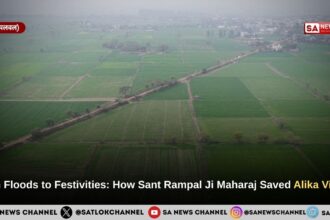


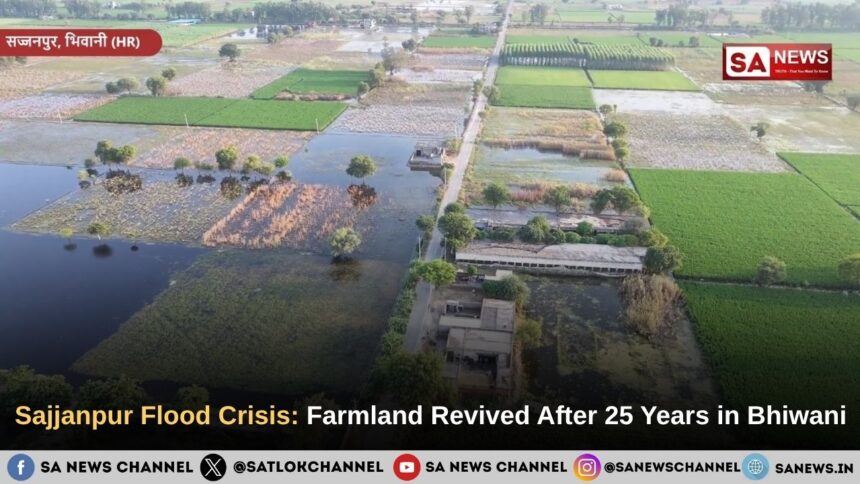
For nearly 25 years, recurring flooding has remained a persistent crisis for farmers in Sajjanpur village, located in Bawani Khera tehsil of Haryana’s Bhiwani district. Every year, 20–25 families have watched their fertile land submerge under 3 to 4 feet of water, leading to repeated crop losses and financial distress. This year, the situation intensified, with around 570 acres of farmland submerged and damage spreading across nearly 1000–1200 acres. With limited administrative support and mounting losses, several farmers were even considering selling their land. However, a recent intervention has changed the situation, allowing cultivation to resume.
- Key Takeaways: Sajjanpur Flood Relief and Recovery
- A 25-Year Flood Crisis That Repeated Every Year
- Heavy Crop Losses and Growing Distress Among Farmers
- Limited Administrative Support and Search for Solutions
- Assistance Under Annapurna Muhim by Sant Rampal Ji Maharaj
- Systematic Water Drainage Restores Farmland
- Return of Agricultural Activity and Visible Change
- Voices from the Ground: Farmers Share Their Experience
- Sajjanpur Moves Towards Recovery
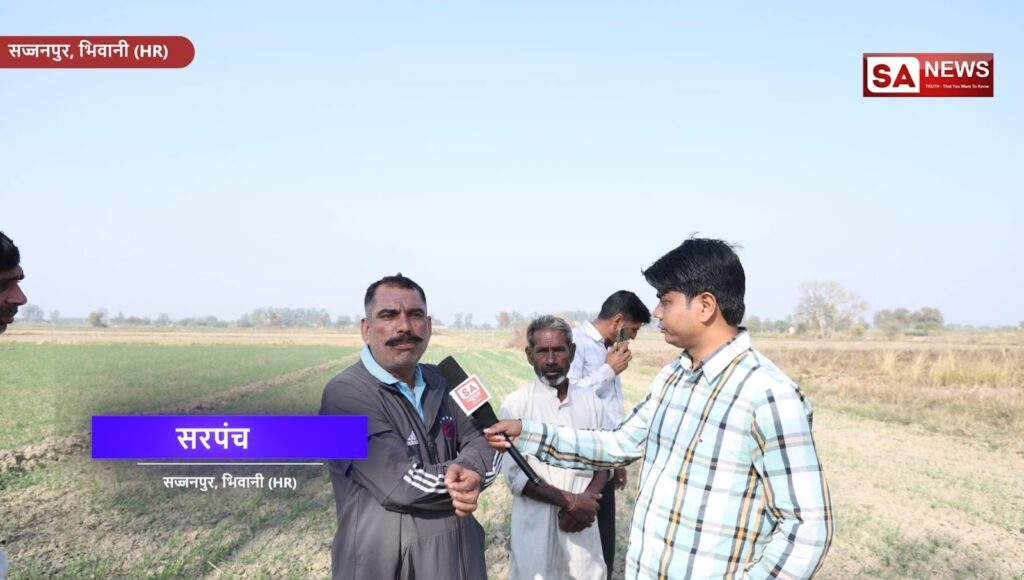
At a time when no effective solution was visible, the villagers, led by Sarpanch representative Naresh Kumar and the local panchayat, approached the committee of Tatvdarshi Sant Rampal Ji Maharaj ji with a prayer, seeking help to overcome the crisis.
Key Takeaways: Sajjanpur Flood Relief and Recovery
- Sajjanpur village faced flooding for over 25 years, affecting 20–25 families annually
- Around 570 acres submerged, with impact extending to 1000–1200 acres
- Water levels remained at 3 to 4 feet for nearly 2–3 months
- Crops including paddy, cotton, and bajra were completely destroyed
- Farmers reported 100% crop loss and heavy financial damage
- Assistance provided under Annapurna Muhim by Sant Rampal Ji Maharaj
- Equipment included:
- 4500–9000 feet pipeline (8-inch)
- Two 10 HP motors
- Starters, cables, connectors, adhesive, nuts and bolts
- Water drained systematically, enabling 95% farmland to be cultivated again
- Wheat sowing resumed; tractors returned to fields
A 25-Year Flood Crisis That Repeated Every Year
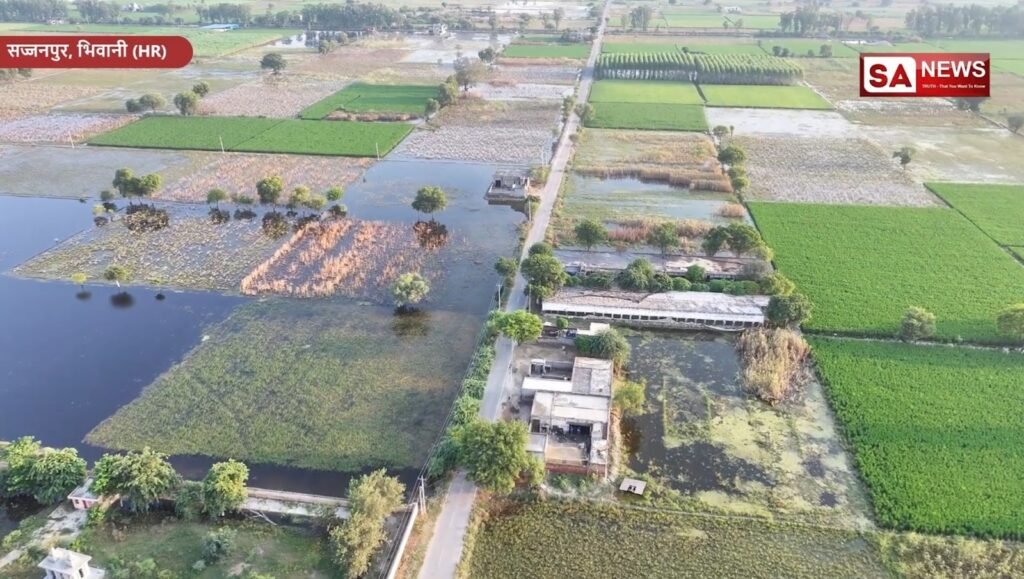
Sajjanpur village in Bawani Khera, Bhiwani, has been battling a recurring flood problem for the past 25 years. Each year, around 20 to 25 families have seen their agricultural land submerge under several feet of water. The situation this year turned severe, with approximately 570 acres of farmland lying underwater, while the total affected area expanded to nearly 1000 to 1200 acres.
Farmers reported that water levels reached between 3 to 4 feet and remained stagnant for nearly two to three months. The prolonged waterlogging not only damaged standing crops but also prevented access to fields, making it impossible for farmers to manage or salvage anything.
Heavy Crop Losses and Growing Distress Among Farmers
The impact of flooding was extensive and deeply damaging. Crops such as paddy, cotton, and bajra were completely destroyed. In several cases, farmers stated that not even a single grain could be recovered from their fields.
One farmer explained that a five-acre paddy field suffered losses worth approximately ₹3 lakh. The estimated yield of around 100 quintals, calculated at ₹3000 per quintal, was entirely lost. Many farmers described the loss as “100% damage,” highlighting the scale of the crisis.
Also Read: Sajjanpur Village, Haryana: A Permanent Solution to Flood Misery for Hundreds of Farmers
In addition to agricultural losses, houses were also affected. Some residents reported that water entered their homes, forcing families to consider leaving their houses. There was also a shortage of fodder for livestock, further worsening the situation.
Limited Administrative Support and Search for Solutions
Villagers stated that while some administrative help was provided, it was not sufficient to address the scale of the problem. With no clear solution in sight and repeated losses over the years, frustration among farmers grew.
According to the Sarpanch representative, Naresh Kumar, the village collectively decided to seek external assistance. A formal proposal was prepared, and the local panchayat approached the committee office (Muninder Dharmarth Trust in Barwala) of Tatvdarshi Sant Rampal Ji Maharaj with a request for help.
Assistance Under Annapurna Muhim by Sant Rampal Ji Maharaj
Following the request, assistance was provided under the Annapurna Muhim by Sant Rampal Ji Maharaj. Within about a week of the proposal, relief material reached the village.
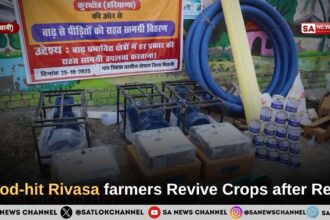
The support included a comprehensive setup designed to remove stagnant water from the fields:
- 4500 to 9000 feet of 8-inch pipeline
- Two 10 HP motors
- Supporting equipment such as starters, cables, connectors, adhesive, nuts, and bolts
Villagers stated that all materials were provided as a permanent installation, ensuring no additional cost to the community.
Systematic Water Drainage Restores Farmland
The equipment was installed across the affected areas, with pipelines laid out and connected to drainage outlets such as canals. Motors operated continuously, day and night, to pump out water from the fields.
According to local accounts, the system was divided into multiple lines to efficiently cover the entire area. Over time, the accumulated water, which had persisted for months, was successfully removed from most parts of the village.
Farmers reported that nearly 95% of the farmland became suitable for cultivation again. Only a few low-lying patches continued to hold water, but they were expected to dry soon.
Return of Agricultural Activity and Visible Change
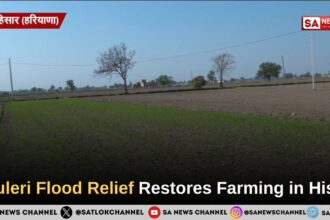
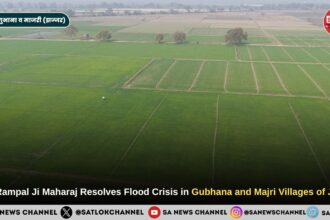
The transformation in Sajjanpur has been significant. Fields that were previously submerged are now dry, and agricultural activities have resumed.
- Tractors have returned to the fields
- Wheat sowing has begun across most areas
- Land preparation is ongoing in remaining sections
Farmers stated that without this intervention, even the next cropping cycle would not have been possible, which could have led to complete financial collapse for many families.
One farmer noted that earlier, it was not even possible to enter the fields due to waterlogging, whereas now tractors are operating normally.
Voices from the Ground: Farmers Share Their Experience
Several villagers shared their experiences, highlighting both the severity of the crisis and the impact of the assistance.
- Farmers described the earlier situation as “unmanageable,” with no access to fields
- Many confirmed that crop loss was total, leaving them without income
- Residents stated that after water removal, sowing became possible again
- Some mentioned that even entering the fields earlier was difficult due to depth of water
A farmer named Sandeep said that water levels had reached 4 to 5 feet in some areas and that without the pipeline and motors, it would not have been possible to resume farming.
Another resident, Bhup Singh, stated that he had not seen such severe conditions before and that the assistance helped restore normal agricultural activity.
Sajjanpur Moves Towards Recovery
The situation in Sajjanpur has shifted from prolonged distress to gradual recovery. With most fields now ready for cultivation and sowing underway, farmers have been able to resume their primary source of livelihood.
While the earlier losses remain significant, the ability to cultivate again has provided a path forward. The restoration of farmland has also reduced uncertainty for families dependent on agriculture.
Residents described the development as a turning point after years of repeated losses, marking a transition from waterlogged fields to productive farmland once again.
Website: www.jagatgururampalji.org
YouTube: Sant Rampal Ji Maharaj
Facebook: Spiritual Leader Sant Rampal Ji