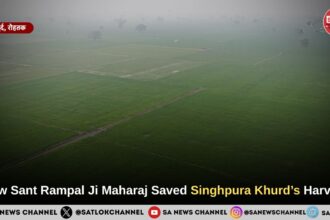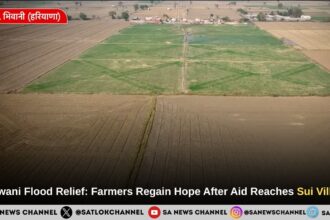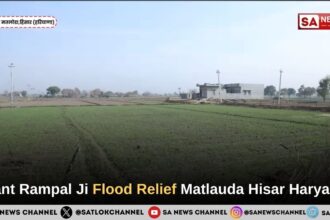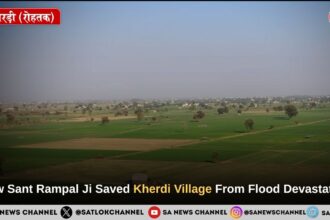


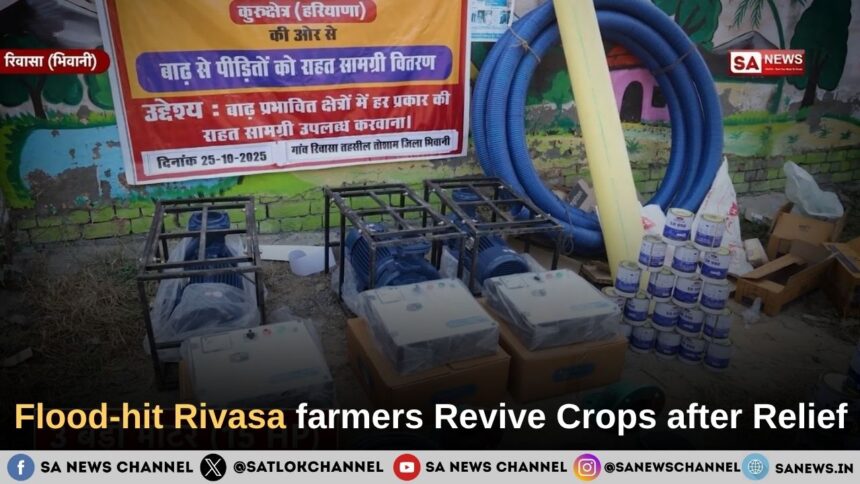
Rivasa village in Tosham tehsil of Bhiwani district, Haryana, is witnessing a gradual return to agricultural activity after months of severe flooding disrupted farming across hundreds of acres. Nearly 600–700 acres of farmland remained submerged under 4–5 feet of stagnant water, leaving farmers with no immediate solution. With limited assistance initially available, the situation remained critical for nearly three months. However, large-scale water drainage through motors and pipelines has now enabled farmers to resume sowing across a significant portion of land, bringing relief and renewed hope.
- Key Takeaways: Rivasa Flood Recovery and Farming Revival
- Months of Flooding Leave Farmland Unusable
- Appeal for Help and Subsequent Intervention
- Comprehensive Support System Established
- Farming Activity Resumes Across Large Areas
- Farmers Describe Losses and Recovery
- Permanent Infrastructure for Future Protection
- Visible Change in Fields and Community
- Rivasa’s Recovery Reflects Collective Effort and Timely Support
Villagers had approached Muninder Dharmarth Trust office in Barwala led by Tatvdarshi Sant Rampal Ji Maharaj with a prayer for help, seeking urgent intervention as their fields remained waterlogged and unproductive.
The support extended far beyond just major equipment. At a single instruction from Sant Rampal Ji Maharaj, His disciples arranged everything required to make the system operational—starters, cables, elbows, suction pipes, rubber gaskets, adhesives like Fevicol, and even the smallest steel nuts and bolts.
Key Takeaways: Rivasa Flood Recovery and Farming Revival
- Around 600–700 acres of farmland were submerged under 4–5 feet water
- Waterlogging persisted for nearly three months
- Initial assistance included only one motor, later increased but remained insufficient
- Farmers approached Sant Rampal Ji Maharaj for support
- High-capacity 315 HP motors and 8000 ft pipelines enabled water drainage
- Nearly 400 acres have been sown, with 100–200 acres remaining
- Remaining land to be used for vegetables and fodder crops
- Permanent underground pipeline system installed for future resilience
- Farmers report significant improvement and recovery of agricultural activity
Months of Flooding Leave Farmland Unusable
The crisis in Rivasa village began when floodwaters inundated vast stretches of farmland, submerging approximately 600 to 700 acres under 4 to 5 feet of water. Farmers described the situation as severe, with stagnant and polluted water remaining in fields for nearly three months. The water not only halted agricultural activity but also led to the presence of harmful creatures reaching residential areas.
Sarpanch Virender Kumar stated that repeated requests were made to the administration for assistance. Despite these efforts, only one motor was initially provided, which proved inadequate for draining water across such a large area. Farmers compared the situation to “a drop in the ocean,” indicating the scale of the challenge.
Appeal for Help and Subsequent Intervention
With limited resources and worsening conditions, villagers submitted a request for help to Tatvdarshi Sant Rampal Ji Maharaj through His Muninder Dharmarth Trust. Within approximately ten days, relief measures were initiated.
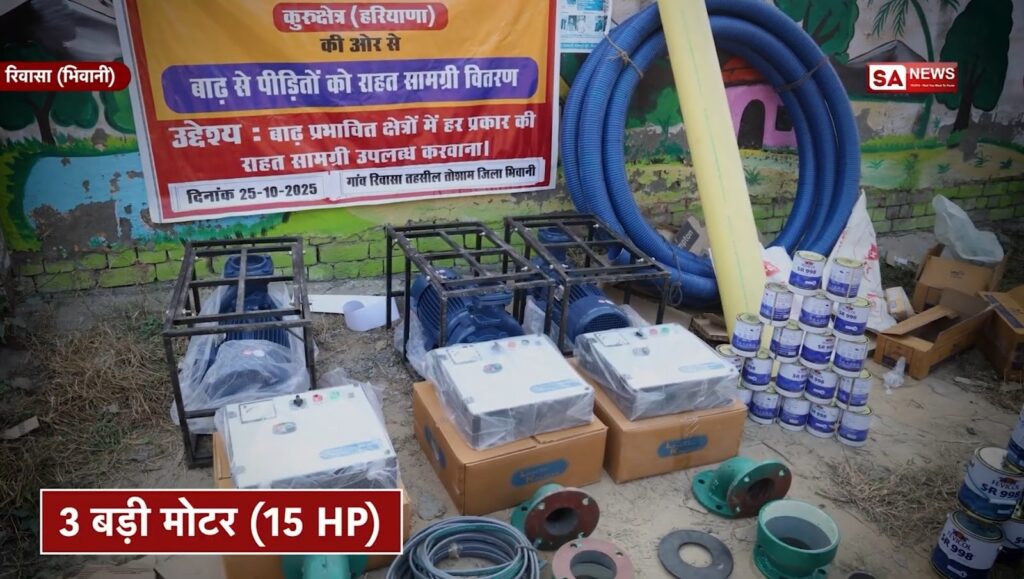
High-capacity equipment was deployed, including:
- 315 HP motors
- 8000 feet of 8-inch pipelines
This infrastructure enabled continuous water drainage, operating day and night to remove stagnant water from fields.
Farmers noted that this intervention significantly changed the situation, as the water that had resisted earlier efforts was gradually pushed out beyond village boundaries.
Comprehensive Support System Established
The assistance provided extended beyond machinery. Villagers confirmed that all necessary components required to operate the system were arranged, including:
- Starters and electrical cables
- Elbows and suction pipes
- Rubber gaskets and adhesives
- Steel nuts and bolts
Farmers stated that they did not need to purchase any additional materials from the market, as everything required for installation and operation was provided.
Farming Activity Resumes Across Large Areas
Following the drainage efforts, agricultural activity resumed. Farmers reported that:
- Approximately 400 acres have already been sown
- Around 100–200 acres still remain, where water persists or tractor access is limited
In several fields, wheat sowing has already taken place, with early signs of germination visible. In other areas, sowing was carried out recently, while some portions are still under preparation.
Also Read: Incarnation of God in Haryana: Sant Rampal Ji Maharaj Saves Farmana Badshahpur from Floods
Farmers indicated that by the second week of February, sowing across all remaining areas is expected to be completed. Remaining land will be used for:
- Vegetables
- Fodder crops such as green fodder and jowar
Farmers Describe Losses and Recovery
Farmers including Satveer Singh, Rajkumar, Jaiveer, Ramkishan, and Krishan Kumar described the earlier situation as extremely difficult.
- Fields had water levels reaching 5–6 feet
- Farming activities had completely stopped
- Previous crops were already lost
Farmers stated that without intervention:
- The previous crop was already destroyed
- The next crop would not have been possible
Some farmers described the situation as a “double loss,” where both past and future harvests were at risk.
However, after water drainage:
- Farming resumed
- Wheat sowing began
- Estimated production of 15–20 maund was expected in some areas
Farmers also reported a sense of relief, with one stating that the situation earlier had reached a level of extreme distress.
Permanent Infrastructure for Future Protection
To prevent recurrence of such a crisis, villagers installed a permanent underground pipeline system, buried approximately 3 feet below ground level.
Key features include:
- Pipeline connected toward a dam located between two hills
- The dam spans approximately 15 acres
- Provides water access for wild animals and irrigation purposes
- Enables both water drainage and irrigation
Farmers confirmed that:
- Equipment has been preserved for future use
- Pipeline system is operational and ready for emergencies
However, they mentioned that an additional requirement remains:
- Around 3000 feet of pipeline (as stated contextually)
- One additional motor
Villagers expressed hope that this requirement would also be fulfilled in the future.
Also Read: 14 महीने से लकवाग्रस्त दिनेश कुमार को संत रामपाल जी महाराज की अन्नपूर्णा मुहिम से मिला सहारा
Visible Change in Fields and Community
Visual conditions in the village have changed significantly:
- Fields that earlier had stagnant water now show active farming
- Wheat crops are visible in multiple areas
- Tractors are operational across fields
Farmers noted that:
- Around 80% improvement has been achieved
- Water has been largely drained from affected areas
Agricultural activity, which had completely stopped, is now steadily progressing.
Rivasa’s Recovery Reflects Collective Effort and Timely Support
The situation in Rivasa village highlights the impact of timely intervention during agricultural crises. Farmers who had faced months of waterlogging and uncertainty are now able to resume cultivation and plan for upcoming harvests. With a combination of drainage infrastructure, continuous effort, and resource availability, large portions of farmland have been restored.
Villagers acknowledged the importance of having a permanent system in place, which may help mitigate similar challenges in the future. As sowing continues across remaining fields, the focus has shifted from loss to recovery, marking a significant transition for the farming community in Rivasa, Tosham, Bhiwani (Haryana).
For more information please do visit our various social media platforms:
Website: www.jagatgururampalji.org
YouTube: Sant Rampal Ji Maharaj
Facebook: Spiritual Leader Sant Rampal Ji
‘X’ handle: @SaintRampalJiM