

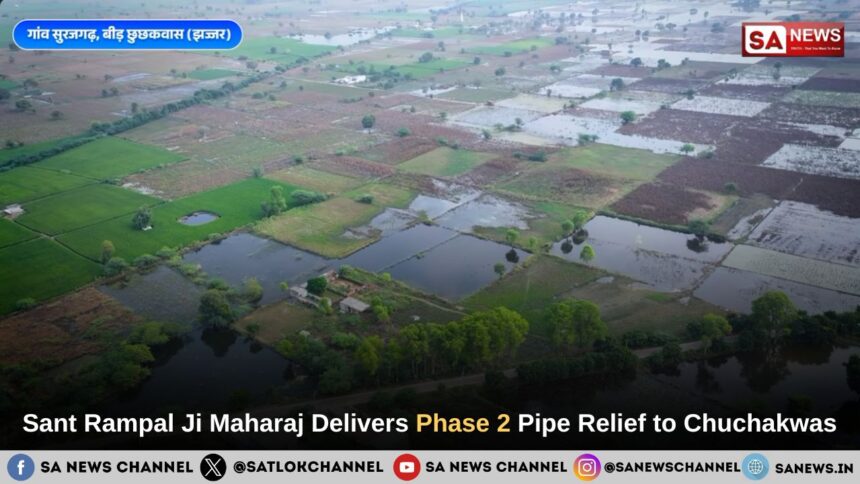
Surajgarh village, which functions under the administrative jurisdiction of the Bid Chuchakwas Gram Panchayat in the Jhajjar district of Haryana, faced a severe, continuous agricultural crisis lasting more than half a century.
- Institutional Neglect and the Strategic Intervention of the Gram Panchayat
- Technical Field Assessment by the Appointed Survey Team
- Rapid Deployment of Phase 2 Disaster Relief Materials within 24 Hours
- Statistical Ledger of the Bid Chuchakwas Drainage Project
- Structural Directives and Time-Bound Execution Mandate
- Non-Political, Nation-Wide Humanitarian Framework of the Annapurna Muhim
- Permanent Resolution of the Agrarian Crisis and Projected Economic Impact
The geographical cluster affected by this issue encompasses three interconnected villages: Bhadgarh, Surajgarh, and Bid Chuchakwas. Local agrarian records and testimonies from elderly residents establish that since 1967, the local farming community had not witnessed their agricultural fields completely free from water accumulation.
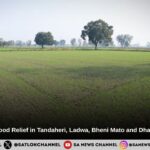
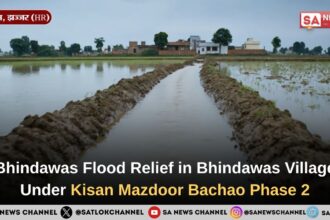
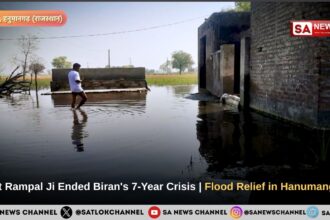
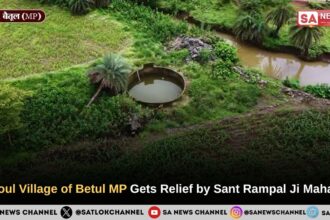
A substantial expanse of fertile cultivable land, measuring approximately 250 to 300 acres, remained submerged, effectively transforming the agricultural zone into a permanent, stagnant lake. The accumulated water maintained a consistent depth of 4 to 5 feet, rendering the soil completely uncultivable. Due to the prolonged stagnation, the water became putrid, creating an environment inhabited by scorpions and snakes.
This ongoing environmental condition systematically prevented the execution of regular seasonal farming cycles:
- Kharif Season Disruptions: Farmers were entirely unable to sow essential regional crops, specifically paddy (rice) and pearl millet (bajra).
- Rabi Season Disruptions: The persistent water layer blocked the timely cultivation of winter crops, notably wheat and mustard.
- Complete Crop Ruin: Any minimal attempts at delayed sowing resulted in the standing crops rotting entirely within the fields.
An entire generation of the local population passed without witnessing grain production from these specific lands. Furthermore, during periods of heavy seasonal rainfall or structural breaches like the cutting of local embankments (pachra), the volume of water accelerated rapidly, threatening the physical habitations of the village. Residents were forced to navigate their fields using manual iron basins (taslas) to cut wild grass.
Institutional Neglect and the Strategic Intervention of the Gram Panchayat
For over 50 years, successive state administrations, political representatives, and local bureaucratic bodies failed to implement a viable, permanent solution to the waterlogging crisis in Surajgarh. During periodic electoral cycles, political candidates visited the locality to solicit votes, but administrative attention ceased immediately after the conclusion of elections.
The occasional deployment of temporary, low-capacity dewatering pumps by governmental agencies failed to alter the core problem, as the volume of extracted water was mathematically insufficient to drain the vast submerged acreage.
Consequently, the local farming collective fell deep into a cycle of institutional debt, financial destitution, and systemic economic despair.
Recognizing the absolute failure of conventional administrative channels, the Bid Chuchakwas Gram Panchayat formally resolved to approach the institutional framework established under the ‘Kisan Mazdoor Bachao Abhiyan’ (Save Farmer and Laborer Movement) directed by Sant Rampal Ji Maharaj.
The sarpanch, elected panches, and village elders drafted a formal petition executed on the official letterhead of the Gram Panchayat. This document requested the immediate allocation of 3,000 feet of heavy-duty drainage piping and a high-capacity electric motor to facilitate structural water extraction.
Technical Field Assessment by the Appointed Survey Team
Upon receiving the official written request from the Bid Chuchakwas Gram Panchayat, Sant Rampal Ji Maharaj dispatched a specialized technical survey team composed of trained voluntary service providers (sevadars) to Surajgarh village. The team arrived on-site to conduct a comprehensive spatial, topographical, and hydrological evaluation of the waterlogged terrain to identify slope gradients and potential drainage discharge channels.
The technical evaluation conducted by the survey team yielded the following structural conclusions:
- The initial request by the panchayat for a single motor was technically inadequate given the immense volume of stagnant water spread across 300 acres.
- The team determined that a minimum of two separate, heavy-capacity industrial electric motors were required to achieve sustained, effective water clearance.
- The optimal drainage route required the deployment of exactly 3,000 feet of heavy-duty piping with a wide diameter of 8 inches to ensure high-velocity fluid transit.
- The primary extraction node was structurally fixed at a specific point on the agricultural land belonging to Lakhi Ram, the village watchman (chowkidar), where a 20 Horsepower (HP) heavy-duty electric motor would be integrated to pump the stagnant water directly into the main regional irrigation canal.
Rapid Deployment of Phase 2 Disaster Relief Materials within 24 Hours
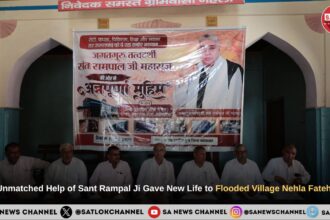
Following the submission of the field report by the technical survey team, Sant Rampal Ji Maharaj directed the immediate mobilization of the required logistical infrastructure under the Phase 2 flood relief initiative. Within a strict 24-hour timeline, a comprehensive convoy transporting the entire consignment of industrial materials arrived at the central village square (chaupal) of Surajgarh.
Sant Rampal Ji Maharaj directly provided the following materials to the affected community:
- Exactly 3,000 feet of heavy-duty, 8-inch diameter drainage piping.
- Industrial-grade adhesive solution (Fevicol) required to seal the pipe joints securely.
- Specialized SR (Sustained Release) joints and functional air valves designed to maintain internal line pressure and prevent structural pipe collapse during high-volume pumping.
The rapid arrival of these materials generated a widespread celebration among the local populace, who viewed the intervention as an immediate end to their multi-decadal crisis.
The arrival was marked by a large community procession featuring dozens of local tractors, traditional drums (dhol-nagadas), and live performances by international woodwind instrumentalist Kailashnath, who played traditional bean melodies. The village sarpanch and citizens presented floral garlands and showered flower petals upon the portrait of Sant Rampal Ji Maharaj to record their institutional gratitude.
Statistical Ledger of the Bid Chuchakwas Drainage Project
| Project Parameters | Validated Field Data and Technical Specifications |
| Geographical Area Benefited | Surajgarh, Bhadgarh, and Bid Chuchakwas, Jhajjar District, Haryana |
| Duration of Core Problem | Active since 1967 (approximately 50-60 years of continuous waterlogging) |
| Total Land Submerged | Estimated between 250 to 300 acres of prime agricultural soil |
| Initiative Classification | Phase 2, Kisan Mazdoor Bachao Abhiyan via Annapurna Muhim |
| Piping Infrastructure | 3,000 linear feet of industrial-grade 8-inch diameter pipeline |
| Joint and Safety Mechanics | Industrial adhesive solution (Fevicol), SR couplings, and pressure air valves |
| Total Motor Allocation | 02 heavy-capacity industrial units (including one 20 HP main pump) |
| Primary Extraction Node | Cultivable field owned by village watchman (chowkidar) Lakhi Ram |
| Logistical Turnaround Time | Delivery completed within 24 hours of technical field survey completion |
| Discharge Destination | Regional Government Irrigation Canal system |
| Panchayat Commitment | Execution of complete underground pipeline burial within a 7-day period |
| Prior Institutional Aid | Historical allocation of 6,000 feet of piping and 02 motors to Bhadgarh village |
Structural Directives and Time-Bound Execution Mandate
During the formal handover of the Phase 2 relief materials to the village authorities, the administrative representatives of the ashram communicated a strict operational protocol mandated by Sant Rampal Ji Maharaj. The protocol dictates a sequential, performance-linked distribution of the mechanical assets to ensure proper long-term utility:
- Step 1: Underground Pipeline Burial: The Gram Panchayat must immediately mobilize local labor and machinery to bury the entire 3,000-foot pipeline underground to prevent surface damage and long-term degradation.
- Step 2: Institutional Reporting: Upon the complete structural installation and burial of the pipeline, the village panchayat committee is required to submit a formal completion notice to the central ashram management committee.
- Step 3: Verification Survey: The technical survey team will return to the village to conduct a physical inspection of the buried pipeline to verify structural alignment and joint integrity.
- Step 4: Motor Deployment: Immediately following technical verification, the two high-capacity electric motors (including the 20 HP unit) will be delivered and installed at the designated nodes to commence active water pumping.
The leadership of the Bid Chuchakwas Gram Panchayat accepted these conditions and formally committed to completing the entire excavation and underground pipeline burial process within one week.
Non-Political, Nation-Wide Humanitarian Framework of the Annapurna Muhim
The operational representatives present at the Surajgarh distribution site emphasized that the relief operations directed by Sant Rampal Ji Maharaj are completely independent of any political considerations, electoral processes, or state financial assistance.
Sant Rampal Ji Maharaj has utilized the institutional framework of the Annapurna Muhim to establish a sustainable, non-sectarian model of humanitarian relief across multiple states.
The broader scope of the humanitarian initiatives directed by Sant Rampal Ji Maharaj includes the following systematic operations:
- Interstate Flood and Drainage Relief: Active deployment of survey teams, pipelines, and industrial pumps across flood-affected rural zones in Haryana, Uttarakhand, Himachal Pradesh, Jammu and Kashmir, and Gujarat.
- Free Housing Construction: Provision of permanent, concrete residential structures built completely free of cost for destitute, homeless, and economically marginalized families.
- Dowry-Free Mass Marriages: Organization and execution of simple, legally compliant marriages (termed Ramaini) conducted without any financial exchanges, dowry, or ceremonial expenses.
- Monthly Ration Distribution: Distribution of comprehensive dry food ration kits to impoverished households to eliminate local food insecurity.
- Socio-Spiritual Reformation: Sustained campaigns aimed at enforcing complete de-addiction from alcohol and narcotics across entire village populations, while broadcasting daily spiritual discourses on Sadhana TV from 7:30 PM to 8:30 PM to foster moral development.
Permanent Resolution of the Agrarian Crisis and Projected Economic Impact
The successful delivery of the Phase 2 drainage materials ensures a permanent structural resolution to the fifty-year-old waterlogging crisis affecting the three connected villages of the Bid Chuchakwas region. Draining the 300 acres of stagnant water will restore the agricultural utility of the land, allowing hundreds of local families to resume dual-crop farming annually.
Elderly residents, including farmer Bhim Singh, noted that while elected politicians systematically abandoned the village after securing votes, Sant Rampal Ji Maharaj provided a complete structural solution without any self-interest or political expectation.
Empirical data from nearby regions previously treated under this movement showed that restoring proper soil aeration and drainage caused agricultural yields to rise from a historical average of 50 maunds (mann) per acre to 70 maunds per acre.
Draining this water eliminates a major vector for waterborne pathogens, improves the physical safety of the area, and secures the long-term economic future of the local farming community.