


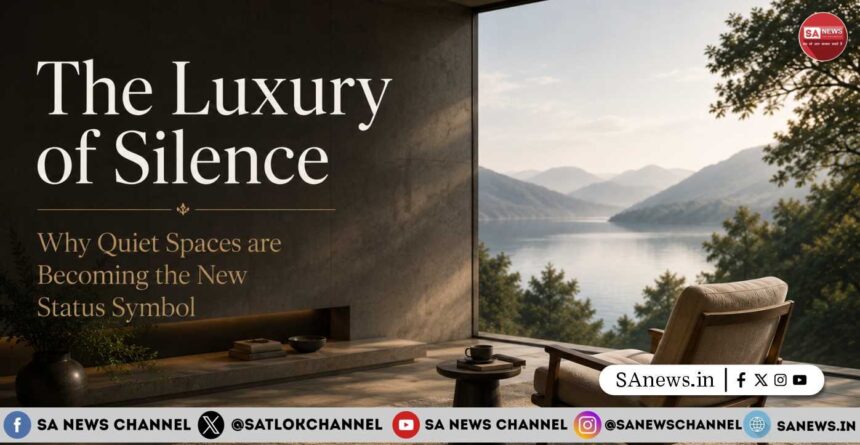
The Luxury of Silence: Luxury is changing. Earlier, status symbols meant expensive cars, designer logos, and lavish parties. But in today’s fast-moving and digitally overloaded world, people are beginning to value something far more precious – silence. Quiet homes, peaceful vacations, noise-free environments, and digital detox lifestyles are becoming symbols of modern success. From celebrities escaping crowded cities to professionals investing in soundproof homes and wellness retreats, the idea of luxury is shifting toward calmness and mental peace. In a noisy world full of distractions, silence has become rare. And whenever something becomes rare, it becomes valuable. This new era of “quiet luxury” reflects humanity’s deeper search for balance and inner peace.
- The Rise of Quiet Luxury in Modern Society
- Why the World Feels Louder Than Ever
- Silence as the New Status Symbol
- The Psychological Benefits of Quiet Spaces
- Silence Improves Mental Health
- Quiet Spaces Increase Productivity
- Silence Strengthens Emotional Clarity
- The Economics of Silence
- Quiet Luxury in Travel Trends
- Minimalism and the Quiet Luxury Movement
- Social Media and the Desire for Peace
- The Architecture of Silence: How Modern Design is Changing
- The Rise of Silent Cafés and Mindful Public Spaces
- Why Gen Z and Millennials are Leading the Quiet Luxury Trend
- The Science Behind Why Humans Crave Silence
- How Quiet Luxury is Influencing Fashion and Lifestyle
- Technology Companies are Now Selling Calmness
- The Emotional Power of Nature and Silence
- The Future of Luxury: Calmness Over Consumption
- How Brands Are Adapting to the Silence Economy
- The Hidden Danger: Silence Only for the Rich?
- Real Peace Comes from Within: Spiritual Silence Explained
- FAQ on The Luxury of Silence
The Rise of Quiet Luxury in Modern Society
What is Quiet Luxury?
Quiet luxury is a lifestyle trend that values simplicity, privacy, calmness, and quality over flashy display. Instead of showing wealth through loud branding, people are investing in peaceful experiences and meaningful living.
Today’s luxury includes:
- Noise-free homes
- Wellness retreats
- Digital detox vacations
- Minimalist interiors
- Meditation spaces
- Nature-connected living
- Mental wellness practices
- Private experiences
- Slow living
- Emotional well-being
This shift is especially visible among younger generations and high-income individuals who are exhausted by overstimulation.
According to recent lifestyle reports, affluent travelers now prefer peaceful destinations and personalized retreats instead of crowded tourist attractions.
Why the World Feels Louder Than Ever
Modern life constantly bombards people with information and stimulation.
Sources of Daily Noise
- Social media notifications
- Traffic and urban noise pollution
- Streaming content
- 24/7 work culture
- Advertising overload
- News anxiety
- Smartphone addiction
- Crowded cities
Research published in The Guardian highlighted that urban noise levels have increased steadily over the past decades, negatively affecting mental and physical health.
Many people no longer get genuine quiet time. Even moments of relaxation are filled with scrolling, alerts, and digital distractions.
As a result, silence has become scarce – and scarcity creates value.
Silence as the New Status Symbol
In previous generations, wealth was displayed publicly. Today, wealth is increasingly expressed privately.
Modern status symbols now include:
1. Time Freedom
Having time away from constant work and digital interruptions is considered luxurious.
2. Peaceful Homes
Luxury apartments now advertise:
- Soundproof walls
- Private gardens
- Quiet neighborhoods
- Wellness architecture
3. Exclusive Nature Retreats
Luxury travel is shifting toward:
- Silent retreats
- Forest resorts
- Remote mountain stays
- Wellness spas
Vogue recently reported that quiet travel destinations and sound-healing retreats are becoming major luxury trends worldwide.
4. Digital Detox
Many wealthy individuals are intentionally reducing screen time and social media exposure to protect mental peace.
The Psychological Benefits of Quiet Spaces
Silence Improves Mental Health
Scientific studies show that quiet environments help reduce:
- Stress
- Anxiety
- Mental fatigue
- Emotional burnout
Silence allows the brain to recover from overstimulation.
A report discussed in The Guardian explained that even brief moments of silence can calm the nervous system more effectively than relaxing music.
Quiet Spaces Increase Productivity
Modern professionals are now designing:
- Minimal workspaces
- Meditation rooms
- Deep-focus environments
Because constant interruptions reduce concentration and creativity.
This is why:
- Noise-canceling offices
- Silent co-working spaces
- Mindfulness rooms
are rapidly growing in popularity.
Silence Strengthens Emotional Clarity
When people disconnect from noise, they reconnect with themselves.
- Quietness encourages:
- Self-reflection
- Emotional healing
- Better decision-making
- Mindfulness
- Gratitude
This explains why meditation, yoga, and spiritual retreats continue to rise globally.
The Economics of Silence
Why Quiet Spaces Cost More
In many cities, peaceful neighborhoods are significantly more expensive.
Properties with:
- Natural surroundings
- Low traffic noise
- Privacy
- Green spaces
often command premium prices.
Luxury hotels are also marketing silence as a premium experience.
This proves that people are willing to pay more for calmness.
Quiet Luxury in Travel Trends
The post-pandemic world changed how people define relaxation.
Instead of crowded vacations, travelers now seek:
- Wellness tourism
- Eco-resorts
- Meditation retreats
- Slow travel experiences
According to travel industry reports, luxury tourism increasingly focuses on privacy, wellness, and peaceful environments.
Minimalism and the Quiet Luxury Movement
Less is Becoming More
Minimalism and quiet luxury are closely connected.
People are now choosing:
- Fewer possessions
- Better quality products
- Timeless interiors
- Sustainable lifestyles
Instead of excessive consumerism.
A growing online discussion also suggests that many individuals are becoming tired of flashy consumer culture and prefer meaningful living.
Social Media and the Desire for Peace
Ironically, social media helped create the desire to escape social media.
People now openly discuss:
- Screen fatigue
- Content overload
- Social comparison anxiety
As a result:
- Offline hobbies
- Nature experiences
- Journaling
- Meditation
are becoming popular again.
The Architecture of Silence: How Modern Design is Changing
Modern architecture is increasingly focusing on creating peaceful living environments. Designers now understand that mental wellness is deeply connected to the spaces people live and work in.
Today’s premium buildings include features such as:
- Acoustic wall panels
- Noise-absorbing materials
- Indoor gardens
- Natural lighting
- Meditation corners
- Minimalist layouts
- Open breathing spaces
Architects are also moving away from chaotic interiors filled with excessive decoration. Instead, they are creating homes that feel emotionally calming.
This trend is especially visible in countries where urban noise pollution has become a serious health concern. Studies suggest that excessive noise can affect sleep quality, blood pressure, and emotional stability.
As a result, “wellness architecture” is becoming one of the fastest-growing luxury design movements globally.
The Rise of Silent Cafés and Mindful Public Spaces
Interestingly, silence is no longer limited to homes and retreats. Public spaces are also adapting to this cultural shift.
Across the world, many businesses are experimenting with:
- Silent cafés
- Quiet libraries
- Meditation lounges
- Phone-free restaurants
- Mindfulness zones
These spaces encourage people to slow down, reduce screen use, and engage in real-life presence.
For example, some cafés now promote “deep conversation environments” where loud music and constant phone usage are discouraged. Customers are encouraged to enjoy
calmness, reading, journaling, or meaningful conversations.
This reflects a larger social movement where people are rediscovering the value of human connection without constant digital interruption.
Why Gen Z and Millennials are Leading the Quiet Luxury Trend
Young generations are often blamed for spending too much time online, but they are also leading the movement toward mindful living.
Many Gen Z and Millennial consumers now prioritize:
- Mental health
- Work-life balance
- Emotional wellness
- Sustainable living
- Minimalism
- Authentic experiences
Unlike previous generations that focused heavily on material display, younger people increasingly value emotional comfort and peace of mind.
This is why trends such as:
- Slow mornings
- Digital detox weekends
- Cottagecore living
- Nature retreats
- Offline hobbies
have exploded across social media platforms.
Ironically, social media itself has become a place where people discuss escaping social media.
The Science Behind Why Humans Crave Silence
Scientists explain that the human brain was never designed for nonstop stimulation.
Thousands of years ago, humans spent most of their lives surrounded by nature sounds:
- Wind
- Birds
- Water
- Forests
But modern environments expose people to:
- Traffic horns
- Phone alerts
- Construction noise
- Continuous entertainment
This overstimulation keeps the nervous system in a constant state of alertness.
Silence gives the brain an opportunity to:
- Recover cognitive energy
- Process emotions
- Improve memory
- Reduce cortisol levels
Some neurological studies even suggest that moments of silence may stimulate brain growth and creativity.
This explains why many people suddenly feel emotionally lighter after spending time in nature or away from technology.
Also Read- The Science of Sound and Silence: Mastering Modern Communication
How Quiet Luxury is Influencing Fashion and Lifestyle
The quiet luxury movement is also reshaping fashion trends.
Instead of loud logos and flashy branding, people are choosing:
- Neutral colors
- Timeless clothing
- Comfortable fabrics
- Elegant simplicity
- Sustainable fashion
The focus has shifted from attention-seeking appearance to understated confidence.
Fashion experts describe this as: “wealth whispering instead of shouting.”
Celebrities and influencers are also embracing simpler aesthetics that reflect calmness and refinement rather than extravagance.
This shift shows that modern consumers increasingly admire emotional sophistication over visual excess.
Technology Companies are Now Selling Calmness
One of the most interesting developments is how technology companies are responding to the demand for silence.
Apps and devices now promote:
- Focus modes
- Sleep sounds
- Meditation features
- Screen-time tracking
- Digital wellbeing dashboards
Even smartphone manufacturers market features designed to reduce distractions.
This reveals a strange paradox: Technology created much of today’s noise – and now technology is trying to solve it.
People are becoming more conscious of how digital overload affects:
- Attention span
- Relationships
- Productivity
- Mental health
As awareness grows, “mindful technology use” is becoming an important lifestyle goal.
The Emotional Power of Nature and Silence
One reason quiet spaces feel luxurious is because they reconnect humans with nature.
Natural silence has a unique emotional effect.
Whether sitting near mountains, forests, rivers, or beaches, people often experience:
- Calmness
- Emotional clarity
- Gratitude
- Spiritual reflection
This explains why eco-tourism and nature retreats are expanding rapidly worldwide.
Many psychologists believe that humans have an innate biological connection to nature, often called “biophilia.” When surrounded by natural environments, stress levels decrease naturally.
In many ways, the growing demand for silence is also a demand to reconnect with the natural world.

The Future of Luxury: Calmness Over Consumption
The future may redefine success entirely.
Earlier generations admired:
- Bigger houses
- Expensive brands
- Public displays of wealth
But future luxury may increasingly focus on:
 Emotional health
- Privacy
- Time freedom
- Spiritual growth
- Peaceful relationships
- Simplicity
This shift reflects a deeper cultural awakening. People are beginning to realize that endless consumption does not guarantee happiness.
After years of chasing speed and stimulation, society is slowly rediscovering the importance of stillness. And perhaps that is why silence feels so luxurious today – because it offers something modern life rarely gives: the chance to simply exist peacefully.
How Brands Are Adapting to the Silence Economy
Luxury brands are changing their marketing strategies.
Instead of loud advertising, they now promote:
- Craftsmanship
- Wellness
- Privacy
- Simplicity
- Emotional comfort
The idea is no longer: “Look how expensive this is.”
Instead, it is: “Look how peaceful this feels.”
This reflects a major cultural transformation.
The Hidden Danger: Silence Only for the Rich?
While quiet spaces are desirable, there is growing concern that peace itself may become available only to privileged people.
Many urban families still struggle with:
- Overcrowded housing
- Traffic noise
- Digital dependency
- Stressful work environments
This raises important social questions: Should peace and mental wellness become luxury products?
Experts increasingly argue that healthier
sound environments should be accessible to everyone.
Real Peace Comes from Within: Spiritual Silence Explained
External silence can calm the mind temporarily, but permanent peace comes from inner spiritual silence. According to Sant Rampal Ji Maharaj, the human soul constantly suffers because of worldly distractions, desires, anger, greed, and attachment. Modern society’s noise is not only external – it is also internal. Sant Rampal Ji Maharaj explains that: Real peace cannot be purchased with money.Luxury cannot remove mental suffering and silence is meaningful only when connected to spiritual knowledge.
Today’s world is running after temporary comfort:
- Luxury retreats
- Expensive vacations
- Digital detoxes
But true and permanent peace is achieved through:
- Satbhakti (true worship)
- Spiritual understanding (Satsang)
- Living a simple and pure life
As people search for silence outside, spirituality teaches them to discover silence within. This growing global desire for calmness indirectly reflects humanity’s deeper spiritual hunger – the search for eternal peace beyond material success.
FAQ on The Luxury of Silence
1. Why are quiet spaces becoming luxury status symbols?
Quiet spaces are becoming luxurious because modern life is filled with constant noise, digital overload, and stress. Peaceful environments are now rare and highly valued.
2. What is quiet luxury?
Quiet luxury is a lifestyle focused on simplicity, quality, privacy, minimalism, and emotional well-being instead of flashy displays of wealth.
3. How does silence improve mental health?
Silence helps reduce stress, anxiety, emotional fatigue, and mental exhaustion while improving focus, emotional clarity, and relaxation.
4. Why are people choosing digital detox vacations?
People are increasingly choosing digital detox vacations to escape social media pressure, screen fatigue, and information overload for better mental wellness.
5. What does spirituality say about true peace?
Spiritual teachings explain that lasting peace comes from inner spiritual understanding, meditation, and connection with God rather than material comforts alone.