

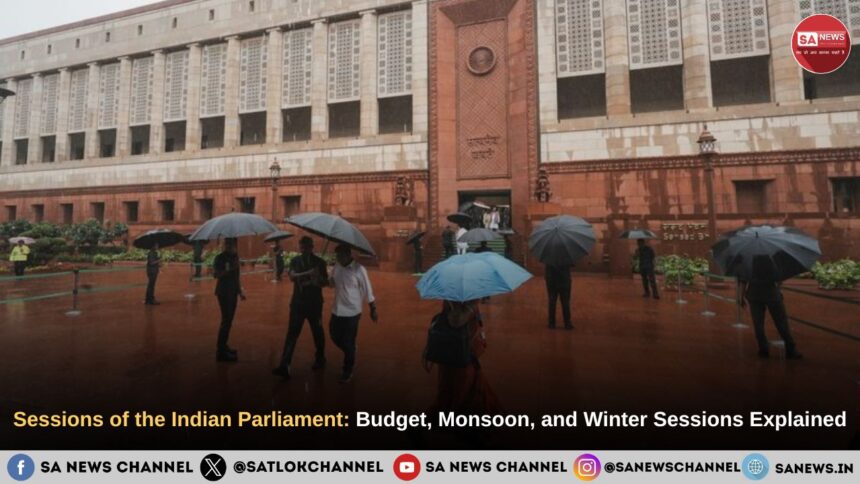
The Indian Parliament is the heart of India’s democracy, where laws are discussed, government policies are evaluated, and ministers are made accountable. It operates in different periods known as sessions, during which Members of Parliament (MPs) address issues, enact laws, approve government budgets, and voice the concerns of citizens.
- What Is a Session of Parliament?
- The Three Regular Sessions of Indian Parliament
- Budget Session: Focus on Finance
- Monsoon Session: Focus on Legislation and Current Issues
- Winter Session: Completing Parliamentary Work
- Importance of Parliamentary Sessions
- Key Activities During Sessions
- Who Decides Parliament’s Schedule?
- Why Citizens Should Understand Parliamentary Sessions
- Sant Rampal Ji Maharaj’s Perspective on Good Governance and Human Welfare
- Conclusion
The Constitution of India does not mandate that Parliament convenes three times a year. It only specifies that no more than six months should elapse between two sessions. However, traditionally, Parliament typically meets in three main sessions: the Budget Session, Monsoon Session, and Winter Session.
What Is a Session of Parliament?
A Parliament session is the time when the Lok Sabha and Rajya Sabha gather to carry out official duties.
It starts when the President of India calls Parliament and concludes when it is prorogued.
During a session, Parliament carries out various tasks, such as:
Enacting and modifying laws.
Debating government policies.
Inquiring with ministers.
Examining government expenditures.
Addressing issues of public significance.
A session consists of several sittings spread over weeks, rather than being just one meeting.
The Three Regular Sessions of Indian Parliament
| Parliamentary Session | Usually Held | Main Purpose |
| Budget Session | January/February to April or May | Union Budget, financial decisions, and legislation |
| Monsoon Session | July to August/September | Bills, debates, and current national issues |
| Winter Session | November to December | Pending legislation and policy discussions |
Each session has a different focus but plays an important role in parliamentary functioning.
Budget Session: Focus on Finance
The Budget Session is often seen as the most crucial parliamentary session since it focuses on the nation’s finances.
It typically starts with the President’s Address, which highlights the government’s plans and priorities for the upcoming year. Following this, the Finance Minister presents the Union Budget, detailing the government’s income, spending, and economic strategies.
During this session, Parliament discusses:
- The Finance Bill.
- The Appropriation Bill.
- Demands for Grants by ministries.
- Government spending plans.
The session often has two phases separated by a recess. During the break, parliamentary committees examine budget proposals in detail before further discussions take place.
Monsoon Session: Focus on Legislation and Current Issues
The Monsoon Session usually begins in July and focuses mainly on legislative work and important national matters.
Bills that remain pending after the Budget Session are often discussed during this period. MPs also raise issues that have developed in recent months, such as economic concerns, social issues, or national emergencies.
This session provides an important platform for Parliament to question the government’s actions and discuss matters affecting the public.
Winter Session: Completing Parliamentary Work
The Winter Session, generally held from November to December, is usually shorter but remains significant.
During this session, Parliament works on:
- Pending bills.
- Committee reports.
- Policy discussions.
- Public issues requiring attention.
Although shorter than other sessions, the Winter Session has often seen important debates and legislative decisions.
Importance of Parliamentary Sessions
Parliamentary sessions are essential for a functioning democracy. They allow elected representatives to:
- Create and modify laws.
- Approve taxes and government expenditure.
- Hold the executive accountable.
- Discuss national and international issues.
- Represent citizens’ concerns.
Parliament is not only a law-making body but also a forum where government decisions are examined and debated.
Key Activities During Sessions
Several important parliamentary procedures take place during every session.
Question Hour allows MPs to ask ministers questions about government decisions and policies. It is one of the main tools for ensuring accountability.
Zero Hour allows MPs to raise urgent public matters without prior notice.
Parliament also debates bills, reviews committee reports, discusses motions, and examines government performance.
Also read: Indian Election Process: Democracy, Voting System and Voting
Who Decides Parliament’s Schedule?
The President of India officially summons parliamentary sessions under Article 85 of the Constitution.
In practice, the Union Cabinet, headed by the Prime Minister, decides the schedule and advises the President.
The constitutional requirement that Parliament cannot remain inactive for more than six months ensures regular functioning and accountability.
Why Citizens Should Understand Parliamentary Sessions
Decisions made during parliamentary sessions affect everyday life. Changes in taxes, education policies, healthcare schemes, environmental laws, defence spending, and welfare programmes are discussed and approved through Parliament.
Understanding parliamentary sessions helps citizens follow how laws are made and how the government is held responsible. While political debates often receive attention, much of Parliament’s important work happens through detailed discussions and committee reviews.
Sant Rampal Ji Maharaj’s Perspective on Good Governance and Human Welfare
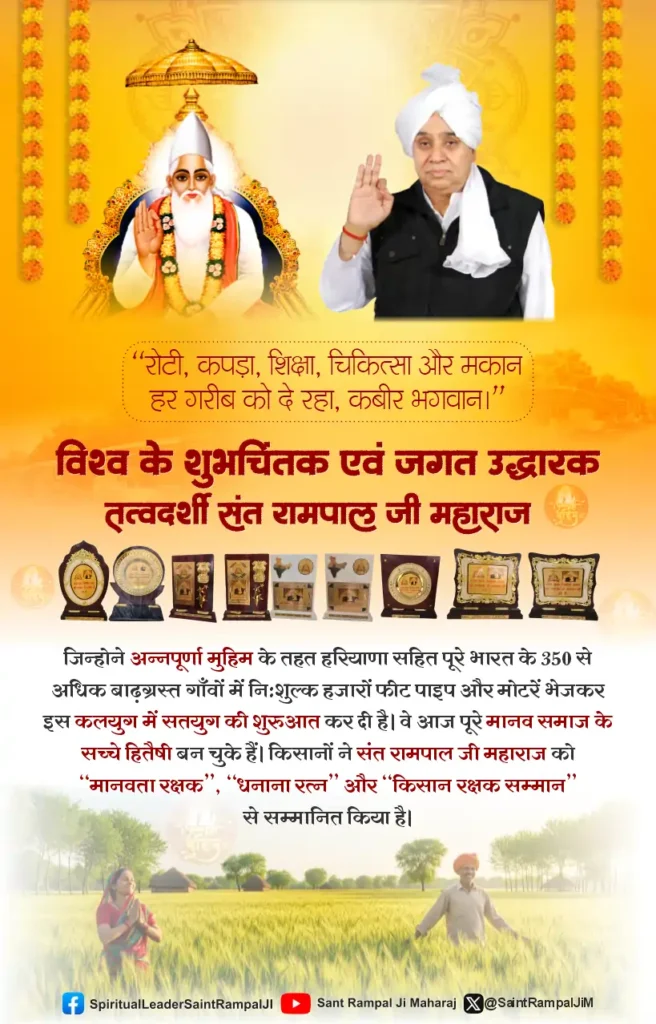
The Indian Parliament plays a vital role in making laws, approving budgets, and shaping policies for the welfare and development of the nation. Effective governance can improve education, healthcare, infrastructure, and social justice, benefiting millions of citizens. However, Sant Rampal Ji Maharaj teaches that while good governance is essential for a peaceful society, lasting happiness and freedom from suffering come only through true spiritual knowledge.
According to the Vedas, a nation becomes truly prosperous when its people follow righteousness, moral values, and scripturally authorized worship under the guidance of a Complete Satguru. Along with imparting spiritual wisdom, Sant Rampal Ji Maharaj inspires society through humanitarian initiatives such as the Annapurna Mission, blood donation drives, de-addiction campaigns, dowry-free marriages, and efforts to promote equality and brotherhood. To know who the True Supreme God is, the real purpose of human life, and the path to salvation, visit the Sant Rampal Ji Maharaj YouTube Channel.
Conclusion
The Budget Session, Monsoon Session, and Winter Session form the regular working cycle of the Indian Parliament. Each session has a specific role, from managing national finances and debating laws to reviewing government policies.
Although the Constitution only requires Parliament to meet at least once within six months, the three-session system has become an important part of India’s democratic process. These sessions ensure that laws are examined, public money is monitored, and elected representatives can voice the concerns of citizens across the country.