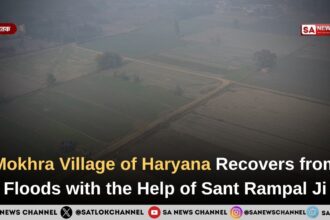


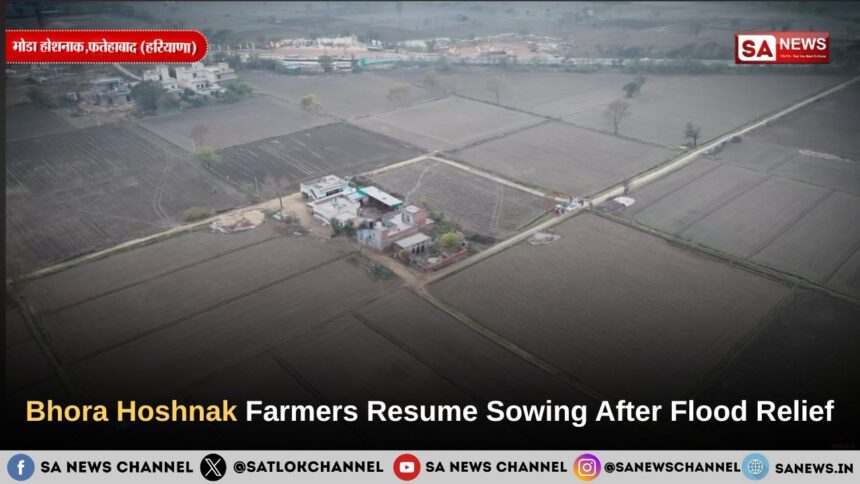
After nearly three months of severe flooding in Bhora Hoshnak village of Fatehabad district, Haryana, agricultural activity has resumed across the area as farmers completed wheat sowing on land that had remained submerged under stagnant water. Villagers said kharif crops were completely destroyed, homes and village roads remained flooded, and families were forced to leave their dwellings due to disease risks and waterlogging. Residents stated that relief support provided by Tatvdarshi Sant Rampal Ji Maharaj under the Annapurna Muhim helped drain the accumulated water and restore farming activities in the village.
- Key Takeaways: Bhora Hoshnak Flood Relief and Farming Recovery
- Flood Conditions Left Bhora Hoshnak Villagers Struggling
- Farmers Say Livestock Crisis Deepened the Situation
- Relief Support Arrived Under Annapurna Muhim
- Farmers Say the Water was Drained Within Weeks
- Farmers Describe Return of Agricultural Activity
- Villagers Recall Difficulties Faced by Children and Families
- The Divine Command of Sant Rampal Ji Maharaj Ji
According to villagers and the village panchayat, they approached Sant Rampal Ji Maharaj Ji with a prayer for help after seeing similar assistance being extended in the nearby village of Khasa. Residents said they had received assurances from authorities earlier, but the flood situation in Bhora Hoshnak continued to worsen as water remained stagnant in fields, homes, and village pathways.
Key Takeaways: Bhora Hoshnak Flood Relief and Farming Recovery
- Bhora Hoshnak village in Fatehabad remained affected by flood water for nearly three months
- Around 450 acres of agricultural land were submerged
- Cotton and bajra crops were completely destroyed
- Water levels reached nearly 2 to 4 feet in fields and several homes
- Families migrated temporarily from flooded dwellings due to snakes, diseases, and unsafe conditions
- Children were carried through waterlogged streets to attend school
- Sant Rampal Ji Maharaj Ji provided relief support under the Annapurna Muhim
- Villagers received 6,500 feet of 8-inch pipeline along with 15 HP and 10 HP motors
- Wheat sowing was later completed across most of the affected land
- Farmers and the village panchayat expressed relief after water was drained within around 15 to 20 days
Flood Conditions Left Bhora Hoshnak Villagers Struggling
Residents of Bhora Hoshnak described the flood situation as one of the most difficult periods faced by the village in recent months. Villagers said black and foul-smelling water remained accumulated in agricultural fields for nearly three months, while several streets turned into stagnant ponds.
According to local residents, water entered houses and village dwellings, with flood levels reaching nearly three to five feet in some areas. White marks left behind by the floodwater remained visible on walls and structures even after the water receded.
Farmers stated that kharif crops, including cotton and bajra, were completely destroyed. Many said they had lost not only their standing crops but also investments made on seeds and labour.
Major Problems Faced During the Flood
| Issue | Situation Reported by Villagers |
| Crop damage | Complete destruction of kharif crops |
| Waterlogging | 2 to 4 feet of stagnant water in fields |
| House flooding | Water entered homes and village dwellings |
| School access | Children carried through flooded roads |
| Livestock problems | Severe fodder shortage for animals |
| Health concerns | Fear of diseases and snakes |
| Transportation | Roads fully submerged |
Villagers also stated that roads and agricultural fields became indistinguishable because floodwater covered the entire surrounding area. Several farmers used mud-filled sacs around their homes to stop water from entering further inside.
Also Read: Bhoda Hoshnag Flood Crisis: Drainage System Brings Relief to Farmers in Haryana
Farmers Say Livestock Crisis Deepened the Situation
Apart from crop damage, villagers described a severe crisis related to livestock management. Farmers said they struggled to arrange fodder for cattle after floodwater destroyed surrounding vegetation and access routes.
Some residents stated that animals had to be shifted to higher areas, while others were sent to relatives in nearby places because villagers feared they would die without food. Farmers recalled bringing grass from distant areas under difficult conditions as movement through flooded roads remained nearly impossible.
One farmer stated that families even considered leaving their homes permanently because of the continuous accumulation of water around residential areas.
Relief Support Arrived Under Annapurna Muhim
Villagers said Sant Rampal Ji Maharaj Ji extended assistance under the Annapurna Muhim after the village panchayat and local residents approached Him seeking help.
Also Read: Nectar for the Farmers & Labourers: Annapurna Muhim Phase 2 Mega-Drive Begins from Biran Village
According to residents, a relief convoy reached the central chabutra of the village carrying essential equipment required for large-scale water drainage operations.
The relief support included:
- 6,500 feet of 8-inch pipeline
- One 15 HP motor
- One 10 HP motor
- Starters from Kirloskar and Crompton
- Cables and suction pipes
- Elbows and rubber fittings
- Adhesives including Fevicol
- Steel nuts and bolts
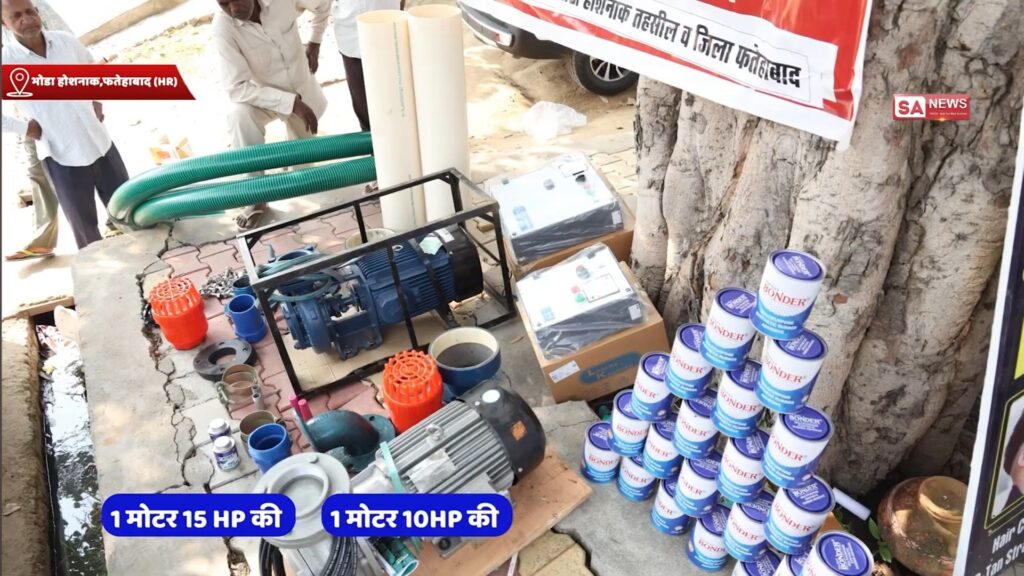
The support extended far beyond just major equipment. Sant Rampal Ji Maharaj Ji arranged everything required to make the system operational, including starters, cables, elbows, suction pipes, rubber gaskets, adhesives like Fevicol, and even the smallest steel nuts and bolts. As villagers themselves expressed, “We didn’t have to purchase even a single nut from the market to get everything running.”
Villagers further stated that they were clearly informed that the entire equipment would remain a permanent shared resource of the village for future use.
Farmers Say the Water was Drained Within Weeks
Residents and farmers stated that the motors and pipelines were immediately used to remove stagnant water from the village and agricultural land.
According to multiple villagers interviewed in the area, the water was drained within nearly 15 to 20 days. Farmers said the land later became suitable for cultivation again, allowing wheat sowing to begin across most parts of the village.
Ramesh, the village sarpanch, stated that nearly 450 acres had remained submerged earlier but sowing had now been completed across the affected land. Farmers repeatedly said that natural drainage alone would not have solved the situation because water levels remained too high in the fields.
Villagers added that the equipment provided under the Annapurna Muhim played a major role in preventing further agricultural losses.
Farmers Describe Return of Agricultural Activity
During field visits, villagers showed standing wheat crops growing in areas that had remained waterlogged earlier. Farmers were also seen spraying wheat fields after sowing operations were completed.
Several residents said they had lost hope of cultivating another crop after the destruction of the kharif season. According to villagers, they initially believed the stagnant water would remain for a prolonged period and prevent any further farming activity.
Farmers repeatedly expressed relief that wheat sowing became possible before the next agricultural cycle was missed completely.
One farmer stated that farming was their only means of livelihood and that the successful drainage of water helped save their remaining agricultural season.
Villagers Recall Difficulties Faced by Children and Families
Residents described how children faced major difficulties attending school while roads remained submerged. According to villagers, parents often carried children on their shoulders or transported them through flooded routes using motorcycles.
Families living in village dwellings and isolated farm structures also reported severe inconvenience in daily life because movement became nearly impossible during the flood period. Several villagers said displaced families have now returned to their homes after water levels receded.
The Divine Command of Sant Rampal Ji Maharaj Ji
According to the sacred directive of Tatvdarshi Sant Rampal Ji Maharaj, every village that has received assistance must ensure that the relief materials provided, such as motors and pipelines, are used effectively so that no farmer’s field remains flooded and the next crop can be sown on time. His order clearly states that even if more materials are needed, they should be requested without hesitation, but under no circumstance should water remain stagnant.
Sant Rampal Ji Maharaj Ji blessed the villagers, saying that this aid must become a permanent solution for their suffering, a gift from Supreme God Kabir through His grace. He also instructed that if the given resources are not utilized properly and the water is not drained, future assistance will be withheld.
Website: www.jagatgururampalji.org
YouTube: Sant Rampal Ji Maharaj
Facebook: Spiritual Leader Sant Rampal Ji
‘X’ Handle: @SaintRampalJiM