

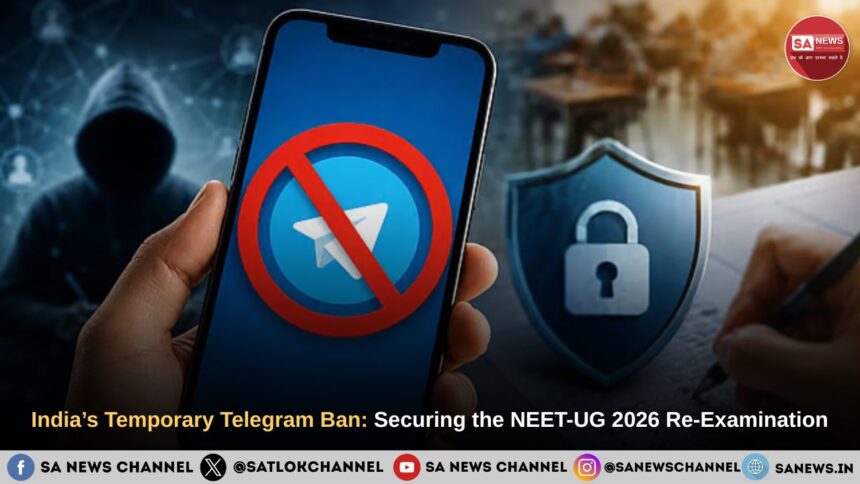
In a significant move to safeguard the integrity of national examinations, the Government of India has imposed temporary restrictions on the popular messaging app Telegram. This decision comes ahead of the crucial NEET-UG 2026 re-examination scheduled for June 21, following widespread controversy and allegations of paper leaks during the initial test held in May.
The Scope of the Restrictions
The Indian government, through the Ministry of Electronics and Information Technology (MeitY), has implemented two distinct tiers of restrictions on the platform:
Platform Access Ban: Access to the Telegram app has been restricted across various networks in India until midnight on June 22, 2026. To enforce this, the government directed both Google and Apple to delist Telegram from their respective app stores.
Message Editing Block: In a more targeted move, Telegram has been ordered to disable its message-editing feature for all previously posted messages in India until June 30, 2026. While users can still send new messages (if they have access), they cannot modify any older content during this period.
Why Telegram Was Targeted
The National Testing Agency (NTA), which conducts the NEET-UG exam, described the ban as a “measure of last resort” to protect the examination process and maintain public order. Authorities identified several Telegram channels with names like “PAPER LEAKED NEET,” “Re-NEET 2026,” and “Private Mafia” that were allegedly being used to organize cheating and cyber fraud networks. These channels reportedly demanded payments ranging from a few thousand to several lakh rupees in exchange for purported access to exam papers.
A specific concern involved Telegram’s message-editing feature. The NTA alleged that channel administrators were misusing the tool to create fake evidence of paper leaks. By editing an old message after the exam was over to include actual questions while retaining the original, pre-exam timestamp, fraudsters could claim they had the paper before the test began. Disabling this feature closes this avenue of fabrication during the post-examination window.
A Massive Impact on Users
India is one of Telegram’s largest global markets, with more than 150 million users. The ban affects a vast ecosystem of people who rely on the app for legitimate everyday communication, including study groups, professional work, and community discussions. While the government expressed regret for the “inconvenience caused,” it maintained that the step was necessary because previous attempts to remove specific fraudulent channels had failed to solve the issue.
Pavel Durov and Global Reactions
Telegram founder and CEO Pavel Durov has criticized the move, arguing that it “punishes” ordinary citizens rather than the individuals responsible for the leaks. Durov stated on social media that the ban is ineffective because the leaks “simply moved to other apps”. He noted that the move unfairly targets 150 million users while failing to stop the “insiders” who actually provide the exam materials.
Digital advocacy groups in India have also voiced concerns. The Internet Freedom Foundation (IFF) described the shutdown as a “band-aid solution” and a “disproportionate” response to exam fraud. Similarly, other policy experts have questioned whether a total platform restriction is the least intrusive way to handle the misuse, given that many students and teachers use the platform for genuine educational purposes.
Looking Ahead
The NTA has clarified that no genuine NEET paper is available outside the secured examination chain, and any such promises made on social media are fraudulent. As of now, the platform-access restriction is set to lift on June 22, 2026, while the message-editing restriction will persist until June 30. Students are advised to remain vigilant against fraudulent claims and focus on the official re-test on June 21.
FAQs
1. Why has the Indian government temporarily restricted Telegram?
The government imposed restrictions to prevent paper leaks and cyber fraud related to the NEET-UG 2026 re-examination scheduled for June 21. Authorities identified that the platform was being used by cheating rackets to target candidates and spread misinformation.
2. When will the Telegram ban in India end? Access to the Telegram platform is restricted until midnight on June 22, 2026. However, the specific restriction on editing previously posted messages will continue until June 30, 2026.
3. Why was the “Message Editing” feature specifically targeted?
The National Testing Agency (NTA) found that administrators were using the editing tool to create fake evidence of paper leaks. By editing an old message to include actual exam questions after the test, they could claim they had the paper before the exam while keeping the original timestamp.
4. Can I still use Telegram if it is already installed on my phone?
While Google and Apple have delisted Telegram from their app stores, existing accounts generally remain operational. However, users may face access disruptions depending on their network service provider, and new accounts cannot be activated on certain devices like iPhones.
5. How has Telegram’s leadership reacted to this ban?
Telegram CEO Pavel Durov criticized the move, stating that it “punishes” 150 million ordinary users in India rather than the “insiders” responsible for the leaks. He argued that such bans are ineffective because leaks simply move to other messaging applications.