


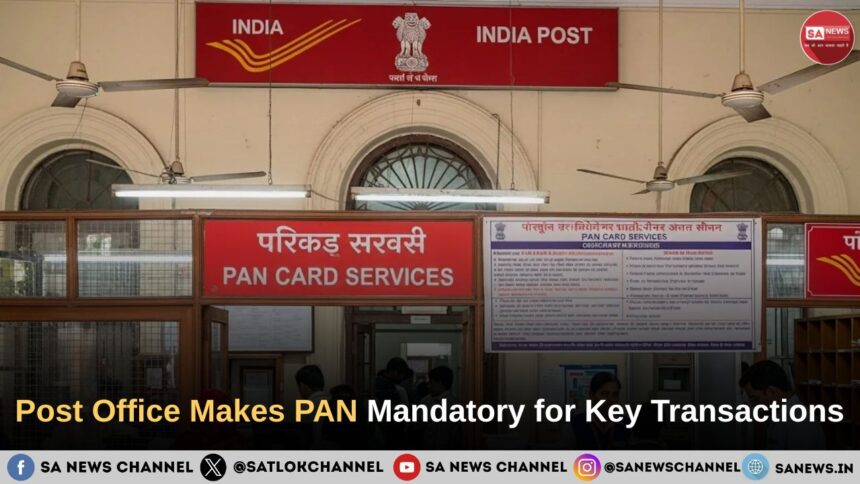
India’s post office savings ecosystem is set for a major compliance overhaul under the Income-tax Rules, 2026, with the Department of Posts introducing new guidelines that make Permanent Account Number (PAN) mandatory for several financial transactions. The revised framework applies to account opening, deposits, withdrawals, and investments in time deposits across post office schemes. The changes also replace existing declaration procedures with new forms and documentation requirements aimed at strengthening transparency, improving financial reporting, and integrating post office savings channels into the formal tax administration system.
- Key Takeaways on Post Office Rules 2026
- Department of Posts Introduces New Compliance Framework
- PAN Requirement Linked to Tax Reporting System
- What Happens if a Depositor Does Not Have a PAN?
- Forms 15G and 15H Replaced With Form 121
- Implementation Under Post Office SB Order No. 02/2026
- Growing Focus on Financial Transparency
- Financial Discipline and Inner Responsibility
- FAQs on Post Office Rules 2026
Key Takeaways on Post Office Rules 2026
- PAN has become mandatory for specified post office transactions
- The revised rules fall under Income-tax Rules, 2026
- Rules 159, 160, 161, 211, and 237 are linked to the changes
- Depositors without PAN must submit Form 97
- Form 97 replaces the earlier Form 60
- Forms 15G and 15H have been merged into Form 121
- Form 121 must be submitted annually for each financial year
- Post offices will maintain records for seven years
- The changes are effective under Post Office SB Order No. 02/2026
- Interim arrangements remain in place until backend system upgrades are completed
Department of Posts Introduces New Compliance Framework
The Department of Posts has issued fresh guidelines under the Income-tax Rules, 2026, making PAN compulsory for a wide range of post office financial transactions. The move marks a significant shift in the compliance structure governing India’s traditional small savings network.
According to the revised framework, PAN must now be quoted for specified activities including:
- Opening post office accounts
- Depositing money
- Withdrawing funds
- Investing in time deposits
- Other specified financial transactions
The mandatory PAN requirement falls under multiple provisions of the Income-tax Rules, 2026, specifically Rules 159, 160, 161, 211, and 237.
Also Read: PAN Card Rules Changing from April 1, 2026: Aadhaar-Only Process Ends
Officials stated that the revised compliance mechanism is aimed at improving transparency within the post office savings ecosystem while also strengthening financial tracking and reporting standards.
PAN Requirement Linked to Tax Reporting System
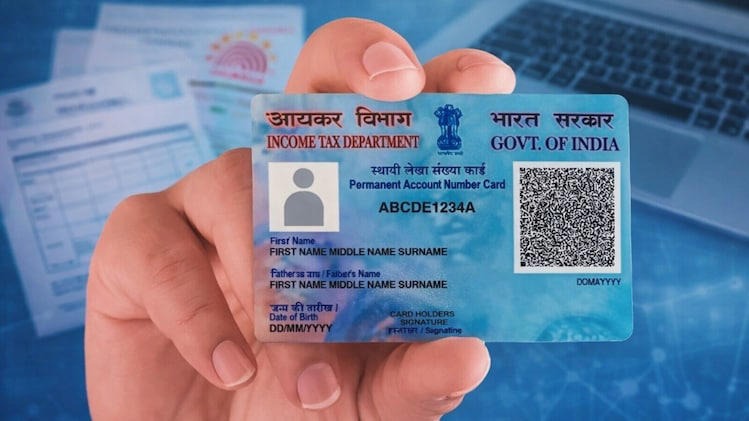
The changes reflect a broader policy effort to integrate traditional savings channels into the formal tax reporting framework. Authorities aim to strengthen audit trails and reduce the possibility of tax evasion through improved documentation and transaction monitoring.
The Department of Posts indicated that the updated rules are intended to:
- Improve transparency in financial transactions
- Track specified and high-value transactions more effectively
- Enhance tax compliance among depositors and small savers
- Streamline reporting and documentation procedures
- Reduce duplication in declaration systems
The revised rules affect a large number of depositors and investors who use post office savings schemes for long-term investments and secure deposits.
What Happens if a Depositor Does Not Have a PAN?
Under the new guidelines, individuals without a PAN card are still allowed to complete specified transactions, but they must follow an alternative compliance process.
Depositors without PAN are now required to submit Form 97, which replaces the earlier Form 60.
The form requires depositors to provide detailed information including:
| Requirement | Details Needed |
| Identity Details | Name and address of depositor |
| Transaction Information | Nature and amount of transaction |
| Supporting Documents | Documents validating the transaction |
Post offices have been instructed to collect and maintain this information to ensure that even non-PAN transactions remain properly documented and traceable under the tax system.
The revised framework clarifies that compliance documentation has become mandatory for specified transactions within the post office savings network.
Forms 15G and 15H Replaced With Form 121
Another major procedural change introduced under the new rules is the consolidation of Forms 15G and 15H into a single declaration document known as Form 121.
Previously:
- Form 15G was used by individuals below 60 years of age
- Form 15H was used by senior citizens
These forms were submitted to avoid Tax Deducted at Source (TDS) on interest income when the taxpayer’s income remained below the taxable threshold.
Under the revised framework:
- Form 121 will serve as the unified declaration form
- The form must be submitted every financial year
- It applies only where the estimated total income results in nil tax liability
The Department of Posts also outlined an internal verification process for handling the new declaration system.
Verification Process for Form 121
| Process Stage | Responsibility |
| Part A Collection | Depositor submission |
| Part B Completion | Post office verification |
| Record Maintenance | Retained for seven years |
Authorities stated that post offices will collect Part A of the declaration, complete Part B internally, and preserve records for the mandatory retention period.
Also Read: आधार-PAN लिंक स्टेटस कैसे चेक करें – जानिए राष्ट्रीय सरकारी पोर्टल पर आसान तरीका
Implementation Under Post Office SB Order No. 02/2026
The revised procedures have been implemented under Post Office SB Order No. 02/2026. The order confirms that the changes are effective immediately.
However, interim operational arrangements remain in place while backend technology systems are being upgraded.
Until the completion of system updates, the existing process involving Forms 15G and 15H may continue temporarily in certain cases.
The transition phase is intended to ensure continuity of services while the new compliance procedures are integrated into the post office network.
Growing Focus on Financial Transparency
The revised rules indicate a growing regulatory focus on bringing traditional savings systems under structured tax reporting standards. Post office savings schemes remain widely used across India, particularly among small savers and long-term depositors.
By making PAN mandatory for specified transactions and standardising declaration procedures, authorities aim to strengthen traceability and improve the overall compliance environment within the post office financial system.
For depositors and investors, the updated framework makes PAN availability and proper documentation increasingly important for uninterrupted post office transactions and compliance under the Income-tax Rules, 2026.
Financial Discipline and Inner Responsibility
The revised post office compliance framework highlights the growing importance of accountability, transparency, and responsible financial conduct in everyday life. Spiritual teachings also emphasise honesty and discipline in human actions, including financial dealings and social responsibilities.
Tatvdarshi Sant Rampal Ji Maharaj explains that a disciplined and truthful lifestyle helps individuals maintain balance in both worldly and spiritual matters. His Spiritual Knowledge encourages people to follow lawful conduct, remain free from deception, and live with responsibility towards society and ethical values.
For more information visit our
Website: www.jagatgururampalji.org
YouTube: Sant Rampal Ji Maharaj
Facebook: Spiritual Leader Saint Rampal Ji
X (Twitter): @SaintRampalJiM
FAQs on Post Office Rules 2026
1. What changes have been introduced in Post Office Rules 2026?
PAN has become mandatory for specified transactions including deposits, withdrawals, account opening, and time deposit investments.
2. Which form replaces Form 60 in post office transactions?
Form 97 has replaced the earlier Form 60 for individuals who do not possess a PAN card.
3. What is Form 121 in the new post office rules?
Form 121 is the unified declaration form replacing Forms 15G and 15H for eligible taxpayers seeking TDS exemption.
4. Which rules are linked to the revised PAN requirement?
The changes fall under Rules 159, 160, 161, 211, and 237 of the Income-tax Rules, 2026.
5. Under which order were these changes implemented?
The revised procedures were implemented through Post Office SB Order No. 02/2026.