

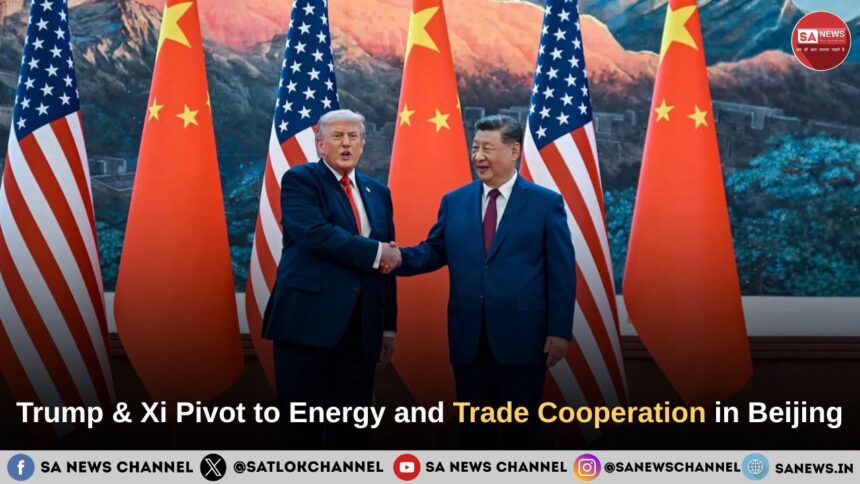
President Donald Trump and Chinese President Xi Jinping have opened a high-stakes summit in Beijing with both sides signaling a cautious shift toward cooperation on energy, trade and global stability. The meeting at the Great Hall of the People lasted more than two hours and covered Iran, the Strait of Hormuz, trade, Taiwan, U.S. energy exports, Boeing aircraft purchases and possible tariff relief.
U.S. officials said Xi expressed interest in buying more American oil, including potential supplies from Alaska, to reduce China’s dependence on energy routes through the Strait of Hormuz. Chinese state media, however, did not confirm the energy discussions, and no final agreement has yet been announced. The summit is being watched as a possible turning point in U.S.-China ties, but the outcome remains cautious rather than complete.
Trump-Xi Beijing Summit: What Changed?
Cooperation Replaces Confrontation-At Least in Tone
The first major shift from the summit is tonal. Chinese leader Xi Jinping said the United States and China should be “partners, not rivals,” while Trump told Xi that relations would be “better than ever.” The Guardian reported that the talks included economic cooperation, trade and Iran, while Reuters said Xi warned Trump that Taiwan could still send relations down a dangerous path if mishandled.
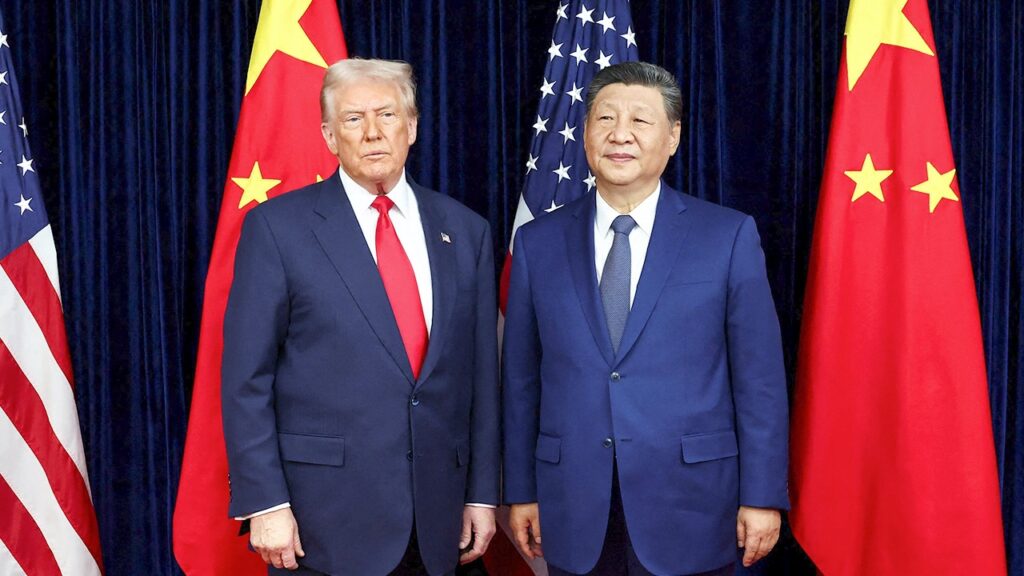
This tone matters because U.S.-China relations have been defined in recent years by tariffs, technology controls, Taiwan tensions, fentanyl disputes and competing strategic visions. A summit that produces even limited cooperation can lower the risk of sudden escalation.
Still, the warmer language should not be mistaken for a full reset. Taiwan remains sensitive. Technology restrictions remain unresolved. China wants tariff relief, while the U.S. wants market access, export commitments and stronger action on fentanyl precursors. The summit has opened a path, but it has not erased the rivalry.
Iran and Hormuz Add Urgency
The Middle East crisis has made the summit more urgent. The Strait of Hormuz remains one of the world’s most important energy corridors, and China is deeply exposed to Gulf energy flows. U.S. officials said Trump and Xi discussed keeping the strait open and preventing Iran from acquiring nuclear weapons. The New York Post, citing the White House, reported that both leaders agreed the Strait of Hormuz must remain open and demilitarized.
For China, energy security is not theoretical. Any prolonged disruption in Hormuz can affect Chinese industry, shipping costs and inflation. For the U.S., China’s influence with Iran is diplomatically useful. This is why energy and Middle East stability became linked at the Beijing summit.
U.S. Energy Exports to China Back on the Table
China Shows Interest in American Oil
Reuters reported that U.S. officials flagged the possibility of China increasing imports of American energy after the Trump-Xi meeting. According to the White House summary, Xi showed interest in reducing China’s reliance on the Strait of Hormuz by purchasing more U.S. oil. Treasury Secretary Scott Bessent said the energy talks included possible sourcing from Alaska.
Also Read: The World Is Watching Beijing As High Stakes Trump-Xi Summit Gets Underway
This would be a major shift if it becomes reality. China has largely paused U.S. oil imports because of tariffs imposed during the trade war. Reuters noted that those tariffs would likely need to be lifted before significant U.S. crude flows to China resume.
The energy conversation is therefore both commercial and strategic. For Trump, selling more U.S. oil to China would support American producers and reduce the trade imbalance. For Xi, buying some U.S. energy could diversify supply and reduce risk from Gulf instability.
Chinese State Media Stays Silent
One caution is important: Chinese state media did not confirm the energy discussions in its account of the meeting, and China’s foreign ministry declined to comment. Reuters specifically noted this gap between U.S. claims and Chinese public messaging.
That silence may be tactical. Beijing may not want to appear dependent on U.S. energy or pressured by Washington. It may also be waiting for tariff terms before publicly committing to purchases.
Trade Rebalancing and Boeing Orders
Bessent Expects Large Boeing Purchase
U.S. Treasury Secretary Scott Bessent said he expected a major Chinese Boeing order during Trump’s China visit. Reuters reported that Bessent highlighted possible Chinese purchases of Boeing aircraft, U.S. energy, agricultural goods and potential investment in non-sensitive U.S. sectors.
A Boeing order would carry strong symbolic value. It would support U.S. manufacturing, give Trump a visible export win and show that Beijing is willing to use commercial purchases to stabilize relations.
For China, aircraft purchases can serve both practical and diplomatic purposes. Chinese airlines need fleet capacity, and a Boeing deal can be used as a goodwill gesture if tariff relief or broader trade stability is part of the package.
Tariff Relief on Non-Sensitive Goods
Reuters reported that talks continue toward reducing tariffs on around $30 billion worth of non-sensitive goods. Such a move would not resolve the full trade war, but it would show that both sides are willing to separate strategic sectors from ordinary commerce.
This distinction is key. The U.S. is unlikely to relax restrictions on sensitive technologies such as advanced chips, AI-related hardware or military-linked components. But lower-risk goods may become part of a trade easing package.
Investment and Business Channels
Board of Trade and Board of Investment
Bessent also spoke about the idea of forming bilateral structures such as a “Board of Trade” and a “Board of Investment” to oversee trade and investment channels. Reuters reported that the aim would be to encourage Chinese investments in areas that are unlikely to be flagged by the Committee on Foreign Investment in the United States.
This would help both sides manage risk. The U.S. wants investment without national-security exposure. China wants predictable rules instead of sudden political blocks. A structured channel may reduce friction if designed carefully.
No $1 Trillion Investment Pledge
Bessent dismissed speculation that Washington was seeking $1 trillion in Chinese investment. That clarification matters because unrealistic headline figures can create false expectations. The summit appears focused more on targeted purchases, tariff relief and limited investment frameworks rather than one grand bargain.
Taiwan Still the Strategic Red Line
Xi Warns Trump
Even as trade and energy talks moved forward, Xi raised Taiwan. Reuters reported that Xi warned Trump that disagreement over Taiwan could push relations down a dangerous path.
This means the summit’s cooperative mood has limits. For Beijing, Taiwan remains a core sovereignty issue. For Washington, Taiwan is tied to Indo-Pacific credibility, supply chains and regional alliances.
The absence of Taiwan from some U.S. public briefings does not mean the issue disappeared. It remains the most dangerous flashpoint in U.S.-China relations.
Why This Summit Matters Globally
Energy Markets Are Watching
If China resumes meaningful U.S. oil purchases, global energy flows could shift. U.S. producers may gain a major buyer, China may reduce partial dependence on Gulf routes, and market pressure from Hormuz tensions could soften.
Trade Could Stabilize Supply Chains
If tariffs are reduced on non-sensitive goods, businesses in both countries may gain some predictability. That could support consumer goods, agriculture, aviation and selected industrial sectors.
Diplomacy Can Lower Crisis Risk
The summit also gives both leaders a way to manage Iran-related tensions without direct confrontation. If China helps stabilize energy flows and the U.S. softens trade pressure in some areas, both sides can claim a partial win.
Peace, Power and Responsible Leadership
The Beijing summit shows that even the world’s biggest rival powers eventually need dialogue when trade routes, energy prices and ordinary livelihoods are at risk. Sant Rampal Ji Maharaj’s guidance on truthfulness, humility, non-violence and freedom from greed offers a meaningful moral lens for such diplomacy. His teachings also stress honest conduct in work and the rejection of corruption, intoxication, theft and other social evils.
In global politics, the same principle applies at a larger scale: power without restraint creates fear, while dialogue guided by responsibility can prevent suffering. SatGyan reminds humanity that ego and greed disturb peace, whereas truthful conduct and devotion to Supreme God Kabir lead toward harmony.
The Trump-Xi summit will be judged not by warm words alone, but by whether both nations act with fairness, restraint and concern for people affected by war, trade disruption and inflation.
FAQs on Trump-Xi Summit
1. What was the main focus of the Trump-Xi summit?
The summit focused on energy cooperation, trade, Iran, the Strait of Hormuz, Boeing purchases, tariffs, investment channels, fentanyl and Taiwan.
2. Did China agree to buy U.S. oil?
U.S. officials said Xi showed interest in buying more American oil, including possible supplies from Alaska, but Chinese state media did not confirm the energy discussion.
3. Was a Boeing deal discussed?
Yes. U.S. Treasury Secretary Scott Bessent said he expected a major Chinese Boeing order during Trump’s China visit.
4. Did Trump and Xi discuss the Strait of Hormuz?
Yes. U.S. accounts say the leaders discussed keeping the Strait of Hormuz open and preventing Iran from obtaining nuclear weapons.
5. Did the summit resolve U.S.-China tensions?
No. It created a cooperative opening, but major issues such as Taiwan, technology controls and tariffs remain unresolved.
6. Why is the summit important for global markets?
It could influence oil flows, aviation purchases, tariffs, supply chains, shipping confidence and global inflation expectations.