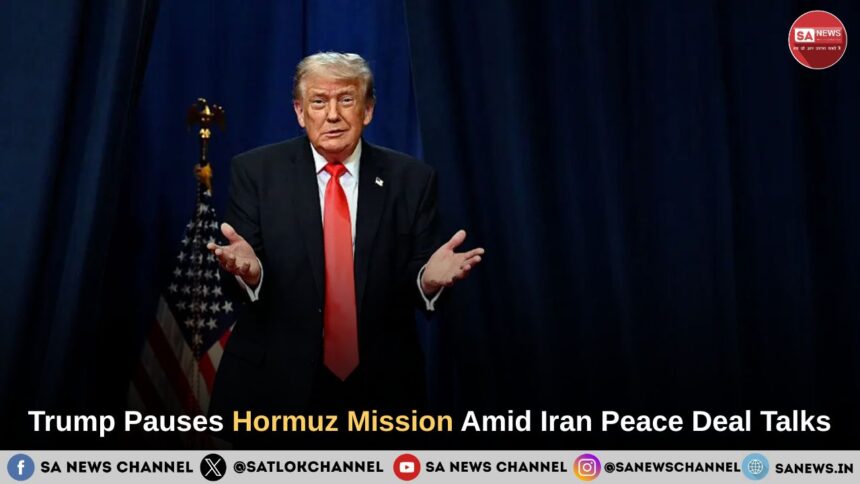
The United States has paused “Project Freedom,” the naval mission launched to escort commercial ships through the Strait of Hormuz, as diplomatic efforts with Iran appear to gain momentum. US President Donald Trump said the operation was halted following “great progress” towards an agreement with Tehran and after requests from Pakistan and other countries. The development comes amid continuing regional tensions involving Iran, Israel, Gaza, Lebanon and the occupied West Bank, while discussions over sanctions, nuclear negotiations and maritime access continue through indirect diplomatic channels. Read to know details.
- Key Takeaways on Trump’s Hormuz Pause and Iran Deal Talks
- Trump Pauses ‘Project Freedom’ in Strait of Hormuz
- Strait of Hormuz Remains Central to the Crisis
- Iran’s Conditions and Proposed Framework
- Pakistan, Saudi Arabia and China Increase Diplomatic Efforts
- Analysts Question Effectiveness of Military Pressure
- Violence Continues Across Gaza, Lebanon and the West Bank
- Diplomatic Momentum Shapes the Next Phase
- Peace Through Spiritual Understanding
- FAQs on Iran-Israel War and Hormuz Deal Talks
Key Takeaways on Trump’s Hormuz Pause and Iran Deal Talks
- Donald Trump announced a pause in “Project Freedom” in the Strait of Hormuz.
- The US said it would now operate defensively to enforce a naval blockade.
- Reports suggested Washington and Tehran were nearing a draft memorandum of understanding.
- Iran reportedly demanded that the war end before nuclear negotiations continue.
- Pakistan emerged as a key mediator between the US and Iran.
- Marco Rubio said the military phase of “Operation Epic Fury” had concluded.
- Iran continued to seek a “new mechanism” governing Hormuz.
- Saudi Arabia and China increased diplomatic engagement to reduce escalation.
- Violence continued in Gaza and the occupied West Bank.
Trump Pauses ‘Project Freedom’ in Strait of Hormuz
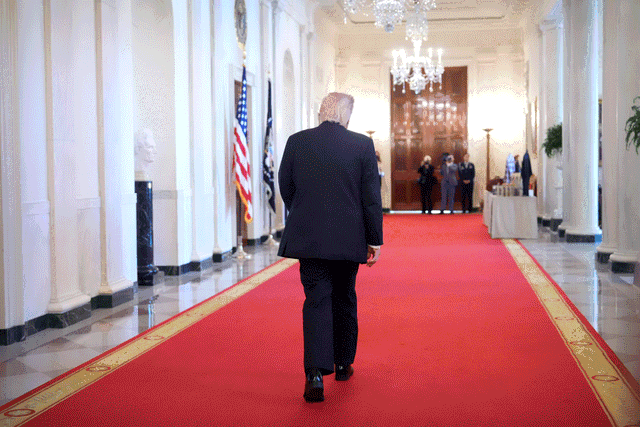
US President Donald Trump said the American operation to escort ships through the Strait of Hormuz had been paused amid efforts to secure an agreement with Iran.
The mission, known as “Project Freedom,” had been launched to restore commercial shipping through the strategic waterway after weeks of escalating conflict in the region. Trump said the operation was paused following “great progress” towards a possible deal and after requests from Pakistan and other countries.
The United States also stated that its military posture would now focus on defensive operations linked to enforcing a naval blockade rather than continuing active escort missions.
According to multiple media reports, Washington and Tehran appeared to be moving closer to a one-page memorandum of understanding aimed at ending the conflict and reopening the Strait of Hormuz.
Strait of Hormuz Remains Central to the Crisis
The Strait of Hormuz remained a major point of tension throughout the conflict. Iran reportedly tightened its control over the strategic chokepoint during the previous 48 hours.
Reports stated that Iranian authorities informed ships and vessels they would need to coordinate with the IRGC Navy in order to receive designated safe routes through the strait. Iran reportedly warned that vessels failing to follow the mechanism could face force from the IRGC Navy.
Analysts described the move as one of Iran’s strongest bargaining tools in negotiations related to the conflict and regional security.
Also Read: De-escalation: Trump Pauses “Project Freedom” Amid Fragile Iran Ceasefire
The conflict intensified after the US and Israel launched strikes on Iran on February 28, triggering Iranian retaliation across the Gulf and the effective closure of Hormuz. Around 20% of global oil and liquefied natural gas supplies pass through the route.
Iran’s Conditions and Proposed Framework
Recent reports indicated that Washington may now be moving closer to Iran’s sequencing demands regarding the conflict.
For weeks, the US had insisted that any agreement include major concessions regarding Iran’s nuclear programme, including dismantling facilities and surrendering highly enriched uranium.
However, recent statements from US officials suggested Washington may now be accepting Iran’s demand that the war be ended first before detailed nuclear negotiations proceed.
US Secretary of State Marco Rubio stated that the military phase of “Operation Epic Fury” had concluded and said Washington was now seeking a “memorandum of understanding for future negotiations”.
According to Al Jazeera, this framework matched proposals Iran had reportedly sent to Washington through Pakistani mediators.
Iran’s latest reported proposal included:
| Proposed Measures | Details |
| War Process | 30-day process to end the war |
| Hormuz Access | Gradual reopening of the Strait of Hormuz |
| Naval Restrictions | Partial lifting of the US naval blockade |
| Financial Measures | Release of frozen Iranian assets |
| Nuclear Talks | Delaying detailed negotiations until later stages |
| Sanctions | Partial sanctions relief |
Reuters, citing sources familiar with the talks, reported that a proposed 14-point memorandum would formally end the war while establishing a temporary framework for discussions on Hormuz, sanctions and Iran’s nuclear activities.
The proposed agreement also reportedly involved:
- A moratorium on nuclear enrichment during negotiations
- Phased easing of restrictions around Hormuz
- Partial sanctions relief
Iran’s Foreign Ministry spokesman said Tehran had not yet issued a formal response to the latest US proposal but confirmed that diplomatic messages continued through Pakistani mediation.
“Messages are being exchanged through the Pakistani mediator, and reviews regarding the exchanged texts are ongoing,” Iran’s IRIB broadcaster quoted Baghaei as saying.
Pakistan, Saudi Arabia and China Increase Diplomatic Efforts
Pakistan’s role in mediation became increasingly significant as diplomatic discussions intensified.
Pakistani Prime Minister Shehbaz Sharif welcomed Trump’s decision to pause the Hormuz naval operation and stated that Saudi Crown Prince Mohammed bin Salman had also encouraged efforts aimed at avoiding escalation.
Saudi Arabia publicly supported Pakistan’s mediation efforts and called for the Strait of Hormuz to return to its pre-war status with unconditional freedom of navigation.
China also became more actively involved in diplomatic efforts.
Iranian Foreign Minister Abbas Araghchi arrived in Beijing for discussions with Chinese officials shortly before Trump’s scheduled summit with Chinese President Xi Jinping.
Beijing, which purchases the majority of Iran’s exported oil, resisted US pressure to further isolate Tehran while also encouraging de-escalation to protect energy supplies and regional stability.
Analysts Question Effectiveness of Military Pressure
The US mission in Hormuz reportedly faced significant operational challenges shortly after its launch.
Iranian forces reportedly fired missiles and drones at ships and targets linked to the United States and its Gulf allies. US officials acknowledged military engagements around Hormuz but stopped short of restarting large-scale combat operations.
Several analysts argued that the situation exposed the limits of military pressure.
Ali Vaez of the International Crisis Group told the BBC that the operation was “not going to solve the problem” and risked dragging Trump back into war.
Al Jazeera quoted Tehran-based analyst Seyed Mojtaba Jalalzadeh as saying Washington was gradually recognising that “the balance of deterrence is currently skewed in Iran’s favour”.
Andreas Krieg of King’s College London described the emerging US position as a “meaningful concession” because resolving the war, Hormuz and nuclear issues simultaneously was “no longer realistic”.
However, major disagreements remained unresolved.
Iran continued to demand a “new mechanism” governing Hormuz, while Marco Rubio rejected any arrangement requiring ships to coordinate passage or pay what he described as “tolls” to Iran.
Violence Continues Across Gaza, Lebanon and the West Bank
Even as diplomatic activity increased, military operations and tensions continued elsewhere in the region.
An Israeli air strike in Gaza killed Naseem al-Kalazani, identified by medics as a colonel in Gaza’s police force. The strike reportedly targeted his vehicle near the al-Mawasi area in western Khan Younis and wounded at least 17 others.
Lebanese Parliament Speaker Nabih Berri stated that any agreement with Israel would require guarantees because Israel had allegedly violated the cessation of hostilities despite Hezbollah’s commitment.
Berri also said Iran’s foreign minister had informed Lebanese officials that Lebanon would be included in any US-brokered agreement aimed at ending the conflict.
Meanwhile, Israeli operations continued across the occupied West Bank.
According to Wafa news agency:
- Troops stormed the Qalandiya refugee camp north of occupied Jerusalem.
- Snipers occupied rooftops in several neighbourhoods.
- Forces demolished a house in Shuqba near Ramallah.
- Raids occurred in Abu Falah and al-Mughayyir.
- Arrests were reported in Nablus, Bethlehem and Tuqu.
- Settlers reportedly set fire to lands in Beita.
Reports stated that since October 7, 2023, Israel had detained more than 23,000 Palestinians and killed 56 others, including 16 reportedly killed by settlers.
Diplomatic Momentum Shapes the Next Phase
Diplomatic negotiations now appear focused on securing a limited framework agreement rather than a broader settlement covering every disputed issue simultaneously.
Analysts suggested that the compressed timetable may improve the chances of achieving a temporary arrangement while reducing the possibility of a comprehensive long-term agreement.
As Andreas Krieg told Al Jazeera, “The timetable increases the chances of a limited deal, but lowers the chances of a grand agreement.”
Peace Through Spiritual Understanding
The continuing tensions surrounding Iran, Israel, the Strait of Hormuz and regional security once again highlight how prolonged conflict affects global stability, diplomacy and ordinary lives. While governments continue negotiations and strategic discussions, many spiritual teachers have consistently emphasised the importance of peace, restraint and human unity during times of crisis.
Tatvdarshi Sant Rampal Ji Maharaj also explains through His True Spiritual Knowledge that lasting peace in society can emerge only when humanity rises above hatred, violence and division. His teachings focus on coexistence, moral conduct and spiritual awareness as foundations for a stable and peaceful world.
Only through the power of word of a Complete Saint, big changes are expected to occur. Today, Sant Rampal Ji Maharaj, the Complete Saint of our era, has shown us by setting examples through His devotees that true spiritual knowledge can help in healing a wounded society. Right now, the world needs the wisdom of Sant Rampal Ji Maharaj while He (Sant Rampal Ji) has been continuously extending His hand to save humanity, it is for the world to grab this golden opportunity.
For more information visit our
Website:www.jagatgururampalji.org
YouTube: Sant Rampal Ji Maharaj
Facebook: Spiritual Leader Saint Rampal Ji
X (Twitter): @SaintRampalJiM
FAQs on Iran-Israel War and Hormuz Deal Talks
Why did Trump pause Project Freedom?
Trump said the operation was paused after “great progress” towards a possible agreement with Iran and requests from other countries.
What is the Strait of Hormuz issue?
Iran reportedly sought tighter control mechanisms for ships passing through the strategic waterway during the ongoing regional conflict.
What role is Pakistan playing?
Pakistan is acting as a mediator between Washington and Tehran by facilitating indirect diplomatic communication.
What did Marco Rubio announce?
Rubio said the military phase of “Operation Epic Fury” had concluded and future negotiations were being pursued.
What issues remain unresolved?
Disagreements continue over Hormuz navigation rules, sanctions relief and the structure of future nuclear negotiations.