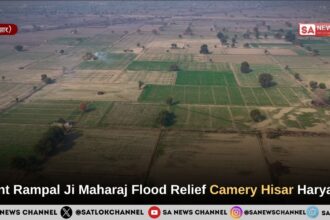


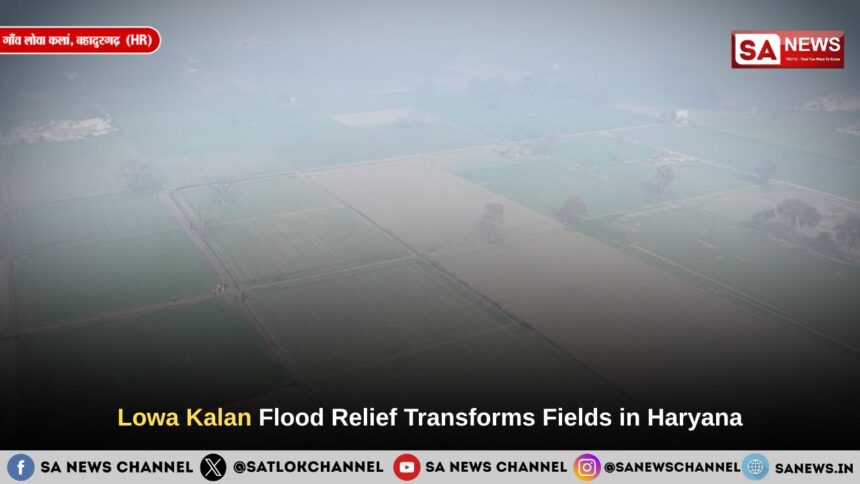
This story of Lowa Kalan, a small village in Bahadurgarh tehsil of Jhajjar district, Haryana, is not just about fields submerged in water, but about struggle, helplessness, and then the sudden relief that transformed the entire village. For the past two years, the village had been battling a problem that nearly halted the farmers’ hard work, hopes, and livelihoods.
- The Wrath of Flood: When Fields Turned into Water Reservoirs
- Disappointment with the System: When All Doors of Help Closed
- The Beginning of Hope: When the Village Sought Help
- Change Within 24 Hours: Relief Reaches the Village
- Ground Reality Changes: When Water Left and Greenery Returned
- Farmers’ Voices: From Pain to Happiness
- Social Impact: Prosperity Returns to the Village
- An Example of Service: The Power of Selfless Help
- A Message of Hope, Unity, and Service By Supreme God Saint Rampal ji Maharaj
Around 250 to 300 acres of land remained submerged under water for 5–6 months continuously. Dirty water, 2 to 4 feet deep, filled the fields. Where once lush green crops flourished, there was now silence and despair. For farmers, this was not just a crop loss—it shook the very foundation of their lives.
The Wrath of Flood: When Fields Turned into Water Reservoirs
In Lowa Kalan, flooding was not a one-time natural disaster but a persistent issue. There was no proper drainage system. Every year after rainfall, water accumulated in the fields and remained stagnant for months.
Village Sarpanch Rahul states that about 150 acres of land were completely waterlogged. Farmers watched their land turn barren. Crops like paddy, millet, and others were completely destroyed. Farmers said that if the water did not drain, the land would remain unused for the entire year. One farmer shared, “There was at least 2.5 to 3 feet of standing water. Everything was submerged. There was no hope of growing anything.”
Disappointment with the System: When All Doors of Help Closed
The villagers repeatedly approached the administration. They visited Bahadurgarh, met officials, and submitted applications, but received only assurances—no concrete action was taken.
Gradually, farmers lost faith in the system. They said, “We depended on the government, but no help came.” The situation became so severe that villagers tried installing pipes themselves to drain water, but those efforts were insufficient. With no crops for two consecutive years, the financial condition worsened. Laborers had no work, and the entire village economy came to a standstill.
The Beginning of Hope: When the Village Sought Help
When all options failed, the villagers turned in a different direction. They presented their problem in the court of Saint Rampal Ji Maharaj Ji. This step proved to be a turning point for the village. While farmers hoped for help, no one expected such a quick solution.
Change Within 24 Hours: Relief Reaches the Village
According to villagers, within just 24 hours of their request, help arrived. Saint Rampal Ji Maharaj Ji sent two powerful 15 HP motors and approximately 10,000 feet of 8-inch pipeline to the village.
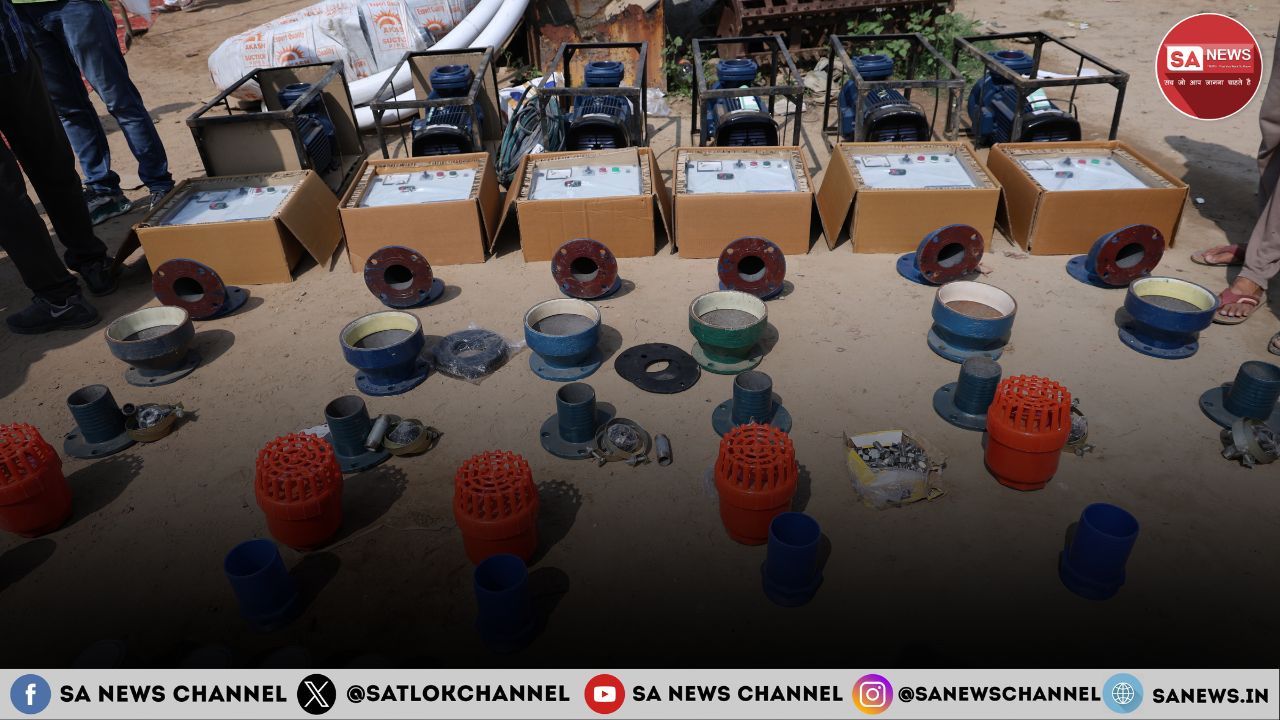
The most remarkable aspect was that everything was fully prepared—starters, bands, nuts, bolts, and wiring were all included. Farmers did not have to arrange anything separately. Sarpanch Rahul said, “We thought it would take at least 7–10 days, but work started the very next day, and water began to drain.”
Ground Reality Changes: When Water Left and Greenery Returned
These machines worked day and night to remove water from the fields. The land that had remained unused for two years came back to life. Today, those same fields are flourishing with green wheat crops. Where there was silence before, now the sound of tractors echoes.
An emotional farmer said, “If the water had not been drained, we could not have sown anything. But now look—the entire land is full of crops.”
Farmers’ Voices: From Pain to Happiness
The reactions of the farmers reflect the real impact of this transformation:
- “Our land was completely destroyed, but now it has turned green again.”
- “For the first time, 80–90% of the land has been cultivated.”
- An elderly farmer said emotionally, “When no one helped us, we found support.”
Farmers believe this was not just technical assistance—it restored their lives.
Social Impact: Prosperity Returns to the Village
The impact of this relief work extended beyond the fields. Laborers who had been unemployed got work again, and their homes saw cooking fires lit once more. The village economy, which had nearly collapsed due to flooding, began to recover.
The biggest change was visible on people’s faces—where there was once worry and despair, now there is satisfaction and happiness. Even the youth feel renewed energy and confidence that difficult situations can be overcome with timely support.
Villagers are now preparing for the future by installing the pipeline permanently to prevent similar issues.
An Example of Service: The Power of Selfless Help
Villagers say that the help provided by Saint Rampal Ji Maharaj Ji was completely selfless. Not only was it free of cost, but it was also given for permanent use by the village.
One farmer said, “Even the government could not help us as much as we received here.” Elderly people and women believe that when everyone else turned away, He supported the village like a father.
A Message of Hope, Unity, and Service By Supreme God Saint Rampal ji Maharaj
This story of Lowa Kalan is not just about one village, but about thousands facing similar struggles. It shows that when systems fail, the spirit of service can bring real change.
Today, not only have crops grown in Lowa Kalan, but hope has also returned. The smiles on farmers’ faces are proof of the significant role played by the blessings of Saint Rampal Ji Maharaj Ji.
One more thing becomes clear from this entire incident: Saint Rampal Ji Maharaj Ji stands for every needy person without any discrimination of caste or class. While many so-called saints today are seen taking money from people, He extends open support to the needy—whether it is medical treatment, building homes, providing education, arranging food, or helping farmers in crisis.
His service is not limited but vast. That is why people consider Him not just a saint but God—and indeed, He is, because such selfless and large-scale help is beyond the capability of an ordinary person.