

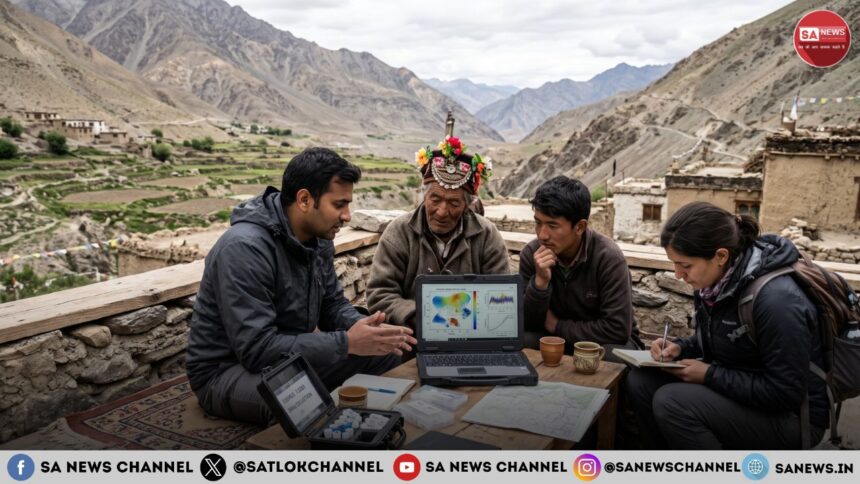
The Himalayas are famous for towering peaks and rich biodiversity, but they also hide a human mystery. Several isolated Himalayan communities, including the Brokpa of Ladakh, the Kalash of Pakistan and the Toto of India’s Eastern Himalayan foothills, have preserved distinctive languages, traditions and ancestral histories. Modern DNA research is now uncovering clues about their migrations and origins, though many questions remain open.
- Key Takeaways
- The Hidden Human History of the Himalayas
- Three Himalayan Communities That Continue to Fascinate Researchers
- 1. The Brokpa: Ladakh’s Distinctive Mountain Community
- 2. The Kalash: An Ancient Population of the Hindu Kush
- The Toto: One of India’s Distinctive Small Tribal Communities
- What Does Modern DNA Research Reveal?
- Why Are Their Origins So Hard to Trace?
- Are These Ancient Communities at Risk of Losing Their Identity?
- What Does the Future Hold for Himalayan Anthropology?
- Looking Beyond Differences to the Purpose of Human Life
- Frequently Asked Questions
Key Takeaways
- The Brokpa, Kalash and Toto are three of the most studied isolated communities in the region.
- Popular claims of descent from Alexander the Great are not supported by scientific evidence.
- Whole-genome studies show the Himalayas were never fully cut off from the rest of Asia.
- Preserving their languages and heritage matters as much as studying their DNA.
The Hidden Human History of the Himalayas
The Himalayas are more than a geographical boundary. Their valleys, passes and river corridors have shaped migration, settlement and cultural exchange for thousands of years. Some communities lived in relative isolation, which helped their languages, traditions and genetic traits survive across generations.
Their backgrounds do not trace to a single origin. They reflect multiple migration routes and centuries of contact between South Asian, Central Asian and East Asian populations.
Also Read: Wildlife Conservation and Tiger Protection: India’s Continuing Battle to Save Its National Animal
A 2025 study in Current Biology offered new insights. Researchers analysed 87 whole-genome sequences from 16 populations across Bhutan, Nepal, India and the Tibetan Plateau, revealing ancient population structure, genetic adaptations and migration patterns.
Three Himalayan Communities That Continue to Fascinate Researchers
1. The Brokpa: Ladakh’s Distinctive Mountain Community
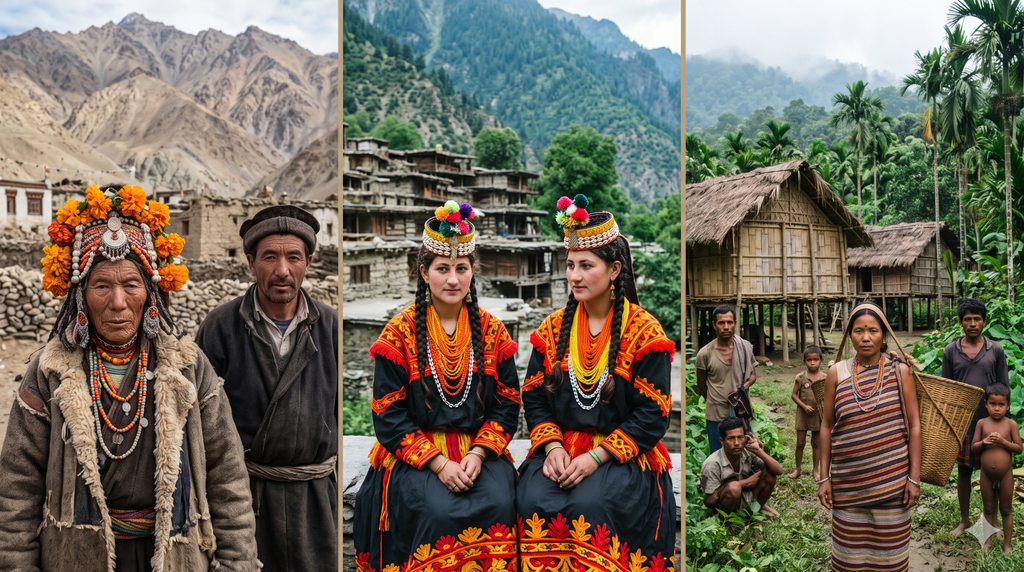
The Brokpa live mainly in the villages of Dah and Hanu in Ladakh. They speak Brokskat, a language usually classified in the Dardic group of the Indo-Aryan family. Their clothing, festivals and farming practices attract researchers and travellers alike.
A popular claim says they descend from Alexander the Great’s soldiers or are a “pure Aryan” population. Scientific evidence does not support either claim.
A 2019 study in Annals of Human Biology examined 75 Brokpa men from the Dah-Hanu region. It found the Y-chromosome haplogroup L1a2 (M357) in 62.7% of them, which points to a more complex ancestry than the popular myths suggest. However, the study looked only at paternal markers in a limited male sample, not the whole community’s ancestry.
2. The Kalash: An Ancient Population of the Hindu Kush
The Kalash live in the remote valleys of Chitral in northwestern Pakistan. Their religious practices, colourful clothing, seasonal festivals and Indo-European language make them one of the region’s most distinctive peoples.
Folk stories link the Kalash to Alexander’s campaigns, but genetic research has not confirmed a Greek ancestry. A 2015 study in The American Journal of Human Genetics, “The Kalash Genetic Isolate: Ancient Divergence, Drift, and Selection,” found evidence of a strong population bottleneck and genetic drift shared with ancient northern Eurasian populations.
This shows how isolation and small population size can shape a community’s genetics over thousands of years. Their full history cannot be reduced to one migration story or one historical figure.
The Toto: One of India’s Distinctive Small Tribal Communities
The Toto live in Totopara, a remote settlement in Alipurduar district, West Bengal, near the Bhutan border. They have kept a distinct language, identity and way of life. The Toto language belongs to the Tibeto-Burman family and is an important part of India’s linguistic diversity.
The 2025 Current Biology study included Toto individuals and found evidence of a historical population bottleneck. Studying small populations like the Toto helps scientists understand human genetic diversity as a whole.
What Does Modern DNA Research Reveal?
Earlier studies relied on limited markers such as Y-chromosome and mitochondrial DNA. Whole-genome sequencing examines far more of the genome and gives a much broader picture of ancestry.
The 2025 study, “Whole-genome sequences provide insights into the formation and adaptation of human populations in the Himalayas,” reported these findings:
- Ancient population structure: Genetic differences among Himalayan populations began more than 10,000 years ago.
- Geographical isolation: Mountain environments influenced migration and created differences between populations.
- Genetic adaptation: Variants linked to high-altitude survival, including the EPAS1 haplotype, were found in high-altitude populations.
- Historical migration: Gene flow ran in both directions between East Asian and Central and South Asian populations.
- Population bottlenecks: Some communities went through historical drops in population size, affecting their genetic diversity.
Together these results show the Himalayas were never completely disconnected from the rest of Asia. Different valleys experienced different degrees of isolation and interaction.
Why Are Their Origins So Hard to Trace?
Geographical isolation. Steep mountains, deep valleys and harsh winters limited travel, so some communities developed distinct cultural and genetic traits.
Limited written records. Many communities preserved history through oral tradition. It is valuable, but it rarely gives precise dates or family relationships.
Genetic mixing over generations. Populations rarely stay unchanged. Migration and marriage gradually add new ancestry, so DNA alone cannot reveal a community’s complete origins.
Cultural identity versus genetics. A community’s identity does not always match its genetic ancestry. The “Aryan” label attached to the Brokpa shows how tourism, identity and history can get mixed with scientific claims. Anthropologists therefore combine language, archaeology, oral history and genetics.
Are These Ancient Communities at Risk of Losing Their Identity?
Education, migration, tourism, new economic opportunities and modern communication are changing traditional life. Younger people increasingly adopt dominant regional languages, putting smaller indigenous languages under pressure. Local festivals, craftsmanship, farming knowledge and oral histories can fade during rapid social change.
Researchers and cultural organisations emphasise language documentation, community-led heritage preservation and responsible tourism. Protecting these communities does not mean blocking development. It means ensuring progress does not force people to give up their heritage.
What Does the Future Hold for Himalayan Anthropology?
Future progress will depend on combining genome sequencing, archaeology and historical linguistics with real community participation. Researchers must respect the privacy, consent and cultural rights of indigenous communities. They must also avoid calling any population “genetically pure” or treating ancestry as a competition between civilisations.
Every community has a complex history. The Brokpa, Kalash and Toto show that even small populations can hold remarkable cultural and historical diversity, and that human history is far more interconnected than popular narratives suggest.
Looking Beyond Differences to the Purpose of Human Life
The Brokpa, Kalash and Toto have different languages, rituals and ancestral stories, yet science shows that all human communities share a deeply interconnected past. No population is “pure”, and no community is above another.
This is the very message of Sant Rampal Ji Maharaj. Teaching in the Kabir tradition, He explains that every human being is a child of the same Supreme Creator, and that caste, culture, language and outward identity cannot divide what God has made one. His Satgyan guides people toward the real purpose of human life: to know the true path of liberation and to live with compassion, honesty and respect for all.
To understand the deeper meaning of life beyond science, read the Gyan Ganga book by Sant Rampal Ji Maharaj.
Frequently Asked Questions
1. Which Himalayan communities have mysterious ancient origins?
The Brokpa of Ladakh, the Kalash of Pakistan and the Toto of India’s Eastern Himalayan foothills are among the distinctive populations whose ancestry still interests researchers.
2. Are the Brokpa descendants of Alexander the Great?
No conclusive scientific evidence supports this. Genetic and anthropological research points to a more complex ancestry.
3. What makes the Kalash genetically unique?
Studies show strong genetic drift, a historical population bottleneck and distinctive ancestral links that set them apart from many neighbouring populations.
4. How does DNA research reveal ancient Himalayan origins?
It helps scientists trace ancestral relationships, migrations, genetic diversity and historical contact between communities.
5. Why is preserving isolated Himalayan communities important?
It protects indigenous languages, traditional knowledge, cultural practices and valuable evidence of human diversity.
6. Where do the Toto people live?
The Toto live in Totopara, in Alipurduar district of West Bengal, near the Bhutan border.