

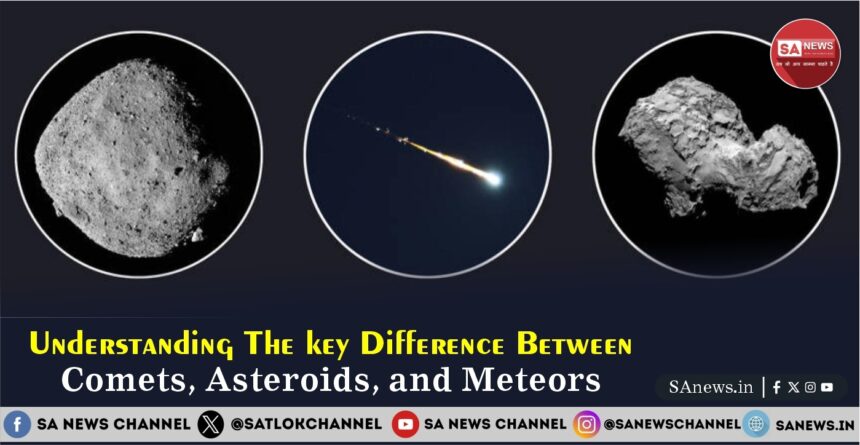
When we gaze into a clear night sky, we often see sparkling stars, distant planets, and sometimes fleeting streaks of light. Many people refer to these streaks as “shooting stars,” but they are far from stars. They are part of a fascinating family of small celestial bodies that orbit the Sun — comets, asteroids, and meteors. Though all three are remnants from the early Solar System, each has its own unique nature, origin, and behavior. Understanding their differences helps us unlock the history of our cosmic neighborhood and why these objects continue to fascinate astronomers and the public alike.
- 1. What Are These Objects? Overview
- 2. Comets — The Icy Wanderers of the Solar System
- 3. Asteroids — The Rocky Relics
- 4. Meteoroids, Meteors, and Meteorites — The Flashing Travelers
- 5. Key Differences Summarized
- 6. Why These Differences Matter
- 7. The grand story of our Solar System
- Wisdom and Wonder: Quotes on Comets, Asteroids, and Meteors
- Mark Twain (on Halley’s Comet)
- Carl Sagan (on comets and cosmic origins)
- Neil deGrasse Tyson (on meteors)
- Fred Whipple (astronomer, on comets)
- Brian Cox (on asteroids and Earth)
- Spiritual Perspective: Creation of the Universe and Nature
- FAQs about The Difference Between Comets, Asteroids, and Meteors
1. What Are These Objects? Overview
All three, comets, asteroids, and meteors; are small objects in space left over from the time the Solar System formed about 4.6 billion years ago. They are part of the debris that did not become planets, moons, or other large bodies when the Sun and planets were born. Yet despite their small sizes, they carry valuable clues about how our world and solar neighborhood came to be.
However, they differ significantly in composition, structure, location, and behavior. Comets are icy and often spectacular, asteroids are rocky and varied, and meteors are the fleeting flashes we see when fragments blaze through Earth’s atmosphere.
2. Comets — The Icy Wanderers of the Solar System
Definition and Composition
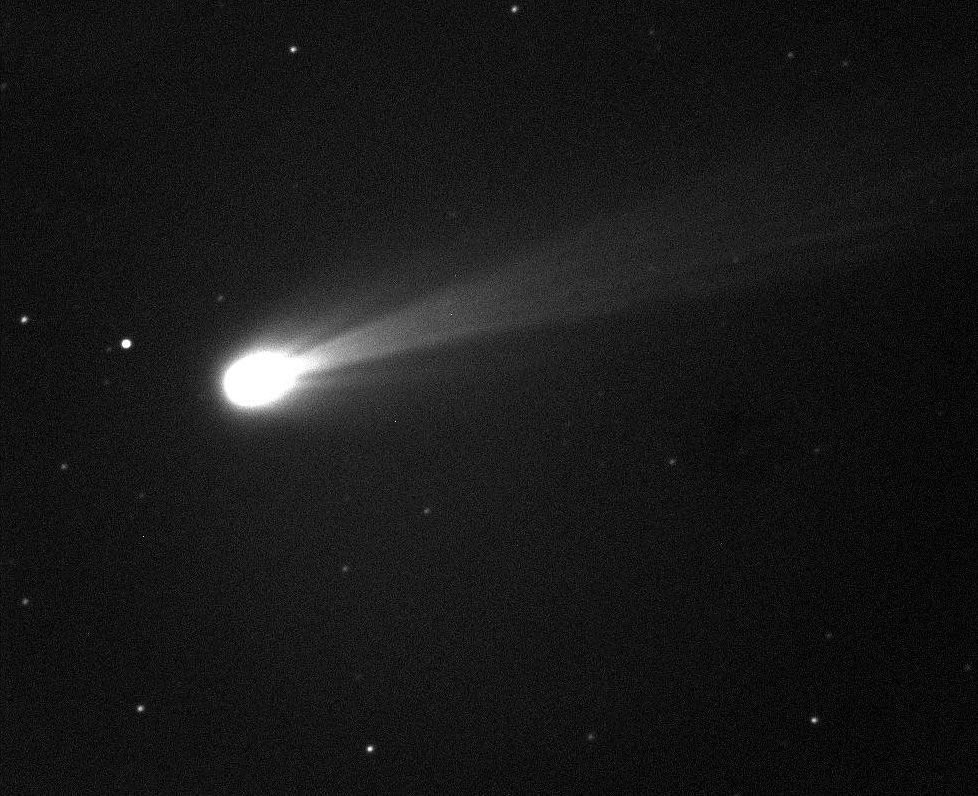
A comet is a small Solar System body composed primarily of ice, dust, and rocky material. These objects are sometimes described as “dirty snowballs” because their solid cores (called nuclei) contain a mix of frozen water, carbon dioxide, methane, ammonia ices, and dust particles.
When a comet approaches the Sun, the heat causes these volatile ices to sublimate (turn directly from solid to gas). This release of gas and dust creates a glowing atmosphere around the nucleus called a coma, and often a long, streaming tail that can stretch millions of kilometers through space. Solar radiation and solar wind push the gas and dust away from the comet, forming two kinds of tails — a gas (ion) tail and a dust tail, each interacting differently with the Sun’s energy.
Origins and Orbits
Comets originate mainly from two distant regions of the Solar System:
1. Kuiper Belt
A disc-like region beyond Neptune where shorter-period comets (returning close to the Sun within decades or centuries) come from.
2. Oort Cloud
A vast spherical shell surrounding the Solar System at great distances, the source of long-period comets with orbits lasting thousands or even millions of years.
Because of these distant origins, comets often have highly elongated orbits, bringing them very close to the Sun at one end of their journey and far into cold space at the other.
Famous Examples
Some of the most well-known comets include:
- Comet Halley, visible from Earth about every 75 years.
- Comet NEOWISE, which was a spectacular sight in 2020.
- Comet 67P/Churyumov–Gerasimenko, visited by the European Space Agency’s Rosetta mission.
Scientific Importance
Comets are scientifically invaluable. Because they formed far from the Sun and have remained largely unchanged, they contain pristine material from the early Solar System. Studying them helps scientists understand how the planets formed and what ingredients might have been delivered to early Earth, possibly even water and organic compounds vital for life.
3. Asteroids — The Rocky Relics
Definition and Composition
An asteroid is a small, rocky object that orbits the Sun, made mostly of rock and metal, and lacking the substantial ice content found in comets. They are often referred to as minor planets or planetesimals, leftover building blocks that never became full-fledged planets.
Asteroids contain a wide range of materials. Some are composed of rocky silicates, others contain significant metallic iron and nickel, and some are mixtures of rock and metal. Their surfaces are typically pitted and irregular due to impacts with other objects over billions of years.
Where Are Asteroids Found?
The most famous concentration of asteroids is the Main Asteroid Belt, a broad region between the orbits of Mars and Jupiter. This belt formed because Jupiter’s strong gravity prevented these rocky fragments from coalescing into a planet billions of years ago.
Asteroids can also be found in other parts of the Solar System. Some share Earth’s orbit as co-orbitals, others are found near other planets, and a class known as Near-Earth Asteroids (NEAs) pass close to our planet’s orbit. Astronomers monitor these especially closely because of their potential impact risks.
Size and Diversity
Asteroids range from small rocks just meters across to colossal bodies hundreds of kilometers in diameter. The largest and most famous asteroid — Ceres — is nearly 950 kilometers (590 miles) across and is large enough to be classified as a dwarf planet.
Missions and Exploration
Several spacecraft have visited or even sampled asteroids, bringing back material for laboratory study:
- OSIRIS-REx returned samples from asteroid Bennu.
- Dawn visited Vesta and Ceres.
- Lucy is exploring Trojan asteroids near Jupiter.
These missions help scientists understand how asteroids formed, their composition, and what they reveal about the early Solar System.
4. Meteoroids, Meteors, and Meteorites — The Flashing Travelers
The term meteor is often confused or used interchangeably with asteroids or comets, but it actually refers to a different phenomenon:
Meteoroids — The Small Debris
A meteoroid is a small piece of rock or metal in space that is smaller than an asteroid but larger than dust grains. These fragments often originate when asteroids collide or when comets shed debris as they approach the Sun.
Meteoroids can vary greatly in size, from microscopic grains to rocks meters across.
Meteors — Shooting Stars
When a meteoroid enters Earth’s atmosphere at high speed, friction with the air causes it to heat up and vaporize, producing a streak of light across the sky known as a meteor. This vivid flash is often called a shooting star, though it’s unrelated to actual stars.
Meteor showers occur when Earth passes through a trail of debris left by a comet. During these events, observers can see dozens or even hundreds of meteors per hour as many meteoroids enter the atmosphere in a short span.
Meteorites — Visitors on the Ground
If a meteoroid survives its fiery plunge and lands on Earth’s surface, the remaining solid fragment is called a meteorite. These pieces are immensely valuable to scientists because they provide direct samples of materials from other parts of the Solar System.
5. Key Differences Summarized
| Object | Composition | Location | Key Feature |
| Comet | Ice, dust, rocky particles | Orbits Sun, from Kuiper Belt or Oort Cloud | Visible coma and tail when close to Sun |
| Asteroid | Rock and metal | Orbits Sun, mainly in Main Asteroid Belt | Rocky, without large tails |
| Meteoroid/Meteor/Meteorite | Fragment of rock/metal | Space or Earth’s atmosphere/ground | Meteor is the bright streak; meteorite is remnant on Earth |
This table highlights how composition and behavior differentiate these cosmic objects. Comets shine with dramatic tails, asteroids remain rocky and silent in space, and meteors are transient light trails caused by tiny fragments burning in the atmosphere.
6. Why These Differences Matter
Understanding Solar System History
Comets, asteroids, and meteoroids are not just celestial curiosities. They are time capsules from the earliest days of the Solar System. Because they have changed little, their materials tell scientists about the building blocks that formed planets and shaped our cosmic environment.
Assessing Impact Risks
Studying these objects also helps us predict and mitigate potential threats. Large asteroids crossing Earth’s orbit pose impact risks, and space agencies around the world track Near-Earth Objects (NEOs) to prepare possible deflection strategies.
Exploring Resources and Future Space Travel
Asteroids contain metals and minerals that could be valuable for future space missions. Some scientists and companies are exploring the idea of asteroid mining as humanity expands its presence beyond Earth.
7. The grand story of our Solar System
Comets, asteroids, and meteors are like scattered pages from an ancient book. Each holds unique information about the cosmic environment from which our planets, including Earth, emerged. Their differences are not just scientific curiosities; they are essential keys to understanding where we came from and how the Solar System continues to evolve.
Comets dazzle with icy tails, asteroids quietly trace their orbits, and meteors paint brilliant streaks of light across night skies. Together, they remind us that even the smallest objects in space can have enormous significance.
Also Read: Geminids Meteor Shower 2025: A Celestial Spectacle Lighting Up December Skies
Wisdom and Wonder: Quotes on Comets, Asteroids, and Meteors
Mark Twain (on Halley’s Comet)
“I came in with Halley’s Comet in 1835. It is coming again next year, and I expect to go out with it.”
Mark Twain was born during Halley’s Comet’s appearance and died shortly after it returned in 1910, making this quote both poetic and historically meaningful.
Carl Sagan (on comets and cosmic origins)
“Comets may be the source of water and organic molecules that made life possible on Earth.”
Carl Sagan often emphasized the role of comets as carriers of life’s raw ingredients across the universe.
Neil deGrasse Tyson (on meteors)
“When a meteoroid enters Earth’s atmosphere, it becomes a meteor. The light is not the rock burning, but the air glowing.”
This quote reflects his clear scientific explanation of what people commonly call “shooting stars.”
Fred Whipple (astronomer, on comets)
“A comet is like a dirty snowball — ice mixed with dust and rocky material.”
Fred Whipple’s description remains one of the most famous and accurate explanations of comet structure.
Brian Cox (on asteroids and Earth)
“Asteroids are reminders that Earth exists in a dynamic and sometimes dangerous cosmic environment.”
This quote highlights why studying asteroids is important for planetary safety and awareness.
Spiritual Perspective: Creation of the Universe and Nature
According to the spiritual knowledge given by Sant Rampal Ji Maharaj Ji, the creation of nature is not accidental nor self-originated. The vast universe, including stars, planets, comets, asteroids, and all celestial bodies, has been created in a well-defined order by the Supreme God Kabir. Just as scientific studies show that comets, asteroids, and meteors follow fixed laws and paths, spiritual scriptures explain that these laws were established by a higher, conscious power.
Sant Rampal Ji Maharaj Ji explains that the material universe is temporary and operates under time, decay, and destruction. Objects like asteroids colliding, meteors burning in the atmosphere, and comets losing mass over time clearly demonstrate this impermanence. Science observes these processes, while spiritual knowledge reveals their deeper purpose, to remind humanity that nothing in this creation is eternal.
The Supreme God created nature as a structured system, where every element has a role, yet none provides permanent peace. Human life is granted not merely to observe the wonders of space, but to understand the truth beyond it. By recognizing the limited nature of the material universe, one is inspired to seek true devotion and knowledge, which leads beyond destruction and change toward the eternal realm described in authentic scriptures.
FAQs about The Difference Between Comets, Asteroids, and Meteors
1. Are comets and asteroids the same thing?
No, comets and asteroids are different. Comets are rich in ice and dust and form glowing tails when they approach the Sun, while asteroids are mostly made of rock and metal and do not produce tails. Their compositions and places of origin in the Solar System are also different.
2. Why do comets have tails but asteroids do not?
Comets develop tails because their icy surfaces heat up near the Sun, releasing gas and dust. This material is pushed away by sunlight and solar wind, forming long, visible tails. Asteroids lack significant ice, so they do not release gas or form tails.
3. Is a meteor the same as a shooting star?
Yes, the term “shooting star” is a common name for a meteor. It is the bright streak of light created when a small space rock, called a meteoroid, burns up while entering Earth’s atmosphere. It has nothing to do with real stars.
4. Can asteroids or comets hit Earth?
Yes, both asteroids and comets can potentially collide with Earth, although large impacts are rare. Space agencies actively monitor near-Earth objects to track their paths and assess any possible risk to our planet.
5. What is the difference between a meteor and a meteorite?
A meteor is the flash of light seen when a meteoroid enters Earth’s atmosphere and burns up. If part of that object survives the fall and reaches the ground, it is then called a meteorite.