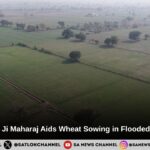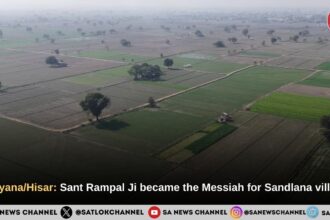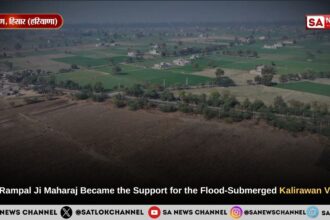


Ladwi village, located in the Mandi Adampur Tehsil of Hisar District, Haryana, remained in a submerged state for approximately three months.
- Technical Assistance Provided by Sant Rampal Ji Maharaj
- Operational Execution and Agricultural Restoration
- Summary of Logistics and Financial Relief in Ladwi
- Individual Impacts and Farmer Testimonials
- Infrastructure Sustainability and Future Preparedness
- Socio-Economic Stabilization and Livelihood Recovery in Ladwi
- Successful Reclamation of 400 Acres and Restoration of Local Economy
The environmental crisis resulted in the local sports stadium being covered by 12 feet of water, resembling a lake, while thousands of acres of agricultural land were waterlogged with stagnant water reaching depths of 5 to 6 feet.
Residents reported that for a period of two months, they approached various government ministers and officials but received only verbal assurances without effective logistical support.
The small-scale assistance provided by the administration, such as limited piping for individual plots, proved insufficient for the total volume of water.
Technical Assistance Provided by Sant Rampal Ji Maharaj
Following a formal request from the Ladwi village panchayat, Sant Rampal Ji Maharaj provided substantial technical resources through the Annapurna Muhim. Within a few days of the petition, a relief convoy arrived at the village, where residents received the equipment with traditional ceremonies, including the use of drums and entering the area barefoot.
Sant Rampal Ji Maharaj provided the following items through the Annapurna Muhim:
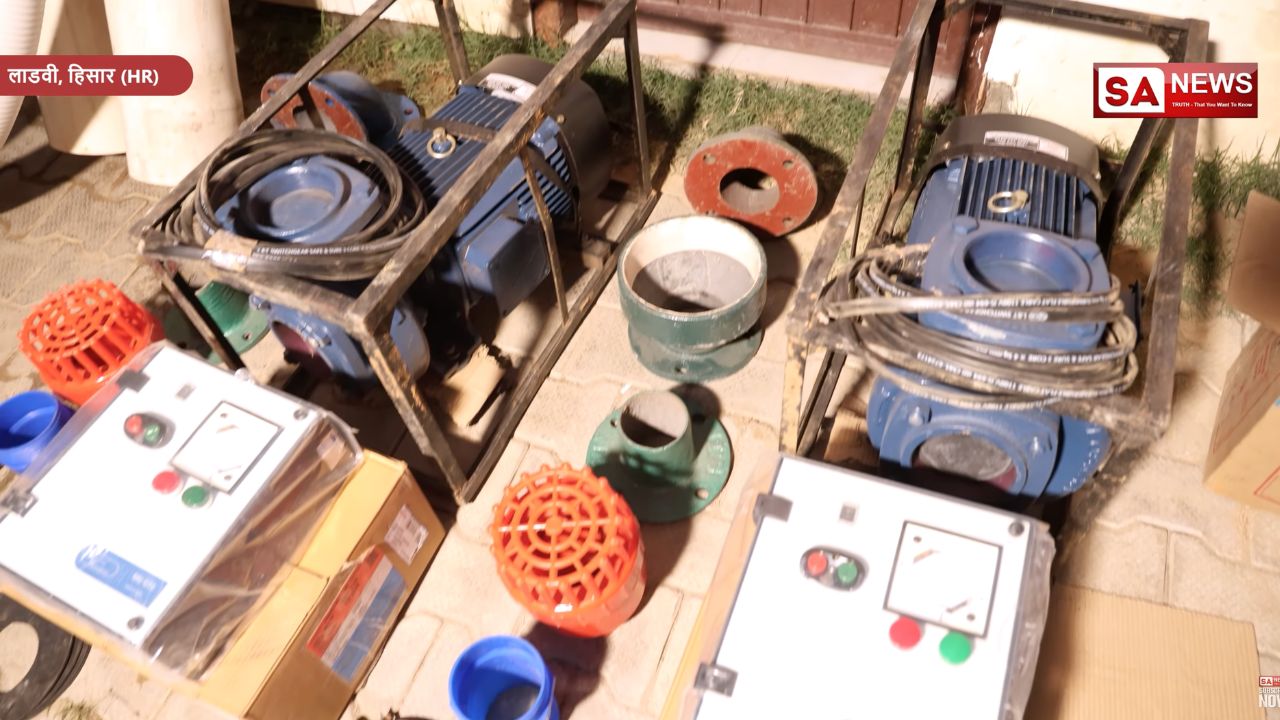
- 11,000 feet of high-quality 8-inch diameter pipeline.
- Two powerful 10 Horsepower (HP) water pumping motors.
- All necessary operational accessories, including industrial starters, electrical cables, suction pipes (sundia), and basic hardware such as nuts and bolts.
The estimated financial value of this donated equipment ranges between ₹15 lakh and ₹20 lakh. The provision of these resources ensured that the village did not have to incur any additional expenditure for the drainage operation.
Operational Execution and Agricultural Restoration
The drainage operation, supported by the equipment from Sant Rampal Ji Maharaj, lasted between 10 to 15 days. The 11,000-foot pipeline was deployed over a distance of approximately 3 kilometers to transfer the standing water into the canal system. This technical intervention led to the following results:
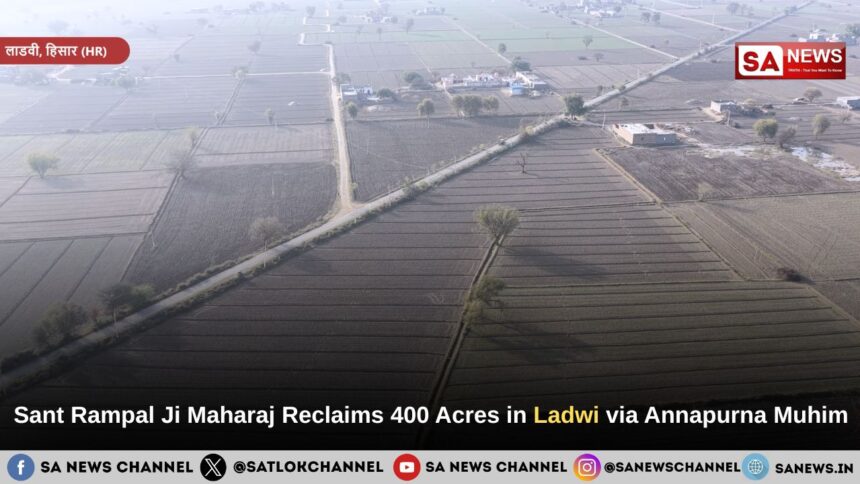
- Land Reclamation: Approximately 400 acres of previously submerged land were cleared of water.
- Wheat Sowing: In the most affected 150-acre zone, wheat sowing has been completed, and the crops have begun to sprout.
- Infrastructure Recovery: The BPL (Below Poverty Line) colony and the Ramdev Cricket Ground, which were completely underwater, are now dry and functional.
- Residential Safety: The rapid removal of water prevented the collapse of residential structures and “dhani” (farmhouses) that had developed structural cracks and dampness.
Summary of Logistics and Financial Relief in Ladwi
| Category | Details and Quantitative Data |
| Pipeline Length | 11,000 Feet (8-inch diameter) |
| Pumping Capacity | 2 Motors (10 HP each) |
| Response Duration | 10 to 15 days of continuous pumping |
| Land Reclaimed | ~400 Acres total; ~150 Acres primary sowing |
| Equipment Value | ₹15 Lakh to ₹20 Lakh |
| Economic Mitigation | Saved estimated ₹5 Crore in potential crop loss |
| Project Distance | 3-Kilometer drainage line to the canal |
Individual Impacts and Farmer Testimonials
The intervention by Sant Rampal Ji Maharaj directly impacted the financial stability of local farmers and residents:
- Kuldeep Singh: A farmer who had leased 10 acres of land at a rate of ₹40,000 per acre. He stated that without the drainage, he would have faced a total loss on his investment and fallen into significant debt.
- Ram Kumar: His farmhouse was submerged under 3 feet of water, forcing his family to take refuge in a village school and move their belongings to rooftops. The drainage allowed him to return to his home and resume farming.
- Mohan Lal: A local vegetable vendor noted that previously the area had no dry ground for walking, but now vegetable cultivation has resumed, and local produce is being sold again.
- Mahendra Singh (Numberdar): He confirmed that 99% of the village land, which was underwater, has now been sown with crops, with only a few acres remaining in the final stages of drying.
- Ramesh Bidasra: He estimated that the village would have suffered a loss of approximately ₹5 crore if the wheat sowing window had been missed due to administrative delays.
Infrastructure Sustainability and Future Preparedness
The Ladwi village panchayat and local residents have formulated a plan to ensure the long-term utility of the resources provided by Sant Rampal Ji Maharaj.
They intend to collect communal funds to permanently install the 11,000 feet of piping underground.
This permanent drainage infrastructure is designed to provide an immediate solution for any future heavy rainfall or flood events, preventing the recurrence of a three-month waterlogging crisis.
Socio-Economic Stabilization and Livelihood Recovery in Ladwi
The successful drainage of 400 acres has restored the primary economic engine of Ladwi village.
Residents emphasized that the stagnant water had become a health hazard and was threatening the foundations of their homes. Sant Rampal Ji Maharaj, through the Annapurna Muhim, provided a comprehensive solution that included even the smallest mechanical components, ensuring no operational delays.
The sight of tractors operating in fields that were 6 feet deep in water a month prior serves as a physical record of the recovery.
Successful Reclamation of 400 Acres and Restoration of Local Economy
The technical intervention by Sant Rampal Ji Maharaj has resulted in the total reclamation of the agricultural landscape in Ladwi. By providing 11,000 feet of pipeline and high-capacity motors, the immediate threat of a ₹5 crore economic loss was neutralized.
The transition from a 12-foot deep “lake” in the stadium to sprouted wheat fields confirms the restoration of the village’s functional status.
This operation has secured the food supply and financial future of the 95% of the population dependent on these lands for their survival.