The United States has launched the most sweeping overhaul of its H-1B skilled worker visa programme in more than a decade. The Department of Homeland Security has confirmed the end of the long-standing lottery system, replacing it with a wage and skill weighted selection model that prioritises higher-paid and higher-skilled foreign workers.
- Key Takeaways: US H-1B Visa Overhaul
- H-1B Lottery System Formally Abandoned
- Trump Administration’s Rationale: Wages and Alleged Misuse
- $100,000 Annual Fee Introduced as Eligibility Condition
- Expanded Social-Media Vetting for Applicants
- Implementation Changes: Forms, Filings and Registration
- Significance for Indian Professionals and Employers
- Corporate and Geographic Concentration
- Redefining the H-1B Programme
- The Illusion of Stability in a Changing World
- The Divine Solution Beyond Human Metrics
- FAQs on US H-1B Visa Overhaul
Alongside this structural shift, the Trump administration has enforced a $100,000 annual fee per visa for certain employers and expanded social-media vetting for applicants and dependents. While statutory visa caps remain unchanged, the reforms collectively redefine how foreign professional talent is selected, priced, and scrutinised in the US, with implications for technology firms and Indian professionals.
Key Takeaways: US H-1B Visa Overhaul
- The US replaces the H-1B lottery with a wage-weighted selection system
- The final rule takes effect on 27 February 2026
- The new process governs the FY2027 H-1B cap registration season
- Employers face an additional $100,000 annual fee per visa
- Social-media vetting expands for H-1B applicants and H-4 dependents
- Visa caps remain 65,000 regular + 20,000 master’s quota
- Indian professionals form one of the largest H-1B beneficiary groups
H-1B Lottery System Formally Abandoned
The Department of Homeland Security said it is replacing the long-standing random lottery system for H-1B work visas with a new approach that prioritises skilled, higher-paid foreign workers. The final rule, issued through US Citizenship and Immigration Services (USCIS), formally abandons the lottery model that has governed the programme for decades.
Read More: Passport Seva 2.0: India Launches e-Passports for Faster, Safer Travel
The rule takes effect on 27 February 2026 and will govern the upcoming H-1B cap registration season for fiscal year 2027. Under the revised framework, wage levels and job characteristics will directly influence an applicant’s probability of selection, marking a decisive break from random allocation.
According to the Department of Homeland Security, approximately 85,000 H-1B visas are allocated annually under the programme, including the statutory cap of 65,000 regular visas and an additional 20,000 for individuals with a master’s degree or higher.
Trump Administration’s Rationale: Wages and Alleged Misuse
US officials have framed the policy shift as a corrective response to what they describe as misuse of the existing lottery system.
USCIS spokesman Matthew Tragesser said:
“The existing random selection process of H-1B registrations was exploited and abused by US employers who were primarily seeking to import foreign workers at lower wages than they would pay American workers.”
(Source: USCIS News Release dated 23/12/2025)
The Trump administration argues that linking selection probabilities to compensation levels better aligns the programme with labour-market needs and discourages wage undercutting. The new system is designed to increase the likelihood that visas are allocated to higher-skilled and higher-paid foreign workers.
$100,000 Annual Fee Introduced as Eligibility Condition
Separate from the December decision on the lottery system, President Donald Trump declared earlier in 2025 that employers sponsoring certain H-1B workers would be required to pay an additional $100,000 annual fee per visa.
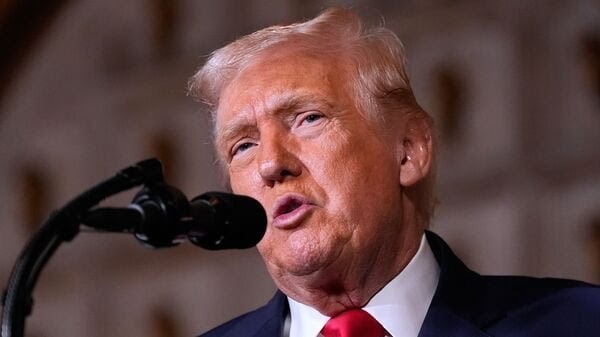
The measure was introduced through a presidential proclamation and later reinforced through USCIS guidance. It has been positioned as a condition of eligibility, not a routine filing charge.
A Department of Homeland Security press release described —
“It is in line with other key changes the administration has made, such as the Presidential Proclamation that requires employers to pay an additional $100,000 per visa as a condition of eligibility.”
Read More: Trump Introduces $100,000 Annual Fee for H1-B Visa in Major Immigration Overhaul
The fee has triggered legal challenges from business groups. However, a federal judge rejected an initial attempt to block the measure in late December.
Expanded Social-Media Vetting for Applicants
Alongside structural and financial reforms, the Trump administration has expanded vetting requirements for visa applicants.
In December 2025, the US State Department instructed consular officers to widen social-media and online-presence checks for H-1B applicants and their H-4 dependents. While social-media screening has existed in some form since Trump’s first term, immigration lawyers say the latest guidance significantly broadens its routine application.
The expanded checks increase scrutiny during visa interviews and may lengthen processing timelines, according to practitioners familiar with the updated procedures.
Implementation Changes: Forms, Filings and Registration
USCIS has updated guidance, forms and operational rules to align with the new selection framework.
- Updates apply to Form I-129, the electronic registration system, and supporting documentation
- The USCIS electronic registration page explicitly states that the final rule takes effect on 27 February 2026
- Employers are being advised to review offered wages, job classifications and documentation strategies
Despite the changes, the statutory numerical caps remain unchanged, with 65,000 regular visas and 20,000 reserved for US Advanced degree holders.
Significance for Indian Professionals and Employers
The H-1B programme is used extensively by American technology companies to employ foreign workers. Indian professionals, including technology workers and physicians, form one of the largest groups of H-1B visa holders.
The visa system has long been a critical pathway for young Indian professionals seeking career opportunities in the US. However, the new wage-based criteria are expected to make it harder for entry-level professionals to qualify.
Supporters of the programme say it remains an important pathway for hiring healthcare workers and educators, driving innovation and economic growth while helping employers fill specialised roles.
Read More: How to Apply for a Schengen Visa: A Simple Guide for Indian Travelers
Critics argue that visas often go to entry-level positions rather than senior roles requiring specialised skills. They also claim companies can pay lower wages by classifying jobs at the lowest skill levels, even when workers have more experience.
Corporate and Geographic Concentration
Historically, the H-1B programme has been dominated by technology and IT services firms.
In the most recent approvals:
- Amazon emerged as the largest recipient with more than 10,000 visas
- Other major recipients included Tata Consultancy Services, Microsoft, Apple, and Google
Geographically, California remains the largest hub for H-1B workers, reflecting its concentration of technology firms and research institutions.
Redefining the H-1B Programme
The combined reforms, ending the lottery, introducing a wage-weighted selection process, enforcing a $100,000 annual fee, and expanding vetting, represent one of the most far-reaching resets of the H-1B programme in over a decade. While the statutory framework remains intact, the operational and economic thresholds for participation have shifted significantly, altering how employers and foreign professionals engage with the US skilled-migration system.
The Illusion of Stability in a Changing World
The drastic shift in the H-1B visa program—from a random lottery to a wage-based selection with a $100,000 fee — has left many professionals in a state of deep uncertainty . While humanity invests immense effort into securing these “golden tickets” for a better life, we must ask: Is true security ever found in systems governed by shifting man-made laws? Why does the pursuit of worldly success always seem to come with a new set of hurdles and hidden costs?.
The Divine Solution Beyond Human Metrics
Jagatguru Tatvdarshi Sant Rampal Ji Maharaj reveals that our successes and failures are not merely products of policy, but of our unseen karmic account. No matter how high the wage or how steep the fee, worldly achievements remain temporary and subject to decay. Sant Rampal Ji Maharaj provides the only authentic method of worship that can dissolve karmic debts and grant lasting peace. As Sant Garibdas Ji warns, everything we see is a deception; true stability lies only in returning to our eternal home, Satlok.
“Drishti pade so dhokha re. Khand pind brahmand chalenge thir nahi rahsi loka re. thir nahi rahsi loka re.”
Stop chasing a mirage and discover your true purpose today.
For more information, visit our:
Website: www.jagatgururampalji.org
YouTube: Sant Rampal Ji Maharaj
Facebook: Spiritual Leader Saint Rampal Ji
X (Twitter): @SaintRampalJiM
FAQs on US H-1B Visa Overhaul
1. When does the new H-1B selection system take effect?
The final rule takes effect on 27 February 2026.
2. Is the H-1B lottery system completely removed?
Yes, the random lottery is replaced by a wage-weighted selection process.
3. What is the new H-1B visa fee announced by Trump?
Certain employers must pay an additional $100,000 annually per visa.
4. Are H-1B visa caps changing under the new rule?
No, caps remain 65,000 regular plus 20,000 for US Advanced degree holders.
5. Who are the largest users of H-1B visas?
Technology firms such as Amazon, TCS, Microsoft, Apple and Google.