



Keeping your home safe for babies is very important. As they start to move around, it’s key to child safety. This means getting rid of dangers and making sure things are secure.
- How to Baby-Proof Your Home: A Room-by-Room Guide
- Understanding the Importance of Baby-Proofing
- Essential Baby-Proofing Tools and Products
- General Baby-Proofing Principles for Every Room
- How to Baby-Proof Your Home: A Room-by-Room Guide
- Creating a Baby-Proofing Checklist
- Prioritizing Safety Measures
- Involving Family Members in Safety Protocols
- Living Room Safety Strategies
- Entertainment Center and Electronics Safety
- Securing Furniture and Decor
- Bookshelf and Display Cabinet Security
- Coffee Table and Side Table Hazards
- Creating Safe Play Areas
- Kitchen Safety Measures for Babies and Toddlers
- Baby-Proofing the Bathroom
- Creating a Safe Nursery Environment
- Special Considerations for Indian Homes
- Dealing with Power Outages and Inverters
- Monsoon Season Safety Precautions
- Securing Traditional Indian Furniture
- Safety Around Household Help and Extended Family
- Outdoor Areas and Balcony Safety
- Conclusion: Maintaining a Baby-Safe Home
- FAQ
- What is the most important step in baby-proofing my home?
- At what age should I start baby-proofing my home?
- What are some essential baby-proofing products I should have?
- How can I secure heavy furniture and appliances to prevent tip-overs?
- Are there any specific safety measures I should take in the kitchen?
- How can I prevent my baby from accessing the bathroom?
- What are some common hazards in the nursery that I should be aware of?
- How can I baby-proof my balcony or outdoor area?
- Are there any specific baby-proofing products designed for Indian homes?
- How frequently should I assess and revise my baby-proofing strategies?
How to Baby-Proof Your Home: A Room-by-Room Guide
Baby-proofing is more than just putting up safety gates. It’s about making your whole home safe. A room-by-room guide shows you how to find and fix risks. This makes a safe place for your baby to grow.
By taking a careful approach to baby-proofing, you can lower the chance of accidents. This guide will show you how to make a safe and loving space for your baby.
Key Takeaways
- Identify possible dangers in each room
- Secure furniture and appliances to prevent tip-overs
- Install safety gates at stairs and doors
- Protect electrical outlets and cords
- Remove harmful materials and objects
Understanding the Importance of Baby-Proofing
The journey to a baby-safe home starts with knowing why baby-proofing is key. As babies move around, they can find danger if homes aren’t safe.
Common Household Hazards for Babies
Babies love to explore, which can lead to danger. Hazards include electrical outlets, sharp corners, and toxic substances. The right safety steps can help avoid these dangers.
When to Start Baby-Proofing
Start baby-proofing before your baby can move around. Preparation is key for a safe space. Begin around 6 to 12 months, when babies start crawling. But, it’s good to check your home for dangers early on.
By understanding baby-proofing’s importance and acting early, you make a safe and nurturing environment for your child.
Essential Baby-Proofing Tools and Products
Baby-proofing your home is key to keeping your infant safe. You’ll need various tools and products to make your home safe. Knowing the must-have safety items is important.
Must-Have Safety Items
Several key safety products are needed to baby-proof your home. These include:
Safety Gates and Barriers
Safety gates block stairs and certain rooms. Make sure they are sturdy and easy to install.
Cabinet Locks and Latches
Cabinet locks and latches keep babies away from harmful substances and objects in cabinets.
Outlet Covers and Cord Protectors
Outlet covers and cord protectors stop electrical shock and entanglement hazards.
Optional but Helpful Products
There are also optional products that can make your home safer.
Corner Guards and Edge Protectors
Corner guards and edge protectors protect against injuries from sharp furniture corners.
Edit
Delete
Monitoring devices let you watch your baby, even when you’re not there.
Doorknob Covers and Door Locks
Doorknob covers and door locks stop babies from entering rooms or accessing certain areas.
General Baby-Proofing Principles for Every Room
Baby-proofing is not just about one room. It’s about making every room safe for babies. Parents need to think about dangers that could be anywhere.
Electrical Safety Measures
Electrical safety is key. Use safety covers on outlets and keep cords away from babies. Outlet covers stop electrical shock. Also, hide cords with organizers or furniture to stop babies from chewing on them.
Furniture Anchoring and Corner Protection
Securing furniture is important. Heavy items can tip over, hurting babies. Anti-tip brackets keep them stable. Corner protectors also help by cushioning falls.
Door and Window Safety
Doors and windows must be safe. Use door stops to avoid pinched fingers. Window guards stop falls. Make sure doors and windows are locked tight to keep babies safe.
| Safety Measure | Purpose | Implementation |
| Outlet Covers | Prevent Electrical Shock | Install on all outlets |
| Furniture Anchoring | Prevent Furniture Tip-Overs | Use anti-tip brackets |
| Corner Protectors | Cushion Falls | Apply on sharp edges |
| Door Stops | Prevent Finger Pinching | Install on doors |
| Window Guards | Prevent Falls | Install on windows |
By following these baby-proofing tips, parents can make their home safer. This helps babies grow and explore safely.
How to Baby-Proof Your Home: A Room-by-Room Guide
To make your home safe for babies, check each room for dangers. Think about what each room needs to be safe. Then, add the right safety steps.
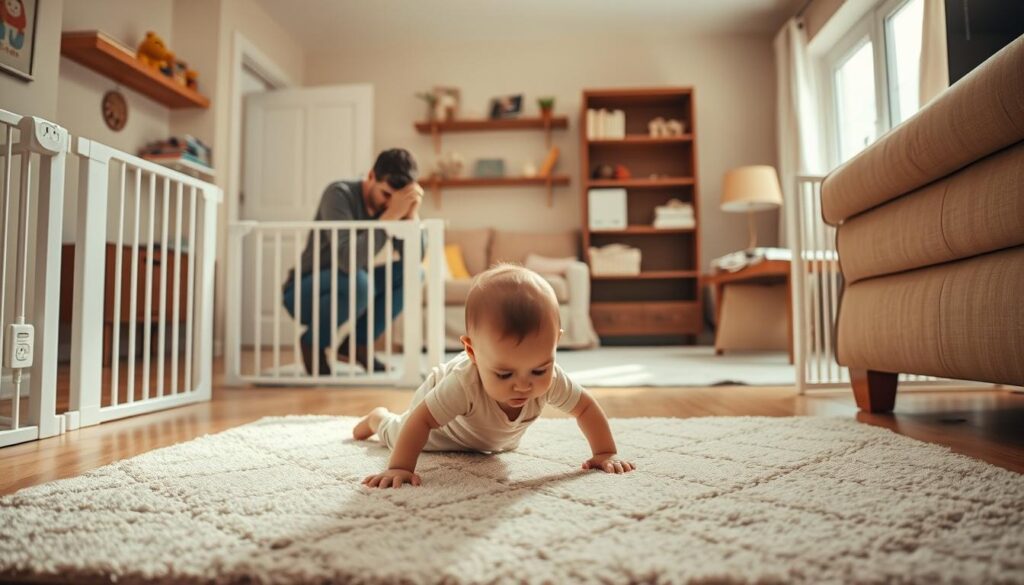
baby-proofing your home
Creating a Baby-Proofing Checklist
First, make a detailed checklist for baby-proofing. It should cover things like securing furniture and putting up safety gates. Also, don’t forget to cover electrical outlets.
Here’s what your checklist might have:
- Securing heavy furniture and appliances to walls
- Installing safety gates at stairs and doorways
- Protecting electrical outlets with safety covers
- Padding sharp corners on furniture
Prioritizing Safety Measures
Not all safety steps are the same. Focus on the biggest dangers first. These might include loose furniture or open electrical outlets.
For example, if your baby loves the living room, make sure furniture is stable. Also, keep electrical cords away from them.
Involving Family Members in Safety Protocols
Baby-proofing is a team effort. Everyone in the family should help keep the home safe. Teach them why safety is important and give them tasks.
Also Read: South Korea’s Baby Bust: The World’s Lowest Birth Rate Puts Its Future at Risk
Together, you can keep your home a baby-safe home as your baby grows and discovers.
Living Room Safety Strategies
The living room is the heart of the home. But for babies, it can be dangerous if not baby-proofed. It’s important to make it safe for your little ones.
Entertainment Center and Electronics Safety
Entertainment centers and electronics can be risky for babies. They can be heavy and cause electrical shock. Securing these items is key.
Use anti-tip brackets or straps to keep TVs and entertainment centers from falling. Also, manage cords and wires. Use cord organizers or protectors to avoid electrical dangers.
Securing Furniture and Decor
Furniture and decor can be dangerous too. Heavy furniture can fall over. Decorative items can be sharp or breakable.
Bookshelf and Display Cabinet Security
Bookshelves and display cabinets need to be anchored to walls. This stops them from tipping. Remove heavy or breakable items from lower shelves that your baby can reach.
Coffee Table and Side Table Hazards
Coffee tables and side tables have sharp edges. Use edge protectors or corner guards to make them safer. If you can, take away any dangerous items from these surfaces.
Creating Safe Play Areas
Make a safe play area in the living room. Use a playpen or a gated area to keep your baby safe. Make sure this area is free from dangers like electrical outlets, sharp objects, and heavy furniture.
By following these steps, you can make your living room safer. This will help your baby grow and explore in a safe space.
Kitchen Safety Measures for Babies and Toddlers
Kitchen safety is very important for families with young kids. The kitchen has many dangers like sharp objects and hot surfaces. To keep it safe for babies and toddlers, we need to childproof it well.
kitchen safety measures
Cabinet and Drawer Locks
Securing cabinets and drawers is a key step in kitchen safety. Cabinet and drawer locks stop kids from getting to harmful things. There are many types of locks, like adhesive, magnetic, and slide locks.
Choosing the right lock depends on the cabinet or drawer and how much security you need.
- Adhesive locks are easy to put on and work for most cabinets.
- Magnetic locks are very secure and are often used on fridge doors.
- Slide locks are simple and good for drawers.
Appliance Safety
Kitchen appliances can be very dangerous for young kids. We need to make them safe.
Stove and Oven Guards
Stove guards stop kids from turning on burners or getting too close to hot surfaces. Oven guards or locks keep the oven door shut, so kids can’t get hurt or trapped.
Refrigerator and Microwave Precautions
Refrigerator locks keep kids from getting into harmful things inside. Teaching kids about the dangers of microwaves and making sure they can’t use it alone is important for microwave safety.
Preventing Access to Harmful Substances
The kitchen has many harmful things like cleaning supplies and certain foods. Proper storage and using locks on cabinets are key to keep kids safe. It’s also important to teach older kids and family members to keep these things away from younger ones.
Some important steps include:
- Keeping harmful substances in high or locked places.
- Using safety latches on cabinets and drawers.
- Keeping countertops clear and clutter-free.
Baby-Proofing the Bathroom
The bathroom is a place of danger for babies and toddlers. It has many risks, like water-filled bathtubs and slippery floors. It’s also where medicines and other harmful items are kept.
Water Safety Precautions
Water is a big danger in the bathroom. Never leave a baby alone in the bathtub. Always check the water before putting your child in it.
Using a bath seat or mat can help keep your child safe. It stops them from slipping in the tub.
Medicine Cabinet Security
Bathrooms have medicines and products that are bad if swallowed. Lock your medicine cabinet to keep kids away from them.
Keep all medicines and cleaners out of reach. Store them in high places or in locked containers.
Preventing Slips and Falls
Bathrooms are very slippery, which can cause falls. Use non-slip mats in the shower or bathtub to help.
Make sure the bathroom floor is clean and dry. This helps avoid accidents.
By taking these steps, you can make the bathroom safer. This helps make your home safer for babies. Remember, keeping the bathroom safe from slips and falls is very important.
Creating a Safe Nursery Environment
A nursery should be a safe place for your baby to sleep, play, and grow. It’s important to make sure this space is safe.
Crib and Sleeping Area Safety
The crib is the main part of the nursery. Its safety is very important. There are several things to think about for crib safety.
Crib Placement and Construction
Put the crib away from windows and curtains. Make sure it’s far from any objects that could be dangerous. The crib should meet current safety standards. It should have a firm mattress and no soft bedding.
Bedding and Sleep Safety Guidelines
Don’t use soft toys, blankets, or pillows in the crib. Use a tight-fitting mattress cover. Keep the crib free of loose items. These sleep safety guidelines can help a lot.
Changing Table Security
Changing tables can be dangerous if not used right. Always strap your baby in and never leave them alone. Some important safety steps include:
- Using safety straps
- Keeping the changing table in sight always
- Storing diapers and essentials within arm’s reach
Toy and Storage Safety
Toys and storage units should be fixed to walls to prevent them from falling. Choose toys that are right for your baby’s age. Avoid any with small parts. Here are some tips for picking baby-proofing products:
- Look for products with good safety ratings
- Avoid products with sharp edges or points
- Make sure the product is stable and won’t fall over
Special Considerations for Indian Homes
Indian homes are diverse and vibrant. They have unique baby-proofing challenges. Tailored safety measures are needed to ensure a safe environment for babies.
Dealing with Power Outages and Inverters
Power outages are common in India. Homes use inverters as a backup. It’s important to ensure inverters are installed and maintained properly.
Keep inverters out of children’s reach. Also, install them in well-ventilated areas to prevent overheating.
Monsoon Season Safety Precautions
During the monsoon, homes can flood and get damp. This creates safety hazards. Keep electrical outlets and appliances away from water.
Use non-slip mats in bathrooms and kitchens. This prevents slips and falls.
Securing Traditional Indian Furniture
Traditional Indian furniture can be hazardous. Use anti-tip devices to secure heavy furniture to walls. This prevents them from tipping over.
Also, pad sharp edges to prevent injuries.
Safety Around Household Help and Extended Family
In many Indian homes, household help and extended family help with childcare. It’s important to educate them on baby-proofing. Ensure they follow safety protocols.
They should be aware of hazards and take steps to mitigate risks.
| Safety Measure | Description | Benefit |
| Securing Furniture | Use anti-tip devices to secure heavy furniture | Prevents furniture from tipping over |
| Electrical Safety | Keep electrical outlets and appliances away from water | Reduces risk of electrical shock |
| Inverter Safety | Ensure proper installation and maintenance of inverters | Prevents accidents and overheating |
Outdoor Areas and Balcony Safety
Outdoor spaces like gardens, yards, and balconies have their own dangers. As kids get older and more curious, these risks grow.
Garden and Yard Hazards
Gardens and yards can be risky for young kids. They have plants, water, and tools that can harm them. Making these areas safe is key.
Plant Safety and Toxic Vegetation
Some plants are bad for kids if they eat them. It’s important to find and get rid of these plants in your garden or yard.
Water Features and Tool Storage
Water features like ponds can be dangerous. Tools can also hurt kids. Keeping tools safe and fencing water areas is very important.
Balcony and Outdoor Furniture Safety
Balconies and outdoor furniture can also be dangers. Making sure balconies are safe and furniture is stable is very important.
| Safety Measure | Description | Importance Level |
| Secure Balcony Railings | Ensure balcony railings are sturdy and cannot be climbed over. | High |
| Outdoor Furniture Anchoring | Anchor heavy outdoor furniture to prevent tipping. | High |
| Toxic Plant Removal | Remove or secure toxic plants from accessible areas. | Medium |
Conclusion: Maintaining a Baby-Safe Home
Keeping your home safe for babies is a big job that never ends. As your baby gets older and more curious, new dangers can pop up. It’s key to always be ready for these risks.
By using this detailed child safety guide and following good babyproofing tips, you can lower the chance of accidents. Check your home often, update your safety steps, and learn about new dangers. This way, you’ll make sure your child has a safe place to play and learn.
Baby-proofing is something you do all the time, not just once. Be active and you’ll create a safe and loving space for your child to grow. By focusing on keeping your home safe, you’ll feel calm and can help your child grow and learn.
FAQ
What is the most important step in baby-proofing my home?
First, find and fix hazards like outlets, sharp corners, and toxic stuff. This makes your home safer for your baby.
At what age should I start baby-proofing my home?
Start early, around 6-9 months, before your baby can move around. This way, your home is safe from the start.
What are some essential baby-proofing products I should have?
You’ll need safety gates, cabinet locks, outlet covers, and furniture anchors. You can find these at Baby Depot or on Amazon.
How can I secure heavy furniture and appliances to prevent tip-overs?
Use anti-tip brackets or straps to hold furniture and appliances to the wall. Make sure to follow the instructions.
Are there any specific safety measures I should take in the kitchen?
Yes, lock cabinets and drawers, keep appliances away, and store dangerous stuff like cleaners and sharp objects in a safe place.
How can I prevent my baby from accessing the bathroom?
Use a door lock or latch that your baby can’t reach. Also, think about using a door stopper to keep the door from opening too wide.
What are some common hazards in the nursery that I should be aware of?
Watch out for crib bumpers, soft bedding, and loose toys. They can be dangerous. Make sure the crib is safe and meets current standards.
How can I baby-proof my balcony or outdoor area?
Put up railings that are at least 36 inches high. Secure outdoor furniture and decorations. Consider a gate or barrier to block access.
Are there any specific baby-proofing products designed for Indian homes?
There aren’t products just for Indian homes. But, think about using things that keep your baby safe during power outages, like securing inverters and generators.
How frequently should I assess and revise my baby-proofing strategies?
Check your home often as your baby grows and learns new things. Update your safety steps as needed to stay safe.