

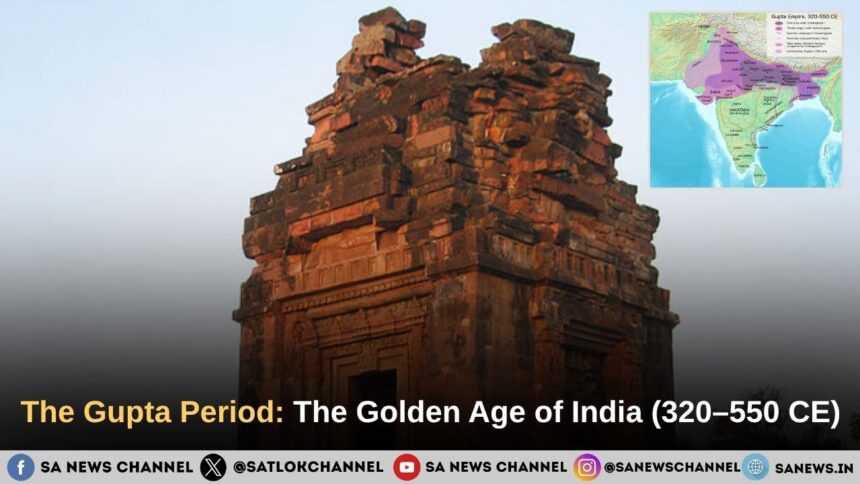
The history of the Indian subcontinent is a vast tapestry of empires, but few threads shine as brightly as the Gupta Empire. Established in the early 4th century CE, this era is universally recognized by historians as the “Golden Age of India.” It was a period where the convergence of political stability, economic prosperity, and intellectual freedom birthed a cultural revolution that continues to influence the world today.
- The Political Foundation: From Local Lords to Imperial Giants
- Major Rulers and Milestones of the Gupta Dynasty
- The Reign of Chandragupta I (319–335 CE)
- Samudragupta: The Napoleon of the East (335–375 CE)
- Governance Structure
- A Flourishing Economy
- Mathematics and Astronomy
- Metallurgy: The Iron Pillar of Delhi
- Art, Literature, and Philosophy: The Soul of the Golden Age
- Social Life and Religion
- Beyond the Dust of History: The Search for the Permanent Golden Age
- FAQs on the Gupta Period
- 1. Who is considered the real founder of the Gupta Empire?
- 2. What was the “Navaratna” in the Gupta court?
- 3. Is it true that the concept of Zero was invented during the Gupta period?
- 4. What was the significance of the Allahabad Pillar Inscription?
- 5. Which foreign invaders contributed to the fall of the Gupta Empire?
From the invention of the zero to the sublime poetry of Kalidasa, the Gupta Period was not merely a time of conquest, but a time of profound human realization. In this extensive report, we explore the rise, the zenith, and the eventual sunset of this magnificent dynasty through the lens of history and spiritual reflection.
The Political Foundation: From Local Lords to Imperial Giants
The Gupta Dynasty did not emerge in a vacuum. After the decline of the Kushan Empire, Northern India was fragmented into small kingdoms and republics. It was Sri Gupta who laid the foundation around 240 CE, but the spark of empire was lit by his grandson, Chandragupta I.
Major Rulers and Milestones of the Gupta Dynasty
To understand the progression of this “Golden Age,” it is essential to look at the lineage that transformed a small kingdom into a subcontinental superpower.
| Ruler | Reign (Approx.) | Key Contributions & Achievements |
| Sri Gupta | 240–280 CE | The founder of the dynasty; initially a local ruler in Magadha. |
| Ghatotkacha | 280–319 CE | Successor to Sri Gupta; maintained the family’s regional influence. |
| Chandragupta I | 319–335 CE | The first “Imperial” ruler; married Kumaradevi of the Licchavi clan. |
| Samudragupta | 335–375 CE | The “Napoleon of India”; a brilliant military strategist and musician. |
| Chandragupta II | 375–415 CE | Defeated the Shakas; period of peak cultural and literary output. |
| Kumaragupta I | 415–455 CE | Founded Nalanda University; maintained peace for four decades. |
| Skandagupta | 455–467 CE | The last great Gupta; successfully fought off the early Huna invasions. |
The Reign of Chandragupta I (319–335 CE)
Chandragupta I is credited with being the first true imperial ruler of the dynasty. He strengthened his position by marrying Kumaradevi, a princess of the powerful Licchavi clan. This marriage was so significant that it was commemorated on gold coins. By the time of his death, the Gupta kingdom had expanded from a small principality in Magadha to a significant power covering parts of modern-day Bihar and Uttar Pradesh.
Samudragupta: The Napoleon of the East (335–375 CE)
If Chandragupta I built the foundation, his son Samudragupta built the walls of the empire. He was a warrior-king, a musician, and a poet. The Prayag Prashasti (Allahabad Pillar Inscription), composed by his court poet Harisena, provides a detailed account of his military exploits. He followed a policy of “Digvijaya” (conquest of the four quarters), bringing almost all of Northern India under his direct rule while making Southern kings his tributaries.
Administrative Excellence and Economic Prosperity
The success of the Gupta Empire was rooted in its unique administrative structure. Unlike the highly centralized Mauryan Empire, the Guptas favored a decentralized model that allowed for local flourishing.
Governance Structure
- The King: The absolute head, often taking titles like Paramabhattaraka and Maharajadhiraja.
- Council of Ministers: Known as Mantriparishad, helping the king in judicial and executive matters.
- Provinces (Bhuktis): The empire was divided into provinces, governed by officials called Uparikas.
- Districts (Vishayas): Provinces were subdivided into districts, managed by Vishayapatis.
- Village Administration: The village was the smallest unit, where local elders (Gramikas) held significant influence.
A Flourishing Economy
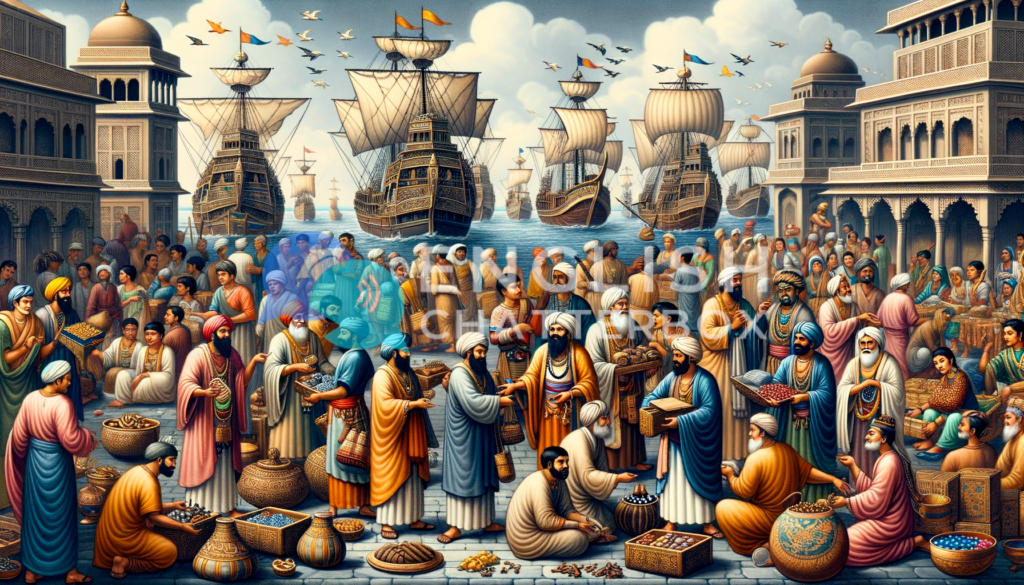
The Gupta era saw India becoming the “Sone ki Chidiya” (Golden Bird). The abundance of gold coins, known as Dinars, indicates a high level of liquidity and wealth.
| Economic Sector | Description | Impact |
| Agriculture | Development of irrigation and diverse crops (wheat, rice, sugarcane). | Food security and high tax revenue. |
| Trade | Extensive sea routes to Rome, Egypt, and Southeast Asia. | Inflow of gold and exotic goods. |
| Guilds (Srenis) | Professional bodies of craftsmen and merchants. | Acted as banks and regulated quality/prices. |
| Textiles | Mastery in silk and muslin production. | Major |
Also Read: The Partition of India: Understanding One of History’s Greatest Tragedies
The Scientific Revolution: When India Led the World
While Europe was entering the Dark Ages, India was undergoing a scientific renaissance. The Gupta Period produced thinkers whose theories remained unchallenged for over a millennium.
Mathematics and Astronomy
The most towering figure of this era was Aryabhata. Writing in 499 CE, his work Aryabhatiya covered arithmetic, algebra, and trigonometry.
- Concept of Zero: While the placeholder existed, the Guptas formalized zero as a mathematical digit.
- The Value of Pi: Aryabhata calculated π to be approximately 3.1416.
- Heliocentric Hints: He proposed that the Earth was a sphere and that it rotated on its own axis, explaining the cause of day and night.
- Eclipses: He scientifically explained that lunar and solar eclipses were caused by shadows, not by demons like Rahu and Ketu.
Metallurgy: The Iron Pillar of Delhi
The Iron Pillar at Mehrauli, dating back to the reign of Chandragupta II, is a metallurgical marvel. Standing over 7 meters tall and weighing more than 6 tons, it has stood in the open air for over 1,600 years without rusting. This proves that Gupta smiths possessed advanced knowledge of phosphorus-rich iron casting.
 Source: Wikipedia
Art, Literature, and Philosophy: The Soul of the Golden Age
The Guptas were great patrons of the arts. They moved away from the earlier Greco-Buddhist styles toward a more indigenous, classical Indian aesthetic.
Literature: The Age of Sanskrit
Sanskrit became the lingua franca of the elite. This era saw the compilation of the Puranas and the final editing of the Mahabharata and Ramayana.
- Kalidasa: His plays like Abhigyanashakuntalam and poems like Raghuvamsha are considered the pinnacle of Sanskrit literature.
- Vishnu Sharma: Composed the Panchatantra, a collection of animal fables used to teach political wisdom.
- Sudraka: Wrote the play Mrichchhakatika (The Little Clay Cart), which gave a vivid description of social life.
Architecture and Sculpture
The Gupta period saw the transition from cave architecture to free-standing stone temples.
- The Sarnath Buddha: A masterpiece of Gupta sculpture, depicting the Buddha in the Dharmachakra Pravartana mudra.
- Temple Construction: The Dashavatara Temple at Deogarh introduced the Shikhara (tower), which became a staple of Hindu temple architecture.
Social Life and Religion
The society was organized into the Varna system, but there was a significant degree of social mobility and religious harmony during the early Gupta period.
Religious Synthesis
While the Gupta rulers were devout Vaishnavites (worshippers of Lord Vishnu), they were remarkably tolerant.
- Buddhism: Flourished under their patronage. The University of Nalanda became the premier Buddhist learning center in the world, attracting students from China, Korea, and Tibet.
- Hinduism: The era saw the rise of Bhakti (devotion) and the establishment of the structural temple as a center of community life.
Status of Women
Historical records provide a mixed view. While women like Prabhavatigupta (daughter of Chandragupta II) ruled as regents, the general social status of women began to see more restrictions compared to the earlier Vedic period. However, education among upper-class women remained prevalent.
Also Read: History of the European Union: From War-Torn Continent to Unified Bloc
The Twilight of the Empire: Decline and Disintegration
No empire, no matter how “golden,” lasts forever. By the mid-5th century, the cracks began to show.
The Huna Invasions
The primary external threat came from the Hunas (Central Asian nomads). While Skandagupta managed to drive them back in a heroic struggle, the continuous warfare drained the royal treasury.
Internal Factors of Decline
- Weak Successors: After Skandagupta, the later Guptas lacked the military and administrative charisma of their ancestors.
- Feudalization: The practice of granting land to officers in lieu of cash salaries led to the rise of powerful local landlords (Samantas) who eventually declared independence.
- Economic Disruption: With the decline of the Roman Empire, silk trade shifted, impacting the gold inflow and hurting the urban economy.
By 550 CE, the empire had dissolved into several smaller regional kingdoms, marking the end of the classical age and the beginning of the early medieval period.
Beyond the Dust of History: The Search for the Permanent Golden Age
The rise and fall of the Gupta Empire serve as a poignant reminder of the law of impermanence. History books celebrate the Guptas for their “Golden Age,” but we must ask: Is any age truly golden if it ends in decay?
In the spiritual discourses of Sant Rampal Ji Maharaj, it is explained that this material world (the realm of Kaal Brahm) is a place of constant change. Today’s king is tomorrow’s pauper; today’s golden empire is tomorrow’s archaeological ruin. We spend lifetimes building “Golden Ages” on earth, only to leave them behind at the moment of death.
True prosperity is not found in gold coins or territorial expansion, but in the spiritual earning. The Supreme God, Kabir Sahib, describes a place called Satlok-the Eternal Kingdom. In Satlok, there is no old age, no disease, and no Huna-like invasions to fear. It is the “Golden Age” that never ends.
The Gupta kings were patrons of Nalanda, a place of worldly knowledge. But today, the need is for true spiritual knowledge (Satgyan) which is being disseminated by Sant Rampal Ji Maharaj. He provides the “lost key” to the worship of the Almighty, allowing the soul to escape the cycle of 8.4 million births and deaths. As we admire the ruins of the Gupta temples and the wisdom of Aryabhata, let us also look inward and seek the guidance of a Tatvadarshi Saint to build a personal “Golden Age” of the soul.
To understand the complete story of the universe and the Supreme God, visit:
FAQs on the Gupta Period
1. Who is considered the real founder of the Gupta Empire?
While Sri Gupta started the dynasty, Chandragupta I is considered the real founder and the first sovereign ruler who expanded the kingdom significantly.
2. What was the “Navaratna” in the Gupta court?
The Navaratna or “Nine Gems” were a group of nine extraordinary scholars in the court of Chandragupta II, including the poet Kalidasa and the astronomer Varahamihira.
3. Is it true that the concept of Zero was invented during the Gupta period?
Yes, while the idea of a void existed earlier, Indian mathematicians like Aryabhata formalized the use of Zero as both a value and a placeholder during this era.
4. What was the significance of the Allahabad Pillar Inscription?
Composed by Harisena, the inscription is the primary source of information regarding the military conquests and personality of Samudragupta.
5. Which foreign invaders contributed to the fall of the Gupta Empire?
The Hunas (often identified as the White Huns) from Central Asia launched multiple invasions that weakened the empire’s economy and military strength.