


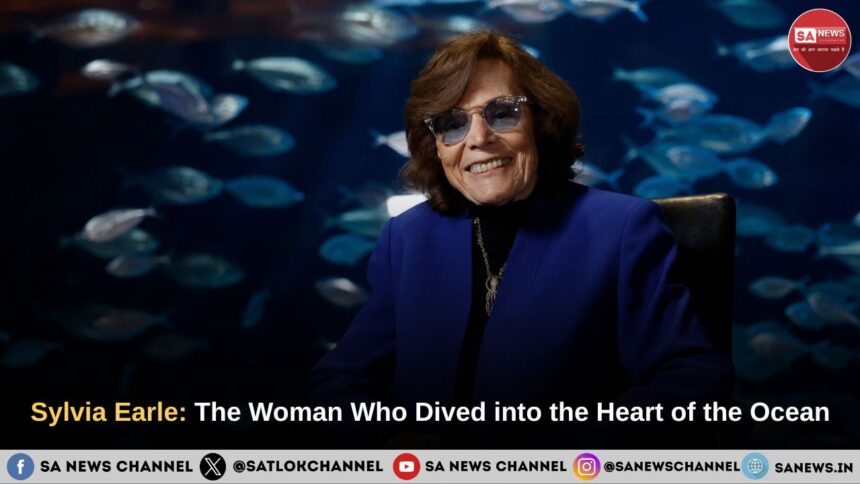
Sylvia Earle, affectionately known as ‘Her Deepness’, stands among the most influential figures in modern ocean science. A marine biologist, oceanographer and environmental advocate, she has dedicated her lifetime of work to unveiling the ocean. As the first woman to serve as Chief Scientist of NOAA and the visionary founder of Mission Blue, Earle has spearheaded more than a hundred underwater expeditions and set historic diving records.
- Highlights
- Who is Sylvia Earle
- Sylvia Earle’s Early Life and Education
- Why did Sylvia Earle Pursue a Career in Marine Biology
- Why is Sylvia Earle Famous?
- Breaking Barriers and Diving into the Deep
- Trailblazer for Women in Science
- Global Environmental Advocate
- Public Communication and Inspiration
- Mission Blue and the Fight to Save the Oceans
- Breakthroughs and Record-setting Dives in Sylvia Earle’s Life
- 1964 Indian Ocean Expedition
- Smithsonian Institution’s Man-in-Sea Project
- 1970 Tektite Project: The First All-Female Aquanaut Team
- 1979 JIM Suit Dive
- Decades of Service
- Awards, Achievements, and Recognition
- Sylvia Earle’s Strong Advocacy of a Plant-Based Diet
- The Hidden Karmic Debt: What Humanity Has Forgotten
- FAQs on Sylvia Earle
Her unwavering mission in ocean conservation, marine exploration and climate awareness continues to inspire global action for marine protection. Uncover rarely-discussed insights into the life of ‘Her Deepness’ Sylvia Earle in this article.
Highlights
- Sylvia Earle has spent over six decades studying marine ecosystems and leading deep-sea expeditions.
- She was the first female chief scientist of the U.S. National Oceanic and Atmospheric Administration (NOAA).
- She has led more than 100 expeditions and logged over 7,000 hours underwater, including record-setting solo dives.
- In 1979, she made history by walking untethered on the sea floor at a depth of 381 metres (1,250 feet) – the deepest dive ever made by a woman.
- Earle is also a passionate advocate for ocean conservation, warning about overfishing, pollution and climate change.
Who is Sylvia Earle
Sylvia Earle is an American marine biologist, oceanographer, explorer, author and environmental advocate, widely regarded as one of the most influential ocean scientists in the world.
Sylvia Earle’s Early Life and Education
Born on 30th August 1935 in Gibbstown, New Jersey, USA, Sylvia Alice Earle grew up surrounded by woods and rivers, where her fascination with nature began early. When her family moved to Dunedin in Florida during her childhood. This became a turning point in her life and the ocean became her new frontier as Dunedin is situated close to the Gulf of Mexico. Collecting shells, studying marine plants and swimming among fish, Sylvia Earle found a lifelong calling in the underwater world during these early years of her life, as she puts in her own words the ocean became her ‘backyard, laboratory, play place’.
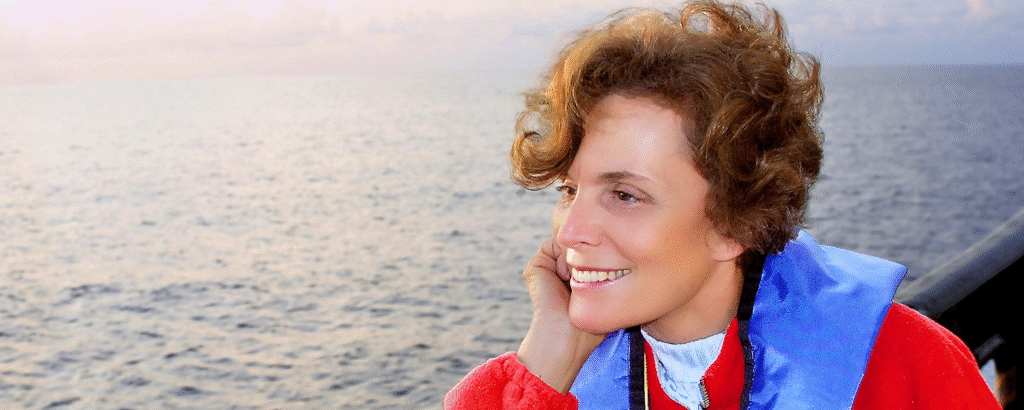
Sylvia has often narrated one particular incident in interviews about her first brush with sea waters at the age of three. When her family went to the beach, Sylvia was knocked down by a wave and instead of running to pick her, Sylvia’s mother encouraged her to explore and familiarise herself with the ocean waters on her own. This memory stayed with Sylvia Earle as the point when the ocean caught her attention.
Sylvia earned a bachelor’s degree in Botany from Florida State University (1955) and went on to complete her PhD in Phycology (the study of algae) at Duke University (1966). Her early academic research laid the foundation for her groundbreaking work in marine ecology and ocean conservation.
Why did Sylvia Earle Pursue a Career in Marine Biology
Sylvia Earle decided to pursue a career in marine biology because she was deeply fascinated by nature and the ocean from a very young age. Her love for the sea began as a mix of curiosity, wonder and a desire to understand how life works beneath the waves.
Also Read: From Playwright to President: The Story of Vaclav Havel
Sylvia is often admired for being one of the earliest women in marine biology and marine explorations at a time when the majority of such outgoing careers were deemed as men-only spheres. Riding against the wave and the perceptions of society at the time, Sylvia went on to choose such an unconventional career influenced by some pivotal moments and personal drive:
- Sylvia grew up in Gibsontown, New Jersey, and later moved to the west coast of Florida, where the Gulf of Mexico became her playground.
- She spent hours exploring beaches, tide pools and underwater life by collecting shells, observing fish and feeling a sense of connection to the sea.
- She once said, ‘Every time I slip into the ocean, it’s like going home’.
- From a young age, she wanted to understand how living things survive and interact.
- While other children were interested in land animals, Sylvia was captivated by the mystery of underwater worlds, places that few people had ever seen.
- During the 1940s and 1950s, very little was known about deep-sea life. This sense of mystery inspired her to become an explorer as she wanted to see the unseen and learn about life beneath the surface.
- As she studied more, she saw how human activities like pollution, overfishing and habitat destruction were harming the oceans.
- Her scientific curiosity gradually evolved into a mission to protect what she loved.
- She has often said her work is driven by one question, ‘How can we take care of the ocean that takes care of us?’ However, a very important question here for all of us is: Can we actually take care of the ocean?
Why is Sylvia Earle Famous?
Sylvia Earle is famous because she redefined how the world understands the ocean. Her fame comes from a combination of groundbreaking scientific achievements, record-setting exploration and her lifelong advocacy for marine conservation. A brief look at what sets Sylvia Earle apart:
Breaking Barriers and Diving into the Deep
In an era when few women entered the sciences, Sylvia’s courage redefined possibilities for her. She became one of the first women to lead major oceanographic expeditions and was later appointed the first female Chief Scientist of the U.S. National Oceanic and Atmospheric Administration (NOAA).
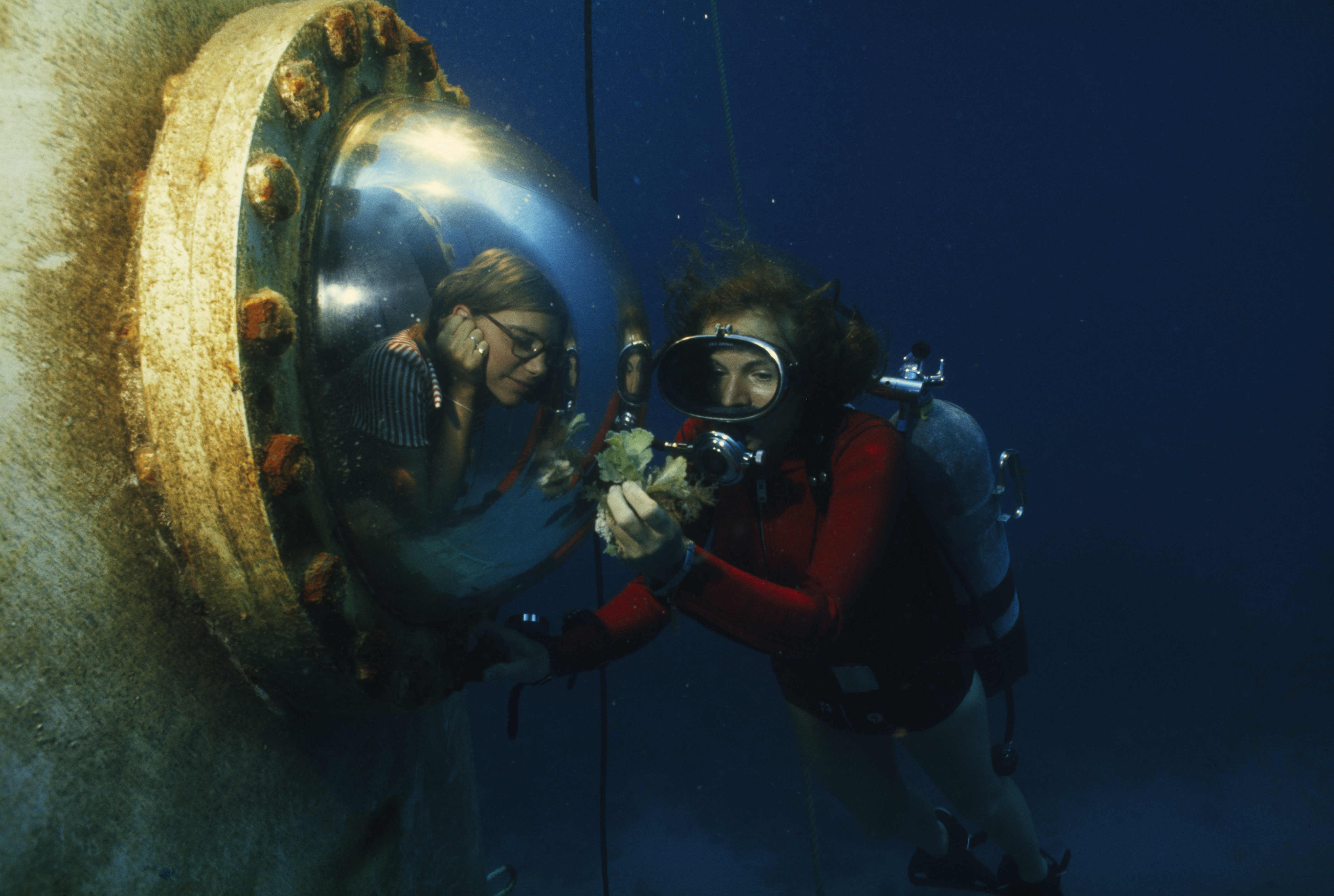
In 1970, she led the Tektite II project, commanding an all-female team of aquanauts who lived two weeks beneath the sea – a record at the time. The mission revealed how marine ecosystems respond to light and human presence and demonstrated that women were equally capable of the rigours of scientific exploration.
Her most historic moment came in 1979, when she made a record-breaking solo walk on the ocean floor at a depth of 381 metres (1,250 feet) near Hawaii. Wearing a pressurised diving suit known as the ‘JIM suit’, she experienced total silence and darkness. That dive convinced her that humanity’s ignorance of the ocean is one of its greatest dangers.
Since then, she has spent over 7,000 hours underwater, exploring places most humans may never see.
Trailblazer for Women in Science
Sylvia Earle’s appointment as the first female chief scientist of NOAA (National Oceanic and Atmospheric Administration) broke gender barriers in marine research. Her leadership opened doors for women in oceanography, marine biology and other STEM fields.
Global Environmental Advocate
Sylvia Earle has spent decades warning the world about ocean pollution, overfishing, coral destruction and climate change. She founded Mission Blue, which identifies and campaigns for the protection of ‘Hope Spots’ (critical areas of the ocean that sustain biodiversity and help stabilise the planet’s ecosystems). Through Mission Blue and her documentaries, she made marine conservation a global cause.
Public Communication and Inspiration
Sylvia is a National Geographic Explorer-in-Residence, appearing in documentaries like ‘Mission Blue’ by Netflix and countless interviews, inspiring millions. Her ability to explain complex science in simple, emotional terms makes her a powerful voice for the oceans. She’s often called ‘Her Deepness’, a nickname that captures her pioneering status in ocean exploration.
Mission Blue and the Fight to Save the Oceans
Witnessing the decline of coral reefs, whale populations and fish stocks, Sylvia Earle transformed from explorer to activist. In 2009, she founded Mission Blue, a non-profit organisation dedicated to establishing ‘Hope Spots’. Optimistically titled, Hope Spots are protected areas in the ocean critical for biodiversity and planetary balance. Today, there are over 140 Hope Spots worldwide established by Mission Blue.
Through Mission Blue, documentaries and global campaigns, she has inspired millions to recognise that ocean conservation is not a choice but a necessity. Sylvia Earle aimed to make her message felt clearly: ‘No ocean, no life. No blue, no green. Everything depends on the ocean’.
With no intention of criticising the statement, it is, however, important to pause and examine the validity of this very statement. Does life truly depend on the ocean? Or is there a greater, higher, invincible force who protects us, the oceans and all of nature?
Breakthroughs and Record-setting Dives in Sylvia Earle’s Life
Sylvia’s career is distinguished by barrier-breaking moments in both science and society. Some key moments to note are:
- Earle was among the first to experience scuba diving (then called the Aqua Lung) in the United States while pursuing her graduate studies at Duke University. This technology, which she was told to ‘Breathe naturally; over the side’ opened up an entirely new world, allowing her to realise that the ocean was not just water and rock, but a ‘living system’.
- In the 1960s, few women worked in oceanography. Sylvia often faced discrimination and exclusion – she was told expeditions didn’t have ‘facilities for women’.
- By 1966, Sylvia Earle had earned her Ph.D. in botany, a milestone that marked the beginning of her groundbreaking contributions to marine science. For her doctoral research, she painstakingly collected and catalogued over 20,000 specimens of algae from the Gulf of Mexico – a monumental achievement that offered one of the most comprehensive studies of marine plant life ever attempted at the time.
- What set her work apart was her pioneering use of SCUBA diving to study aquatic ecosystems directly in their natural environments, an approach few scientists had dared to attempt. Her dissertation became a landmark reference for decades and firmly established her reputation as a visionary in field-based marine research.
1964 Indian Ocean Expedition
In 1964, a young Sylvia Earle joined the International Indian Ocean Expedition, a monumental scientific venture that sought to chart one of the least known regions of the world’s seas. At the time, oceanography was a field almost entirely dominated by men and yet Earle, then a doctoral student, secured her place on board as the only woman among seventy male scientists.
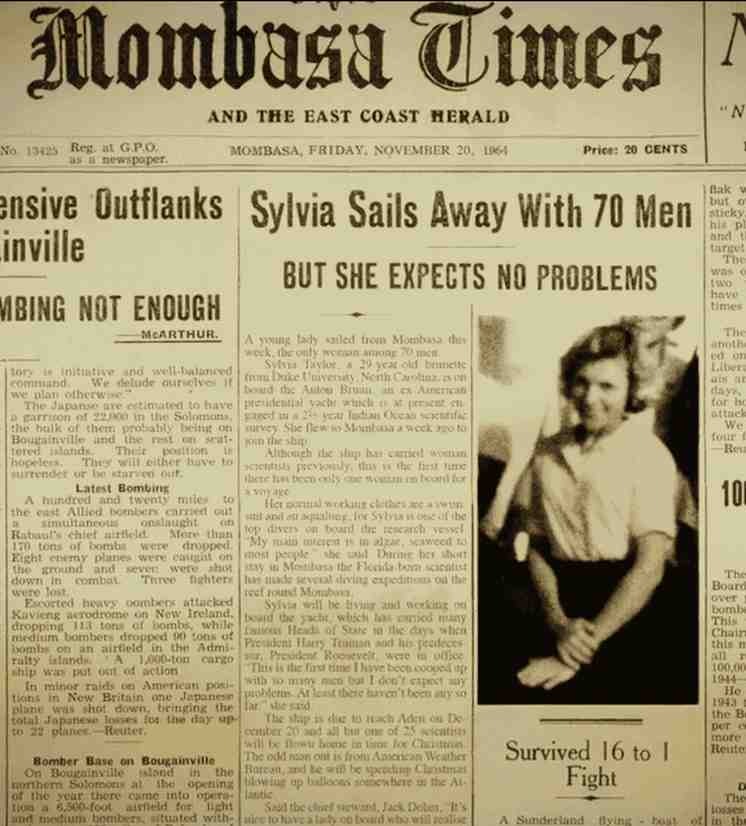
- Her inclusion was considered so unusual that the local press focused on the novelty of her presence and ran the headline ‘Sylvia sails away with 70 men’.
- But behind this sadistic humour was a quiet revolution. A woman stepping into a world that had, until then, been closed to her gender.
- During the months-long voyage, Earle explored coral reefs and collected hundreds of marine plant specimens from the Indian Ocean’s vast and varied ecosystems.
- She spent hours in the water documenting species of algae, her primary research focus, while also observing the complex interdependence of marine life right from plankton blooms to fish migrations.
It was on this expedition that Earle’s conviction to understand the ocean deepened. She believed one had to live with the ocean, not just observe it from afar. This insight became the philosophical foundation for her life’s work in immersive exploration. This experience also shaped her determination to break barriers for women in science and inspired her to lead all-female expeditions later on.
Smithsonian Institution’s Man-in-Sea Project
In 1968, Sylvia Earle joined a team of scientists with the Smithsonian Institution’s Man-in-Sea project in the Bahamas.
- As part of an experimental mission to test human endurance in underwater habitats, she descended 100 feet beneath the surface in a submersible and entered the pressurised habitat.
- She became the first woman scientist ever to do so.
- Notably, she undertook this bold dive while four months pregnant. Her daughter was born later that year. Her move is seen as a living symbol of her efforts to strike balance between motherhood and exploration.
1970 Tektite Project: The First All-Female Aquanaut Team
In 1970, Sylvia Earle again made history by leading the first-ever all-female team of aquanauts during the Tektite II Project, an ambitious U.S. government experiment designed to study how humans could live and work underwater for extended periods. For Sylvia, it was more than a scientific challenge. It was a chance to prove that women were just as capable of operating in the harsh, high-pressure environments of the deep sea as their male counterparts.
- The mission took place in the U.S. Virgin Islands, where Earle and her four teammates lived for two weeks inside an underwater habitat, 15 metres (about 50 feet) below the surface.
- The structure resembled a small, pressurised house and was equipped with bunks, workstations, communication gear and oxygen systems.
- Their task was to conduct marine research by cataloguing coral reef life, monitoring fish behaviour and testing how prolonged underwater living affected human physiology.
- Despite the scientific importance of their work, much of the early media attention focused not on their research but on their gender.
- Reporters dubbed them ‘aquababes’ and ‘aquanaughties’ – nicknames that reflected both the novelty and bias of the era. The correct term for such underwater explorers is aquanaut.
- Sylvia, however, responded with quiet determination, turning the public spotlight into an opportunity to highlight women’s competence in marine science and the importance of ocean exploration.
- During those two weeks beneath the waves, Earle and her crew made detailed observations that helped shape future studies on coral reef ecosystems and underwater living conditions.
- The experience also deepened her emotional connection to the ocean. Living continuously beneath the surface, she later reflected, made her realise that humans were not separate from the sea but an extension of its living system.
The Tektite II project became a defining moment in Earle’s career. It set the stage for her later ventures into even greater depths, including her record-setting solo dive in 1979 that earned her the enduring title ‘Her Deepness’.
1979 JIM Suit Dive
In 1979, Sylvia Earle achieved a feat so extraordinary that it earned her the nickname that would follow her forever – ‘Her Deepness’.
- Wearing a one-of-a-kind pressurised diving suit known as the JIM Suit, she became the first person to walk untethered on the ocean floor at a depth of 381 metres (1,250 feet) off the coast of Oahu, Hawaii.
- The mission was part of a deep-sea research project supported by the National Oceanic and Atmospheric Administration (NOAA) and Lockheed Corporation, intended to test how humans could operate in extreme underwater conditions.
- Unlike traditional divers who remain connected to the surface through air hoses, Sylvia descended alone, entirely self-contained.
- She entered a world of complete darkness, freezing temperatures and crushing pressure of nearly 600 pounds per square inch.
- For two and a half hours, she walked the ocean floor surrounded by bioluminescent creatures and drifting clouds of marine snow.
- The experience left her awestruck by the ocean’s vastness and vulnerability, reinforcing her belief that the deep sea is not a place of emptiness, but of immense life, beauty and mystery.
The event captured global attention, propelling Sylvia into the public eye as both a scientist-explorer and a voice for conservation. It transformed Sylvia Earle from an oceanographer into a global environmental icon.
Decades of Service
In her lifetime, Sylvia Earle went on to log more than 7,000 hours underwater, lead over 100 expeditions and authored over 150-200 scientific and popular publications. She also served as the former chief scientist of the National Oceanic and Atmospheric Administration (NOAA) and is a National Geographic explorer-in-residence.
Awards, Achievements, and Recognition
Sylvia Earle’s career is crowned with over 100 national and international honours. Among her most notable accolades are:
- National Geographic Society’s Explorer-in-Residence
- TED Prize in 2009 for her wish to ignite public support for a global network of marine protected areas
- In 1998, the Time Magazine conferred their first ‘Hero for the Planet’ award to Sylvia.
- Library of Congress Living Legend Award in 2000
- Royal Geographical Society’s Patron’s Medal in 2011
- Hubbard Medal from the National Geographic Society in 2013
- UN Champions of the Earth Award awarded by the UNEP in 2014
- The Ken Burns American Heritage Prize (2024)
Her work has also been chronicled in the acclaimed Netflix documentary ‘Mission Blue’ (2014).
Sylvia Earle’s Strong Advocacy of a Plant-Based Diet
Over the years, Sylvia’s relationship with the ocean transformed not only how she studied marine life, but also how she lived. After witnessing the devastating consequences of overfishing and the silent suffering of sea creatures, Sylvia made a conscious decision to stop eating fish decades ago. As she once stated in interviews, ‘I used to eat fish, but once I really got to know them, I couldn’t anymore’.
To her, consuming fish was no different from eating wildlife. She sought to awaken humanity to a simple truth that marine beings are not just resources but sentient lives, capable of feeling fear, pain and emotion. Her deep-sea encounters led her to an awakening that beneath the waves dwell souls, not specimens. And yet, one cannot help but wonder – why must it take extraordinary discoveries for us to recognise something so basic: that every life is sacred?
Jagatguru Tatvdarshi Sant Rampal Ji Maharaj reveals that taking the life of any being, whether from land, sea or sky, is an unforgivable act in the Constitution of the Supreme Creator, Kabir Saheb Ji, the True Father of all souls.
Sant Rampal Ji Maharaj clarifies that no scripture of any faith endorses violence in the name of food. In fact, Genesis 1:29 of the Holy Bible states that God gave us vegetarian food (seed bearing plants, trees and fruit yielding seeds) as the source of our food. It was always intended that humans live by plants and never by killing other beings.
Genesis 1:29 (KJV) – And God said, Behold, I have given you every herb bearing seed, which is upon the face of all the earth, and every tree, in which is the fruit of a tree yielding seed; to you it shall be for meat.
However, the absence of spiritual understanding and guidance from a Complete Saint (Tatvdarshi Sant) has pushed humanity into deep darkness. Today, despite clear signs of intelligence and emotion in animals, people continue to deny their souls, driven by nothing but blind hunger and ignorance. The Supreme God can never be pleased if we kill His beloved souls.
The Hidden Karmic Debt: What Humanity Has Forgotten
Jagatguru Tatvdarshi Sant Rampal Ji Maharaj unveils a truth that pierces through the veil of worldly ignorance. The act of consuming flesh is not merely dietary, it carries deep karmic repercussions. This world operates under the dominion of Kaal Brahm (Satan), who enforces the brutal law of ‘tit for tat’. Every act of violence we commit against another life returns to us, unerringly, through the wheel of rebirth.
Those who take pleasure in eating meat or participate in the slaughter of animals, unknowingly weave themselves into an unending cycle of pain and vengeance. The soul that one kills today becomes the one that consumes them in the next life. This is how Kaal Brahm traps souls. He nurtures ignorance so profound that humans commit monstrous sins without batting an eyelid or a flicker of conscience.
Sant Rampal Ji Maharaj illustrates this moral downfall through the powerful story of Sadana Kasai (Sadana the Butcher). In this revelation, when Sadana prepares to slaughter his 101st goat, in defiance of Supreme God Kabir’s command, the unimaginable occurs. The goat speaks, propelled by the power of God Kabir. It warns him of the eternal cycle of suffering awaiting them both. In future lives, they will exchange roles – one as butcher, the other as victim, forever bound by the karma of bloodshed.
This spine-chilling incident exposes the truth that sins never end with death. They perpetuate through lifetimes. You can witness this eye-opening spiritual discourse here:
Each human being intuitively knows that karma never fails. We even romanticise it through quotes and sayings. Yet, where has our fear of God gone? Why do we need personal tragedy before recognising the suffering we inflict upon others?
The answer lies in the absence of spiritual refuge under a Tatvdarshi Sant – a True Saint Who alone possesses the divine wisdom to unveil reality as it is. Only such a Saint can awaken dormant conscience, restore lost moral balance and guide souls towards liberation.
Today, Sant Rampal Ji Maharaj stands as the only Tatvdarshi Saint of our era and the real beacon of truth in an age of spiritual darkness. His teachings realign humanity with the eternal path of righteousness, compassion and salvation. Seek His wisdom with an open heart, for it is not too late to return to the light. Visit:
- Website: www.jagatgururampalji.org
- YouTube: Sant Rampal Ji Maharaj
- Facebook: Spiritual Leader Saint Rampal Ji
- X (Twitter): @SaintRampalJiM
FAQs on Sylvia Earle
Q1: Who is Sylvia Earle and why is she famous?
Answer: Sylvia Earle is a world-renowned marine biologist, oceanographer and explorer.
Q2. What are Sylvia Earle’s major achievements?
Answer: She was the first female Chief Scientist of NOAA, founded Mission Blue, led over 100 marine expeditions, and logged more than 7,000 hours underwater.
Q3. What is Sylvia Earle’s message to the world?
Answer: Her core message is ‘No Blue, No Green, No Life’, urging humanity to protect the ocean as the foundation of all life on Earth.