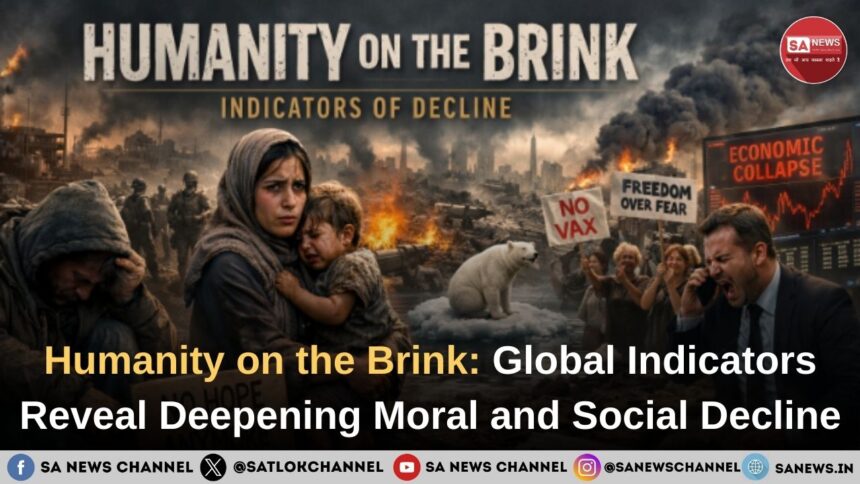
As the world steps further into 2026, global indicators reveal a sobering picture: Humanity is confronting an accelerating moral and social decline. The question of why humanity seems to be deteriorating has become the focus of a serious social debate in recent years. The warning signs are visible across governance, humanitarian conditions, geopolitical stability, and social cohesion. Recent international reports show rising corruption, eroding respect for international law, widespread conflict, shrinking civic freedoms, and deepening inequalities-all converging to weaken the moral foundations of modern society.
- Navigating the Crisis: Core Dimensions of the Social Shift
- Digital Age and Human Behaviour
- Impact of Social Media Pressure on Humanity
- Decline of Humanity in Modern Society
- Emotional Detachment and Information Overloaded
- Humanity and Empathy
- Restoring Humanity: Kindness and Spiritual Reconnection
- Deepening the Dialogue: Frequently Asked Questions
Nowadays people believe that the decline of humanity in modern society is visible through increasing negativity, and growing lack of empathy in daily life. The effect of social media on the people is one of the most talked about causes of this shift. Although technology has brought millions of people together globally, it has also altered the way that people communicate.
Navigating the Crisis: Core Dimensions of the Social Shift
- The Digital Age and Human Behavior: Exploring how digital anonymity and the shift in online interaction are fundamentally reshaping how we treat one another.
- The Impact of Social Media Pressure: Analyzing how the constant quest for validation and the “comparison culture” on social platforms erode our sense of collective responsibility.
- The Decline of Humanity in Modern Society: Examining the systemic weakening of moral foundations, visible in rising global corruption and the erosion of civic freedoms.
- Emotional Detachment and Information Overload: Understanding how the relentless 24-hour news cycle of crises can lead to “compassion fatigue” and a lack of empathy.
- The Vital Connection Between Humanity and Empathy: Highlighting why active listening and small acts of kindness are essential for maintaining human bonds in a tech-driven world.
Digital Age and Human Behaviour
According to experts in human behaviour and the digital age, people frequently express stronger opinions online than they would in real life. Because of the increase in social conflicts, digital toxicity, and growing emotional detachment, many observers believe that humanity is at a turning point. Every generation has faced challenges, but the modern era’s rapid changes brought about by financial strain, cultural shifts, and technological advancements have created a unique environment where moral boundaries are frequently blurred. However, it is important to know that the narrative of “falling humanity” is not entirely one-sided. For every negative incident that goes viral online, countless acts of kindness remain unnoticed.
Also Read: 7 Signs You Need a Social Media Detox
Impact of Social Media Pressure on Humanity
Social media’s growth has revolutionized communication and opinion expression. These platforms foster comparison, quick responses, and divisive discussions. Modern lifestyles place a greater emphasis on personal freedom and success. Despite the fact that independence can empower individuals, some content that an over emphasis on self-interest may erode collective responsibility. Traditional family and community structures that once served as a guide for moral behaviour are slowly shifting, which makes many people feel alienated.
Sant Rampal Ji Maharaj encourages people to live moral lives based on sacred texts and spreads a message of harmony that transcends social divides. Kindness, patience and respect for one another are frequently viewed as remedies for the apparent decline of humanity in contemporary society; they contend that such teachings encourage people to rediscover these qualities.
Also Read: Impact of Social Media on Human Mental Health
Decline of Humanity in Modern Society
Modern living has changed people’s emotional experience, communication patterns, and thought process. A constant stream of bad news, however , can lead to cynicism and emotional exhaustion. Although these difficulties give rise to worries about a moral decline, experts contend that awareness, closer ties to the community, and thoughtful technology use can help reestablish equilibrium and uphold the fundamental principles that uphold a wholesome and compassionate society.
Emotional Detachment and Information Overloaded
People are constantly exposed to negativity through the 24 hour news cycle, which includes crises and conflicts. Constant exposure to upsetting material can cause emotional exhaustion, according to psychologists, which reduces empathy for the hardships of others.
Humanity and Empathy
However humanity and empathy are still necessary to preserve equilibrium in a world that is changing quickly. The emotional distance brought about by modern life can be overcome by small deeds of kindness, attentive listening, and sincere support. Reconnecting with one’s compassionate side can facilitate ties, and responsible technology use, according to numerous experts. The cultivation of empathy enables people to maintain the human values that bind communities together and to form healthier relationships, even in a society that is changing quickly.
Restoring Humanity: Kindness and Spiritual Reconnection
In our fast-paced society, the decline of kindness and social responsibility has created a “spiritual alienation.” Sant Rampal Ji Maharaj is addressing this crisis by teaching a lifestyle rooted in moral discipline and equality. His teachings provide practical solutions for a modern world:
Inner Stability: Spiritual knowledge helps people replace anger with patience.
Annapurna Muhim: This initiative puts compassion into action by providing free food to the needy, proving that serving humanity is essential to spiritual growth.
Social Responsibility: By encouraging introspection and selfless service (Seva), he inspires a shift from self-interest to community care.
Through these efforts, Sant Rampal Ji Maharaj is reestablishing the human values needed to heal today’s fractured society.
Deepening the Dialogue: Frequently Asked Questions
1. Why is 2026 being called a “turning point” for humanity?
Global indicators show a critical decline in moral foundations due to rising inequality and social instability, forcing society to choose between further decay or a moral restart.
2. How does the “Digital Age” specifically impact our moral boundaries?
Online anonymity often fosters “digital toxicity,” encouraging hostility and emotional detachment that would rarely occur in face-to-face interactions.
3. What is “Compassion Fatigue,” and how do we overcome it?
It is emotional exhaustion caused by a constant stream of negative news; it can be overcome by setting digital boundaries and practicing small, real-life acts of kindness.
4. How do Sant Rampal Ji Maharaj’s teachings address the decline of humanity?
They promote a return to sacred values like equality and non-violence, providing the “inner stability” needed to respond to chaos with patience instead of anger.