

Imagine sitting in your office or resting at home, entirely unaware that a massive cyclone is brewing off the coast or that flash floods are moments away from inundating your city. In those critical moments, time is the difference between survival and tragedy. Recognizing this, the Indian government has taken a monumental step forward in national security and disaster management.
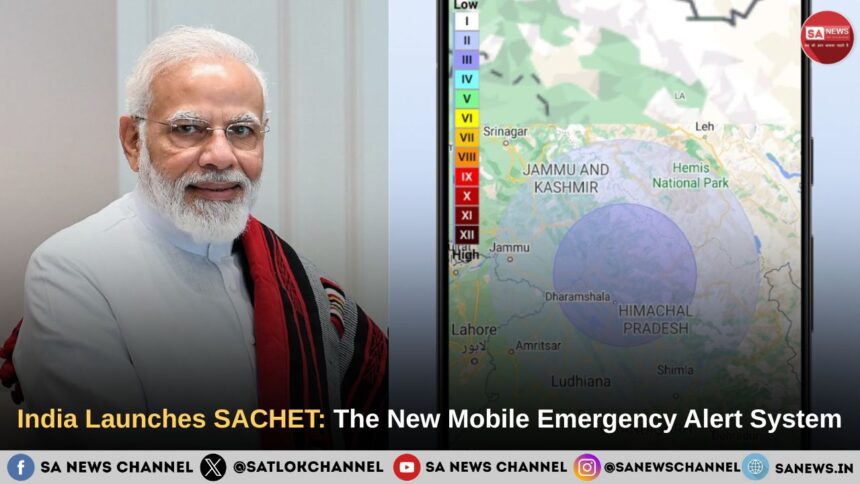
On May 2, 2026, the country officially activated the indigenous Cell Broadcast Emergency Alert System, heavily anchored by a newly integrated platform known as SACHET. This technological leap means your smartphone is no longer just a device for social media and calls; it is now a frontline defense mechanism designed to warn you about impending natural disasters before they strike.
Key Points at Glance
- Nationwide Activation: The SACHET alert system is now fully operational across all 36 states and Union Territories in India.
- Hyper-Local Targeting: Using advanced geographical targeting, the system ensures that only mobile users in the specific danger zone receive the emergency alerts.
- Multilingual Reach: To overcome regional barriers, warnings are broadcast in over 19 different Indian languages.
- No Internet Required: The system operates on cell broadcast technology, meaning alerts will reach your phone even if your mobile data is turned off or internet bandwidth is choked.
- Collaborative Engineering: The platform is the result of a joint effort by the National Disaster Management Authority (NDMA), the Department of Telecommunications (DoT), and C-DOT.
The Mechanics of Survival: How SACHET Works
During a natural calamity like an earthquake, a landslide, or a tsunami, traditional communication networks often collapse. People lose internet access, and television networks go down. This is where the SACHET system proves its true value.
Developed by the Centre for Development of Telematics (C-DOT) in strict alignment with the Common Alerting Protocol (CAP) recommended by the International Telecommunication Union (ITU), the system bypasses standard internet protocols. Instead, it utilizes cell broadcast technology.

When authorities detect an imminent threat, they can push a high-priority warning through local cellular towers directly to every connected handset within a specific geographic radius. Your phone will emit a loud, distinct siren-like tone even if it is set to silent or “Do Not Disturb” mode and display a flash message detailing the nature of the emergency and immediate safety instructions.
A Highly Targeted Approach
One of the historical problems with mass alert systems is “warning fatigue.” If a citizen in North Delhi constantly receives flood warnings meant for South Delhi, they eventually start ignoring the alerts.
The SACHET platform elegantly solves this through geographical targeting. If a severe cloudburst is predicted to hit a specific district in Uttarakhand, only the mobile towers within that exact district will broadcast the alert. A tourist passing through the area will receive the warning on their phone instantly, while someone sitting safely just fifty kilometers away will remain undisturbed. This precision ensures that when the alarm does sound, the public takes it with the utmost seriousness.
Breaking the Language Barrier
India’s immense linguistic diversity has always posed a challenge for nationwide emergency protocols. A warning issued strictly in English or Hindi might be completely useless to a local fisherman in coastal Tamil Nadu or a farmer in rural Bengal.
Addressing this, the NDMA and DoT have ensured that the SACHET system is highly localized. The platform is capable of pushing messages in over 19 regional Indian languages. Already tested extensively, the infrastructure has successfully managed the transmission of over 134 billion SMS alerts during pilot phases. By prioritizing the native language of the geographical zone, the government ensures that critical, life-saving instructions are immediately understood by the most vulnerable populations without any translation delays.
A Milestone in Disaster Preparedness
The formal launch by Union Home Minister Amit Shah and Communications Minister Jyotiraditya Scindia marks a paradigm shift in how India handles crises. For decades, disaster response was largely reactive, focusing on rescue and relief after the damage was done. SACHET pushes India into an era of proactive disaster management.
By leveraging the fact that India has one of the highest smartphone penetration rates in the world, the government has essentially placed a decentralized early warning siren in the pocket of almost every citizen.
As climate change accelerates and the frequency of extreme weather events increases, infrastructure like SACHET is no longer just an administrative upgrade; it is a critical necessity. Whether you are dealing with a sudden earthquake tremor or an approaching cyclone, those few extra seconds of advanced warning will undoubtedly save countless lives across the nation.
Finding Calm in Chaos
Let’s be honest: our world is louder and more stressful than ever. Even with all our modern comforts, many of us feel a lingering sense of unrest. We see rising tension, a lack of empathy, and a general decline in the values that once held communities together. While we’ve mastered the physical world through science, we often feel like we’re losing our internal footing.
This is exactly why the message of Jagatguru Tatvadarshi Sant Rampal Ji Maharaj resonates so deeply today. He shifts the focus from external fixes to internal healing. His core message is that the deep-seated peace we’re all searching for can’t be found in a gadget or a lifestyle trend; it comes from reconnecting with the eternal spiritual knowledge of Supreme God Kabir.
By following the path of “True Devotion” and living with the integrity described in our holy scriptures, Sant Rampal Ji Maharaj teaches that we can actually dissolve the hatred and anxiety that weigh us down. He’s currently sharing this divine insight with people all over the globe, helping them trade stress for stability. Ultimately, his guidance is about more than just religion; it’s about building a kinder, more united, and spiritually awakened world for everyone. To know more about true spiritual knowledge you must download Sant Rampal Ji Maharaj App from playstore.
FAQs Related to ‘SACHET’ Alert System
1. What is the SACHET emergency alert system?
SACHET is India’s newly launched, indigenous Cell Broadcast Emergency Alert System. It is designed to send immediate, targeted warnings to mobile phones in specific geographic areas during natural disasters or emergencies.
2. Do I need internet access to receive a SACHET alert?
No. The system utilizes cell broadcast technology and SMS, which means you will receive the emergency alert through your cellular network even if your mobile data is turned off or internet connectivity is down.
3. Will the emergency alert sound if my phone is on silent?
Yes. To ensure critical warnings are not missed, the SACHET cell broadcast alerts are designed to override your phone’s volume settings, emitting a loud, distinct siren tone along with a pop-up flash message.
4. How does the system target specific regions?
The technology is geographically targeted. Authorities can select specific mobile towers in the direct path of a disaster, ensuring that only the people currently located in the danger zone receive the warning, thus preventing unnecessary panic elsewhere.
5. Which languages does the SACHET system support?
To ensure wide comprehension, the platform is capable of broadcasting emergency alerts in more than 19 different regional Indian languages, ensuring that the message is clearly understood by local populations.