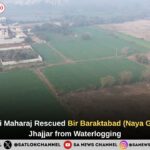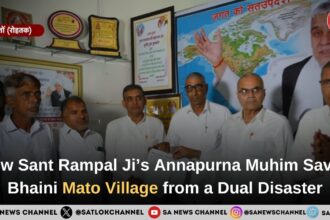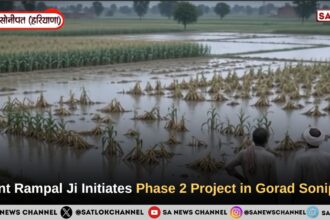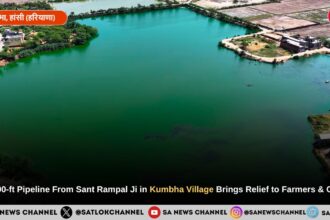


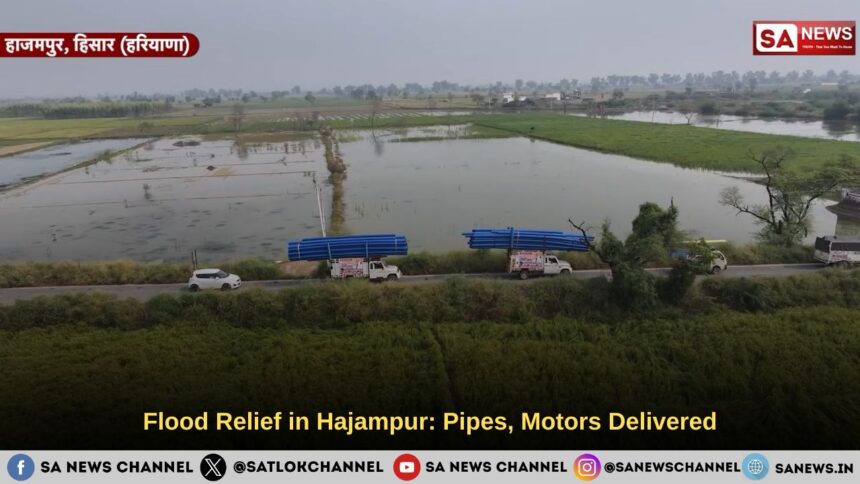
Flood-affected Hajampur village in Hansi, Haryana (earlier part of Hisar district), witnessed a large-scale relief effort after waterlogging disrupted farming activities and daily life. With no immediate administrative support, farmers faced uncertainty as the sowing season was slipping away. Following a collective appeal, essential equipment including pipes and motors was delivered, enabling water drainage and restoring the possibility of the next crop cycle. Residents described the intervention as timely and critical for their livelihood.
- Key Takeaways: Hajampur Flood Relief Effort
- Flood Crisis Disrupts Life and Farming in Hajampur
- Collective Appeal Leads to Immediate Response
- Comprehensive Relief: From Pipes to Complete Installation Setup
- Relief Under Annapurna Muhim and Wider Outreach
- Instructions to Villagers and Accountability Measures
- On-Ground Execution and Community Response
- Long-Term Impact on Agriculture and Rural Stability
- Broader Context: Role of Community and Institutions
- Restoring Hope Through Structured Relief
A separate appeal was formally made by the village representatives and Gram Panchayat, who approached Sant Rampal Ji Maharaj with a request for urgent assistance to address the flood crisis.
Key Takeaways: Hajampur Flood Relief Effort
- Hajampur village in Hansi faced severe flooding and crop damage
- No immediate administrative relief was available
- Villagers collectively appealed for assistance
- 11,500 feet of 8-inch pipes and two 15 HP motors were provided
- Complete supporting equipment was also delivered for installation
- Relief was extended under His Annapurna initiative
- Over 400 villages have received similar support
- Villagers were instructed to ensure water drainage for future sowing
Flood Crisis Disrupts Life and Farming in Hajampur
Hajampur village experienced extensive flooding that left agricultural fields submerged, severely affecting farmers and daily life. Standing crops were damaged, and future sowing became uncertain as water remained stagnant in the fields. Essential services were also disrupted, with reports of schools and dispensaries being inaccessible due to waterlogging.
Farmers expressed distress over the situation, highlighting that the delay in sowing could lead to long-term economic losses. The lack of immediate administrative support further intensified the challenges faced by the villagers.
Collective Appeal Leads to Immediate Response
Amid the crisis, the entire village, along with the Gram Panchayat, made a collective request seeking assistance. The appeal highlighted the urgency of removing water from fields to save the upcoming crop cycle.
Following this request, Sant Rampal Ji Maharaj accepted the appeal and directed that the required materials be delivered to the village.
Comprehensive Relief: From Pipes to Complete Installation Setup
The relief provided included not only major equipment but also every essential component required to make the system functional.
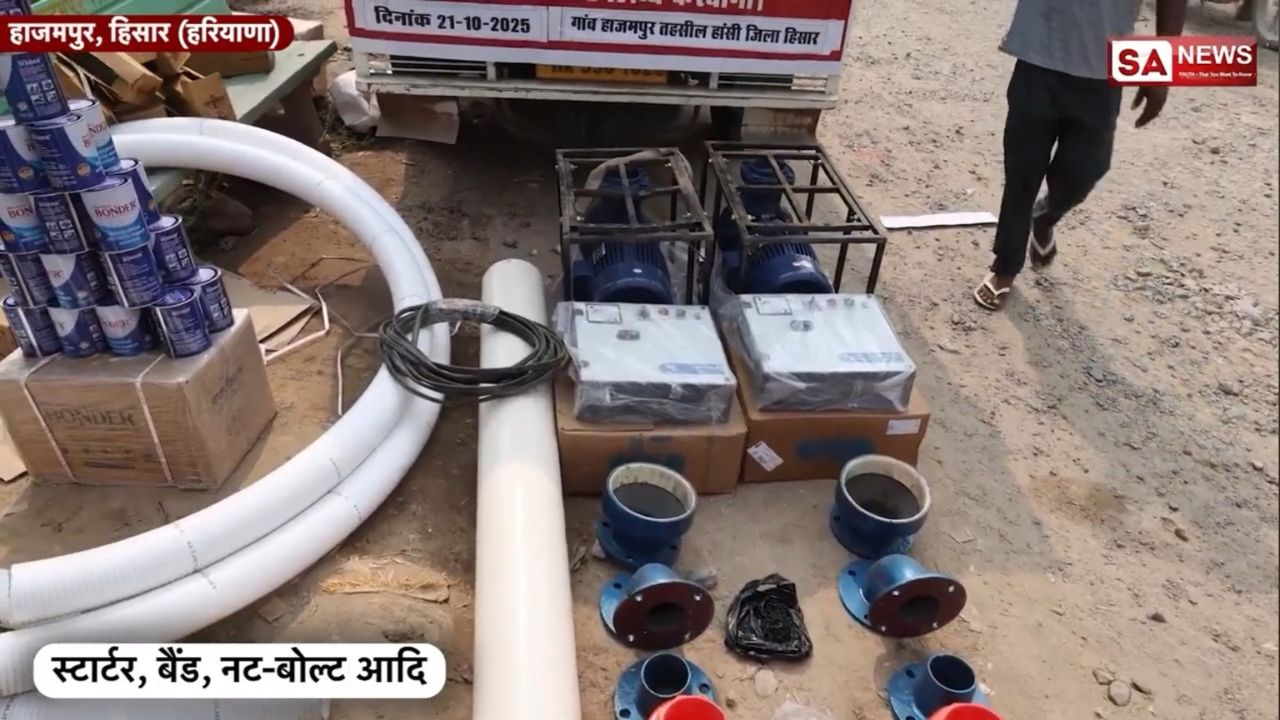
Material Delivered to Hajampur
| Item | Details |
| Pipes | 11,500 feet, 8-inch |
| Motors | 2 units, 15 HP |
| Motor Brand | Crompton |
| Supporting Equipment | Starters, cables, clips, bands |
| Additional Components | Jointers, nuts, bolts, screws |
| Electrical Items | Wires and connectors |
The support extended far beyond just major equipment. At a single instruction from Tatvdarshi Sant Rampal Ji Maharaj, His disciples arranged everything required to make the system operational, including starters, cables, suction pipes, rubber gaskets, adhesives, and all necessary fittings.
Villagers stated that they did not need to purchase even the smallest item from the market, as the entire setup was provided.
Relief Under Annapurna Muhim and Wider Outreach
The assistance was extended by Sant Rampal Ji Maharaj under His Annapurna Muhim, which was started months earlier to support those in need. Flood-affected villages, including Hajampur, were included under this initiative.
According to the information shared during the relief effort, similar assistance has already been provided in more than 400 villages, and the work is ongoing.
Instructions to Villagers and Accountability Measures
Along with the material, a formal message was conveyed to the villagers. They were instructed to ensure that the water is removed from the village within the required time so that sowing can take place.
Key points of the instructions included:
- The equipment is meant for permanent use and should be installed properly
- Villagers must work collectively to remove water
- If water is not cleared and sowing does not happen, future assistance may not be extended
- Additional materials can be requested if required
To maintain transparency, the village condition was documented through video recordings:
- Current flood situation
- After water removal
- During crop growth
These recordings are intended to demonstrate the effective use of resources.
On-Ground Execution and Community Response
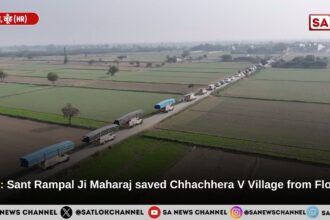
The delivery of materials involved trucks and tractor trolleys transporting pipes and equipment to the village. Volunteers coordinated the process, ensuring that all items reached the site and were handed over to the Gram Panchayat.
The Sarpanch confirmed that all requested materials were received as per demand. A written acknowledgement and agreement were also signed by the Panchayat.
Residents expressed their views on the development:
- Farmers noted that without the intervention, sowing would not have been possible
- Several villagers stated that the work addressed a gap where administrative support had not reached
- The availability of drainage equipment was seen as a long-term solution
An elderly resident remarked that the assistance had effectively “saved” the village’s agricultural prospects.
Long-Term Impact on Agriculture and Rural Stability
The installation of pipes and motors is expected to provide a permanent solution to waterlogging. Villagers have been advised to embed the system in their fields so that excess rainwater can be drained whenever required.
This is expected to:
- Prevent future crop losses due to flooding
- Enable timely sowing
- Support economic stability for farmers and labourers
The intervention was described by residents as a long-term asset that could benefit future generations.
Broader Context: Role of Community and Institutions
The situation in Hajampur also highlighted the challenges faced during natural disasters, where government efforts may not always be sufficient. The relief effort emphasized the role of organized community support in addressing such crises.
It was also noted during the event that contributions received are utilized for public welfare activities, including disaster relief and support for vulnerable communities.
Restoring Hope Through Structured Relief
The development in Hajampur reflects a shift from immediate crisis response to long-term recovery planning. With the provision of complete drainage infrastructure and clear instructions for usage, the focus has been placed on enabling self-sufficiency within the village.
Residents now look toward the upcoming sowing season with renewed confidence, as the intervention has addressed both the immediate challenge of waterlogging and the broader concern of agricultural continuity.
Please Do Visit Our Official Social Media Channels:
Website: www.jagatgururampalji.org
YouTube: Sant Rampal Ji Maharaj
Facebook: Spiritual Leader Saint Rampal Ji
‘X’ handle: @SaintRampalJiM