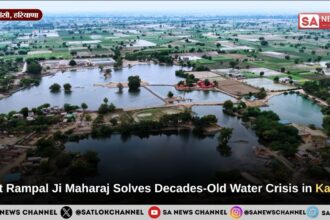


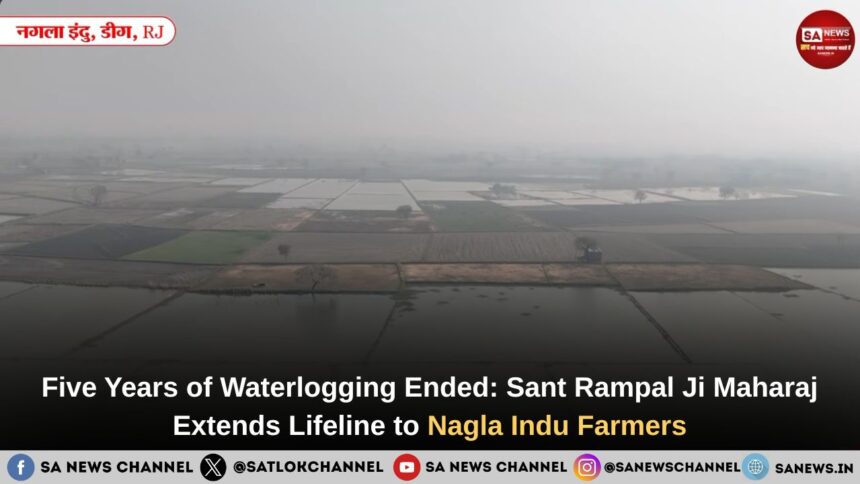
Deeg, Rajasthan: For the residents of Nagla Indu village in Kumher Tehsil, waterlogging had become more than just a seasonal inconvenience; it had turned into a long-term crisis. For nearly five years, vast stretches of agricultural land remained submerged, leaving farmers unable to cultivate crops and threatening the economic stability of the entire village.
What was once productive farmland had gradually transformed into stagnant pools of water, pushing many farming families toward financial hardship and uncertainty.
Thousands of Bighas Left Unproductive
According to local residents, nearly 2,500–3,000 bighas of fertile land remained under water for years. Since agriculture serves as the primary source of income for most families in the village, the prolonged waterlogging severely impacted livelihoods.
With no harvests coming from the affected fields, many households struggled to sustain themselves. Some families reportedly migrated in search of work, while others feared they might eventually have to leave their ancestral lands behind.
A Plea for Help
Facing mounting challenges, village representatives and community leaders approached Sant Rampal Ji Maharaj and explained the difficulties being experienced by local farmers. They highlighted the urgent need for a practical solution that could help remove stagnant water and restore agricultural activity.
The villagers sought assistance not merely for temporary relief but for a solution that would allow them to reclaim their fields and resume farming.
Rapid Response Through Annapurna Muhim
After learning about the situation, Sant Rampal Ji Maharaj arranged immediate assistance for the village. Keeping in mind the area’s limited electricity availability and local conditions, a relief package was prepared specifically to address the waterlogging challenge.
The support included:
• Four tractor coupling sets
• 1,150 feet of 6-inch drainage pipeline
• Necessary accessories and operational equipment
• Diesel support for running the machinery
The equipment was delivered to the village through a dedicated relief convoy, enabling residents to begin efforts to drain accumulated water from affected areas.
Farmers See a Path Forward
The arrival of the relief materials was welcomed by villagers, who viewed the assistance as a significant step toward restoring normalcy.
Community members expressed optimism that once the water is removed, agricultural operations can resume across thousands of bighas of land. Many believe that bringing the submerged fields back into cultivation will improve incomes, strengthen the local economy, and reduce the hardships faced by farming families over recent years.
Village representatives also conveyed their appreciation for the support, noting that the assistance addressed a challenge that had persisted for a long time.
More Than Emergency Assistance
Residents stated that the relief package represents more than short-term support. The pipeline infrastructure and drainage equipment are expected to help the village manage excess water more effectively in the future as well.
By addressing the root cause of the problem, the initiative aims to create conditions that can support sustainable agricultural activity and reduce the impact of recurring water accumulation.
Continuing Humanitarian Efforts
The support provided to Nagla Indu village forms part of the broader Annapurna Muhim initiative. Through this campaign, assistance has been extended to numerous flood-affected communities facing challenges related to waterlogging, damaged infrastructure, and agricultural losses.
The initiative continues to focus on providing practical support to communities affected by natural calamities and helping them rebuild their livelihoods.
Looking Ahead
For the people of Nagla Indu, the relief effort marks the beginning of a new chapter. Fields that remained unusable for years may soon return to production, offering farmers an opportunity to rebuild and move forward.
As drainage work progresses, villagers hope to once again see crops growing where stagnant water once stood, a development that could restore both agricultural productivity and confidence in the future.