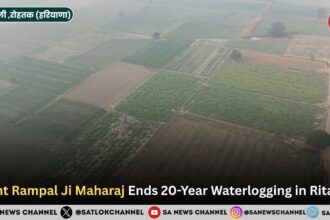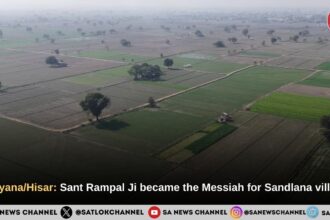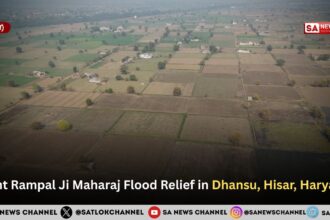


Residents of Rajli village in Haryana’s Barwala tehsil said floodwater receded and farming activity resumed after pipes and motors were installed following weeks of heavy rain and waterlogging. Villagers described water levels reaching four to six feet, crop losses of up to 80 percent, and hundreds of farm dwellings being abandoned.
- Key Takeaways on Rajli Flood Recovery
- Heavy Rain Leaves Village Submerged
- Panchayat Approaches for Assistance
- Drainage Work and Gradual Improvement
- Villagers Describe Earlier Damage
- Return of Families and Farming Activity
- Statements From Residents
- What the Current Situation Shows
- A Village Watching Its Fields Revive
According to residents and local representatives, the assistance was arranged after the village panchayat approached Tatvdarshi Sant Rampal Ji Maharaj. Interviews recorded at the site showed families returning to their homes, wheat sowing restarting across most farmland, and drainage work continuing in remaining patches.
Key Takeaways on Rajli Flood Recovery
- Floodwater surrounded Rajli village at depths of four to six feet
- Residents reported 80% crop damage and 100–150 farm dwellings affected initially
- The village panchayat requested four motors and 20,000 feet of pipeline
- Villagers said pipes, motors, cables and fittings were delivered within 24 hours
- After about two months, most farmland was reported dry and wheat sowing underway
- Farmers and residents described returning home after weeks of displacement
Heavy Rain Leaves Village Submerged
Rajli village, located in Hisar district of Haryana, was described by residents as being surrounded by floodwater following intense rainfall. According to villagers, water accumulated to depths ranging between four and six feet, inundating roads, farmland and residential areas.
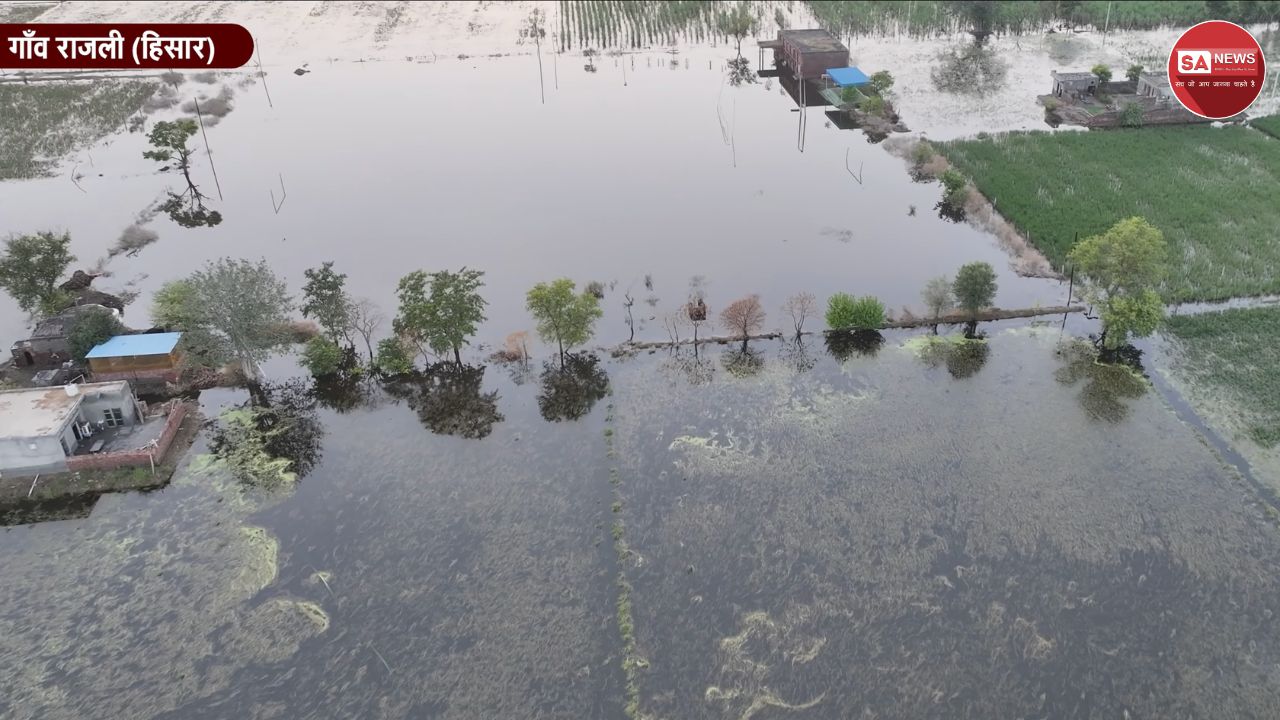
Local representatives said nearly 80 percent of standing crops were damaged. Between 100 and 150 farm dwellings, locally called dhanis, were reported unsafe, forcing families to shift temporarily to the main village or to relatives’ homes. Some villagers stated that around 200 to 250 such dwellings were vacated at the peak of flooding.
Residents added that water had flowed into the area from multiple directions, including sides linked to nearby villages and fields, overwhelming natural drainage routes. In several places, floors inside houses cracked, walls developed damp patches and visible waterlines marked the height of inundation.
Panchayat Approaches for Assistance
With floodwater persisting and residents unable to begin fresh sowing, Rajli’s sarpanch and the full gram panchayat said they approached Tatvdarshi Sant Rampal Ji Maharaj for help.
According to statements recorded on camera, the village requested:
- Four motors
- Around 20,000 feet of pipeline
- Supporting equipment required for installation
Villagers said that within 24 hours of the request, a large convoy reached Rajli carrying 8-inch pipes, four 20-horsepower motors, starters, cables, adhesive materials and nuts and bolts so that nothing would need to be purchased locally.
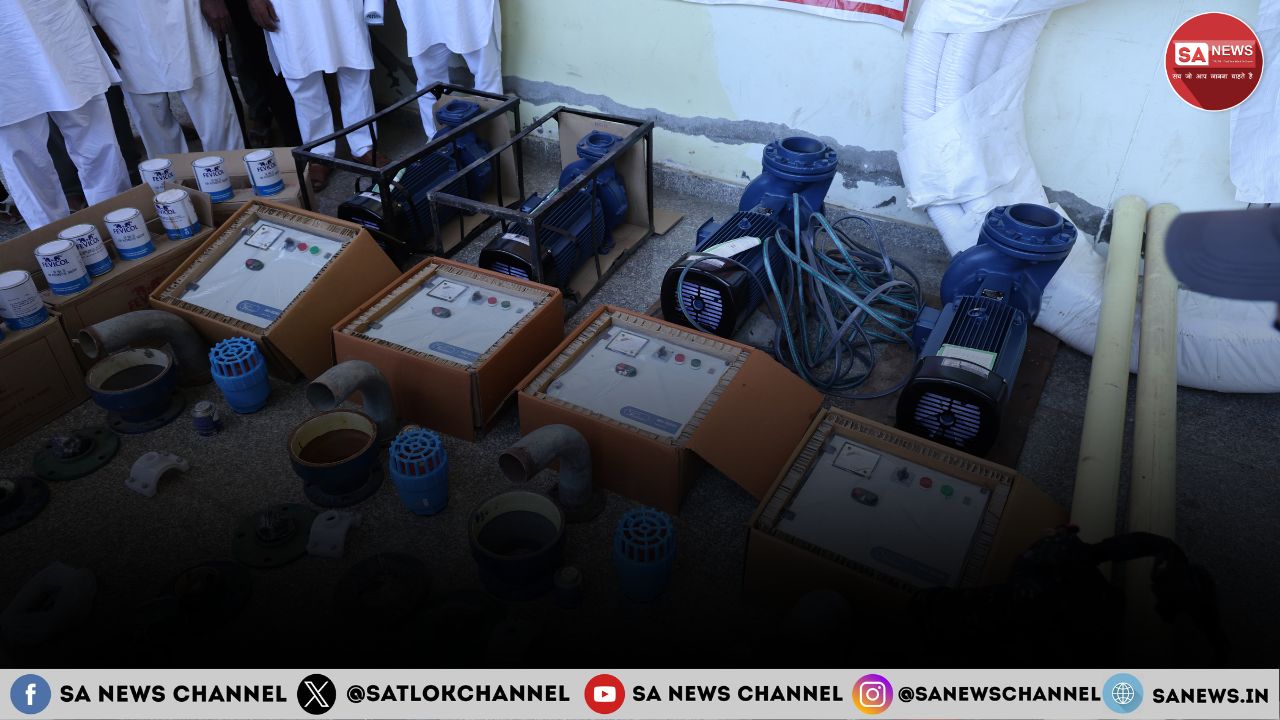
Residents repeatedly stated that the materials were supplied so drainage work could start immediately and water could be diverted toward lower-lying or dry areas.
Drainage Work and Gradual Improvement
Farmers and villagers said the motors and pipes ran continuously, with local residents connecting lines across different sections of farmland to guide water away from submerged fields and homes.
According to multiple interviews:
- About 2,000 acres or kilas of land had been underwater earlier
- Conditions came under control within roughly one month of drainage efforts
- After around two months, most of the village area appeared dry
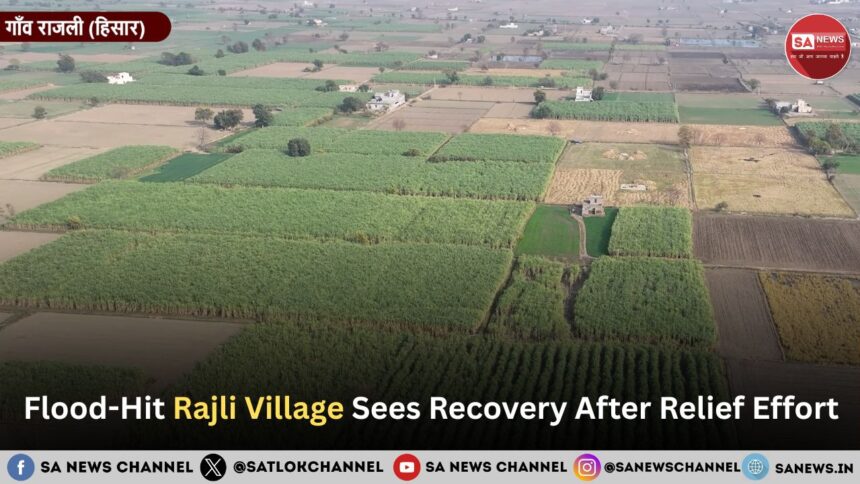
Several farmers said that 90 to 95 percent of farmland had already been sown again, while only four to five percent remained pending and was expected to be cultivated within days. In some fields, wheat plants were reported to be 15 to 20 days old.
Residents also pointed to dried roads, harvested paddy fields and newly prepared wheat plots as signs of recovery.
Villagers Describe Earlier Damage
During repeated visits to Rajli, reporters spoke with farmers, elderly residents and women who had experienced the flooding firsthand.
Some villagers said water inside their houses had risen to one and a half to two feet, while levels outside touched nearly six feet. They described cracked floors, gaps in walls, seepage marks and peeling paint.
One resident said his family had to shift to the main village for nearly two months along with children, cattle and household belongings. Others said livestock had been crowded into safer areas and daily wage work had halted, leaving families without income.
According to villagers:
- Around 100 to 200 homes were vacated at the height of flooding
- Many families stayed with relatives or in temporary shelters
- Some areas had gone nearly six years without proper sowing due to repeated waterlogging
Several residents stated that without drainage, fresh wheat sowing would not have been possible and rehabilitation would have remained uncertain.
Return of Families and Farming Activity
As water levels dropped, families said they gradually returned to their homes and farm dwellings. Fields that had remained muddy for weeks were levelled and prepared for sowing.
Farmers interviewed during the later visit said:
- Nearly all standing water had receded across the village
- Wheat sowing had resumed across most plots
- Only small pockets still held moisture
Residents also said irrigation planning had restarted, marking a shift from flood control to crop management.
Several villagers credited the installation of pipes and motors for enabling drainage at a time when winter conditions made natural evaporation slow.
Statements From Residents
Throughout the site visits, villagers repeatedly expressed gratitude for the assistance and said the work had brought major relief.
They stated that:
- Pipes and motors had been placed permanently in certain locations
- Drainage continued even after major waterlogging ended
- Surrounding villages also benefited from similar efforts
Some residents said that earlier approaches to authorities had not resulted in immediate solutions, while the new arrangements allowed farming to restart before the sowing window closed.
Farmers added that labourers had returned to work in the fields and that daily life was gradually stabilising as cultivation resumed.
What the Current Situation Shows
By the time of the final visit, reporters observed dried ground, harvested paddy stalks, freshly sown wheat fields and families moving back into farm homes.
Villagers said Rajli’s farmland, once described as resembling a waterlogged expanse, was now largely restored for agriculture, with cultivation underway across most of the area.
A Village Watching Its Fields Revive
Residents of Rajli village said they were focusing on the coming harvest after weeks of disruption caused by flooding. Interviews showed families returning home, cattle back in sheds and farmers preparing remaining plots for sowing.
While villagers continued to point to structural damage inside some houses and the hardship faced during displacement, they also said that waterlogging had eased across almost the entire area. With wheat now sprouting in most fields, residents described the situation as a major turnaround from the conditions recorded during the height of the floods.
For More Information Please Visit:
Website: www.jagatgururampalji.org
YouTube: Sant Rampal Ji Maharaj
Facebook: Spiritual Leader Saint Rampal Ji
‘X’ handle: @SaintRampalJiM–