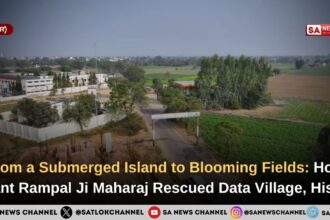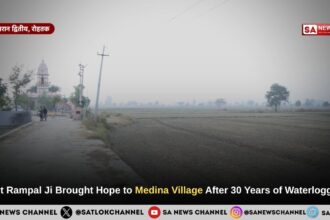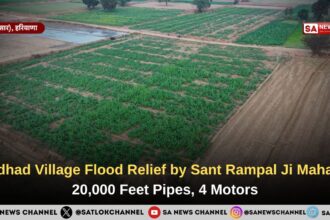


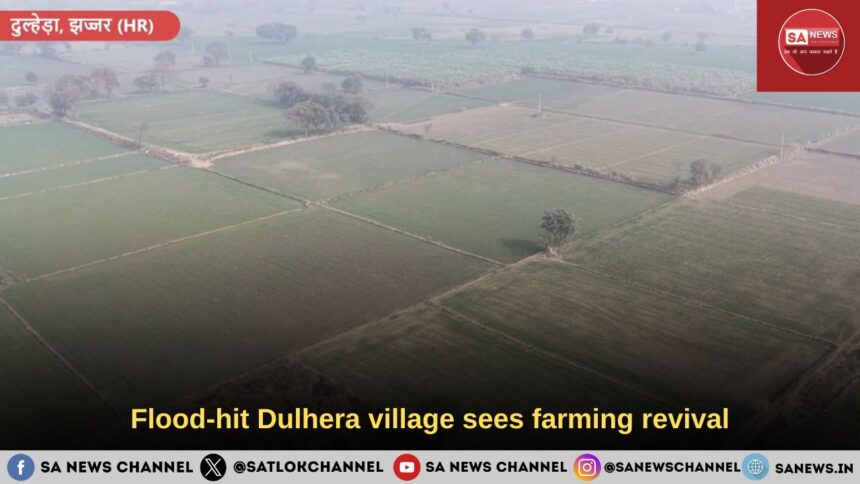
For nearly three months, Dulhera village in Jhajjar, Haryana remained trapped under several feet of stagnant water, affecting over 500–600 acres of agricultural land and destroying the Kharif crop. With limited administrative intervention, the village faced mounting losses and uncertainty over future sowing. However, a rapid response involving essential equipment and collective local effort enabled the complete drainage of water, leading to full wheat sowing and visible recovery across the fields.
- Key Takeaways: Dulhera Flood Crisis and Recovery
- Months-Long Flooding Leaves Village in Distress
- Crop Loss and Growing Uncertainty
- Limited Administrative Response
- Rapid Assistance and Deployment of Equipment
- Continuous Effort Leads to Water Drainage
- From Flooded Fields to Green Farmland
- Farmers Share Ground Realities
- Village-Level Coordination and Execution
- Restoration of Livelihoods and Stability
- A Turnaround Driven by Timely Intervention
In search of relief, the villagers approached Tatvdarshi Sant Rampal Ji Maharaj Ji through His Muninder Dharmarth Trust with a prayer, seeking urgent help as the situation continued to worsen.
Key Takeaways: Dulhera Flood Crisis and Recovery
- Dulhera village remained waterlogged for nearly three months
- Around 500–600 acres of land were severely affected
- Kharif crop (paddy) was completely destroyed
- Wheat sowing was at risk due to persistent flooding
- Villagers received no substantial administrative relief
- Tatvdarshi Sant Rampal Ji Maharaj Ji provided pipes and motors within 24 hours
- Complete drainage of water was achieved through collective effort
- Wheat sowing reached up to 100% in the village
- Farmers reported recovery, greenery, and improved conditions
Months-Long Flooding Leaves Village in Distress
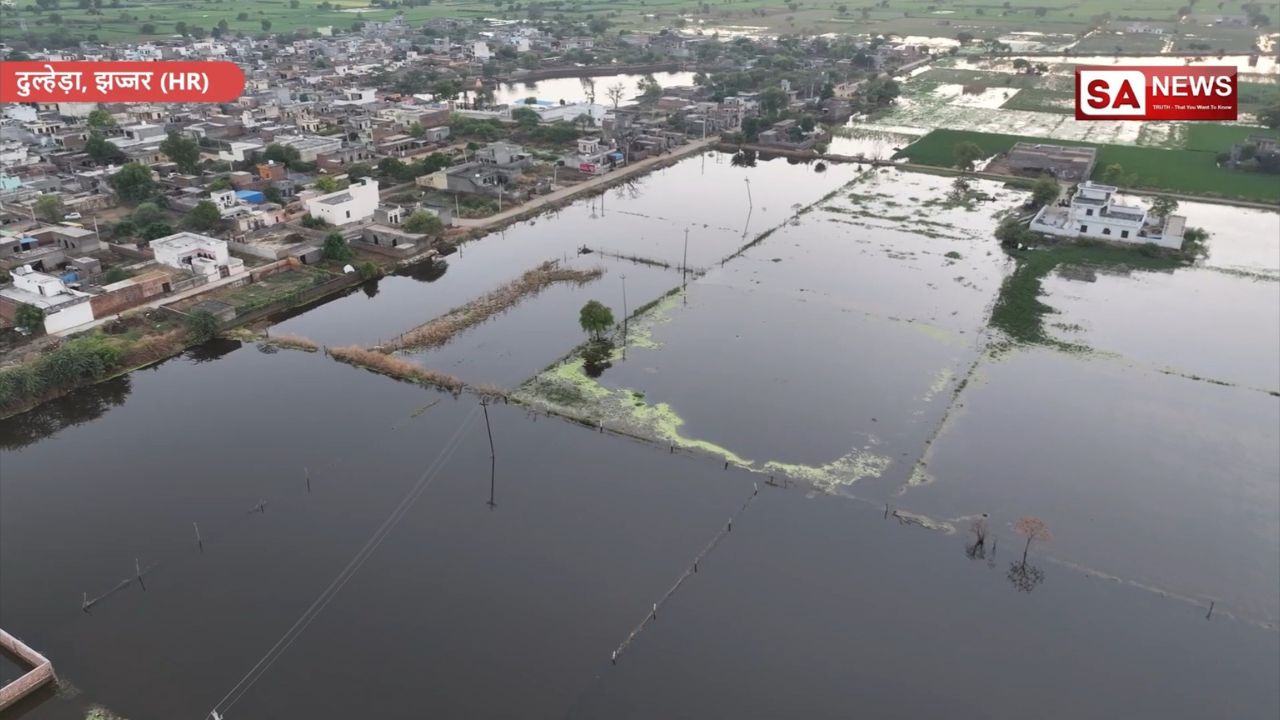
Dulhera village in Jhajjar district experienced severe flooding for nearly three months, leaving large parts of farmland submerged under several feet of stagnant water. According to villagers, more than 200 acres initially, and eventually up to 500–600 acres, were affected as water accumulated in the village’s low-lying areas.
The situation was aggravated by the natural slope of the land, where water from surrounding areas collected and transformed fields and open land into a pond-like expanse. Even the cremation ground remained submerged under approximately 4–5 feet of water, making it difficult for residents to perform last rites.
Also Read: The Miracle of Bheni Bhairo: Sant Rampal Ji Maharaj Restores Life to 1,000 Submerged Acres
Crop Loss and Growing Uncertainty
The prolonged waterlogging led to the complete destruction of the Kharif crop, particularly paddy, resulting in heavy financial losses for farmers. Several villagers estimated losses running into lakhs, while others indicated that overall damage across the area reached crores.
Farmers expressed concern that if the situation persisted, even the upcoming wheat crop would be lost. As one villager noted, if both crops were destroyed, farmers would be left with no means of recovery.
Limited Administrative Response
Villagers stated that they approached local administration seeking assistance. However, they were informed that the situation was a natural disaster and that they would need to manage on their own.
With no immediate solution and increasing distress, the village panchayat decided to seek alternative support to prevent further losses.
Rapid Assistance and Deployment of Equipment
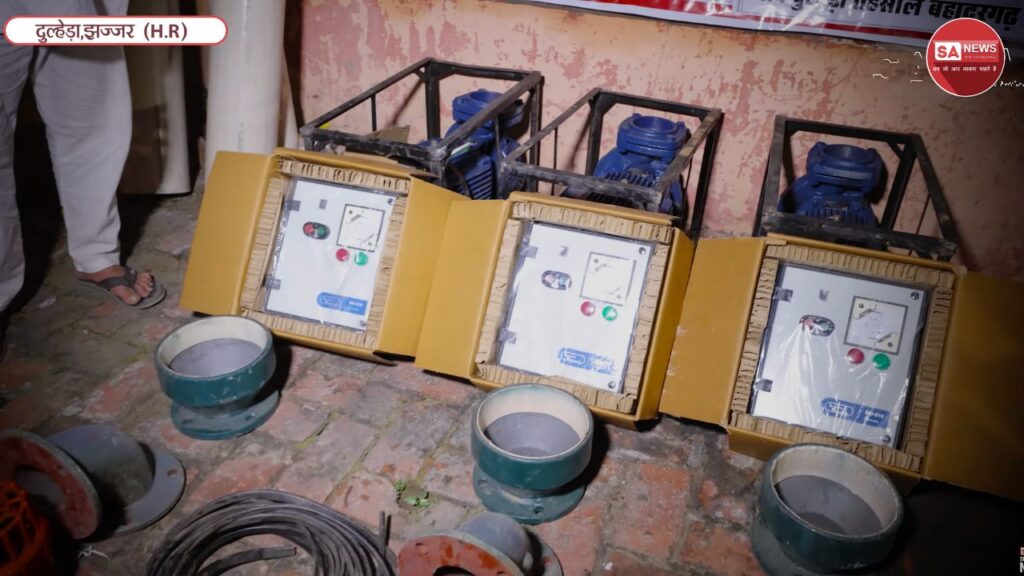
Following the villagers’ request, Tatvdarshi Sant Rampal Ji Maharajarranged assistance within 24 hours. The support included:
- 5000 feet of 8-inch pipeline
- Three powerful 15 HP motors
- Complete operational setup materials
The support extended far beyond just major equipment. At a single instruction from Tatvdarshi Sant Rampal Ji Maharaj Ji, His disciples arranged everything required to make the system operational, including starters, cables, elbows, suction pipes, rubber gaskets, adhesives like Fevicol, and even the smallest steel nuts and bolts. As villagers themselves expressed, “We didn’t have to purchase even a single nut from the market to get everything running.”
All materials were provided free of cost.
Continuous Effort Leads to Water Drainage
Villagers installed the motors at different points and began continuous operations to remove water from the fields. The machines ran day and night, gradually pushing out the stagnant water that had persisted for months.
Farmers and local residents collectively participated in the process, ensuring effective use of the equipment. Over time, the water level reduced significantly, and most of the affected land became suitable for cultivation again.
Alos Read: When the System Surrendered, SATGURU Rampal Ji Maharaj Became Dulhera’s Savior
From Flooded Fields to Green Farmland
The transformation in Dulhera was visible as water receded and farming resumed. Areas that were previously submerged under 4–5 feet of water began showing signs of agricultural activity.
- Wheat sowing reached up to 100% in many parts of the village
- Some farmers initially reported around 70% sowing, which later progressed further
- Fields that once showed signs of destruction turned green with new crops
The cremation ground and surrounding land, once waterlogged, also became accessible again.
Farmers Share Ground Realities
Local farmers and residents highlighted the scale of both loss and recovery:
- One farmer reported damage across 20 acres, estimating a loss of around ₹2.5–2.75 lakh
- Others confirmed that paddy crops were completely destroyed
- Water remained in the village for 3–4 months, even crossing road levels
Farmers stated that the drainage system using pipes and motors played a key role in enabling wheat cultivation. Many expressed that without timely intervention, the situation would have resulted in further severe losses.
Village-Level Coordination and Execution
The village panchayat coordinated the implementation of the support received. Motors were installed at multiple locations to ensure efficient drainage across different areas.
Residents emphasized that the equipment was used effectively and that the collective effort of villagers contributed significantly to the outcome. The process demonstrated how coordinated action and resource availability helped restore agricultural activity.
Restoration of Livelihoods and Stability
With the completion of wheat sowing and visible crop growth, farmers in Dulhera reported a sense of relief. The return of cultivation meant that despite earlier losses, they were able to regain some stability.
Residents noted that the availability of food and crop output would help sustain families and reduce the impact of earlier damage. The overall condition of the village improved as fields turned green and agricultural work resumed.
A Turnaround Driven by Timely Intervention
The situation in Dulhera reflects how a prolonged natural challenge was addressed through timely support and collective effort. From months of waterlogging and crop destruction to full wheat sowing and visible recovery, the village experienced a significant transition.
Villagers acknowledged that the assistance received, combined with their own efforts, enabled them to overcome a difficult phase and restore their agricultural cycle.
Website: www.jagatgururampalji.org
YouTube: Sant Rampal Ji Maharaj
Facebook: Spiritual Leader Sant Rampal Ji
‘X’ handle: @SaintRampalJiM