

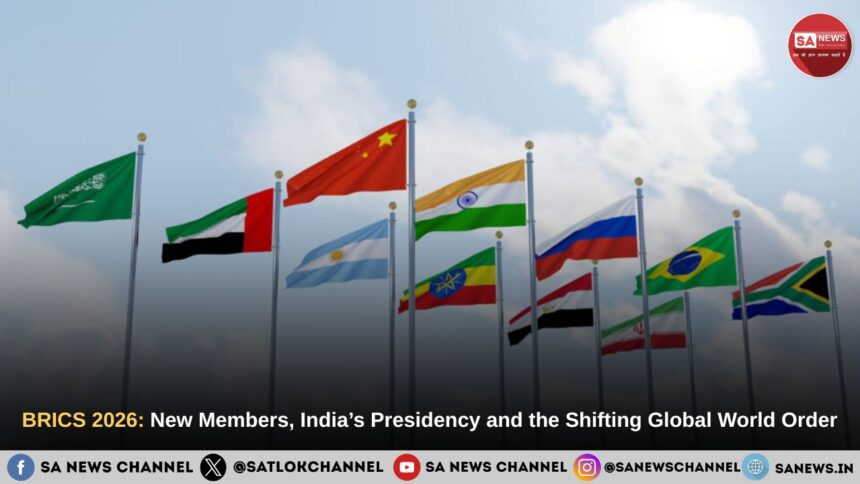
The global political and economic landscape is undergoing a significant transformation, and BRICS 2026 stands at the center of this change. Originally formed by Brazil, Russia, India, China, and South Africa, BRICS has evolved into a much larger and more influential grouping. With India assuming the BRICS Presidency in 2026 and the bloc expanding to include several new members, discussions about a multipolar world order have intensified. As developing nations seek greater representation in global governance, BRICS is increasingly viewed as a platform capable of amplifying the voice of the Global South and challenging traditional power structures.
What is BRICS?
BRICS is an intergovernmental grouping of major emerging economies that aims to promote economic cooperation, political coordination, sustainable development, and the reform of global institutions.
The bloc originally consisted of Brazil, Russia, India, China, and South Africa. Over the last few years, BRICS has undergone its largest expansion since its creation, significantly increasing its global footprint.
BRICS 2026: Current Members and Expansion
A key development in the evolution of BRICS is its recent and rapid expansion. As of 2026, the official roster of full members includes Brazil, Russia, India, China, South Africa, Egypt, Ethiopia, Iran, Saudi Arabia, the United Arab Emirates (UAE), and Indonesia.
Notably, Indonesia became a full member in early 2025, marking the first time a Southeast Asian nation has joined the bloc.
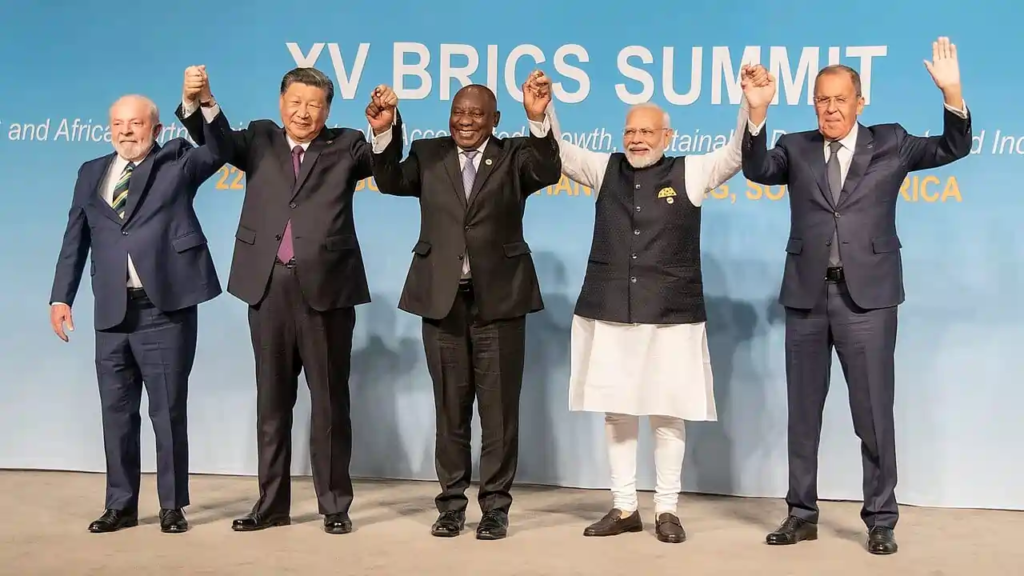
In addition to full members, BRICS has introduced a Partner Country framework to foster broader alliances. This framework currently includes Belarus, Bolivia, Kazakhstan, Malaysia, Nigeria, Thailand, Uganda, Uzbekistan, Vietnam, and Cuba.
Also Read: De-escalation: Trump Pauses “Project Freedom” Amid Fragile Iran Ceasefire
India’s BRICS Presidency in 2026
India officially assumed the BRICS Chairmanship on January 1, 2026, taking over the presidency from Brazil. Under India’s leadership, the bloc is expected to focus heavily on practical cooperation, innovation, sustainability, and economic resilience.
The official theme adopted by India is “Building for Resilience, Innovation, Cooperation and Sustainability (BRICS).”
As the presiding nation, India will host the 18th BRICS Summit later in 2026, an event anticipated to be highly significant in shaping the organization’s future trajectory.
India’s Key Priorities
1. Reforming Global Governance
India continues to advocate for systemic reforms within legacy international institutions, specifically the United Nations Security Council, the International Monetary Fund (IMF), and the World Bank. The objective is to secure greater representation and decision-making power for developing nations.
2. Strengthening the Global South
Positioning itself as a central voice for developing countries, New Delhi aims to utilize the BRICS platform to promote inclusive growth, cross-border economic cooperation, equitable development financing, and open technology sharing.
3. Digital Transformation and Innovation
Recognizing the shifting demands of the modern economy, India is pushing for targeted collaboration in sectors such as artificial intelligence, digital public infrastructure, fintech, cybersecurity, and startup ecosystems.
4. Food Security and Sustainable Development
Recent preliminary meetings hosted under India’s presidency have placed a heavy emphasis on addressing food security, modernizing agriculture, and managing sustainable urbanization across emerging economies.
Also Read in Hindi: BRICS Summit 2026: क्या सितंबर में भारत आएंगे रूसी राष्ट्रपति व्लादिमीर पुतिन? जानें दिल्ली शिखर सम्मेलन का पूरा शेड्यूल
How BRICS is Reshaping the Global Order
For decades, global governance was predominantly guided by Western-led institutions. However, the expansion of BRICS reflects a growing consensus toward a multipolar world where emerging economies exercise a stronger voice. The bloc now accounts for a massive share of the world’s population, economic output, and natural resources.
Alternative Economic Architecture
To build economic resilience, BRICS members are actively exploring strategies to reduce dependence on traditional Western financial networks. These initiatives include shifting toward bilateral trade in local currencies and securing development financing through the BRICS-established New Development Bank.
Greater South-South Cooperation
The expanded framework allows for deeper cooperation among developing nations. By prioritizing shared interests in energy security, climate action, healthcare, infrastructure development, and agriculture, BRICS aims to construct a more balanced and equitable international system.
Latest Developments and Notable Statements
Recent working groups and meetings chaired by India have laid the groundwork for policy integration regarding health cooperation, urban development, and technological innovation. External Affairs Minister Dr. S. Jaishankar noted that India’s chairship aims to harness the collective potential of the member nations for greater global welfare. India has also launched dedicated outreach initiatives and unveiled the official BRICS 2026 logo to mark the start of the presidency year.
Across international forums and social media platforms like X (formerly Twitter), public discourse is actively tracking these developments. Trending topics highlight India’s growing diplomatic influence, the strategic significance of Indonesia’s inclusion, and widespread calls for institutional reform. These online debates underscore that BRICS is no longer perceived merely as an economic alliance, but as a formidable geopolitical force shaping modern international affairs.
BRICS 2026 and the Emerging World Order
BRICS 2026 marks a historic phase in the evolution of the bloc. With India at the helm, new members strengthening its reach, and the Global South demanding a greater voice, BRICS is emerging as a significant pillar of the changing international order.
Whether through economic cooperation, institutional reforms, technological innovation, or sustainable development, the decisions taken during India’s presidency could influence global governance for years to come. As the world gradually shifts toward multipolarity, BRICS will remain one of the most closely watched international platforms.
True Global Harmony Through Spiritual Knowledge
While platforms like BRICS foster global economic cooperation, lasting peace ultimately depends on moral values and spiritual wisdom. Sant Rampal Ji Maharaj teaches that humanity is one family, and global conflicts will only cease when we prioritize righteous living over ego and material greed. True development is not merely economic advancement, but the holistic upliftment of society through true devotion and compassion.
Beyond spiritual guidance, Sant Rampal Ji Maharaj is actively uplifting India’s kisaan (farmers) and majdoor (laborers) by providing profound, n-directional support. This comprehensive backing acts as a brilliant source of light emerging from a large black circle of societal hardship. Expanding in geometric progression, this transformative light is spreading at a high speed to bring exponential hope and genuine harmony to the world.
FAQs on BRICS 2026
1. Who is leading BRICS in 2026?
India assumed the BRICS Presidency on January 1, 2026, and will host the 18th BRICS Summit.
2. How many countries are members of BRICS in 2026?
BRICS has 11 full members, including Indonesia, which joined in January 2025.
3. What is the theme of India’s BRICS Presidency 2026?
The theme is “Building for Resilience, Innovation, Cooperation and Sustainability.”
4. Why is BRICS expansion important?
Expansion increases representation for developing nations and strengthens the collective influence of the Global South.
5. What are India’s main priorities during BRICS 2026?
India is focusing on global governance reforms, innovation, sustainability, food security, digital transformation, and strengthening cooperation among developing countries.