


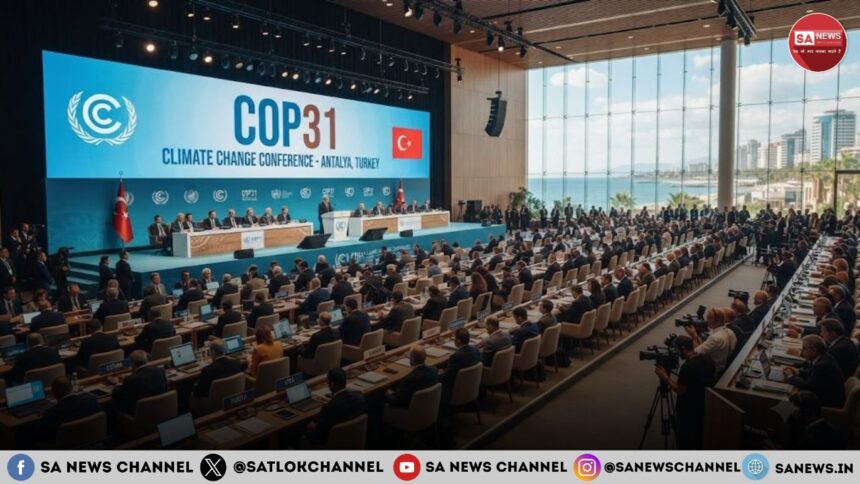
ANTALYA, TURKEY – The global diplomatic calendar has shifted its epicentre to the Mediterranean coast of Turkey, where world leaders, policymakers, environmental scientists, and industry delegates have converged for the high-level summit of the COP31 Climate Change Conference. Running from November 9 to November 20, 2026, at the Antalya Expo Center, the summit opened under strict security. Amid an unusually festive opening featuring traditional cultural showcases, the atmosphere inside the main venue carries an unmistakable undercurrent of profound urgency.
As delegates navigate packed corridors and early morning briefing sessions, the overriding consensus is clear: the window to mitigate the most catastrophic impacts of global heating is narrowing at an unprecedented pace. The conference has kicked off with stark warnings, ambitious policy blueprints, and intense negotiations over how to fast-track the global clean energy transition while protecting vulnerable economies.
The Rising Alarm: Navigating a Warming Planet
The summit opened with an address by United Nations leadership that immediately set a blunt and uncompromising tone for the fortnight of negotiations. Highlighting the accelerating pace of environmental degradation, the UN Secretary-General issued a sharp rebuke to major global polluters, accusing them of dragging their feet while climate catastrophes multiply across continents.
Also Read: Worse Than Aviation: How Food Waste Became Climate Change’s Hidden Driver
“Our planet is heating up. The clock is winding down. It’s make or bake time,” the UN chief declared during his landmark address.
Current scientific data presented ahead of the summit indicates that even if all existing national climate commitments are fully and unconditionally implemented, the planet remains on a trajectory heading toward more than 2.5°C of warming by the end of the century. This far exceeds the critical threshold established under the Paris Agreement.
However, leadership at COP31 has strongly cautioned against a sense of fatalism. Breaching the 1.5°C warming threshold does not signal licence to surrender; rather, it demands an intensified, aggressive global mobilization. Every fraction of a degree of warming avoided translates directly into millions of lives saved, ecosystems preserved, and trillions of dollars in averted economic damages.
Trade Cooperation and Green Technology
Parallel to the high-level political speeches, international economic bodies have released vital frameworks aimed at bridging the gap between climate ambition and commercial reality. A prominent new report released by UN Trade and Development (UNCTAD) underscores that accelerating climate action is fundamentally intertwined with global trade cooperation.
The report highlights a sobering economic projection: unmitigated climate change could result in global GDP losses of up to 10% under a 3°C warming scenario, with developing economies situated closer to the equator facing disproportionate losses reaching up to 17%. Under high-emissions scenarios, long-term global economic damage could scale even higher, threatening international financial stability.
Despite these formidable risks, the green economy is demonstrating explosive commercial growth. Global exports of goods tied directly to solar and wind energy value chains surpassed $1.8 trillion, expanding at a rate significantly faster than traditional manufactured goods. To sustain this momentum, UNCTAD has urged member states to dismantle unnecessary tariff and non-tariff barriers that impede the transfer of green technologies to developing nations.
Also Read: What Is Happening to Our Planet? Climate Change vs Global Warming Explained
While climate-related provisions have increasingly found their way into bilateral and multilateral trade agreements signed in recent years, the vast majority remain declaratory or focused on general cooperation. Less than a tenth of these provisions actively target the reduction of trade barriers for environmental goods. Experts at COP31 are pressing for binding, implementation-focused trade frameworks that make clean tech affordable, accessible, and locally scalable.
Protecting the Vulnerable: The Push for Universal Early Warnings
A major focal point of the Antalya summit-especially during the Leaders’ Summit segments on November 11–12, 2026-is the practical implementation of climate adaptation strategies, specifically the global rollout of advanced early warning systems. While nations like Japan and Rwanda have made remarkable strides in utilizing mobile networks, community cooperatives, and meteorological forecasting to protect citizens from extreme weather events, massive gaps remain in developing regions.
With a powerful El Niño cycle threatening to push global weather monitoring into uncharted territory, meteorological experts warn that vulnerable populations are sitting on the front lines of unprecedented climate shocks.
Addressing high-level events on the ground, international stakeholders have laid out three non-negotiable priorities for the coming decade:
- Institutionalizing Warnings: Making robust early warning frameworks a permanent, state-backed public service rather than temporary project-based interventions.
- Closing Financial Gaps: Ensuring that international climate finance covers the entire warning chain-spanning from high-tech satellite forecasting down to local community volunteers.
- Coordinated Long-Term Support: Moving away from fragmented, short-term foreign aid toward cohesive, country-led resilience plans.
Since the inception of the initiative, roughly 160 countries have received institutional support, mobilizing over $2 billion. However, leaders at COP31 stressed that funding must scale exponentially to match the speed of accelerating climate volatility.
The Road Ahead in Antalya
As COP31 proceeds through its scheduled sessions toward its scheduled close on November 20, 2026, the real test will lie in whether major industrial economies can move past rhetoric and commit to binding financial mechanisms, enforceable carbon-reduction targets, and equitable technology-sharing agreements.
The sentiment on the ground in Antalya is a tense mixture of anxiety and resolute determination. As scientists and diplomats work around the clock to finalize texts for the final COP31 pact, the message echoing from the plenary halls is universal: the era of passive target-setting has closed, and humanity has entered a definitive era of accountability, structural transformation, and survival.
Climate Crisis and True Salvation: A Timeless Message
As world leaders gather in Antalya for COP31 to confront escalating climate emergencies and economic disruptions, humanity faces an unprecedented ecological crossroads. Earthly summits debate policies to heal a warming planet, yet true stability remains elusive. According to Sant Rampal Ji Maharaj, external environmental crises are direct reflections of unrighteous, man-made rituals.
True global harmony cannot be achieved through political rhetoric alone, but through complete surrender to the Supreme Creator, Kabir Sahib. The Vedas and Shrimad Bhagavad Gita point to a Supreme God who is the ultimate Creator of all universes and the true Sustainer. By abandoning scripture-violating practices and embracing the true path of devotion under a complete Saint, souls attain eternal peace and escape the cycle of birth and death. Aligning human actions with divine cosmic laws offers the only permanent sanctuary.
FAQs on COP31 Climate Change Conference
1. What is COP31 and where is it taking place?
COP31 is the 31st United Nations Climate Change Conference, hosted at the Antalya Expo Center in Antalya, Turkey.
2. What are the official dates for the COP31 summit?
The conference runs from November 9 to November 20, 2026, bringing together international delegates, scientists, and world leaders.
3. What are the core priorities discussed at COP31?
Key priorities include accelerating the global clean energy transition, expanding international trade cooperation for green technologies, closing climate adaptation gaps, and scaling financial frameworks.
4. Why is the Antalya summit considered critical for global climate policy?
The summit focuses heavily on translating long-term national commitments into binding financial mechanisms, enforceable carbon-reduction targets, and structural transformations to prevent severe global warming.
5. How do trade and economic frameworks integrate with COP31 goals?
Reports from international bodies like UNCTAD highlight that unmitigated climate change threatens global economic stability, making the removal of trade barriers for renewable energy goods and clean technologies essential for sustainable development.