


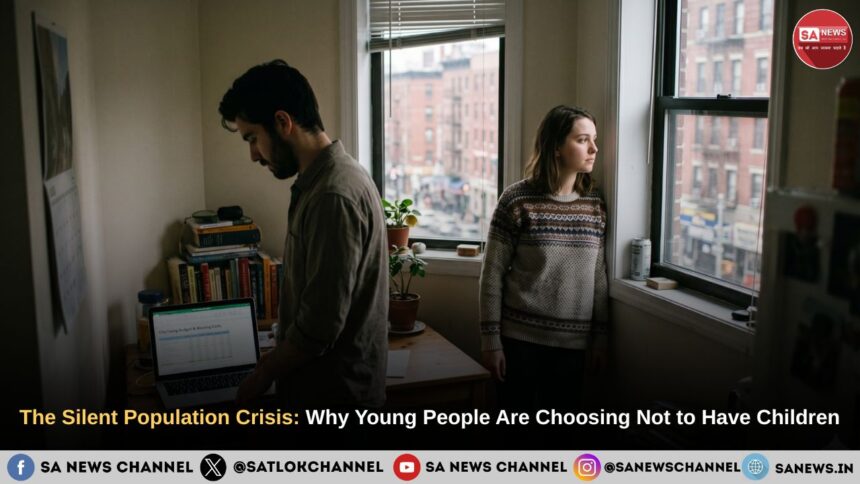
The world is facing a demographic challenge that is growing quietly but rapidly. Across developed and developing nations, birth rates are falling to historic lows. Many countries including South Korea, China, Japan, Italy, Germany, and the United States have experienced declining fertility rates over the past decade. While population growth was once a major concern, many governments now worry about shrinking populations and aging societies. Rising living costs, housing affordability issues, job insecurity, delayed marriages, and changing social values are influencing family planning decisions. This silent population crisis could have profound effects on economic growth, labor markets, healthcare systems, and the future of societies worldwide.
The Real Reasons Behind the Decline
The decision to delay or avoid having children rarely comes down to a single factor. Instead, it is driven by a web of modern pressures:
- The Affordability Crisis: Housing and daily living costs have outpaced wages. Without stable, affordable housing, family formation stalls. A 2025 UNFPA report found that nearly 39% of respondents cited financial limitations-from soaring rent to expensive childcare-as the primary barrier to having children.
- Shifting Timelines: Young adults are spending more years pursuing higher education and establishing careers. As career opportunities (especially for women) expand, establishing financial security often takes precedence over early parenthood.
- Economic and Global Uncertainty: Inflation, technological disruption, and job insecurity make young people question whether they can provide a stable environment for a child.
- Evolving Social Values: Parenthood is increasingly viewed as a choice rather than a mandatory life milestone, with many prioritizing personal growth, flexibility, and travel instead.
Also Read: Rising From A Sedentary Lifestyle: The Beginner’s Guide to Exercise
The Global Ripple Effects
When birth rates decline, the structure of society fundamentally changes.
| Demographic Shift | Societal & Economic Consequence |
| Aging Populations | A higher dependency ratio means fewer young workers must fund surging healthcare and pension costs for the elderly. |
| Shrinking Workforces | Fewer people entering the labor market leads to talent shortages, reduced productivity, and slower economic expansion. |
| Economic Stagnation | A shrinking population lowers overall consumer spending, tax revenues, and housing demand. |
To reverse these trends, policymakers are experimenting with solutions like subsidized childcare, affordable housing programs, and mandatory paid parental leave. However, financial incentives alone often struggle to reverse deeply ingrained cultural and economic shifts.
Rising Cost of Living
One of the biggest reasons behind declining birth rates is the increasing cost of living. Young adults are navigating a financial landscape that leaves very little room for the expenses of raising a child:
- Skyrocketing Housing Costs: Rent and mortgages consume a massive portion of monthly income, making it incredibly difficult for young couples to afford the extra bedroom or larger space a growing family requires.
- Exorbitant Childcare Fees: In many regions, full-time daycare and early childhood education cost as much as a second mortgage, sometimes wiping out an entire salary and forcing one parent out of the workforce.
- The Burden of Education: The long-term price tag of raising a child-from basic school supplies to college tuition-has surged, all while many young adults are still struggling to pay off their own student loans.
- Out-of-Pocket Healthcare: The steep costs associated with pregnancy, childbirth, and ongoing pediatric care act as a major financial deterrent, especially in countries lacking robust universal healthcare.
- Persistent Inflation: The shrinking purchasing power for everyday necessities-like groceries, utilities, and transportation-means paychecks simply do not stretch as far as they used to.
According to a 2025 UNFPA report, financial limitations were identified as the leading reason people have fewer children than they desire. Nearly 39% of respondents cited these exact economic pressures as their major barrier.
Also Read: Types of Farming: Major Farming Methods, Features, and Importance
A Spiritual Perspective on Modern Pressures
While economic and social pressures dominate modern discussions about the future, Sant Rampal Ji Maharaj offers a profoundly different perspective on human existence. According to His teachings, every soul in this entire world is a child of the Supreme God Kabir.
Instead of getting lost in the worldly race which often brings stress, dissatisfaction, and anxiety about the future His teachings emphasize that the true purpose of human life is spiritual. True happiness, peace, and contentment come through Satbhakti (true devotion) to God Kabir.
When individuals realize this universal connection and focus on righteous living, the heavy anxieties tied to material success and societal expectations begin to fade. Understanding our shared spiritual origin helps people lead a balanced, purposeful life, allowing them to navigate the modern world with deep inner peace and clarity.
FAQs on Population Crisis
1. Why are birth rates falling around the world?
Birth rates are falling due to rising living costs, housing affordability issues, delayed marriages, career priorities, economic uncertainty, and changing social values.
2. What is the replacement fertility rate?
The replacement fertility rate is approximately 2.1 children per woman, the level needed to maintain a stable population without migration.
3. Which countries have the lowest birth rates?
Countries such as South Korea, China, Japan, Italy, and Spain have some of the world’s lowest fertility rates.
4. How do falling birth rates affect the economy?
Declining birth rates can lead to workforce shortages, slower economic growth, increased healthcare costs, and pressure on pension systems.
5. Can governments increase birth rates?
Governments can encourage family formation through affordable housing, childcare support, parental leave policies, and economic stability measures, although results vary by country.