

Gravity is something we interact with every day in life and yet, humanity’s greatest scientific failure so far is being unable to decode what gravity truly is despite dedicated work spanning centuries. This article endeavours to crack the code of gravity by traversing through what we already know, such as how scientists from Isaac Newton to Albert Einstein transformed our understanding of gravity, to what we don’t know about gravity, in a simplified explanation.
- Highlights on Gravity
- ‘Gravity’ Was Shaping Life on Earth Since the Beginning
- What Is Gravity in Simple Words?
- The Invisible Force You Can Never Escape
- Why Do Objects Fall to the Ground?
- What Is the Difference Between Mass and Gravity?
- Why Is Gravity Important for Life on Earth?
- What Would Happen If Gravity Suddenly Disappeared for 5 Seconds?
- Ancient India’s Early Understanding of Gravity and Planetary Motion
- Every Theory of Gravity Solved One Mystery and Created Another
- The Falling Apple That Changed Human History
- How Einstein Altered Humanity’s Understanding of Gravity
- Why Einstein’s Theory Changed Modern Physics
- Is Gravity Really a Force?
- Gravity Is Surprisingly the Weakest Fundamental Force
- How Gravity Quietly Affects Our Everyday Life?
- Everyday Life
- Gravity Shapes the Human Body
- Why Do Astronauts Float in Space?
- How Gravity Affects Ageing in Space
- Why Is Gravity Stronger on Some Planets Than Others?
- The Most Extreme Gravity in the Universe
- Black Holes, Singularities and the Edge Where Modern Physics Fails
- What Are the Real-Life Applications of Gravity?
- Why Gravity Fascinates Scientists and Philosophers
- Why Gravity Still Remains One of Science’s Greatest Mysteries
- The Supreme Intelligence Governing the Universe
- FAQs on Gravity
Highlights on Gravity
- Gravity is believed to be the natural force that pulls objects toward one another.
- Researchers emphasise that Earth’s gravity keeps people, oceans and the atmosphere from drifting into space.
- Two theories are popularly known in the study of gravitational science.
- Newton’s law of gravity states that every object in the universe pulls on every other object.
- Einstein’s theory explains gravity as the bending of space and time caused by massive objects.
- Gravitational strength is said to be dependent on both mass and distance between objects.
- In 2015, scientists directly detected gravitational waves for the first time, almost a century after the proposed theories by Albert Einstein. (Source)
- Everyday life aspects are affected by gravity, such as for walking, rainfall, tides, sports and planetary motion.
- Despite years of research, modern science still cannot fully explain gravity at the quantum level.
‘Gravity’ Was Shaping Life on Earth Since the Beginning
A force has always held us safely against the Earth. It guided our first steps on the ground. It also affects our heartbeat regulation, our muscle function and stops the air around us from drifting into space.
Every drop of rain we have ever seen falling, every wave crashing onto a shore, every leap, fall and physical movement in our life has happened under an invisible force influencing those motions.
Long before we learned science and endeavored to understand ‘gravity’ or that natural, invisible force that pulls everything towards earth, this very force was already shaping our existence.
Yet despite experiencing this force every second of our lives, humanity still does not completely understand what gravity truly is. All we know is something that governs us, our movements, and it holds us to the surface of the Earth, but we are unable to define that very force or phenomenon.
That mystery is what makes gravity one of the most fascinating forces in the universe. This article is an endeavour to document humanity’s struggle to understand the reality of gravity, while simplifying the current understanding of gravity.
What Is Gravity in Simple Words?
In this section, we will touch upon the fundamentals we were taught in school. There exists a silent force connecting our everyday life to the movement of stars and galaxies. This is what humans call gravity.
- Gravity is defined as the natural force that attracts objects with mass toward one another.
- This force affects everything in the universe, from falling apples and ocean tides to planets, stars and galaxies.
- The same force pulling your feet toward Earth is also guiding planets around the Sun and shaping the structure of the universe itself.
- NASA describes gravity as the natural force that attracts objects with mass toward one another.
Most explanations convey that Newton explained gravity. Einstein improved it. Done. But the reality is far more complex and daunting.
The Invisible Force You Can Never Escape
Gravity is completely invisible. You cannot see it, touch it or switch it off. Yet gravity quietly controls nearly everything around you.
For ancient humans, gravity was simply part of existence. Objects always fell downward. Rain always returns to Earth. Rivers always flowed toward lower ground. People observed gravity constantly, yet for thousands of years, no one understood why these things happened.
The real question is, despite enormous scientific advancement, have we been able to achieve a complete understanding of this invisible force we call gravity? Why does even quantum physics fail to define gravity?
The irony is that scientists can measure gravity with extraordinary precision. However, one of the greatest mysteries in modern physics is that they still do not fully understand why gravity exists at all.
Before uncovering the gravity of the unanswered questions, let us take a brief look at what our science lessons taught us in school.
Why Do Objects Fall to the Ground?
We have been taught that objects fall to the ground because Earth’s gravity pulls them toward its centre. Additionally, Earth is extremely massive compared to everyday objects. Because of this huge mass, Earth produces a strong gravitational pull.
For example, near Earth’s surface, gravity causes falling objects to increase their speed by roughly 9.8 metres every second for each passing second. That means a falling object speeds up by roughly 9.8 m/s every second. (Source)
At the same time, air resistance can slow falling objects. A feather falls slower than a rock because air pushes upward against the feather more strongly.
What Is the Difference Between Mass and Gravity?
Mass measures how much matter an object contains, while gravity is the force pulling on that mass. For example, your mass stays the same on Earth and on the Moon. However, your weight changes because the Moon’s gravity is weaker.
Why Is Gravity Important for Life on Earth?
Science long believed that gravity is essential because it keeps Earth stable, habitable and capable of supporting life. Without this force, oceans, air, humans and even Earth’s atmosphere would drift into space.
NASA says earth’s atmosphere contains roughly 78% nitrogen and 21% oxygen and gravity prevents these gases from escaping into space.
Imagine This: If gravity suddenly disappeared for just five seconds, then humans, oceans, vehicles and even the atmosphere would begin drifting into space almost immediately.
Does Gravity Keep Planets in Orbit?
Planets travel at high speeds around the Sun. At the same time, the Sun’s gravity is believed to constantly pull them inward. The result is a curved path called an orbit.
As an instance, Earth travels around the Sun at approximately 107,000 kilometres per hour while gravity keeps it from flying away into deep space. (Source)
The gravitational pull of each planet also varies from each other within the solar system.
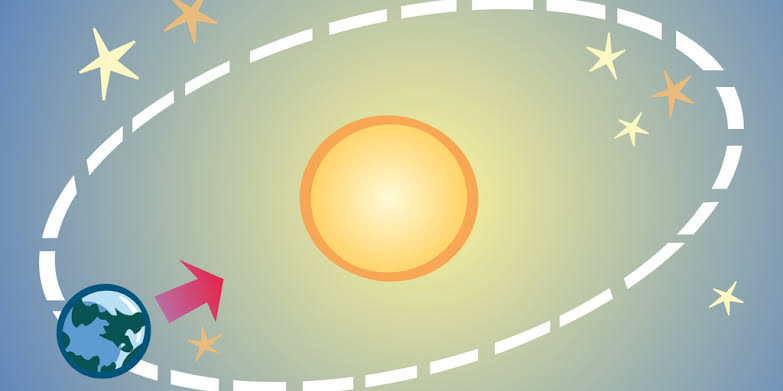
Image Credit: AMMS/Jim Paillot
Imagine This: If Earth suddenly had Jupiter’s gravity, most humans would struggle to stand or even walk normally.
What Would Happen If Gravity Suddenly Disappeared for 5 Seconds?
If gravity vanished for just five seconds, life on Earth would descend into chaos almost instantly.
- The atmosphere would begin drifting into space. Oceans and lakes would rise upward. Buildings, vehicles and humans would lose their connection to the ground.
- At the same time, Earth itself would stop orbiting the Sun correctly.
- Even though five seconds sounds brief, the consequences would be catastrophic.
Here, we must reflect on that gravity is not merely a scientific concept. It is the invisible foundation holding our world together every moment of every day, whether we call it force, phenomenon or power.
Imagine This: If the Sun’s gravitational pull disappeared instantly, Earth would fly away into deep space in a straight line.
Now that we have revisited the commonly known information about gravity, let us proceed deeper into how humanity approached various levels of understanding of this invisible force ‘gravity’.
Ancient India’s Early Understanding of Gravity and Planetary Motion
Long before modern physics emerged in Europe, ancient Indian scholars were already deeply exploring the nature of planetary motion, celestial order and attraction.
The Sanskrit concept of gurutva referred to heaviness or weight, while gurutwakarshan implied attraction caused by heaviness or mass. These ideas reflected an early conceptual understanding that massive bodies possess an attracting tendency. It is also surreal how both the words gurutva and gurutwakarshan also encompass guru – a word that not just means heavy, but also stands for the ‘venerable spiritual teacher’.
Ancient Indian astronomers and mathematicians such as Brahmagupta and Aryabhata studied planetary motion, eclipses, Earth’s spherical nature and celestial calculations centuries before humanity entered space.
Why Don’t We Speak About Brahmagupta Often? Because modern science education usually simplifies history into: ‘Newton discovered gravity’. However, the true historical journey behind this understanding is far more complex and nuanced.
Long before Isaac Newton, several thinkers from different civilisations had already recognised that Earth exerts an attractive pull on objects.
Among the most remarkable of them was Brahmagupta. He described Earth as possessing an attractive nature that pulls objects toward it. One widely referenced interpretation of his ideas suggests that objects naturally move toward Earth because of their inherent heaviness. He also discussed Earth’s spherical nature, attraction toward Earth and why objects return downward. This was extraordinarily advanced for the 7th century.
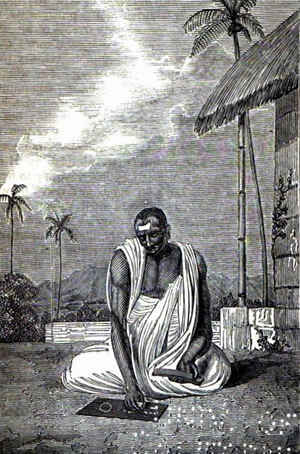
Image Title: Portrait of Brahmagupta
At the same time, Newton’s contribution transformed gravitational attraction into a predictive scientific framework capable of explaining planetary orbits and celestial mechanics with extraordinary mathematical precision.
The history of gravity, therefore, is not the story of a single individual suddenly inventing an idea from nothing. It is the story of humanity attempting to gradually uncover one of the universe’s deepest laws across different civilisations and eras.
Every Theory of Gravity Solved One Mystery and Created Another
This segment of the article will actually lead you to understand humanity’s struggle in decoding gravity.
Humanity’s understanding of gravity evolved gradually over centuries of observation, questioning and discovery.
- For ancient thinkers such as Aristotle, gravity was closely tied to the natural behaviour of elements. Heavy objects, according to Aristotle, naturally moved toward the centre of the universe, while lighter substances like fire rose upward toward the heavens. According to this understanding, every element and object in the universe was believed to belong to a specific natural position within the cosmic order.
- For many generations, this idea heavily influenced how people interpreted movement, falling objects and the behaviour of the physical world. Then came Galileo Galilei.
- Galileo challenged the belief that heavier objects fall faster than lighter ones. By carefully studying falling objects and conducting experiments, he showed that gravitational acceleration affects bodies in the same way irrespective of how heavy or light they are. This shattered major parts of Aristotle’s understanding and marked one of the first great revolutions in gravitational thought.
- Then, in 1687, Isaac Newton transformed gravity forever.
- Newton proposed that ‘every object with mass attracts every other object with mass’. His universal law of gravitation mathematically explained falling objects, planetary orbits, and celestial motion within a single framework.
- For the first time in history, humanity possessed a mathematical law capable of predicting the motion of planets and moons with extraordinary accuracy.
- Newton’s theory was revolutionary because it united Earth and the heavens under the same physical law.
- Yet Newton himself could not explain one profound mystery: How does gravity actually work across empty space?
- How can one object somehow detect and influence another object across empty space? What transmits gravitational interaction across the vast emptiness between massive objects?
- Newton could describe gravity mathematically, but the deeper mechanism remained unknown.
- Then, more than two centuries later, Albert Einstein completely reimagined gravity itself. Einstein proposed something astonishing – gravity might not truly be a force at all.
- Instead, massive objects bend the fabric of space and time itself, creating curved paths through which planets and stars naturally move.
- According to Einstein’s view, the Earth is not simply ‘pulling’ objects downward. Rather, objects move through curved space-time created by Earth’s mass.
- One famous interpretation captures this dramatic shift beautifully: Newton imagined the apple falling because Earth pulled it downward. Einstein imagined the apple remaining where it was while Earth accelerated upward into it.
- This was not merely an improvement to Newton’s theory. It was an entirely different way of understanding reality itself. And yet, even Einstein’s revolutionary equations eventually encounter limits.
- Inside black holes and singularities, Einstein’s equations begin breaking down.
- Quantum mechanics, the theory describing the microscopic universe, also struggles to fully explain gravity.
Modern science can now describe gravitational behaviour with remarkable mathematical precision. However, the true nature of gravity itself remains one of science’s greatest unsolved mysteries.
In many respects, humanity’s journey to understand gravity has been less about reaching final answers and more about uncovering deeper layers of mystery. It is the story of humanity repeatedly discovering how much remains unknown.
The Falling Apple That Changed Human History
Now let’s examine the renowned theory of gravity put forth by Newton.
Picture yourself resting beneath a silent tree in seventeenth-century England when suddenly an apple drops from above and strikes you. What may seem like a slice-of-life simple moment actually sparked an important question in Isaac Newton’s mind – Why do objects always fall downward? And could the same invisible force reaching for that apple also be guiding the Moon itself?
Thereafter, Newton explained gravity as a force of attraction between all objects with mass. In the late 1600s, Isaac Newton realised that the same force causing apples to fall also keeps planets moving around the Sun.
Newton’s theory of gravitation explains that all objects possessing mass exert an attractive influence on one another throughout the universe. He put across two major rules:
- Larger objects create stronger gravity.
- Gravity weakens as distance increases.
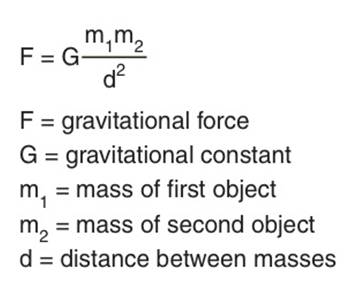
The formula above represents Newton’s universal law of gravitation. Newton suggested that the strength of gravitational attraction is determined by both the mass of objects and the distance separating them.
Why Does Distance Affect Gravity?
The influence of gravity gradually decreases as the distance between objects increases. Earth’s gravity is strongest near the surface. As astronauts travel farther into space, Earth’s gravitational pull decreases. It is believed that gravity decreases according to the square of distance. That means doubling the distance reduces gravity to one-fourth of its previous strength.
How Einstein Altered Humanity’s Understanding of Gravity
For more than 200 years, Newton’s explanation of gravity dominated science, as discussed earlier in this article.
Then Albert Einstein introduced an idea deemed so revolutionary at that time, that it again changed the course of humanity’s quest for gravity.
- Einstein proposed that gravity was not truly a force pulling objects together. Instead, He explained gravity as the bending of space and time caused by massive objects.
- In the early 1900s, Albert Einstein introduced the theory of general relativity. Instead of viewing gravity as a simple force, Einstein described it as curved space-time.
- For example: Imagine placing a heavy bowling ball on a stretched rubber sheet. The sheet bends downward. When a lighter ball moves close to it, its path bends inward toward the heavier object because of the distortion in the surface. Einstein believed massive objects bend space in a similar way.
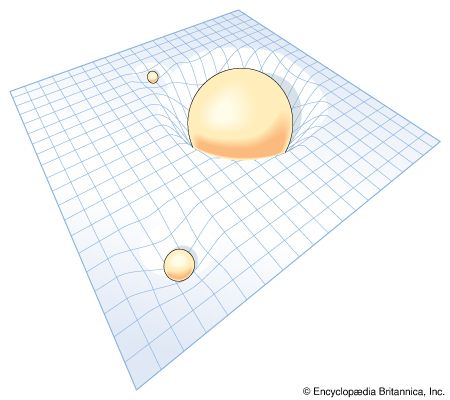
Image Title: Rubber sheet analogy
Therefore, according to Einstein, planets are not simply being ‘pulled’ through space. They are travelling through curved space created by massive objects like the Sun.
Why Einstein’s Theory Changed Modern Physics
Albert Einstein’s theory changed the course of physics because it explained phenomena Newton’s theory could not fully describe.
For instance, Einstein correctly predicted:
- Light bending around stars
- Time slowing near strong gravity
- Gravitational waves
- Black hole behaviour
Therefore, Einstein’s theory could explain why Mercury follows a track unlike Earth’s orbit around the Sun – a roadblock that Newton’s theory couldn’t explain.
However, Einstein’s theory also reached a dead-end in explaining extreme situations not just within the cosmos, but also within a single solar system.
Is Gravity Really a Force?
Here is where modern science as well as all theories struggle to unite.
Even Einstein’s revolutionary theory still leaves many unanswered questions. What is the force that propels planets on the path that they do? Scientists still do not fully know why mass bends space-time, whether gravity possesses a fundamental particle or how gravity connects with quantum mechanics.
As a result, scientists have been able to point out the consequences of gravity, what it can do and what it cannot, without being able to explain what gravity is and how it exists, why it is able to influence planetary functions the way it does.
It is similar to humanity understanding that every living being is born and eventually dies – yet still not fully understanding why life begins at all, or why death is inevitable. We witness the phenomenon constantly, we can measure and describe parts of it scientifically, but the deepest reason behind it still remains unresolved. Gravity presents a similar mystery. Humanity can observe its effects with astonishing precision, yet the true nature of what gravity fundamentally is continues to remain beyond complete understanding.
Gravity Is Surprisingly the Weakest Fundamental Force
Gravity may control planets and galaxies, but it is actually the weakest of the four fundamental forces of nature.
A small household magnet can easily overcome Earth’s enormous gravitational pull on tiny metal objects. Scientists still do not fully understand why gravity is so weak compared to other forces like electromagnetism. And yet, this weakest force has driven researchers crazy over centuries. This strange imbalance remains one of the biggest unsolved mysteries in modern physics.
How Gravity Quietly Affects Our Everyday Life?
Gravity affects nearly every movement, activity and natural process in your daily life. We interact with gravity constantly, often without noticing it.
Everyday Life
If you think carefully, the human lifestyle itself is designed around either saving things from falling down and making them unbreakable. Our cabinets, tables and other furniture is designed keeping in mind that objects will fall down if displaced from that piece of furniture.
Moreover, the rugs and carpets we lay down are also meant to serve as a protective layer for objects falling down.
Gravity Shapes the Human Body
Human beings evolved under Earth’s gravity over millions of years. Our muscles, bones, balance system and even blood circulation depend on gravity functioning normally.
- This can be understood by outer space life. Astronauts living in low-gravity environments experience muscle loss and bone weakening over time because the human body is adapted to Earth’s gravitational pull.
- Football players also calculate arcs and angles because gravity affects the path of the ball.
- Similarly, we mentally calculate the angles of shots when playing tennis, basketball and most other object-driven sports.
- The same gravity affecting coffee pouring into a cup also controls galaxies.
Why Do Astronauts Float in Space?
Astronauts float because they are continuously falling around Earth while orbiting it.
Many people think there is no gravity in space. However, gravity still exists around the International Space Station. Astronauts aboard the ISS experience microgravity because they move around Earth at enormous speeds while constantly falling toward it. (Source)
How Gravity Affects Ageing in Space
Gravity influences the human body so deeply that scientists believe it may even affect ageing itself.
In low-gravity environments, astronauts experience changes in muscles, bones, circulation, vision and cellular behaviour. Some studies suggest that long-term exposure to microgravity may accelerate certain aging-related effects in the human body.
For example, astronauts aboard the International Space Station often lose bone density faster than people on Earth unless they follow strict exercise routines. A case in the picture below.
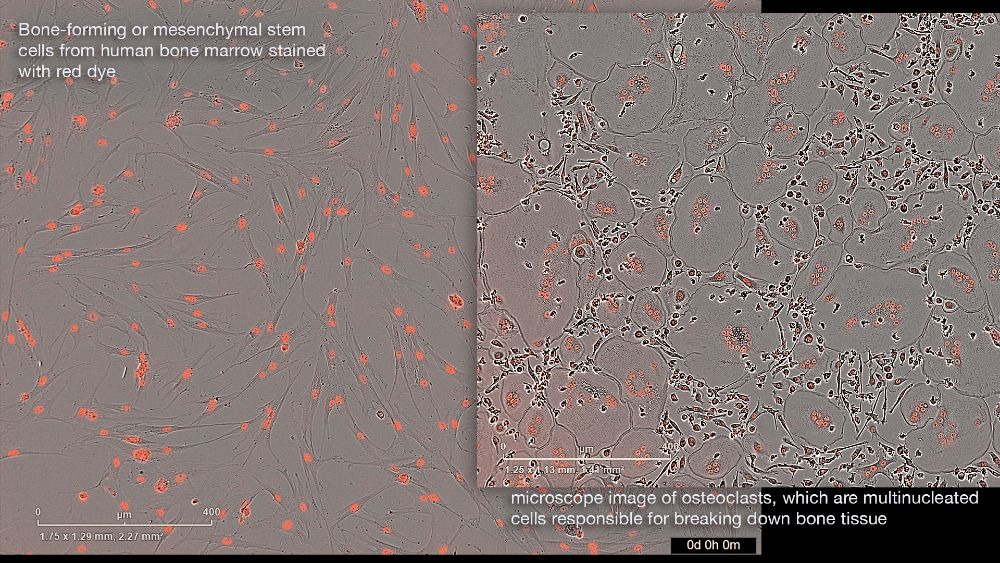
Image Credit: NASA
Sample Holder Credit: Mayo Clinic
Scientists continue studying how gravity affects ageing because future human missions to Mars and deep space aspire to have people live in reduced gravity for years at a time.
Why Is Gravity Stronger on Some Planets Than Others?
Gravity differs between planets and larger planets are believed to generally produce stronger gravitational pull.
Again, this inference hasn’t been easy for humanity and is a result of several space.missions. For example: Jupiter’s gravity is much stronger than the Moon’s because Jupiter contains vastly more mass.
Imagine This: On the Moon, you could jump nearly six times higher than on Earth because lunar gravity is much weaker.
Gravity on Different Worlds
| Planet or Moon | Gravity Compared to Earth |
| Moon | About 16% of Earth’s gravity |
| Mars | About 38% of Earth’s gravity |
| Jupiter | About 2.4 times Earth’s gravity |
| Earth | Standard reference gravity |
A simple example to understand the effect of the strength of gravity: A person weighing 60 kg on Earth would feel much lighter on the Moon.
The Most Extreme Gravity in the Universe
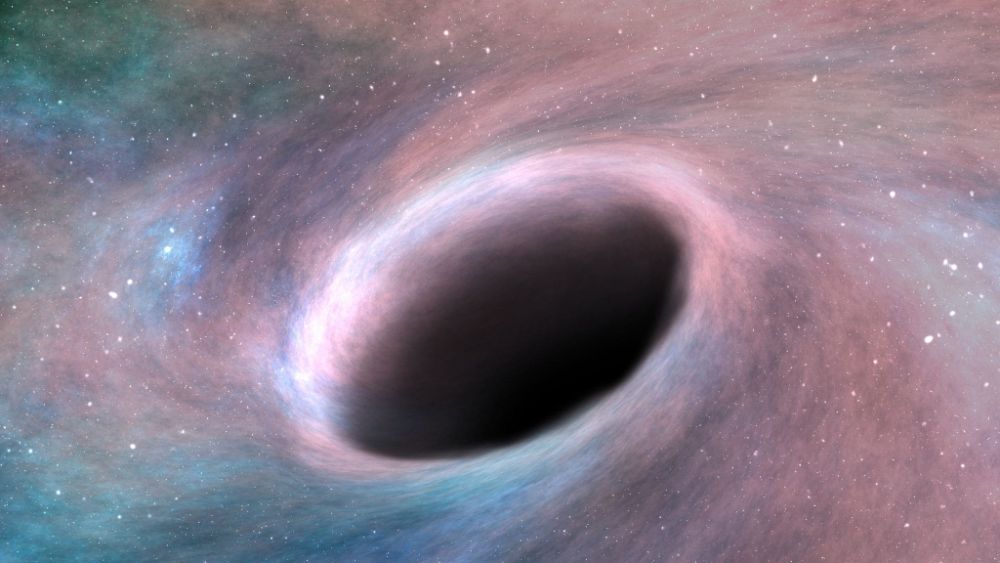
Some places in the universe contain gravity so powerful that even light cannot escape. These objects are defined as black holes by scientists.
Here is what is known about black holes so far:
- Black holes form when massive stars collapse inward under their own gravity. The object becomes so extraordinarily compact that even light is unable to break free from its gravitational grip.
- Black holes possess extremely strong gravity because enormous amounts of mass are believed to be compressed into a tiny space.
- Black holes are places where gravity becomes so extreme that space and time themselves begin to break down.
- Scientists believe the black hole at the centre of the Milky Way has a mass millions of times greater than the Sun.
Black Holes, Singularities and the Edge Where Modern Physics Fails
As scientists explored black holes more deeply, gravity began revealing some of the strangest paradoxes in the universe.
According to Einstein’s equations, when a massive star collapses under its own gravity, the compression can continue until all the matter is crushed into an unimaginably tiny region called a singularity. A singularity is believed to be an infinitely dense state where the established laws of physics begin to collapse and no longer behave in predictable ways. This creates a profound scientific crisis because it suggests a place where mathematics predicts impossible conditions.
Many physicists believe this does not mean the universe is irrational, but rather that current theories remain incomplete. Quantum mechanics, which successfully explains subatomic reality, does not fully agree with Einstein’s description of gravity under extreme conditions.
Some modern theories suggest gravity may eventually behave differently at incredibly high densities, possibly preventing true singularities from forming altogether. Other ideas, such as string theory and higher-dimensional models, propose that gravity may originate from aspects of reality humans cannot directly perceive. In many ways, black holes represent the edge of human understanding — the place where humanity’s greatest theories begin colliding with the unknown.
What Are the Real-Life Applications of Gravity?
Scientists and engineers use gravity in technology, space exploration, construction and astronomy. Here are some prominent real-life uses of gravity:
- Gravity and GPS Technology: GPS systems rely on gravitational calculations to provide accurate navigation.
- Einstein’s theory of relativity helps engineers correct time differences in satellites caused by gravity.Without these corrections, GPS errors could grow by several kilometres each day.(Source)
- Gravity in Space Exploration: Space agencies use gravity to launch spacecraft, orbit planets and study distant worlds.
- Various missions use ‘gravity assists’ from planets to increase spacecraft speed without extra fuel. Additionally, satellites use gravity to remain in stable orbit around Earth.
- Gravity in Engineering and Construction: Engineers calculate gravity constantly when designing buildings, bridges and vehicles.
- An easy example: skyscrapers must withstand both gravitational force and structural stress. Without proper calculations, buildings could collapse.
Why Gravity Fascinates Scientists and Philosophers
Gravity is more than a scientific force. It is also a philosophical mystery because unlike light, sound, or matter, gravity cannot be directly seen. Humanity only observes its effects.
For centuries, scientists and philosophers alike have wondered about the following haunting questions:
- Why does gravity exist?
- Why does mass bend space?
- Why is gravity so weak?
- Could gravity reveal deeper laws of reality still undiscovered?
These unanswered mysteries form the basis for further scientific research, especially in quantum gravity. Despite this, scientists struggle to combine gravity with quantum mechanics.
What Is Quantum Gravity?
Quantum gravity is the attempt to explain gravity using quantum physics. Physicists hope to someday unify gravity with the other fundamental forces of nature.
Their endeavour is to study string theory, quantum fields and tiny particles to understand how gravity behaves at microscopic scales. They believe this can help them unlock the mystery of gravity.
Why Gravity Still Remains One of Science’s Greatest Mysteries
Humanity understands the attributes of gravity well enough to launch satellites, predict eclipses, calculate planetary motion and even detect black holes billions of light-years away. Despite all this scientific progress, physicists still do not fully understand what gravity fundamentally is, why and how it exists.
Unlike electromagnetism, which uses particles called photons to carry force, gravity’s hypothetical force-carrying particle (the graviton) has never been directly observed.
Ironically, the weakest among the four known fundamental forces is also the one that has humbled humanity the most. Gravity still remains trapped within theories, models and unanswered questions. Humanity can calculate its effects with extraordinary precision, yet the true essence of gravity continues to elude complete understanding.
Perhaps this is a reminder that the deepest workings of Nature cannot always be fully confined within mathematical formulas, hypotheses or human imagination alone.
So what is this invisible power that holds planets in orbit, anchors oceans to Earth, prevents humanity from drifting into space and keeps the vast cosmic order from collapsing into chaos?
The Supreme Intelligence Governing the Universe
The infinite complexity of Nature and Creation cannot be fully confined within formulas, equations, and hypotheses alone. There exists a deeper dimension of truth beyond material observation – a reality that can solely be understood through the unparalleled spiritual knowledge of a truly Enlightened Saint (Tatvdarshi Sant).
And before dismissing the idea of spiritual knowledge, one must stop and reflect why despite devoting generations of intellectual effort to understanding gravity, humanity still remains unable to fully decode the invisible force governing planets, stars, galaxies and life itself. Science is not even an iota of the power of the Supreme Creator – God Kabir.
Jagatguru Tatvdarshi Sant Rampal Ji Maharaj explains that the entire creation, countless universes, planetary systems and all forms of life was manifested by Supreme God Kabir through His divine word power. The force that science struggles to fully comprehend is not merely a mechanical interaction of matter, but part of a divinely governed cosmic arrangement sustained by the Supreme Creator Himself.
The greater question, therefore, is not merely ‘What is gravity?’, but rather ‘Who established the laws that keep the entire universe functioning in such astonishing order?’
Sant Rampal Ji Maharaj further explains that sacred scriptures across multiple religions contain indications of this supreme governing power. References within the Holy Bible, the Holy Vedas and the Holy Quran describe the Creator establishing Creation and governing it from His supreme throne.
Furthermore, Sant Rampal Ji Maharaj points out that no matter how much we attempt to research planetary movements, its positions and the cycle of life, the truth is that they will continue functioning because they operate under the eternal command of Supreme God Kabir. This divine ‘word power’ is also bestowed upon the true Enlightened Saint (Tatvdarshi Sant) chosen by the Supreme Creator.
Perhaps humanity’s greatest limitation is not the inability to calculate the universe, but the inability to recognise the Supreme Intelligence sustaining it. Understand this mind-boggling reality that truly governs our entire existence through a very simplified scientific explanation in this video:
The current chaos in today’s world is because science trivialises the supremacy of true spiritual knowledge and downplay the existence of a Creator. This is the reason why centuries of research also could never crack the code of gravity. We must understand that science is merely a fragment of the Supreme God’s power.
Understand more about why despite so much scientific progress, answers are still unfound for the most fundamental questions of life, by listening to the enlightening spiritual discourses of Sant Rampal Ji Maharaj on:
- Website: www.jagatgururampalji.org
- YouTube: Sant Rampal Ji Maharaj
- Facebook: Spiritual Leader Saint Rampal Ji
- ‘X’ handle: @SaintRampalJiM
FAQs on Gravity
Q1) What is gravity in simple words?
Answer: Gravity is the natural force that pulls objects with mass toward one another, keeping planets, stars and people connected.
Q2) Why is gravity important on Earth?
Answer: Gravity keeps Earth’s atmosphere, oceans and living beings anchored to the planet, making life possible.
Q3) Did Newton discover gravity?
Answer: Isaac Newton mathematically explained universal gravitation, but earlier civilisations had already recognised the concept of gravitational attraction.