


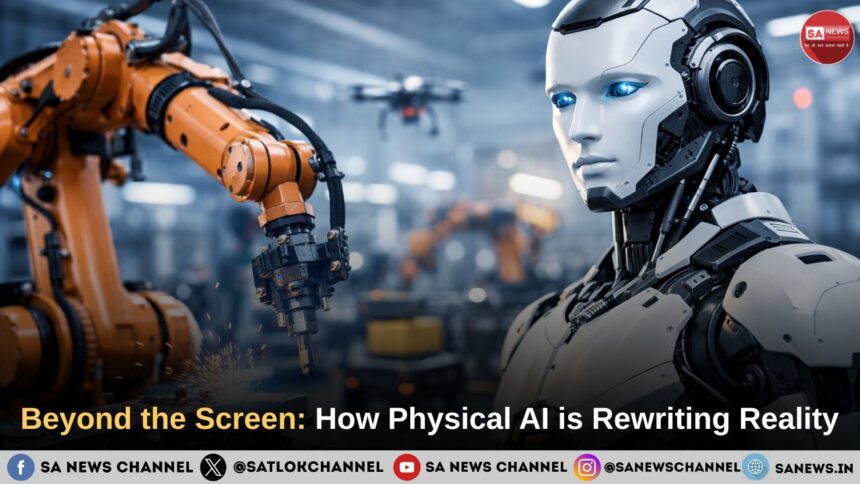
Artificial Intelligence is no longer limited to screens, apps, or virtual assistants. In 2026, the rise of Physical AI marks a turning point where intelligent systems directly interact with the real world. From autonomous robots and smart infrastructure to AI-driven healthcare and agriculture, machines have evolved from passive tools into active agents that shape our physical environment. This transformation promises efficiency, safety, and innovation, but also raises concerns about dependency, control, and human identity. As AI moves beyond code into real-world action, society must rethink its relationship with technology and redefine what it means to live in an increasingly automated world today.
- What is Physical AI?
- The Shift: From Digital AI to Physical AI
- Key Drivers of Physical AI Growth
- How Physical AI is Rewriting Daily Life
- 1. Smart Cities & Infrastructure
- 2. Autonomous Transportation
- 3. Healthcare Transformation
- 4. Smart Homes & Lifestyle
- The Risks: When Code Controls Reality
- 1. Job Displacement
- 2. Cyber-Physical Threats
- 3. Loss of Human Connection
- 4. Surveillance & Privacy Risks
- The Human Question: Are We Losing Control?
- The Future of Physical AI (2027–2030)
- True Purpose of Human Life
- FAQs on Physical AI
What is Physical AI?
Physical AI refers to artificial intelligence systems embedded in physical machines that interact with the real world-such as robots, autonomous vehicles, drones, and smart infrastructure AI systems. Unlike traditional digital AI, which operates within apps or software, Physical AI performs real-world actions.
Also Read: Artificial Intelligence in Healthcare: Can AI Be Trusted with Our Health?
According to industry insights from Deloitte Tech Trends 2026, Physical AI enables machines to perceive, learn, and respond in real-time environments. This shift transforms machines from simple tools into intelligent agents capable of independent decision-making.
The Shift: From Digital AI to Physical AI
For decades, AI existed mainly in digital form-chatbots, recommendation engines, and virtual assistants. However, Physical AI 2026 represents a major transformation where AI interacts directly with the physical world.
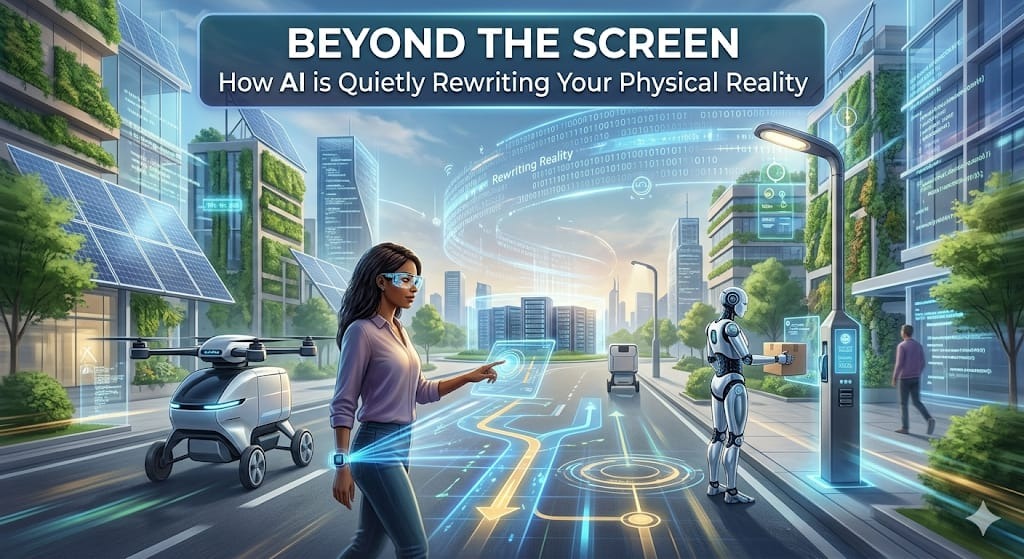
This shift is driven by several key technologies, explained below.
Key Drivers of Physical AI Growth
1. Robotics + AI Integration
Modern robots are no longer static machines. They can learn from data, adapt to environments, and perform complex tasks.
According to the International Federation of Robotics (IFR), the global industrial robotics market reached approximately $16.7 billion in 2026, reflecting rapid growth in AI automation trends.
2. Sensor Fusion & Real-Time Intelligence
Physical AI systems combine multiple inputs:
- Cameras
- LiDAR
- Motion sensors
This allows machines to interpret surroundings instantly, making autonomous systems safer and more reliable.
3. Edge Computing
Edge computing enables AI to process data locally rather than relying on cloud servers.
Benefits include:
- Faster response time
- Reduced latency
- Improved safety in real-world applications
How Physical AI is Rewriting Daily Life
1. Smart Cities & Infrastructure
AI in the real world now manages:
- Traffic systems
- Energy grids
- Water supply
- Smart infrastructure AI improves efficiency but also increases reliance on automated decision-making.
2. Autonomous Transportation
Self-driving vehicles and delivery robots are becoming common in urban environments.
These autonomous systems reduce human effort but raise safety and ethical concerns.
3. Healthcare Transformation
Physical AI is revolutionizing healthcare through:
- Robotic surgeries
- AI diagnostics
- Personalized treatment systems
This increases precision but also raises questions about trust in machines.
4. Smart Homes & Lifestyle
AI-powered homes can:
- Adjust lighting and temperature
- Monitor health via wearables
- Predict user needs
While convenient, this increases dependency on automation.
The Risks: When Code Controls Reality
1. Job Displacement
AI automation trends are replacing repetitive and manual jobs, especially in logistics and manufacturing sectors.
2. Cyber-Physical Threats
Unlike traditional cyber risks, failures in Physical AI can lead to real-world consequences such as:
- Accidents
- System failures
- Infrastructure disruption
Also Read: How Artificial Intelligence is Reshaping Our World: Applications, Advantages & Limitations
3. Loss of Human Connection
As machines handle more interactions, human-to-human communication may decline.
4. Surveillance & Privacy Risks
AI-powered systems track behavior in physical environments, raising concerns about privacy and control.
The Human Question: Are We Losing Control?
As AI in the real world becomes more advanced, dependency is increasing.
When machines:
- Make decisions
- Control systems
- Automate daily life
- Humans risk losing:
- Critical thinking
- Independence
- Emotional intelligence
This is one of the biggest challenges of Physical AI 2026.
The Future of Physical AI (2027–2030)
Looking ahead, Physical AI will expand into:
- Fully autonomous cities
- AI-driven agriculture
- Advanced robotics in daily life
Experts predict that autonomous systems will become more integrated, making life more efficient-but also more automated than ever before.
The key challenge will be maintaining balance between innovation and human control.
True Purpose of Human Life
In this fast-changing technological era, the teachings of Sant Rampal Ji Maharaj provide profound clarity. While humans may feel powerful creating intelligent machines, Sant Rampal Ji Maharaj reminds us that this material world is temporary.
True peace and happiness come only from spiritual realization and devotion to Supreme God Kabir.
Machines can manage life, but they cannot give it true meaning or purpose.
Therefore, we must embrace technology wisely while staying rooted in spirituality, truth, and humanity. Read His sacred book ‘Gyan Ganga’ by clicking this link.
FAQs on Physical AI
1. What is Physical AI?
Physical AI refers to artificial intelligence systems that operate in the real world through machines like robots, vehicles, and smart infrastructure.
2. How is Physical AI different from traditional AI?
Traditional AI works in digital environments, while Physical AI interacts with the real world and performs physical actions.
3. Where is Physical AI used in 2026?
It is used in smart cities, healthcare, logistics, agriculture, and autonomous transportation systems.
4. Is Physical AI safe?
Physical AI can be safe if properly managed, but failures or cyber-attacks can cause real-world risks.
5. Will Physical AI replace jobs?
It may replace repetitive jobs but also creates new opportunities in technology, robotics, and AI management.