



AI and Human Collaboration: AI is no longer just a tool—it’s becoming a true collaborator, reshaping how we think, work, and innovate. This evolving synergy between human creativity and machine logic is unlocking potential we are only beginning to understand. Yet, as we perfect these digital systems, a deeper inquiry remains: is there an underlying “code” within our own existence that remains untouched by technology? Perhaps this surge in progress is actually a gateway toward a profound, overlooked truth that holds the key to our ultimate stability. Dive in to uncover what lies beyond the algorithm.
- What is AI and Human Collaboration?
- Why AI and Human Collaboration is Important
- The Evolution of AI and Human Collaboration
- Key Benefits of AI and Human Collaboration
- Accelerated Innovation
- Improved Customer Experience
- Better Decision-Making
- Increased Productivity
- Enhanced Employee Experience
- Improved Accessibility
- Human vs AI Strengths: A Balanced Approach
- Types of AI and Human Collaboration
- Real-World Examples of AI and Human Collaboration
- Challenges in AI and Human Collaboration
- The Future of AI and Human Collaboration
- How Businesses Can Succeed with AI Collaboration
- Invest Deeply in Reskilling
- Redesign Workflows Completely
- Focus on Human Strengths
- Build a Culture of Experimentation
- Align AI with Business Strategy
- Create Human-AI Operating Models
- The Paradox of Progress: Is AI Enhancing Us or Replacing Us?
- Beyond the Algorithm: Reconnecting with the Supreme Intelligence
- FAQs: AI and Human Collaboration
What is AI and Human Collaboration?
AI and human collaboration is the partnership between human intelligence and artificial intelligence systems to achieve outcomes more effectively than either could alone. Instead of replacing human workers, AI complements human strengths by automating repetitive tasks, analyzing massive datasets, and accelerating workflows.
This collaboration is becoming the backbone of modern work environments. According to McKinsey & Company, AI technologies could automate more than 50% of current work activities. However, this value is only realized when organizations successfully integrate AI into human workflows.
Simultaneously, the World Economic Forum reports that 39% of job skills will change within four years, emphasizing that adaptation is not optional—it is essential.
The key shift is clear: The future of work is built on collaboration between humans and AI—not competition.
Why AI and Human Collaboration is Important
The importance of AI-human collaboration lies in combining complementary strengths.
Human Capabilities
Humans excel in areas that require depth and understanding:
- Creativity and innovation
- Emotional intelligence and empathy
- Ethical reasoning and moral judgment
- Contextual awareness and intuition
Example: A manager resolving a workplace conflict must consider emotions, relationships, and long-term impact—something AI cannot fully replicate.
AI Capabilities
AI thrives in structured, data-driven environments:
- Processing massive datasets
- Identifying hidden patterns
- Performing tasks at high speed
- Automating repetitive processes
Example: AI can analyze millions of customer transactions to identify buying trends instantly.
The Combined Advantage
When these strengths are integrated:
- Decisions become both data-driven and human-centered
- Work becomes more efficient and meaningful
- Innovation accelerates significantly
The Evolution of AI and Human Collaboration
AI collaboration has evolved from simple task automation into a more dynamic partnership where humans and machines contribute complementary strengths. Each stage reflects a shift not just in technology, but in how work is structured and decisions are made.
Early Automation
The earliest phase focused on rule-based systems designed to handle repetitive, predictable tasks.
- Performed high-volume, repetitive operations
- Showed minimal adaptability to new situations
- Required human intervention for exceptions
At this stage, AI functioned purely as a tool for efficiency, not a collaborator.
Assisted Intelligence
AI began supporting human decision-making by offering insights.
- Delivered data-driven recommendations and predictions
- Humans retained full control over final decisions
- Widely used in analytics, finance, and healthcare
This marked the start of interactive collaboration.
Generative AI
AI moved into creation, producing original outputs.
- Generated text, code, and designs at scale
- Accelerated content creation and innovation
- Humans acted as editors and strategists
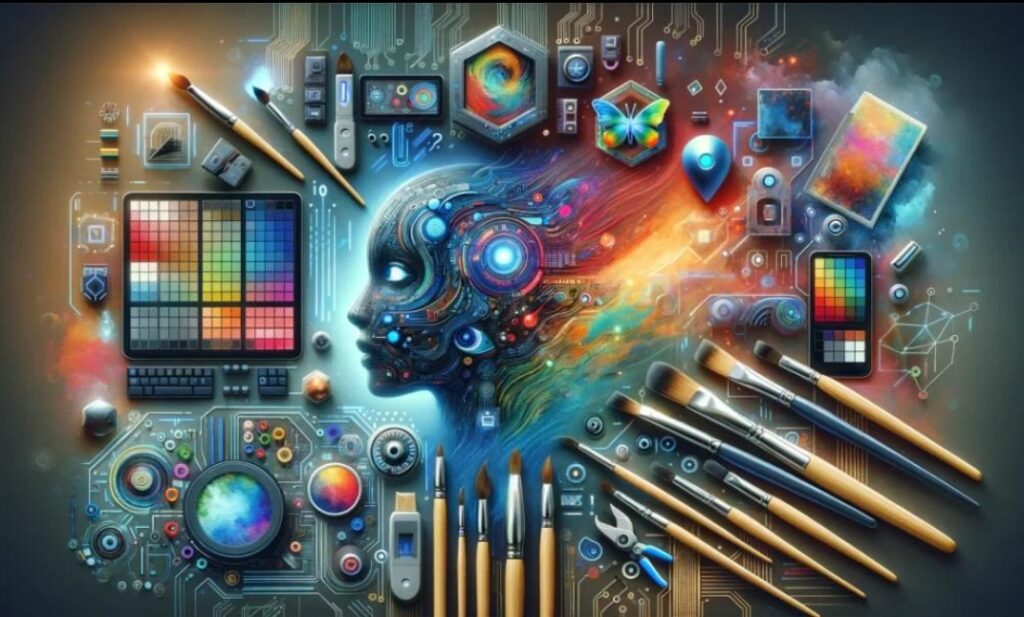
AI became a creative partner, not just an analytical tool.
Agentic AI Systems
The latest stage introduces autonomous, goal-driven AI systems.
- Break down tasks and execute multi-step workflows independently
- Use tools, APIs, and data sources to complete objectives
- Humans provide goals, oversight, and governance
This represents a shift to AI as an executor, not just a responder.
Example: AI systems handling 40% of customer calls and resolving 80% independently demonstrate this shift.
Also Read: Agentic AI and Moltbook: The New Frontier in Autonomous AI Interaction
Future Outlook
According to McKinsey: AI agents could generate $2.9 trillion annually in economic value.
However, this requires:
- Workflow redesign
- Cultural transformation
- Strategic implementation
The future lies in redefining roles—humans lead with strategy and creativity, while AI handles execution and scale.
Key Benefits of AI and Human Collaboration
Accelerated Innovation
AI enables rapid testing, iteration, and prototyping, helping ideas move from concept to execution much faster. Humans guide creativity, apply context, and ensure relevance. Together, they create a faster, smarter innovation cycle with reduced risk and continuous improvement.
Improved Customer Experience
AI delivers speed, personalization, and round-the-clock support, while humans add empathy and emotional understanding. This balance creates experiences that are both efficient and meaningful, leading to higher satisfaction—often around a 17% increase when AI is effectively used.
Better Decision-Making
AI analyzes large volumes of data and uncovers patterns, while humans interpret these insights with judgment and strategic thinking. This combination leads to more accurate, balanced, and informed decisions.
Increased Productivity
AI automates repetitive tasks, reducing manual workload and saving time. This allows humans to focus on high-value work, improving efficiency and boosting productivity by roughly 14%.
Enhanced Employee Experience
With AI handling routine tasks, employees can focus on creative, meaningful, and collaborative work. This improves engagement, reduces burnout, and creates a more fulfilling work environment.
Improved Accessibility
AI tools like translation and intelligent interfaces make communication and complex tasks easier. This increases accessibility, enabling more people to collaborate and use advanced systems regardless of skill level.
Also Read: How Artificial Intelligence is Reshaping Our World: Applications, Advantages & Limitations
Human vs AI Strengths: A Balanced Approach
| Human Strengths | AI Strengths |
| Creativity | Data processing |
| Emotional intelligence | Speed |
| Ethical judgment | Optimization |
| Context understanding | Scalability |
| Intuition | Continuous operation |
Success lies in balancing—not replacing—these strengths.
Types of AI and Human Collaboration
AI as an Advisor
In this model, AI supports humans by providing insights, recommendations, or data-driven suggestions, while humans retain full decision-making authority. AI can analyze large datasets, identify patterns, and propose possible actions, but the final judgment remains with people. This approach is commonly seen in areas like healthcare, hiring, and business strategy, where AI assists in narrowing down options and humans apply context, experience, and ethical reasoning to make the final call.
AI as an Augmenter
AI enhances human capabilities by working alongside individuals in real time, improving their performance rather than replacing it. Instead of simply offering separate recommendations, AI integrates directly into workflows—helping with tasks like writing, translation, or customer interaction. For example, AI tools can suggest responses, refine communication, or surface relevant information instantly, enabling humans to work faster, more accurately, and with greater confidence.
AI as an Executor
In this interaction, humans delegate specific tasks to AI systems, which then operate independently within defined boundaries. AI handles routine or multi-step processes with minimal supervision, allowing humans to focus on higher-level responsibilities. This is especially relevant with modern agentic AI systems that can conduct research, manage workflows, or handle repetitive operations autonomously, as long as clear goals and constraints are set by humans.
AI as a Coworker
AI increasingly functions as an active team member, taking on multiple roles depending on the task. It can act as an analyst by processing large volumes of data and uncovering insights, a researcher by summarizing and connecting information quickly, a creator by generating content or code, or a strategist by evaluating scenarios and suggesting future actions. In all these roles, humans remain essential for direction, interpretation, and validation, ensuring that AI outputs are accurate, relevant, and aligned with real-world goals.
Real-World Examples of AI and Human Collaboration
Content Creation & Marketing
- AI generates ideas, drafts, and multiple content variations quickly
- Analyzes audience data to identify trends and target segments
- Humans refine content, ensure authenticity, and align with brand voice
- Combines speed of AI with human creativity for better campaigns
Healthcare
- At Mayo clinic: AI assists in diagnosis by analyzing scans and patient data
- Supports drug discovery and early risk detection
- Doctors make final decisions using clinical expertise and judgment
- Ensures both accuracy (AI) and empathy (humans) in patient care
Customer Service
- AI handles routine queries and provides instant responses
- Collects customer data and manages initial interactions
- Humans handle complex, sensitive, or emotional cases
- Creates a seamless experience combining efficiency and empathy
Software Development
- According to Gartner: 75% of developers will use AI tools by 2028
- AI generates code, suggests improvements, and automates tasks
- Developers review, refine, and integrate AI-generated code
- Speeds up development while keeping humans in control
Manufacturing
- AI monitors production, predicts failures, and optimizes processes
- Improves supply chain efficiency using data-driven insights
- Humans solve complex problems and manage disruptions
- Balances automation efficiency with human adaptability
Also Read: Artificial Intelligence in Healthcare: Can AI Be Trusted with Our Health?
Challenges in AI and Human Collaboration
Building Trust in AI
- Trust is foundational—without it, adoption and effective collaboration fail
- Organizations must clearly communicate what AI can and cannot do
- Ensure transparency in how AI systems operate and make decisions
- Provide explainable outputs so users understand results
- Enable human oversight to validate and challenge AI when needed
- Build feedback mechanisms to guide when to trust AI vs. apply scrutiny
Data Quality and Governance
- AI is only as good as the data it is trained on
- Poor or outdated data can lead to inaccurate or biased outcomes
- Organizations must ensure:
- Clean, accurate, and regularly updated datasets
- Ethical and responsible data usage
- Strong governance policies on data access, ownership, and storage
- Establish clear guidelines to ensure AI systems use data appropriately and reliably
Skill Gaps and Reskilling
- As AI evolves, workforce skill requirements continuously change
- Ongoing learning is essential—not a one-time effort
- Key skills include:
- AI literacy and understanding system capabilities
- Prompt engineering to effectively guide AI tools
- Critical thinking for interpreting outputs
- Output validation to ensure accuracy and relevance
- Organizations must invest in continuous upskilling to build adaptable teams
Change Management
- AI adoption is not just technical—it is cultural and organizational
- Employees need clarity on how AI will impact their roles
- Organizations must:
- Communicate clearly and consistently
- Redefine roles and responsibilities alongside AI integration
- Establish success metrics for AI initiatives
- Provide continuous support and feedback channels
- Strong leadership is required to present AI as an enhancement, not a replacement, of human work
The Future of AI and Human Collaboration
The future will be shaped by deep integration between humans and AI systems, fundamentally transforming how work is done.
Rise of AI Coworkers
AI will no longer be just a tool—it will act as a team member:
- Assisting decisions
- Executing workflows
- Supporting strategy
Humans will shift from “doing tasks” to managing outcomes and systems.
Explosion of AI Fluency Demand
AI fluency has already grown 7x in recent years.
Future professionals must:
- Understand AI capabilities
- Know when to trust AI
- Guide AI effectively
Shift in Job Roles
Jobs will evolve toward:
- Creative problem-solving
- Strategic thinking
- Relationship management
Routine roles will transform—not disappear.
Emergence of New Work Models
Traditional workflows will be replaced by:
- AI-first systems
- Hybrid decision-making
- Autonomous operations with human oversight
Ethical and Human-Centered AI
Human roles will increasingly focus on:
- Ethics
- Governance
- Social impact
AI cannot define values—humans must lead here.
How Businesses Can Succeed with AI Collaboration
Invest Deeply in Reskilling
Organizations must treat learning as a continuous process rather than a one-time initiative, as AI capabilities keep evolving. Employees need regular exposure to new tools, workflows, and ways of thinking to stay relevant.
Focus areas:
- AI tools and systems for day-to-day work
- Analytical thinking to interpret AI-driven insights
- Human-centered skills like creativity, communication, and ethical judgment
Redesign Workflows Completely
Simply adding AI on top of existing processes is not enough and often leads to limited impact. To unlock real value, businesses need to rethink how work gets done from the ground up.
Businesses must:
- Rebuild processes with AI in mind rather than retrofitting
- Automate tasks intelligently based on value and complexity
- Integrate AI into core operations instead of treating it as a side tool
Focus on Human Strengths
AI should handle repetitive and data-heavy tasks, allowing humans to concentrate on areas where they add the most value. Organizations should actively encourage employees to lean into uniquely human capabilities.
Encourage employees to:
- Innovate
- Lead
- Build relationships
Build a Culture of Experimentation
Organizations that succeed with AI are those that are willing to test, learn, and adapt quickly. Rigid environments slow down adoption and limit innovation.
Successful organizations:
- Encourage testing
- Accept failure as learning
- Adapt quickly
Align AI with Business Strategy
AI should not be used for small efficiency gains alone. As industry leaders often highlight, using AI only for small tasks—like writing emails faster—means missing its larger strategic potential. Instead, organizations should focus on how AI can drive growth, innovation, and competitive advantage.
Create Human-AI Operating Models
Forward-thinking companies recognize that effective collaboration requires structured systems and clearly defined roles. It’s not just about tools, but about how teams are organized and how work flows between humans and AI.
Forward-thinking companies must:
- Redesign teams
- Define human vs AI roles clearly
- Enable collaboration at scale
Also Read: Beyond the Hype: What the Numbers Say About AI in Business?
The Paradox of Progress: Is AI Enhancing Us or Replacing Us?
We live in an era where the boundary between human intuition and machine intelligence is rapidly blurring. AI and human collaboration is celebrated as the pinnacle of modern achievement, promising to solve everything from complex medical puzzles to global logistics. We marvel at how algorithms can predict our needs and optimize our lives, yet this reliance brings an unspoken discomfort. Have we ever paused to ask: are we truly becoming more capable, or are we simply outsourcing our intelligence to a creation that possesses no soul?
While this partnership offers undeniable convenience, it often acts as a sophisticated distraction from our deeper vulnerabilities. Technology can process vast amounts of data, but it cannot provide lasting peace; it can optimize a workflow, but it cannot explain the fundamental purpose of our existence. We are so focused on building smarter machines that we often ignore the “real hacker”—the unseen influence of the mind that leads us toward greed, ego, and attachment. If we cannot even control our own internal impulses, can a collaboration built on silicon and code ever truly shield us from the karmic consequences of our actions?
Beyond the Algorithm: Reconnecting with the Supreme Intelligence
Jagatguru Tatvdarshi Sant Rampal Ji Maharaj provides a profound insight that no computer can compute. He reveals that while we celebrate technological advancements as human triumphs, technology is actually a divine gift intended for a higher spiritual purpose: to spread the long-lost truth of the scriptures to every soul on Earth. However, instead of using these tools to find our way back to our eternal home, Satlok, we have become further entangled in the “place of exile” ruled by Kaal Brahm (Satan).
The ultimate “operating system” is not one made of binaries and bytes, but the spiritual programming of our own consciousness. As Sant Garibdas Ji Maharaj aptly stated:
“Drishti pade so dhokha re. Khand pind brahmand chalenge thir nahi rahsi loka re. thir nahi rahsi loka re.”
This verse reminds us that everything visible to our eyes—including our most advanced technologies—is temporary and destined to perish. True and lasting security cannot be found in man-made systems, but in the shelter of a Complete Saint (Tatvdarshi Sant) who can “debug” our souls of karmic debt. Sant Rampal Ji Maharaj is the only one today who provides the authentic method of worship to break the cycle of 8.4 million births and deaths. Are we going to spend our lives perfecting machines that will eventually decay, or will we finally collaborate with the Divine to attain eternal liberation?
Discover the hidden truth of your existence and the path to ultimate salvation today.
Website: www.jagatgururampalji.org
YouTube: Sant Rampal Ji Maharaj
Facebook: Spiritual Leader Saint Rampal Ji
‘X’ handle: @SaintRampalJiM
FAQs: AI and Human Collaboration
Q1. What is AI and human collaboration?
It is the partnership where humans and AI systems work together to achieve better outcomes.
Q2. Will AI replace jobs?
No—AI will transform roles and create new opportunities.
Q3. Why is collaboration important?
It enhances productivity, innovation, and decision-making.
Q4. What industries benefit most?
Healthcare, IT, marketing, manufacturing, and customer service.