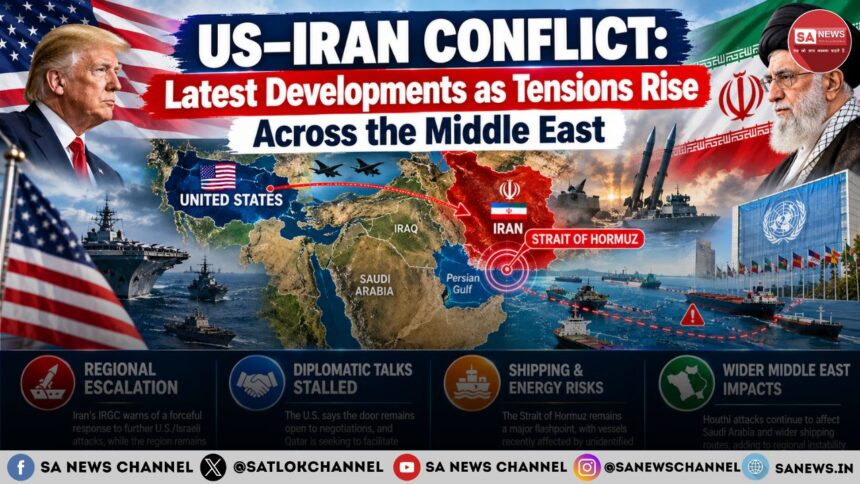
The US–Iran conflict is entering an uneasy period, with military threats, diplomatic efforts and disruptions to regional energy routes occurring at the same time. As of September 20, 2026, Tehran has warned that any new US attack could lead to a broader response, while Washington is considering its options.
The conflict is also spreading beyond the US–Iran confrontation, with fighting involving Yemen’s Houthi movement and increased pressure on Saudi Arabia and other Gulf states.
Iran Warns of Retaliation Against US and Allies
Iran’s military authorities have issued a strong warning concerning any further US or allied attacks. Iranian authorities said that any further attacks would be met with retaliation against US bases and interests in the region. Tehran has warned regional governments against allowing their territory or airspace to be used for American military operations.
The warning follows as Washington is considering whether to continue major military operations. US President Donald Trump has suggested that he is approaching a major decision point over the conflict, while American forces are present in the region.
The situation therefore remains uncertain: military escalation is possible, but diplomatic channels have not closed completely.
Also read: US-Israel-Iran War Live Updates: The Conflict Reshaping the Global Order.
Saudi Arabia Faces New Pressure From Yemen
The conflict has an effect on Saudi Arabia.
Saudi authorities confirmed that Yemen’s Houthi movement was attempting to launch a ballistic missile towards Riyadh on September 19. Saudi forces said the missile was intercepted. Residents reported explosions and smoke near the capital’s airport, but the Saudi authorities did not report major casualties from the missile interception.
The Houthis have also reported additional attacks involving drones and missiles, although some of these claims have not been verified.
The developments are significant as Saudi Arabia is a major regional economic and energy power. Any sustained attacks on its airports, oil facilities or shipping infrastructure could have broader economic consequences.
Iran Sends Conditions for Possible Talks
Despite the military threats, Tehran is also leaving a diplomatic door open.
Iranian Supreme National Security Council Secretary Mohsen Rezaei said Iran had sent conditions to Washington through Qatar for restarting negotiations. Among the publicly identified demands for restarting negotiations are an end to fighting on all fronts, the release of frozen Iranian funds and an end to the US naval blockade.
Iran has also said it is prepared to enter into a larger confrontation should its conditions be rejected.
This combination of military preparation and diplomatic message has become one of the defining features of the present crisis.
Strait of Hormuz Remains a Major Concern
One of the biggest economic risks is the Strait of Hormuz, a crucial route for global energy shipments.
Iranian authorities have said that the waterway will not be opened until their conditions and what Tehran says are US commitments are met.
The situation has already had an impact on oil markets, with reports of crude prices moving above $100 a barrel due to increased uncertainty around Gulf shipping.
The longer the situation continues, the greater the potential impact on fuel prices, shipping costs and global supply chains.
The Cost of the War Is Rising
The conflict is becoming increasingly costly for the United States.
An updated estimate from the US military puts the cost of the war at approximately $43.6 billion as of September 3, weapons expenditure being a significant part of the increase. The Congressional Budget Office has separately estimated that continuing hostilities could cost billions of dollars per month.
The financial burden has become part of the wider political discourse in Washington, particularly as the United States approaches its midterm elections.
From Conflict to the Search for Peace: A Spiritual Perspective
The US–Iran conflict shows how quickly military confrontation can affect not only the countries directly involved but also neighbouring nations, energy routes and the global economy. As tensions rise, diplomacy remains important because dialogue can provide a path away from prolonged confrontation and human suffering. In the same way, spirituality encourages people to move beyond anger, hatred and revenge and develop peace, compassion and mutual understanding. According to the spiritual knowledge of Sant Rampal Ji Maharaj, human beings should recognize the value of life and follow a path based on true spiritual knowledge and scripturally supported devotion. His teachings and humanitarian work promote welfare and peaceful coexistence. To learn more, visit the Annapurna Muhim YouTube channel.
What Happens Next?
The next step depends on whether Washington and Tehran can reach a way back to negotiations.
Iran is demanding an end to military operations, relief from the naval blockade and the release of the frozen funds. The US has not publicly accepted Tehran’s conditions, while continuing to consider its military and diplomatic options.
At the same time, attacks involving the Houthis and greater tensions around Gulf shipping suggest that the conflict is no longer confined to the territory of Iran and the United States.
For the global economy, the most important developments to watch will be the future of the Strait of Hormuz, oil prices, Gulf security and the possibility of renewed US–Iran negotiations.
The coming days may well determine whether the region moves into another round of military escalation or towards a way back to diplomacy.