Plants are the silent supporters of life on Earth. They grow, adapt, and survive in extreme conditions while continuously giving us food, oxygen, shelter, and beauty—without asking for anything in return. From tiny herbs to massive trees, plants form the backbone of our ecosystem and sustain life on this planet.
This article explores the fascinating world of plants, their types, main parts, importance, and life cycle, helping readers understand why plants are truly nature’s unsung heroes.
Plants Around Us: A Living Green Network
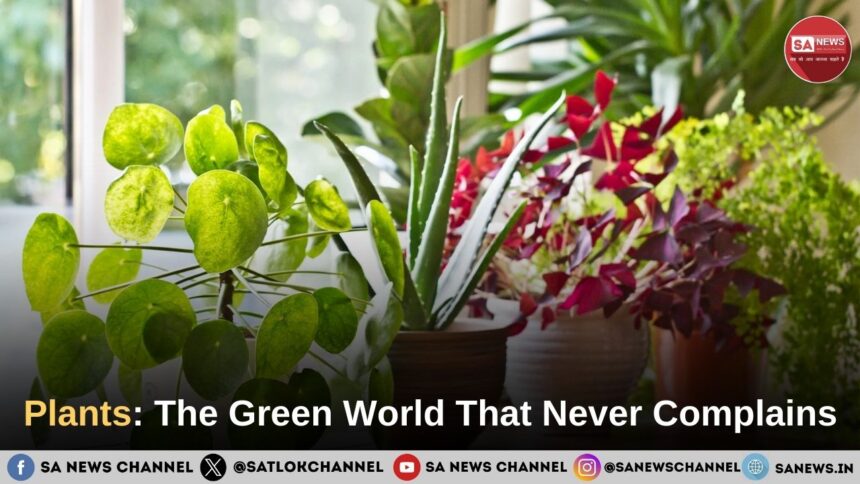
In many residential areas, plants grow quietly alongside human life. Coconut trees, tulsi plants, lemon plants, flowering shrubs, and grass are common sights. Unfortunately, these green spaces are often surrounded by waste such as plastic bottles, caps, stones, and paper, highlighting the urgent need for environmental awareness and plant conservation.
Also Read: 5 Proven Health Benefits of Spending Time in Nature
Plants are not only useful but also calming. Many people feel emotionally connected to plants, often talking to them for comfort. While plants cannot judge or respond like humans, scientific studies show they do react to their surroundings, making them fascinating living organisms.
Parts of a Plant and Their Functions
Every plant has specific parts that work together to help it grow and survive:
Roots
Roots anchor the plant firmly in the soil and absorb water and essential nutrients. They usually grow underground and act as the plant’s foundation.
Stem
The stem supports the plant and transports water, nutrients, and food to different parts. In trees, the stem is thick and woody and is called a trunk.
Leaves
Leaves prepare food for the plant using sunlight, water, and carbon dioxide through a process called photosynthesis. They also help in breathing by exchanging gases.
Flowers
Flowers play a key role in reproduction. They help in the formation of seeds through pollination and fertilisation. Flowers come in various shapes, sizes, and colours, adding beauty to nature.
Fruits
Fruits develop from flowers and protect the seeds inside them. They also help in seed dispersal and provide nutrition to humans and animals.
Seeds
Seeds contain baby plants inside them. Under suitable conditions, seeds grow into new plants, continuing the cycle of life.
Types of Plants
Plants are classified into different types based on their size, structure, and habitat:
Herbs
Small plants with soft, green stems that usually live for a short time, such as mint and grass.
Shrubs
Medium-sized plants with hard but thin stems, often bushy in appearance. Examples include rose and cotton plants.
Trees
Tall, strong plants with a thick trunk. Trees like mango, banyan, oak, and gulmohar provide fruits, shade, and oxygen and can live for centuries.
Climbers
Plants with weak stems that need support to grow upright, such as money plants and grapevines.
Creepers
Plants with very weak stems that spread along the ground. Examples include pumpkin, watermelon, and strawberry.
Aquatic Plants
Plants that grow in or on water, such as lotus, water lily, and water hyacinth.
Desert Plants
Plants adapted to hot and dry regions. They store water in their leaves or stems. Examples include cactus and aloe vera.
Flowering Plants
Plants that produce flowers, either seasonally or throughout the year, such as rose, hibiscus, jasmine, and marigold.
Non-Flowering Plants
Plants that do not produce flowers and reproduce through spores. Examples include ferns, mosses, snake plants, and spider plants.
How Are Plants Useful?
Plants are essential for life on Earth. Their importance cannot be overstated:
- Plants produce oxygen, which is vital for all living organisms.
- They are the primary source of food for humans and animals.
- Plants provide raw materials such as wood, paper, cotton, rubber, and medicines.
- Trees help control air pollution by absorbing carbon dioxide and releasing oxygen.
- Plants prevent soil erosion, reduce flooding, and maintain soil fertility.
- Green spaces provide mental peace, reduce stress, and enhance natural beauty.
Life Cycle of a Plant
The life cycle of a plant begins with a seed. When a seed gets air, water, and sunlight, it starts growing through a process called germination.
Roots grow downward into the soil, while a shoot grows upward toward sunlight. This stage is called a seedling. Over time, the seedling grows into an adult plant, which produces flowers. After pollination, flowers turn into fruits containing seeds. These seeds then grow into new plants, and the cycle continues.
Does the Plant Life Cycle Resemble Human Life?
Just like plants, humans are also part of a cycle of birth and death. However, human life is much shorter compared to trees and plants that can live for hundreds or even thousands of years.
But after human life comes to an end, if we get stuck in the life of a tree, we will be stuck there for centuries altogether and there will be no escape from it. We do not even have the information as to how the cycle could be broken.
This information can be provided to us only by an enlightened Saint. Presently, Saint Rampalji Maharaj is the only enlightened Sage in this world. He is giving true spiritual knowledge based on the holy scriptures from all religions.
FAQs on Plants
1. What is the biggest plant on Earth?
Pando, a massive clonal colony of quaking aspen trees in Utah, is considered the largest known flowering plant.
2. What is the oldest living plant?
The Methuselah Tree, a bristlecone pine in the United States, is estimated to be over 4,800 years old.
3. Which flowers bloom all year round?
Some plants like jasmine, peace lily, begonia, and desert rose can bloom throughout the year under suitable conditions.
4. Can plants respond to touch?
Yes, plants respond to touch through cellular signals. For example, the touch-me-not plant folds its leaves when touched, a phenomenon known as thigmonasty.