

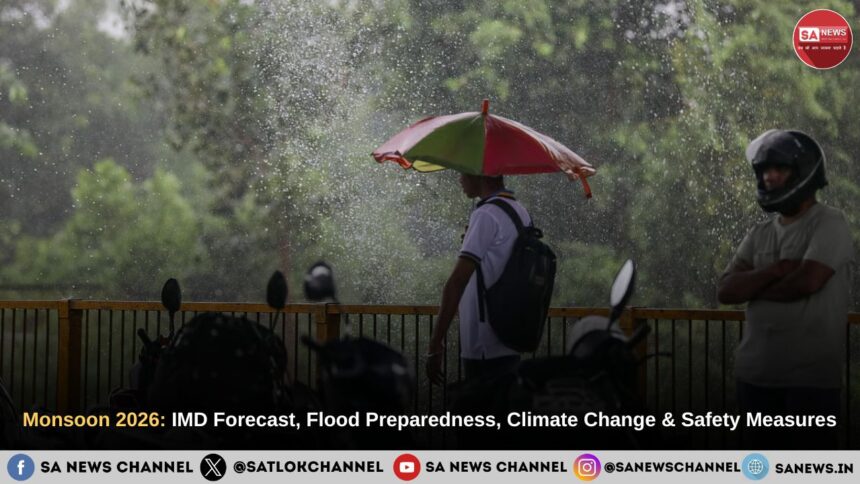
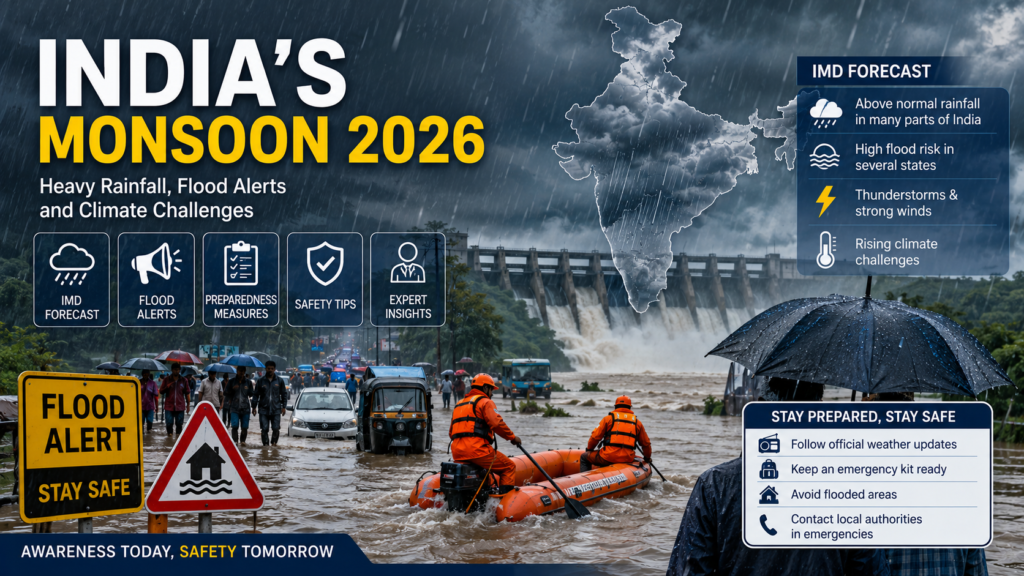
Monsoon 2026 in India: The southwest monsoon is one of India’s most important weather systems, supporting agriculture, replenishing reservoirs, and sustaining millions of livelihoods. However, Monsoon 2026 has also brought renewed concerns over intense rainfall, urban flooding, landslides, and disruptions to transportation across several regions. With climate scientists warning that global warming is increasing the frequency of extreme weather events, India faces the challenge of balancing the benefits of seasonal rainfall with the growing risks of climate-related disasters.
- Monsoon 2026: Why It Matters for India
- A Lifeline for Agriculture
- Heavy Rainfall Across Multiple Regions
- Landslides
- Flash Floods
- Urban Flooding
- Climate Change and Extreme Rainfall
- Why Are Weather Events Becoming More Intense?
- Rising Global Temperatures
- Changing Weather Patterns
- Urban Expansion
- Environmental Degradation
- Government Preparedness for Monsoon 2026
- Early Weather Forecasting
- Disaster Response Measures
- Flood Monitoring
- Rescue Teams
- Public Awareness Campaigns
- Infrastructure Readiness
- Impact on Transportation
- Impact on Agriculture and Rural Economy
- Economic Impact of Monsoon 2026
- Public Health During the Monsoon
- Essential Monsoon Safety Tips
- Building Climate Resilience
- Finding Strength During Times of Uncertainty
- FAQs
- 1. Why is Monsoon 2026 important for India?
- 2. Why are extreme rainfall events becoming more common?
- 3. What precautions should people take during heavy rainfall?
- 4. How does heavy rainfall affect farmers?
- 5. What role do government agencies play during the monsoon?
- 6. How can communities become more resilient to climate change?
Early forecasts from the India Meteorological Department (IMD), along with continuous monitoring by disaster management agencies, have enabled authorities to issue timely warnings and strengthen preparedness. Even so, the intensity and unpredictability of rainfall highlight the importance of community awareness, resilient infrastructure, and coordinated emergency response.
Monsoon 2026: Why It Matters for India
A Lifeline for Agriculture
Nearly half of India’s cultivated land continues to depend directly on monsoon rainfall. Good rainfall supports:
- Kharif crop cultivation
- Groundwater recharge
- Drinking water availability
- Hydroelectric power generation
- Rural employment
A healthy monsoon often contributes positively to agricultural production and rural incomes, making it one of the most closely watched weather events every year.
Heavy Rainfall Across Multiple Regions
Several parts of the country have witnessed spells of intense rainfall during the early phase of the 2026 monsoon season. Localized flooding, overflowing rivers, waterlogging in cities, and disruptions to transportation have been reported in vulnerable areas.
Mountainous regions remain especially susceptible to:
Landslides
Continuous rainfall weakens hill slopes, increasing the possibility of landslides that can block roads and isolate communities.
Flash Floods
Short-duration, high-intensity rainfall often leads to flash floods, especially in hilly terrain and river valleys where water levels can rise rapidly.
Urban Flooding
Major cities continue to experience waterlogging due to:
- Inadequate drainage systems
- Encroachment of natural water channels
- Rapid urbanization
- High rainfall within short time periods
Urban flooding not only disrupts traffic but also affects businesses, schools, hospitals, and emergency services.
Climate Change and Extreme Rainfall
Why Are Weather Events Becoming More Intense?
Climate experts have observed that rising global temperatures increase the atmosphere’s ability to hold moisture. As a result, rainfall events can become more intense even if the total seasonal rainfall remains close to average.
Scientists point to several contributing factors:
Rising Global Temperatures
Warmer oceans provide additional moisture to the atmosphere, increasing the likelihood of heavy rainfall events.
Changing Weather Patterns
Climate variability has made rainfall distribution increasingly uneven, with long dry spells followed by extremely heavy downpours.
Urban Expansion
Concrete surfaces reduce natural water absorption, increasing runoff and worsening flood situations in cities.
Environmental Degradation
Loss of wetlands, forests, and natural drainage systems reduces nature’s capacity to absorb excess rainwater.
Government Preparedness for Monsoon 2026
Early Weather Forecasting
Meteorological agencies continue to monitor rainfall patterns using advanced satellite observations, Doppler weather radars, and numerical weather prediction models.
Timely alerts help:
- State governments
- District administrations
- Farmers
- Fishermen
- Emergency responders
prepare in advance for severe weather.
Disaster Response Measures
Authorities have strengthened preparedness through:
Flood Monitoring
Continuous monitoring of major rivers and reservoirs helps officials make timely decisions regarding water release and evacuation planning.
Rescue Teams
Emergency response agencies remain on standby in vulnerable districts with boats, medical supplies, and rescue equipment.
Public Awareness Campaigns
Governments continue to encourage citizens to:
- Follow official weather updates.
- Avoid flooded roads.
- Prepare emergency kits.
- Evacuate promptly if instructed.
Infrastructure Readiness
Drainage cleaning, embankment inspections, reservoir management, and road maintenance are being prioritised before periods of heavy rainfall.
Impact on Transportation
Heavy rainfall can significantly affect transportation networks.
Air travel may experience delays due to poor visibility.
Rail services can be affected by flooded tracks.
Road travel becomes hazardous because of:
- Waterlogging
- Reduced visibility
- Landslides
- Damaged bridges
- Traffic congestion
Authorities advise travellers to check official weather and transport updates before beginning long journeys.
Impact on Agriculture and Rural Economy
Agriculture remains one of the sectors most dependent on the southwest monsoon. While adequate rainfall supports crop production, excessive or uneven rainfall can damage standing crops, delay sowing, and reduce farm productivity.
Positive Effects of Good Rainfall
A well-distributed monsoon benefits farmers by:
- Improving soil moisture
- Recharging groundwater levels
- Increasing reservoir storage
- Supporting Kharif crops such as rice, maize, cotton, soybean, and pulses
- Reducing irrigation costs
Good monsoon conditions also help dairy farming, fisheries, and horticulture by ensuring better water availability.
Challenges from Excessive Rainfall
Heavy rainfall can create several agricultural challenges:
- Waterlogging in agricultural fields
- Crop diseases due to excessive moisture
- Soil erosion
- Damage to rural roads
- Delays in harvesting and transportation
Small and marginal farmers are particularly vulnerable because they often have limited access to irrigation infrastructure, crop insurance, and financial reserves.
Economic Impact of Monsoon 2026
The Indian economy is closely linked to the performance of the monsoon.
Food Prices
Heavy rainfall can affect the supply of vegetables, fruits, and grains, leading to temporary increases in food prices in local markets.
Infrastructure Damage
Flooded roads, damaged bridges, and disrupted railway services require significant expenditure on repairs and restoration.
Industrial and Business Operations
Manufacturing, logistics, and retail sectors may experience temporary disruptions due to transportation delays and supply chain interruptions.
However, sectors such as agriculture, hydropower, and water resource management generally benefit from healthy rainfall if extreme weather events remain limited.
Public Health During the Monsoon
Monsoon season also brings increased health risks.
Water-Borne Diseases
Contaminated drinking water can increase cases of:
- Diarrhoea
- Typhoid
- Cholera
- Hepatitis A
Mosquito-Borne Diseases
Stagnant water becomes a breeding ground for mosquitoes, increasing the risk of:
- Dengue
- Malaria
- Chikungunya
Safety Measures
Health experts recommend:
- Drinking clean or boiled water
- Maintaining personal hygiene
- Avoiding stagnant water
- Using mosquito repellents and nets
- Seeking medical attention if symptoms develop
Essential Monsoon Safety Tips
Every household can reduce risks by following simple precautions.
Before Heavy Rainfall
- Monitor official weather advisories regularly.
- Prepare an emergency kit with medicines, drinking water, flashlights, batteries, and important documents.
- Charge mobile phones and power banks.
- Keep emergency contact numbers accessible.
During Flooding
- Avoid walking or driving through flooded roads.
- Switch off electricity if water enters the house.
- Stay away from rivers, overflowing drains, and damaged electric poles.
- Follow evacuation instructions issued by local authorities.
After Floodwaters Recede
- Drink only safe water.
- Clean and disinfect homes.
- Dispose of contaminated food.
- Watch for damaged electrical wiring before restoring power.
Building Climate Resilience
Experts believe India must continue investing in long-term climate resilience.
Key priorities include:
- Modern drainage infrastructure
- River basin management
- Wetland conservation
- Afforestation
- Climate-resilient agriculture
- Smart urban planning
- Community disaster preparedness
- Early warning systems
Strengthening coordination between governments, scientists, local communities, and disaster management agencies will be essential in reducing future climate risks.
Finding Strength During Times of Uncertainty
Natural events such as floods, heavy rainfall, and other disasters remind humanity that despite scientific advancement, many aspects of nature remain beyond human control. Alongside practical preparedness and scientific planning, inner strength and righteous living help individuals face difficult circumstances with courage and hope.
According to the spiritual teachings of Sant Rampal Ji Maharaj, human life becomes truly meaningful when it is guided by true devotion to the Supreme God as described in the holy scriptures. He teaches that spiritual wisdom encourages compassion, disciplined living, service to humanity, and moral responsibility—qualities that strengthen society during times of crisis. While science helps us understand weather patterns and governments work to protect citizens through disaster management, spiritual awareness inspires individuals to remain calm, help those in need, and live in harmony with nature. Such values contribute to building resilient families and communities capable of facing challenges with faith, patience, and unity.
FAQs
1. Why is Monsoon 2026 important for India?
The southwest monsoon is vital for agriculture, drinking water, hydropower generation, and the overall economy. It also influences food production and rural livelihoods across the country.
2. Why are extreme rainfall events becoming more common?
Scientists associate the increase in extreme rainfall with climate change, rising global temperatures, changing weather patterns, and rapid urbanisation, which together increase flood risks.
3. What precautions should people take during heavy rainfall?
People should monitor official weather updates, avoid flooded roads, keep emergency supplies ready, drink safe water, and follow evacuation instructions issued by authorities.
4. How does heavy rainfall affect farmers?
While adequate rainfall supports crop growth, excessive rainfall can cause flooding, waterlogging, crop damage, soil erosion, and transportation disruptions, affecting farm incomes.
5. What role do government agencies play during the monsoon?
Government agencies issue weather forecasts, monitor rivers and reservoirs, deploy disaster response teams, coordinate rescue operations, and conduct public awareness campaigns to minimise risks.
6. How can communities become more resilient to climate change?
Communities can strengthen resilience through better infrastructure, environmental conservation, disaster preparedness, sustainable urban planning, responsible water management, and active public participation.