

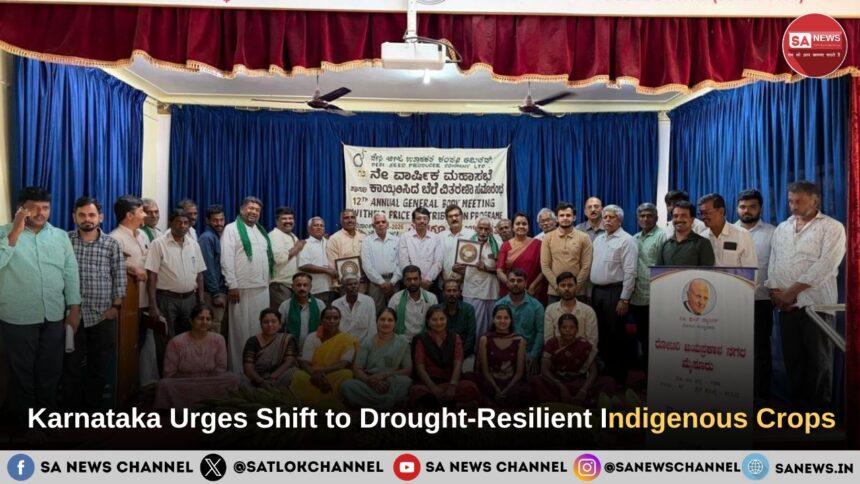
Mysuru — With changing weather patterns bringing deficient rainfall and the looming threat of the El Niño phenomenon, the agricultural sector is bracing for a tough season. To combat this, experts and government officials are strongly advising farmers to pivot towards indigenous, drought-resilient crop varieties. During the 12th Annual General Meeting of the Desi Seed Producers Company held at the Institution of Engineers Hall in Mysuru, stakeholders gathered to discuss the pressing need for climate-smart agriculture and the pivotal role of farmer-owned seed enterprises in securing the country’s food supply.
Key Points of Drought-Resilient Indigenous Crops
- Urgent Shift Recommended: Farmers are being urged to cultivate drought-tolerant indigenous crops to counter deficient rainfall caused by the El Niño phenomenon.
- Impact of Poor Rain: Inadequate rainfall can severely harm horticultural crops by delaying flowering, stunting growth, and increasing susceptibility to pests and diseases.
- Success of Farmer-Owned Enterprises: The Desi Seed Producers Company, recognized as India’s first farmer-owned organic seed company, reported a ₹1.1 crore turnover in the 2025-26 financial year.
- Nationwide Reach: Traditional seed varieties marketed under the ‘Sahaja Seeds’ brand are now being actively procured by state governments in Meghalaya, Odisha, and Andhra Pradesh.
- Local Support: The Rotary Club in Mysuru has pledged to support farmers’ markets to boost consumer awareness regarding organic and indigenous farm produce.
The Call for Climate-Resilient Agriculture
The urgency for a strategic shift in farming practices is growing rapidly. Speaking at the Mysuru event on Wednesday, Manjunath Angadi, Joint Director of Horticulture, Mysuru, emphasized that inadequate rainfall poses a massive threat to horticultural crops. When crops do not receive sufficient water, plant growth slows down, flowering is delayed, and the plants become highly vulnerable to pests and diseases. To mitigate these risks, Angadi urged farmers to take preventive measures by prioritizing indigenous crop varieties that are naturally tolerant to drought conditions.
Shivalli Boregowda, a seed conservationist and company director, echoed this sentiment. He noted that traditional crop varieties are inherently better adapted to handle the severe stress of changing climatic conditions. By producing and marketing these seeds, farmers can build a much more resilient agricultural framework that isn’t entirely dependent on perfect monsoon seasons.
The Rise of Farmer-Owned Seed Enterprises
This shift towards traditional farming is heavily supported by grassroots initiatives. The Desi Seed Producers Company was established by a group of like-minded seed conservers from the districts of Mysuru, Mandya, Chamarajanagar, and Dharwad. Its founder, G. Krishna Prasad, proudly noted in a press statement that the enterprise holds the title of “India’s first farmer-owned organic seed company”.
Under its flagship brand, Sahaja Seeds, the company has evolved into a highly successful venture. In the 2025-26 financial year alone, the company recorded an impressive turnover of ₹1.1 crore and distributed a profit share of ₹75,000 among its seed-producing farmer members. During the meeting, Arpitha C.P. was specifically felicitated for her significant contributions to the ongoing growth of this enterprise.
Expanding Horizons and Boosting Consumer Awareness
The impact of this agricultural initiative is no longer confined to Karnataka. Krishna Prasad highlighted that the vision of a small group of dedicated seed conservers has now expanded nationally. Today, the company’s indigenous seeds have a loyal customer base stretching across India. Prominently, the governments of Meghalaya, Odisha, and Andhra Pradesh are actively procuring seeds from Sahaja Seeds, solidifying the company as a leading model for seed self-reliance among Farmer Producer Companies.
To ensure this momentum continues, bringing consumers into the conversation is just as crucial as educating the farmers. D.M. Nagaraj, President of the Rotary Club, J.P. Nagar, Mysuru, served as the chief guest at the event and promised extensive local support. He announced that the Rotary Club would back farmers’ markets and local fairs to generate greater awareness among Mysuru’s consumers regarding the immense benefits of organic and indigenous farm produce. Furthermore, with backing from the Department of Horticulture, the company already successfully operates the Kisan Mall organic retail outlet on the Kukkarahalli Lake premises to promote and sell these sustainable products directly to the public.
This collaborative push for climate-smart agriculture proves that returning to our indigenous roots might be the most effective way to secure the future of our food supply against an unpredictable climate.
Climate-Resilient Farming and Compassionate Support for Farmers
Karnataka’s farmers are increasingly being encouraged to adopt indigenous, drought-resilient crop varieties that can better withstand deficient rainfall and changing climatic conditions. Experts note that inadequate rainfall can slow plant growth, delay flowering, and increase the risk of pests and diseases. In this changing agricultural landscape, farmer-owned initiatives such as Desi Seed Producers Company, known through its Sahaja Seeds brand, are helping preserve traditional organic seeds, with their reach extending beyond Karnataka to states such as Meghalaya, Odisha, and Andhra Pradesh. Alongside the need for climate-resilient agriculture, Tatavdarshi Sant Rampal Ji Maharaj Ji’s Annapurna Muhim highlights the importance of supporting farming communities; farmers are being assisted with essential inputs such as seeds, fertilizers, and pesticides, while support is also extended to labourers and their children. This combination of sustainable farming and humanitarian service reflects the broader goal of strengthening communities and ensuring that vulnerable families can live with dignity. Visit the Annapurna Muhim YouTube channel to learn more about these efforts and their impact.
FAQs Related to Drought-Resilient Indigenous Crops
1. Why are farmers in Karnataka being urged to adopt indigenous crop varieties?
Experts recommend adopting indigenous crop varieties because they are naturally drought-resilient and better adapted to changing climatic conditions, specifically the deficient rainfall caused by the El Niño phenomenon.
2. How does inadequate rainfall impact horticultural crops?
According to horticulture officials, deficient rainfall slows down plant growth, significantly delays flowering, and increases the overall incidence of pests and diseases in crops.
3. What is the Desi Seed Producers Company?
Founded by seed conservers from districts like Mysuru and Mandya, the Desi Seed Producers Company is recognized as India’s first farmer-owned organic seed company, operating under the popular brand name Sahaja Seeds.
4. Where can consumers buy organic products from Sahaja Seeds in Mysuru?
With the support of the Department of Horticulture, the company operates the Kisan Mall organic retail outlet located on the Kukkarahalli Lake premises in Mysuru.
5. Are other Indian states adopting these climate-resilient seeds?
Yes. The success of the Sahaja Seeds brand has reached a national level, with the state governments of Meghalaya, Odisha, and Andhra Pradesh actively procuring these indigenous seeds for their own agricultural programs.