

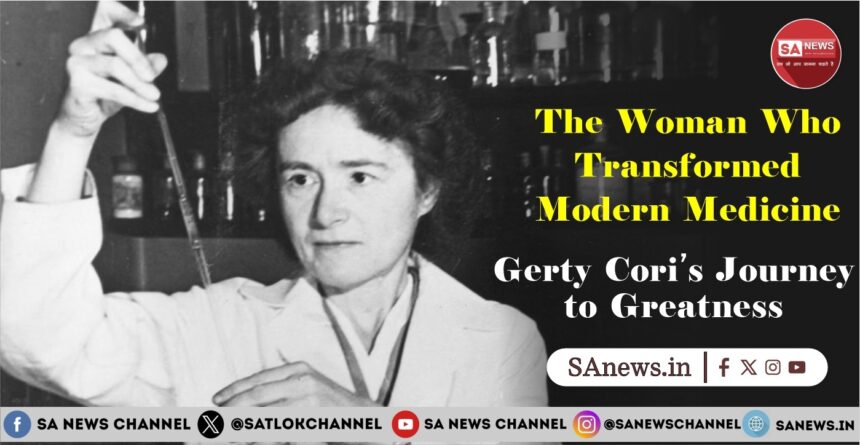
In the grand story of discovery, few chapters shine as bright as Gerty Cori’s rise above her struggles. Born into a world that systematically marginalized women, she would go on to transform our understanding of how the human body stores and releases energy, discoveries that saved countless lives and opened new frontiers in the domain of medicine.
In this article, we’ll go through her journey from a young girl in Prague to the first American woman to win the Nobel Prize in Medicine along with her husband. Keep on reading!
- The Awakening: A Girl’s Rebellion Against Convention
- The Quest of University Entrance: Sheer Human Indomitable Spirit
- A Partnership Forged in Shared Passion
- Escape to the New World: Trading One Barrier for Another
- The Breakthrough Years: Unraveling the Body’s Energy Secrets
- Washington University: Brilliance in the Shadow of Inequality
- The Crown and the Cross: Nobel Recognition Amidst Personal Tragedy
- The Final Chapter: Racing Against Time
- Legacy: The Ripple Effects of a Revolutionary Mind
- Persistence in the face of systemic barriers can yield world-changing results
- Collaboration Amplifies Discovery
- Diverse Perspectives Enrich Science
- Mentorship Multiplies Impact
- Pursue Knowledge with Humility and Humanity
- Dedicate Yourself to What Matters
- Pondering Over the Ultimate Goal for Humanity: The Real Devotion
The Awakening: A Girl’s Rebellion Against Convention
On August 14, 1896, Gerty Theresa Radnitz entered this world in Prague. She was the eldest of three sisters in an upper class Jewish family.
Her father, Otto Radnitz was a chemist who managed sugar refineries after inventing a very successful method for refining sugar. Her mother, Martha Neustradt, moved in cultural circles and was a friend of the famous writer, Franz Kafka.
This parental blend of scientific rigor and cultural sophistication contributed immensely in creating the foundation for young Gerty’s intellectual awakening.
Until the age of 10, Gerty was homeschooled which was a very common practice for the girls of her social standing. In 1906, She entered a Lyceum for girls, which is basically a public institution where lectures were held, and graduated in 1912.
However, Something snapped within her when she was just 16 years old. After a long trail of revelations, she finally decided that she’d like to devote her life into studying medicine and become a doctor. To her surprise, this decision was quite revolutionary and full of hardships for a young woman like her, especially in early 20th century Europe.
The Quest of University Entrance: Sheer Human Indomitable Spirit
To her surprise, there was this one problem ahead of her and it was enormous. Women’s schools of that era didn’t teach the prerequisites needed for the entrance to a university but this wasn’t enough to stop her.
But as it goes, Smooth seas never make skilled warriors. And just like that, Gerty took on this challenge with her fierce determination and over the course of a year, she crammed eight years worth of Latin, five years of science, and five years of mathematics.
It was an intellectual sprint which would’ve normally led most students to a mental burnout, but Gerty made it through. Her uncle, a professor of pediatrics at the University of Prague, encouraged her throughout her journey.
Finally, In 1914, at the age of 18, she passed the entrance examination at the Tetschen Realgymnasium and was admitted to the medical school of the German University of Prague which was an unusual achievement for women at that time.
A Partnership Forged in Shared Passion
In her first year of medical school, during anatomy class, Gerty’s life changed forever. She met
Carl Ferdinand Cori, a fellow medical student.
While Gerty was talkative and extroverted, Carl was quiet and reserved. Yet beneath their different temperaments they shared a deep connection, not only a passion for laboratory research but also a love of the outdoors side quests such as hiking, mountain climbing, skiing, and gardening.
They studied together, researched together, and dreamed together of lives devoted to scientific discovery.
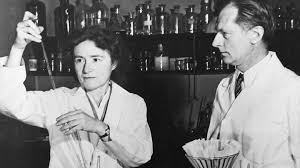
However, just when things were going smoothly, World War I took place which forced Carl to serve as a lieutenant in the Sanitary Corps of the Austrian Army on the Italian front and their medical education was hampered.
Despite these challenges, both graduated with their medical degrees in 1920. That same year marked three milestones: they published their first joint research paper on the complement of human serum, and received their doctorate.
Escape to the New World: Trading One Barrier for Another
After graduation, Gerty took a research position as an assistant at the Karolinen Children’s Hospital in Vienna, where she focused on studying temperature regulation in patients with congenital myxedema and published several research papers on hematological conditions. Carl worked at the University of Vienna’s medical clinic and Pharmacological Institute.

But by 1922, the couple recognized that the future in Europe was dark. Widespread antisemitism was making it increasingly difficult for Gerty, despite her conversion, to obtain university teaching positions. They made the bold decision to emigrate to the United States.
Carl left first in 1922, accepting a position at the State Institute for the Study of Malignant Diseases (later known as the Roswell Park Cancer Institute) in Buffalo, New York. Gerty stayed behind in Vienna, waiting and hoping for an opportunity to join him. Six months later, she finally secured a position at the same institute, initially as an assistant pathologist and later as assistant biochemist. In 1928, the Coris became naturalized United States citizens.
America offered freedom and opportunity, but it did not offer equality. The director of the institute threatened to dismiss Gerty if she did not cease collaborative research with her husband, viewing their partnership as a violation of anti-nepotism rules.
Also Read: The Imperfect Path to Immortality: The Life and Legacy of Rita Levi-Montalcini
The implicit message was clear: women could work, but they could not be equals. Gerty refused to comply. She continued working with Carl, risking her career, and somehow the institute kept her on. During these Buffalo years, Gerty published eleven articles as the sole author which was a powerful statement of her independent intellectual contributions.
The Breakthrough Years: Unraveling the Body’s Energy Secrets
In Buffalo, the Coris embarked on research that would define their lives and transform medicine. They began studying the fate of sugar in the animal body and the effects of hormones like insulin and epinephrine. Their early work demonstrated glycolysis in tumors in vivo. But their most groundbreaking discovery came in 1929, when they described what would become known as the Cori cycle.
The Cori cycle revealed a fundamental truth about how the human body manages energy. When muscles work strenuously, they break down glycogen (the storage form of glucose) into lactic acid through anaerobic glycolysis. This lactic acid doesn’t just simply disappear instead, it travels through the bloodstream to the liver, where it’s converted back into glucose through gluconeogenesis. The glucose then returns to the muscles, eventually completing the cycle.
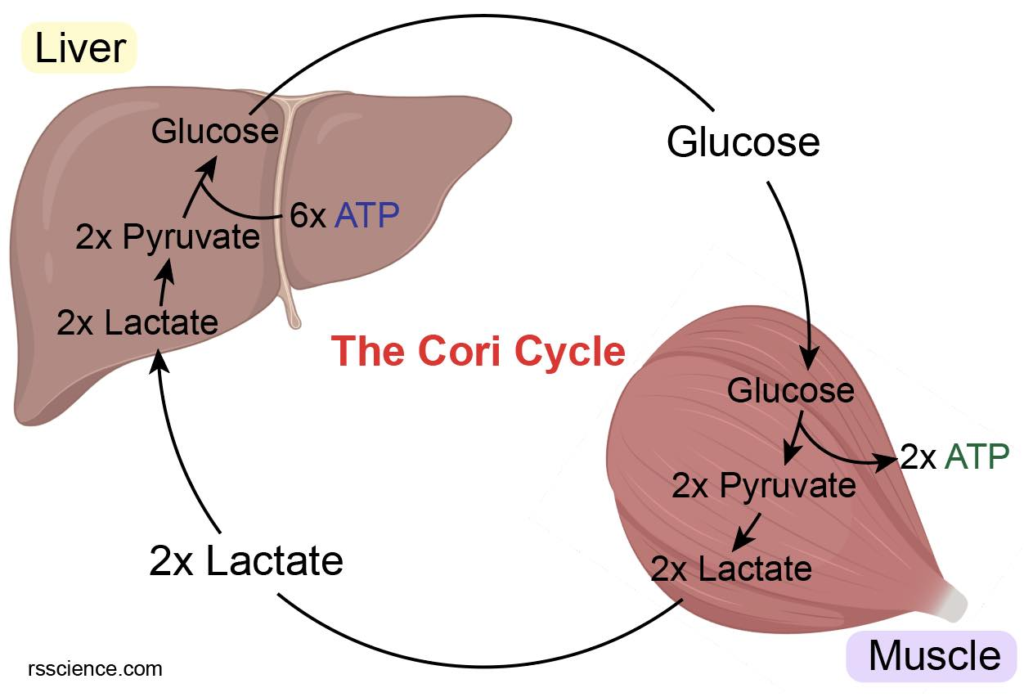
(Source: RSScience)
This discovery illuminated an essential energy conservation mechanism, explaining how the body maintains its delicate biochemical balance and adapts to changing energy demands.
Before Cori’s work, scientists poorly understood the biochemical processes underlying metabolism, despite knowing that defective carbohydrate metabolism could lead to diabetes mellitus. The Cori cycle changed everything, providing a molecular roadmap for energy metabolism that would prove critical to developing treatments for metabolic disorders.
Washington University: Brilliance in the Shadow of Inequality
In 1931, Washington University School of Medicine in St. Louis offered both Coris a position, but not on equal ground. Carl was made head of Pharmacology with full pay and prestige. Gerty, despite identical qualifications and joint contributions, was hired as a research associate at nearly one-tenth of his salary. The message was cruelly clear: her work was valued at 10%.
For the next sixteen years, she worked in this subordinate role while Carl climbed the ladder. Yet these very years became the most defining phase of her scientific life.
In 1936, the Coris isolated glucose-1-phosphate, later known as the “Cori ester” and traced it to the enzyme phosphorylase, revealing that glycogen breakdown wasn’t a simple reaction but a sophisticated enzymatic pathway. Building on this, they achieved something unthinkable for the time: synthesizing glycogen in vitro.
In a world before molecular biology had its tools, they created one, which opened a new era where scientists could dissect metabolic pathways with precision, laying groundwork for treating conditions like glycogen storage diseases and diabetes.
Their breakthroughs didn’t stop there. They discovered phosphoglucomutase, purified and crystallized muscle phosphorylase, and identified its distinct forms, each with a specific role in energy metabolism. Most importantly, they showed how hormones like insulin and epinephrine regulate this enzyme, providing the molecular basis for how the body responds to shifting energy demands.
And amidst this storm of discoveries, Gerty gave birth to her son, Thomas Carl Cori, in 1936 but this didn’t let her dedication to research waver.
The Crown and the Cross: Nobel Recognition Amidst Personal Tragedy
By 1946, Carl had been appointed head of the Biochemistry Department at Washington University. Only then, after sixteen years of producing some of the most important biochemical discoveries of her era was Gerty finally promoted to associate professor. And in 1947, just two months before the Nobel announcements, she was at last granted a full professorship.
On October 31, 1947, the world learned that Gerty and Carl Cori along with Argentine physiologist Bernardo Houssay had won the Nobel Prize in Physiology or Medicine “for their discovery of the course of the catalytic conversion of glycogen.”
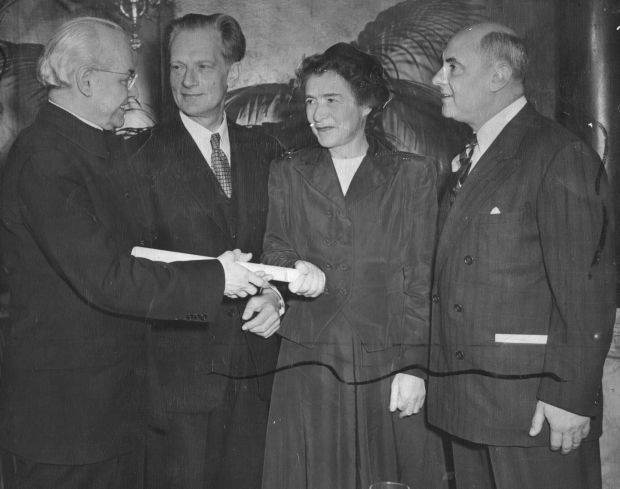
The committee called it one of the defining achievements in biochemistry. Gerty became only the third woman in history to win a Nobel Prize in the sciences, and the first American woman to receive the Nobel in Physiology or Medicine.
Washington University held a celebration for the couple in the Women’s Building. About two hundred people attended. It was warm, festive, and at the same time quietly tragic. That same year, Gerty had been diagnosed with myelofibrosis, an incurable bone marrow disorder. Yet even this didn’t slow her. If anything, it sharpened her resolve, pushing her deeper into the questions she still felt compelled to answer.
The Final Chapter: Racing Against Time
With her usual resolve, Gerty used her final decade to explore new territory. She turned her focus to glycogen storage diseases, a set of inherited childhood disorders that remain incurable even today. These conditions affected roughly one in 100,000 births and often struck early in life, bringing her back to the world of pediatric medicine she first encountered at the Karolinen Children’s Hospital.
Gerty believed these disorders were caused by defects in glycogen-related enzymes. Her research centered on identifying the specific enzyme deficiencies at the core of several diseases, including what would later be called Cori disease or Forbes disease, a glycogen storage disorder caused by the absence of the debranching enzyme. She went on to identify at least four distinct forms of glycogen storage disease, each linked to a precise enzymatic defect. She was the first scientist to establish that a faulty enzyme could cause a human genetic disease, a conceptual breakthrough that opened the door to modern medical genetics.
As myelofibrosis advanced, she endured surgeries, blood transfusions, and eventually needed help moving from one room to another. Yet she stayed active in the laboratory until the end. During this period, she contributed to Edward R. Murrow’s radio series “This I Believe,” where she expressed her philosophy with striking clarity:
“The love for and dedication to my work seems to me to be the basis for happiness. As a research worker, the unforgettable moments of my life are those rare ones which come after years of plodding work, when the veil over nature’s secret seems suddenly to lift and when what was dark and chaotic appears in a clear and beautiful light and pattern.”
She also wrote, “I believe that art and science are the glories of the human mind. I see no conflict between them.”
And with a generosity that speaks louder because of the discrimination she endured, she said, “I came to this country in 1922 and owe it the greatest debt of gratitude for having treated me and my husband with fine generosity, giving us wonderful opportunities for research work, security and a happy life.”
Gerty Theresa Cori died on October 26, 1957, at the age of 61. A memorial service was held two months later at Washington University.
Legacy: The Ripple Effects of a Revolutionary Mind
After Gerty’s death, their son Thomas Cori preserved his parent’s Nobel Prize medals, eventually donating them to Washington University, where they remain on permanent display at the Bernard Becker Medical Library.
These medals symbolize not just personal achievement but a
medical school deeply committed to advancing fundamental biomedical science for the benefit
of all humanity.
For students and researchers in STEM fields today, Gerty Cori’s life offers profound and timely
lessons that resonate across generations. Before we wind up this article, let’s look at some takeaways from the inspiring story of Gerty Cori:
Persistence in the face of systemic barriers can yield world-changing results
The first lesson would be pushing forward even when the system is stacked against you can genuinely change the world. Gerty faced obstacles after obstacles such as sexism, religious bias, unfair rules, pathetic pay gaps, years of being overlooked. She had every reason to walk away. But she didn’t. She locked into the work itself, the excitement of figuring things out, the joy of discovery, the chase for truth.
When the institute director basically threatened to fire her for simply working with her own husband, she didn’t stop. When she was getting paid a fraction of Carl’s salary even though she was doing the same level of work, she still kept delivering breakthroughs. Sixteen years without a promotion, and she still didn’t let frustration drown her drive.
Her journey makes one thing clear: external validation matters, sure, but it can’t be the thing that defines our value or decides whether we keep going.
Collaboration Amplifies Discovery
The Cori partnership stood out not because they were a married couple, but because their strengths truly completed one another. Colleagues often said that Gerty would leap into bold, imaginative ideas, while Carl had a natural talent for turning those ideas into clear, testable questions.
David Kipnis commented, “As a team, they were extraordinary.” Jean Schaffer added that it was rare in their era for two scientists to work so closely side by side, and that their partnership became a model for later generations. She pointed out that modern research values collaboration, and in many ways the Coris were already living that future. The takeaway is simple: look for collaborators who push your thinking further, who balance your weaknesses with their strengths, and who share your hunger for exploration.
Diverse Perspectives Enrich Science
Gerty often said that whatever she achieved in science came from a mix of two worlds. She grew up with the rich intellectual culture of Europe, then came to America where she found more freedom and opportunity. That blend shaped the way she thought and worked.
Her experiences in Prague, the barriers she faced as a woman and as a Jew, and the contrast she saw after moving to the United States gave her a perspective that many privileged male scientists of her time simply never had.
It is a reminder that modern science grows stronger when it brings in people from different genders, cultures, and backgrounds, because each viewpoint adds something the field would otherwise miss.
Mentorship Multiplies Impact
Mentorship has a multiplying effect. The fact that six of the Coris’ trainees later earned Nobel Prizes says everything about how seriously they took the responsibility of shaping future scientists. Gerty understood that real progress in science is never just about one person.
It is about building communities of curiosity that keep growing long after you are gone. For anyone learning today, the message is simple: look for mentors who genuinely care about your growth, and later become that kind of guide for someone else.
Pursue Knowledge with Humility and Humanity
Next, pursue knowledge with humility and a sense of humanity. Even after the discrimination she faced, Gerty never allowed herself to become bitter. She wrote that cynicism and despair suffocate the mind and block great achievements in both art and science.
She believed that the highest work comes from people who have faith and compassion. As she grew older, she said that kindness became more important to her than it had ever been. In a world where academic and professional spaces can sometimes reward cold competitiveness, her life makes it clear that kindness and excellence can exist together.
Dedicate Yourself to What Matters
And ultimately, devote yourself to work that serves a purpose. Gerty was not doing science just to solve puzzles. Her discoveries changed lives. Understanding the Cori cycle transformed the study of diabetes and metabolic disorders.
Her work on glycogen storage diseases helped pinpoint the enzyme defects behind severe childhood illnesses. The methods she developed opened doors for future researchers. She chose her questions by asking how her work could genuinely help people. That is a question worth carrying into any field, any project, any ambition.
Pondering Over the Ultimate Goal for Humanity: The Real Devotion
You may wonder, Humanity has been flourishing for centuries and from the cosmic perspective, the evolution and the creation of the universe can’t just be a mere coincidence of atoms binding together? After enough revelations and experiences over time, we realize that there’s a Creator above us all, the Almighty God who created this universe and us.
For centuries, we looked to priests, saints, and philosophers to find Him. The result? We were left with silence and disappointment. They spun fairy tales that eventually became traps to exploit the faithful. Despite their loud promises, those hollow rituals never brought us peace or answers.
Saint Rampal Ji stands apart as a true Tatvadarshi Guru. He fits every description of a supreme teacher found in our own holy books. Unlike self-proclaimed gurus who speak empty words, he offers proof. Every claim he makes is backed directly by the scriptures.
We live in a world crowded with false guides who lack true wisdom and lead devotees astray. In this confusion, Saint Rampal Ji Maharaj shines as the only Real Saint. He has cleared the fog surrounding worship to reveal the truth about Satlok, our immortal home.
He provides authentic, evidence-based answers to the mysteries that have haunted humanity for ages:
- Who is the Supreme Almighty God?
- From where have we come?
- Why do we face problems?
- Why do we die?
- What happens with a soul after death?
- Why do people face problems and die an untimely death, even when they are already worshipping?
- Is there a land devoid of sorrows, old age and death?
- How can we attain the plentiful and immortal abode?
If you are ready to uncover the Divine Power behind the creation of this universe, read the detailed article below. It is time to find the answers you have been searching for. ⏬
Creation of Nature (Universe) – Jagat Guru Rampal Ji
FAQs
- What is Gerty Cori best known for?
She is best known as the first American woman to win the Nobel Prize in Physiology or Medicine (1947). She received the award jointly with her husband, Carl Cori, for their discovery of the “Cori cycle.”
- What is the Cori cycle?
The Cori cycle is a biological process that explains how the body manages energy. It describes how muscles break down glycogen into lactic acid during exercise, which then travels to the liver to be converted back into glucose for reuse.
- What challenges did Gerty Cori face in her career?
She faced significant gender discrimination, antisemitism, and nepotism rules. For 16 years, she worked in low-ranking positions and was paid one-tenth of her husband’s salary despite doing identical work and holding the same qualifications.
- Did Gerty Cori identify the cause of any specific diseases?
Yes. In her later years, she identified that glycogen storage diseases (like Von Gierke’s disease) were caused by specific enzyme defects. This work established the concept that faulty enzymes can cause human genetic diseases.
- Why did the Cori family emigrate to the United States?
They moved in 1922 because the rise of antisemitism in Europe made it nearly impossible for Gerty to find a university position, and they saw better opportunities for scientific research in America.