



Emmanuelle Charpentier is one of the most influential scientists of the modern era. A microbiologist and geneticist by training, she is best known for co-developing CRISPR-Cas9, a revolutionary genome-editing technology that has transformed biological research and opened new possibilities in medicine, agriculture and biotechnology. Awarded the Nobel Prize in Chemistry in 2020, Charpentier’s journey is more than just studying bacteria and RNA molecules. This article traces Emmanuelle Charpentier’s journey right from her childhood to creating one of the most powerful tools in molecular biology, and analyses how her scientific contributions have shaped society today.
- Who Is Emmanuelle Charpentier?
- Emmanuelle Charpentier’s Early Life and Education
- Emmanuelle Charpentier’s International Research Career and Formation as a Scientist
- The Scientific Breakthrough: CRISPR-Cas9
- The Charpentier-Doudna’s CRISPR-Cas9 Breakthrough
- The Nobel Prize in Chemistry in 2020
- Other Awards and Honours for Emmanuelle Charpentier
- Famous Quotes by Emmanuelle Charpentier
- CRISPR-Cas9 Controversies and Patent Disputes
- A Critical Analysis of Emmanuelle Charpentier’s Views on the Misuse of CRISPR-CAS9
- The Moral Crisis of Humanity: Why Laws Cannot Reform the World
- FAQs: Emmanuelle Charpentier Biography
Who Is Emmanuelle Charpentier?
Emmanuelle Marie Charpentier was born on 11 December 1968 in Juvisy-sur-Orge, a town near Paris, France. She is a French microbiologist, geneticist and biochemist whose research focuses on bacterial regulatory mechanisms and RNA biology. Her name is now inseparably associated with CRISPR-Cas9, the gene-editing system that allows scientists to cut and modify DNA with remarkable precision. In partnership with Jennifer Doudna, a biochemist based in the United States, her research played a central role in establishing CRISPR-Cas9 as a practical genome-editing tool.
Charpentier is currently the Scientific and Managing Director of the Max Planck Unit for the Science of Pathogens in Berlin, where she leads research into infectious diseases and host-pathogen interactions. Curiosity into Emmanuelle Charpentier’s life and how she became a microbiologist at a time when the field was primarily male-dominated triggers interest in her biography.
Emmanuelle Charpentier’s Early Life and Education
Information about Emmanuelle Charpentier’s parents has not been publicly disclosed due to her long-standing preference for privacy. However, from her speeches and interviews, it is known that Charpentier grew up in France with a strong interest in science from an early age.
Emmanuelle Charpentier grew up in a quiet town south of Paris during a period of social change. From a young age, she was encouraged by her family to pursue her academic interests and was an enthusiastic student who took her studies seriously. Having an older sister who entered university before her helped shape her early understanding of academic life as a space not just for learning but for creating and sharing knowledge.
Charpentier’s curiosity extended beyond the natural sciences to mathematics and human sciences such as psychology and philosophy too. She has often reminisced how her father would share the Latin names of plants with her, nurturing her interest in the natural world, while her mother’s interests steered her towards questions related to human health.
Emmanuelle has also recounted memorable conversations from her early teens, where she expressed a desire to work at the Pasteur Institute to her mother and then, ultimately, she did work at the Pasteur Institute later on in life.
She has spoken about her fascination with biology during her childhood and her curiosity about how living organisms function at a molecular level. Alongside science, she also trained in classical piano and ballet, disciplines that required discipline, patience and long-term dedication. These are some of the qualities that would define her scientific approach later on in life.
Educational Foundation and Shift Toward Research
Emmanuelle Charpentier has been vocal about the encouragement she received from her parents to pursue subjects of her academic interest.
- After completing secondary school, Charpentier moved to Paris in 1986 to study biochemistry, microbiology and genetics.
- She studied biochemistry, microbiology and genetics at Pierre and Marie Curie University in Paris.
- Her academic journey led her to the Pasteur Institute, where she received her doctorate in microbiology in 1995. Under the mentorship of Patrice Courvalin, her master’s and doctoral research combined the study of medical microbiology with bacterial genetics, focusing on elements such as antibiotic resistance.
- Her doctoral work on molecular mechanisms in bacteria laid the foundation for her later discoveries in RNA biology.
This period was formative for Charpentier where she found the laboratory environment deeply engaging and recognised that she was not merely a learner. Her early exposure to independence in research fostered a strong sense that she belonged in the world of scientific inquiry rather than just academic study.
Emmanuelle Charpentier’s International Research Career and Formation as a Scientist
One of the defining features of Charpentier’s career is her work in several countries across the globe. Rather than remaining in a single academic system, she pursued research opportunities across Europe and the United States, gaining exposure to different scientific cultures and methodologies.
After her PhD, she undertook postdoctoral research at the Institute Pasteur and later at Rockefeller University in New York. She went on to work at several prestigious institutions in the United States, including academic medical research centres, before returning to Europe.
Over the years, she held research and leadership positions in Austria, Sweden and Germany. She became a professor and research group leader, steadily building independent laboratories and mentoring young scientists. In 2015, she joined the Max Planck Society, whereas in 2018 she founded and became director of a new Max Planck research unit in Berlin. This is her current place of work.
The Scientific Breakthrough: CRISPR-Cas9
After returning to Europe, Emmanuelle Charpentier established her own research group and began focusing on regulatory RNA mechanisms in pathogenic bacteria. Her work centred on understanding how bacteria control gene expression and defend themselves against viral threats.
- Charpentier’s most significant scientific contribution arose from her research into bacterial immune systems. Bacteria are constantly attacked by viruses, and over time, they have evolved defence mechanisms to protect themselves.
- One such mechanism is known as CRISPR, a system that allows bacteria to recognise and destroy invading viral DNA.
- While studying the bacterium Streptococcus pyogenes, Charpentier discovered a small RNA molecule that played a crucial role in this defence system. This molecule, later named tracrRNA, was essential for guiding the bacterial enzyme Cas9 to its DNA target.
- Through meticulous investigation, her research uncovered critical RNA components involved in bacterial immune systems.
- Charpentier collaborated with American biochemist Jennifer Doudna to further investigate this system. Together, they demonstrated that the natural components of the CRISPR system could be simplified and reprogrammed.
- By combining two RNA molecules into a single synthetic guide RNA, they created a tool that could direct Cas9 to cut DNA at virtually any chosen location.
This discovery transformed CRISPR-Cas9 into a programmable genome-editing tool, allowing scientists to modify genes with unprecedented ease and precision.
The Charpentier-Doudna’s CRISPR-Cas9 Breakthrough
During her independent research career in Europe, Emmanuelle Charpentier’s laboratory began investigating the molecular mechanisms behind bacterial immune systems, particularly in Streptococcus pyogenes.
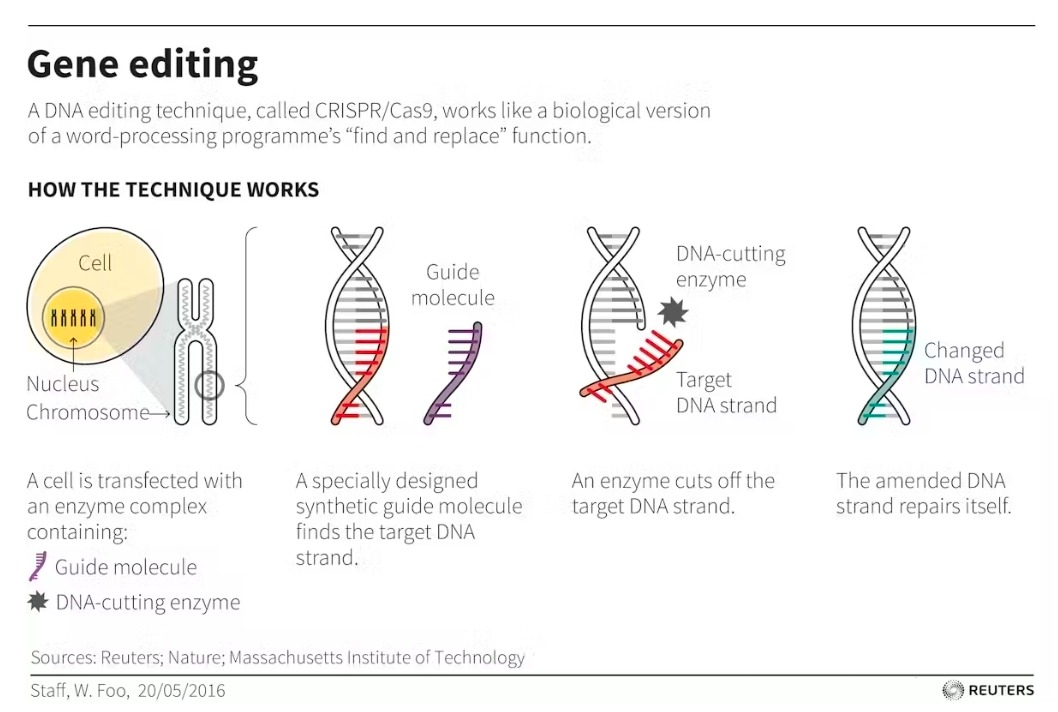
- Her group was among the first to identify and characterise small RNA molecules associated with the CRISPR-Cas9 system, most notably a previously unrecognised RNA called tracrRNA, which plays a key role in how the bacterial CRISPR apparatus functions.
- Recognising that this RNA-guided system might have broader applications, Charpentier and her team pursued the fundamental biology of how CRISPR-Cas9 recognises and cleaves DNA.
- Their work culminated in a pivotal publication in 2011 that highlighted the essential functions of tracrRNA in the CRISPR defence mechanism.
- Building on this understanding, Charpentier collaborated with Martin Jinek and others in Jennifer Doudna’s laboratory to demonstrate that the dual RNA components and the Cas9 protein could be repurposed as a programmable tool for cutting DNA at specific sites.
- This insight laid the foundation for CRISPR-Cas9 to be adapted as a versatile gene-editing technology that allows precise modification of genetic sequences across diverse organisms, revolutionising life sciences research and applications.
- Before CRISPR-Cas9, gene editing was complex, expensive and time-consuming. The new system made genetic modification faster, cheaper and far more accessible.
Image Credit: Reuters/ Reuters Photographer
Within a few years, laboratories across the world adopted CRISPR-Cas9 for research in biology, medicine, agriculture and biotechnology.
The CRISPR-Cas9 technology has enabled:
- Advances in basic genetic research
- Development of potential therapies for inherited diseases
- Improvements in crop resilience and sustainability
- New approaches to studying cancer and infectious diseases
Charpentier’s work was recognised not just within the scientific community, but also worldwide when she and Jennifer Doudna were awarded the Nobel Prize in Chemistry in 2020.
The Nobel Prize in Chemistry in 2020
In 2020, Emmanuelle Charpentier and Jennifer Doudna were jointly awarded the Nobel Prize in Chemistry for the development of CRISPR-Cas9 genome editing. They became the first two women to share a Nobel Prize in Chemistry without a male co-recipient.
The Nobel Committee recognised that their discovery represented a major leap forward in chemical and biological science, with vast implications for humanity. The award acknowledged not only the technical brilliance of the work, but also its transformative impact across multiple disciplines.
Other Awards and Honours for Emmanuelle Charpentier
Emmanuelle Charpentier has received numerous prestigious awards and scientific honours for her breakthrough work in genome editing.
- Aside from the Nobel Prize in Chemistry in 2020 for her role in developing CRISPR-Cas9 technology, Charpentier also has been recognised with the Breakthrough Prize in Life Sciences, honouring advances that have reshaped medicine and genetics.
- In 2018, she received the Kavli Prize in Nanoscience for pioneering contributions to molecular engineering.
- Among her other major recognitions are the L’Oréal-UNESCO International Award for Women in Science, the Japan Prize and the Heineken Prize for Biochemistry and Biophysics.
In addition to these, Charpentier has been elected to leading scientific academies and awarded multiple honorary doctorates.
Famous Quotes by Emmanuelle Charpentier
Some of her most widely quoted statements capture her philosophy and values:
- ‘It’s really about solid work. You need time to do the work in a deep and proper way’.
- ‘Science can move very fast, but society needs time to reflect’.
- ‘We must think carefully about how powerful technologies are used and who benefits from them’.
Also Read: Inside Jennifer Doudna’s CRISPR Legacy: The Discovery That Redefined Science and its Limits
CRISPR-Cas9 Controversies and Patent Disputes
Despite the scientific breakthrough of CRISPR-Cas9 earning global recognition, including a Nobel Prize, the technology has been at the centre of a prolonged patent ownership dispute.
- The controversy primarily concerns who holds the legal rights to use CRISPR-Cas9 in complex cells, particularly for medical and commercial applications.
- Along with Emmanuelle Charpentier and Jennifer Doudna there are multiple claims of who were the first to describe the core mechanism of the technology.
- Competing claims emerged from other research institutions that developed applications of CRISPR in eukaryotic cells.
- In the United States, patent authorities initially ruled in favour of these later applications, but subsequent court decisions questioned the legal reasoning behind those rulings and reopened the case for review.
- This ongoing dispute underscores the tension between scientific discovery and intellectual property law, illustrating how transformative innovations can lead to complex legal and commercial challenges.
Limitations of CRISPR-CAS9
Additionally, despite its potential, CRISPR-Cas9 has several important limitations.
- One major concern is off-target editing, where unintended sections of DNA may be altered, raising safety risks for clinical use.
- The system also depends on the presence of specific PAM sequences, which restricts where edits can be made within the genome.
- Another significant challenge lies in delivering CRISPR components efficiently into target cells and tissues, particularly in human therapies.
- Once DNA is cut, the cell’s natural repair mechanisms can be unpredictable: error-prone repair pathways often lead to unintended mutations, while precise repair occurs at low efficiency.
- In addition, immune responses to the bacterial Cas9 protein may reduce safety in some patients.
- CRISPR-Cas9 also shows variable effectiveness across different cell types, especially in non-dividing cells, and remains less efficient for making large or complex genetic changes.
A Critical Analysis of Emmanuelle Charpentier’s Views on the Misuse of CRISPR-CAS9
Though Emmanuelle Charpentier has repeatedly called for the responsible use of CRISPR-Cas9, it is deeply disheartening to witness a scientist of her stature refer to CRISPR-Cas9 as ‘my’ technology and then position herself as a moral gatekeeper calling for a global moratorium on its use.
- First and foremost, CRISPR-Cas9 is far from foolproof. It carries known risks such as off-target mutations, unpredictable DNA repair outcomes and long-term consequences that science itself has not yet fully grasped. To speak of ownership over such an incomplete and imperfect technology reflects a troubling sense of intellectual entitlement rather than humility before the complexity of life itself.
- Secondly, the repeated call for a ‘global moratorium’ appears naive when examined through the lens of real human behaviour. A ban or pause on technology does not stop misuse. It merely drives it underground or shifts it into less transparent hands.
- If the world were truly disciplined, ethical, and self-regulated, there would be no need for governments, laws, courts or police forces. However, despite an ever-expanding network of regulatory bodies and enforcement agencies, crime, exploitation and unethical conduct have not decreased. Instead, they have escalated. This reality exposes the fundamental weakness of relying on external controls to restrain internal impulses.
The misuse of CRISPR-Cas9, therefore, cannot be prevented by moratoria, international agreements, or ethical committees alone. These are superficial solutions applied to a much deeper problem.
What the world lacks is not regulation, but inner transformation. Without a profound change in human consciousness, one that cultivates responsibility, compassion,and reverence for life, even the most advanced safeguards will fail.
Governments and institutions can control actions to an extent, but they can never reform intent. Until humanity undergoes a moral and spiritual awakening from within, technologies like CRISPR-Cas9 will continue to be misused, regardless of who claims ownership over them or how many bans are imposed.
So what is the true solution to restoring world order and repairing the moral fabric of humanity?
The Moral Crisis of Humanity: Why Laws Cannot Reform the World
The transformation of Valya the dacoit into Maharishi Valmiki stands as one of history’s most powerful reminders that true reform does not arise from fear, force or external control. Valya was not changed by laws, prisons or punishment. His life was transformed through inner awakening, through knowledge that pierced the root of ignorance and reshaped his consciousness. This proves spirituality can reform character, yet Valmiki’s path only brought moral discipline, not complete fulfilment; the higher, complete understanding unfolds only through the refuge of a Tatvdarshi Sant.
This example exposes the fundamental flaw in modern debates surrounding technologies such as CRISPR-Cas9. Scientists speak of regulations, moratoria and ethical frameworks as if misuse can be prevented through external restraint. History repeatedly proves otherwise. Technology, like a weapon, is morally neutral. Its consequences depend entirely on the inner state of the human being wielding it. Without moral elevation, even the most advanced safeguards collapse. CRISPR-Cas9 will never be safe in the hands of a morally unrefined world, just as power, wealth or authority have never been safe in the hands of spiritually empty societies.
This is where the relevance of Jagatguru Tatvdarshi Sant Rampal Ji Maharaj’s transformative spiritual knowledge becomes undeniable. Unlike institutional control, His teachings work at the root level of human behaviour. Millions of individuals influenced by His spiritual guidance have experienced a visible change in character, abandoning crime, addiction, violence, dishonesty and exploitation. This transformation is not enforced, it arises naturally from understanding the true purpose of human life and recognising accountability beyond worldly systems.
Disciples of Sant Rampal Ji Maharaj are known for leading morally disciplined lives, grounded in compassion, self-restraint and responsibility. They consciously renounce harmful habits and destructive tendencies, rejecting not people, but vices such as greed, lust, anger, addiction and violence, which are the true ‘devils’ that corrupt society from within. Such inner reform produces citizens who do not require constant policing, surveillance or coercion to act ethically.
The lesson is unmistakable. The world does not suffer from a lack of laws or institutions; it suffers from the absence of the refuge of a Tatvdarshi Sant (Complete Saint) – the only force capable of bringing about true inner transformation. Sant Rampal Ji Maharaj is that very Saint, foretold by the French astrologer Nostradamus as the Saviour of humanity, destined to ignite an unprecedented spiritual revolution that would reshape the course of the world.
Until humanity experiences the profound moral awakening now visible in the lives transformed by Sant Rampal Ji Maharaj’s revolutionary spiritual knowledge, no policy, technology or authority can redeem this civilisation. The solution does not lie in external control, but in inner realisation – a change that only true spiritual knowledge can awaken. To understand the great prophecies concerning Sant Rampal Ji Maharaj and to explore the life-transforming wisdom that is changing millions of lives across the globe, visit:
- Website: www.jagatgururampalji.org
- YouTube: Sant Rampal Ji Maharaj
- Facebook: Spiritual Leader Saint Rampal Ji
- X (Twitter): @SaintRampalJiM
FAQs: Emmanuelle Charpentier Biography
Q1) Who is Emmanuelle Charpentier and why is she famous?
Answer: Emmanuelle Charpentier is a French microbiologist best known for her role in developing the CRISPR-Cas9 gene-editing system.
Q2) Why did Emmanuelle Charpentier win the Nobel Prize in Chemistry?
Answer: She received the Nobel Prize in Chemistry in 2020 for co-developing CRISPR-Cas9.