


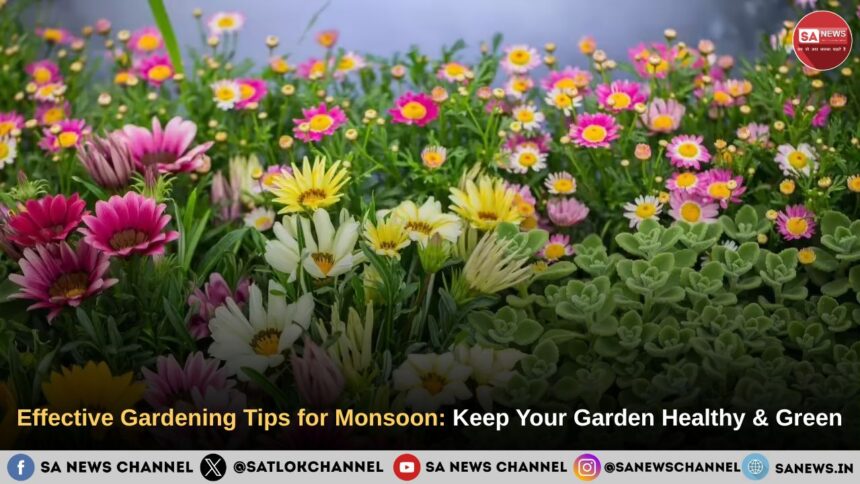
Give your garden a lush and thriving look this monsoon. By carefully understanding the challenges that the monsoon season brings, you can prepare your garden into a blooming and vibrant space. Monsoon rain nourishes the plants and supports the speedy growth but too much moisture also causes soil erosion, waterlogging, root rot, fungal diseases, and pest invasion.
- Prepare Your Garden Before the Rainy Season
- Choose the Best Plants for Monsoon Gardening
- Watering Tips During the Monsoon
- Prevent Fungal Diseases and Plant Infections
- Common Monsoon Plant Diseases
- Natural and Organic Ways to Prevent Fungus
- Common Monsoon Garden Pests
- Eco-Friendly Pest Control Methods
- Fertilizing Plants During the Rainy Season
- Essential Lawn Care Tips During Monsoon
- Container Gardening Tips for the Rainy Season
- Indoor Plant Care During Monsoon
- Satlok Is The Eternal Abode of Peace And Happiness
Ensuring proper damage, healthy soil and timely plant care are crucial for maintaining a blooming garden during this monsoon. Nevertheless, monsoon is one of the best times to grow flowering plants, herbs, vegetables, and ornamental greenery due to abundant moisture and cooler temperatures. By following the right monsoon gardening practices, you can protect your plants, improve soil health, and enjoy a beautiful, vibrant and a disease-free garden this rainy season.
Prepare Your Garden Before the Rainy Season
To get a vibrant and lush green garden, preparing your garden before the monsoon is most important. Begin by improving soil drainage with organic matter, compost, or raised beds to prevent waterlogging, which can deprive plant roots of oxygen and lead to root rot.
Another effective tip to prepare your garden for the monsoon is to clean garden beds by fallen leaves, removing weeds, and plant debris, as these often become breeding grounds for fungal diseases pests and during most and humid weather.
Trimming damaged branches and dead leaves can also improve air circulation, encourage healthy new growth, and reduce the spread of infections. This is essential as most of the plant losses during the monsoon occurs due to poor drainage and fungal diseases. A small preparation before the first showers can help your garden stay healthy, productive, and blooming throughout the monsoon.
Choose the Best Plants for Monsoon Gardening
While preparing your garden for the monsoon is important, choosing the right plants is also equally important. The cooler temperatures and the abundant moisture that the rainy season provides is not suitable for every plant. Selecting the monsoon-friendly flowers, vegetables, and herbs varieties help reduce the risk of fungal diseases, root rot, and poor growth while ensuring a lush, productive and vibrant garden.
Flowering Plants That Thrive in Rain
Certain flowering plant varieties such as marigold, balsam, rain lily, periwinkle, hibiscus, and jasmine require high humidity and consistent rainfall and are best suited for the monsoon and also require relatively low maintenance. Choosing rain-tolerant flowers helps keep your garden colorful and healthy throughout the rain.
Vegetables Suitable for the Monsoon Season
Several vegetables including okra (ladyfinger), spinach, cucumber, bottle gourd, ridge gourd, beans, and chilli are also suitable for the rainy season. Ensuring proper soil drainage to prevent waterlogging and root rot, can significantly reduce crop yields.
Herbs That Grow Well During Monsoon
Fresh herbs such as mint, coriander, basil (tulsi), lemongrass, and curry leaves also flourish in the rainy season. These herbs grow rapidly with adequate moisture, making them an excellent choice for kitchen gardens while adding fresh flavor and nutritional value to your meals.
Also read: How to Improve Your Credit Score Quickly: Proven Strategies for Fast Results
Watering Tips During the Monsoon
Rain provides humidity naturally, but it is still important to water properly in the rainy season. Some gardeners water their plants based on strict schedules instead of checking moisture content of the soil and observing their plants. This can cause layers of waterlogging, rot, or diseases.
When to Water and When to Skip
Carefully check the top 1–2 inches of soil before watering. Skip watering the plants if the soil is moist due to recent rainfall. Water your plants only when the soil begins to dry out, ideally in the early morning, so excess moisture can evaporate during the day.
Avoid Overwatering Your Plants
Overwatering is among the leading causes of plant damage during the monsoon. Overwatering the plants deprives roots of oxygen, stimulates fungal infections, and causes root rot. Ensure proper drainage of the pots and garden beds to let excess rainwater escape, keeping your plants healthy and thriving.
Prevent Fungal Diseases and Plant Infections
Warm temperatures and high humidity are ideal for fungal growth during the monsoon. By maintaining healthy foliage, stronger roots, and better flowering, plants can be protected from diseases by harmful pests throughout the rainy season.
Common Monsoon Plant Diseases
During the rainy season, powdery mildew, leaf spot, root rot, damping-off, and blight are among the most common fungal diseases that affect the plants. Timely inspecting the leaves and stems to detect infections before they spread is essential to maintain proper growth of the plants in the monsoon.
Natural and Organic Ways to Prevent Fungus
Organic solutions including neem oil, baking soda sprays, and compost tea can help control fungal infections naturally while also keeping your garden chemical-free. Improve air circulation by cutting overcrowded plants and avoid wetting leaves while watering.
Keep Garden Pests Under Control
While the rainy season encourages plant growth, it also supports the growth of insects that damage leaves, flowers, and vegetables. Timely monitoring and regular pest control help protect your garden without harming beneficial insects.
Common Monsoon Garden Pests
Aphids, snails, slugs, caterpillars, mealybugs, and mosquitoes are among the most common monsoon pests. If untreated, these pests feed on plant tissues and can quickly spread diseases and destroy your graden.
Eco-Friendly Pest Control Methods
By adapting eco-friendly pest control methods such as using neem oil spray, garlic-chilli solution, sticky traps, or hand-picking larger pests can help reduce the pests. Encouraging the introduction of natural predators in your garden ecosystem like ladybugs also helps maintain a healthy and vibrant garden.
Fertilizing Plants During the Rainy Season
While adequate rainfall ensures proper growth of the plant, heavy rain can wash nutrients away from the soil. Applying the right fertilizer at the right time allows healthy growth without damaging the roots.
Best Organic Fertilizers for Monsoon
Well-decomposed compost, vermicompost, cow manure, and organic liquid fertilizers provide slow-release nutrients that improve soil fertility while supporting healthy plant development.
Mistakes to Avoid While Feeding Plants
Avoid applying excessive fertilizer before heavy rainfall, as nutrients may leach away. Never fertilize waterlogged soil, and always follow the recommended dosage to prevent root damage.
Essential Lawn Care Tips During Monsoon
Lawns grow rapidly during the rainy season and require regular maintenance to stay green and disease-free. Proper mowing and weed control help maintain a healthy and attractive landscape.
Mowing the Lawn Correctly
Prune the grass regularly but avoid cutting it too short. Slightly taller grass improves root strength, reduces soil erosion, and helps the lawn recover quickly after heavy rain.
Prevent Moss and Weed Growth
By removing weeds before they spread too far, improving sunlight exposure, and aerating compacted soil. Ensuring proper drainage also prevents moss from developing in damp areas.
Container Gardening Tips for the Rainy Season
Container plants are especially vulnerable to excess moisture because water can accumulate inside pots. Selecting the right containers as well as potting mix helps maintain healthy roots throughout the monsoon.
Ensure Proper Drainage in Pots
Use pots with sufficient drainage holes and elevate them slightly to allow excess water to drain freely. Empty saucers regularly to prevent standing water.
Best Potting Mix for Monsoon
A well-draining mix containing garden soil, compost, cocopeat, and sand provides excellent aeration while retaining enough moisture for healthy plant growth.
Indoor Plant Care During Monsoon
Indoor plants also require special care during the rainy season because increased humidity and reduced sunlight can affect their growth. Maintaining proper airflow keeps them healthy and vibrant.
Reduce Excess Moisture
Avoid overwatering indoor plants and allow the top layer of soil to dry before watering again. Empty decorative pots if water collects at the bottom.
Improve Air Circulation and Light
Place plants near bright windows with indirect sunlight and ensure good ventilation. Rotating pots regularly helps all sides receive equal light for balanced growth
Satlok Is The Eternal Abode of Peace And Happiness
Like the garden which flourishes only after proper care, protection, and nourishment, our soul also blossoms through the true spiritual knowledge and the correct way of worship. We protect our gardens from weeds, pests, and diseases. In the same way, our soul also requires protection from ignorance, worldly suffering, and the cycle of birth and death.
Currently, Saint Rampal Ji Maharaj ji is the only Saint who is granting a true way of worship to enlighten the souls and provide a true path to eternal abode Satlok which is the place of eternal happiness, peace and no sorrow. Supreme God Kabir Saheb resides in Satlok, and by following the true method of worship given by Saint Rampal Ji Maharaj, a soul can attain salvation and reach this immortal realm.
To get the true way of worship to attain the Supreme God and reside in the eternal abode, take initiation from Saint Rampal Ji Maharaj and perform the true way of worship provided by Saint Rampal Ji Maharaj. For more details, visit www.jagatgururampalji.org or Sant Rampal Ji Maharaj YouTube channel.