

Scientists estimate that 700,000 to a million species exist in the ocean, and most of them have never been officially classified. This unknown frontier sets the stage for our first look at the weirdest sea creatures, as the ocean is an environment in which nature continuously defies our preconceptions. One shrimp creates the fastest limb movement known to science. One jellyfish rewrites itself to become younger. One shark swims the Arctic Ocean for 400 years.
- Why the Ocean Was Home to the Weirdest Sea Creatures on Earth
- Weirdest Sea Creatures With Unbelievable Weapons
- Strange Ocean Animals That Cheat Time and Death
- Deep Sea Creatures That Rewrite the Rules of Biology
- Giants and Survivors: Bizarre Marine Animals at Both Extremes
- Data and Trends: What the Numbers Say About the Craziest Sea Creatures
- The Craziest Sea Creatures and the Mystery Beyond the Data
This guide presents eight of the craziest sea creatures researched by scientists, from the sunlit shallows to the oxygen-free trenches. You will discover exactly how these weird ocean animals hunt, avoid becoming a meal, reproduce, and what allows them to live in such an extreme environment. At the end, you will learn about the medical, engineering, and ecological importance of the weirdest sea creatures on Earth and what mysterious insight they provide into life itself.
Why the Ocean Was Home to the Weirdest Sea Creatures on Earth
Over 90% of the ocean is deep ocean, meaning water below 200 meters, and as of June 2025, only 27.3% of the seafloor has been mapped with modern high-resolution sonar. Satellite information covers the entire seafloor, but it only provides a general impression of the ground within a specific territory.
Mapped does not mean explored. A map serves a different purpose—one that indicates the physical layout of the seafloor—while exploration goes further to catalog what species inhabit the area. Every camera that peers into this darkness has a chance to document an undescribed species.
Knowledge is only half the battle. The other 50% is pressure. The deep water creates crushing weight, near-freezing temperatures, lack of light, and, in some zones, lack of oxygen. Evolution in these conditions results in weird ocean animals that seem impossibly alien, but every feature is a finely tuned adaptation to their environment. Each of the strange creatures below has a unique problem to solve.
Weirdest Sea Creatures With Unbelievable Weapons
Peacock Mantis Shrimp: The Fastest Strike on Earth
The peacock mantis shrimp (Odontodactylus scyllarus) is one of the weirdest sea creatures because of its arm, which moves faster than most cameras can capture. When UC Berkeley researcher Sheila Patek tried filming it, her regular high-speed cameras were no match for the speed, so she borrowed a super-high-speed camera from a BBC crew. The edge of the club moves at about 50 mph and takes less than three thousandths of a second to finish the strike.
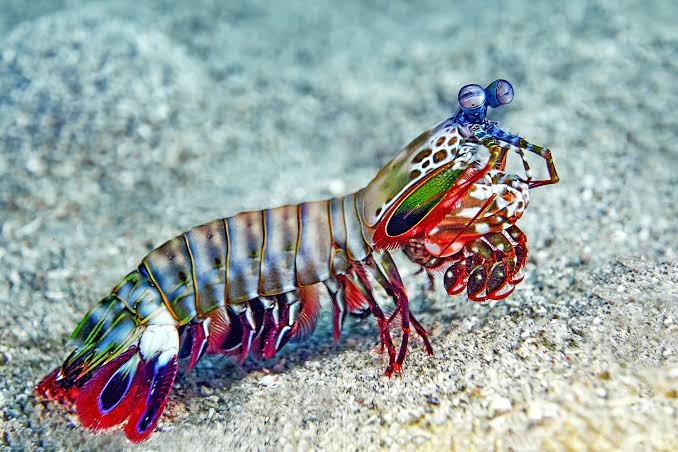
The key to the speed is a saddle-shaped structure in the form of a spring, which stores energy until the moment of impact. The power from the blow is only part of the equation, since the fast movement also creates vapor bubbles on the side of the prey, and the collapse of the cavitation provides a second blow. The same effect is violent enough to pit stainless steel on ship propellers.
One exception to the record-breaking speed is the trap-jaw ant. While the ant’s jaws close faster than the mantis shrimp’s strike, the limb movement record still belongs to the peacock mantis shrimp.
Pistol Shrimp: A Claw That Fires Shockwaves
Not all weapons rely on speed in water. The pistol shrimp has an oversized claw that takes up about half its body length, and there are over 500 species of them. When the claw snaps shut, it fires a stream of water at roughly 60 mph and creates a cavitation bubble behind it. This happens because of a pressure differential. When the shockwave from the bubble hits the water, it causes a flash of light and a pop that can reach up to 218 decibels. The temperature can peak at thousands of degrees, a range that regularly overlaps with the temperature of the Sun’s surface.

Courtesy: deposits magazine
At close range, the force is enough to knock a small fish off its feet. Meanwhile, this tiny gunslinger is also a considerate roommate. Pistol shrimp frequently live in burrows with gobies, and the shrimp builds and maintains the burrow, while the goby acts as an early warning system against predators. The shrimp keeps its antennae on the goby’s tail, and any sudden movement makes the shrimp scurry back.
Strange Ocean Animals That Cheat Time and Death
Immortal Jellyfish: The Animal That Rewinds Its Life
Turritopsis dohrnii is about half a centimeter in size, but it has the dubious distinction of challenging our understanding of aging. Some jellyfish can revert to an earlier stage under certain conditions, but most species lose this ability after reaching sexual maturity. Turritopsis dohrnii is known for its ability to repeatedly return to an earlier life stage even after reproducing.
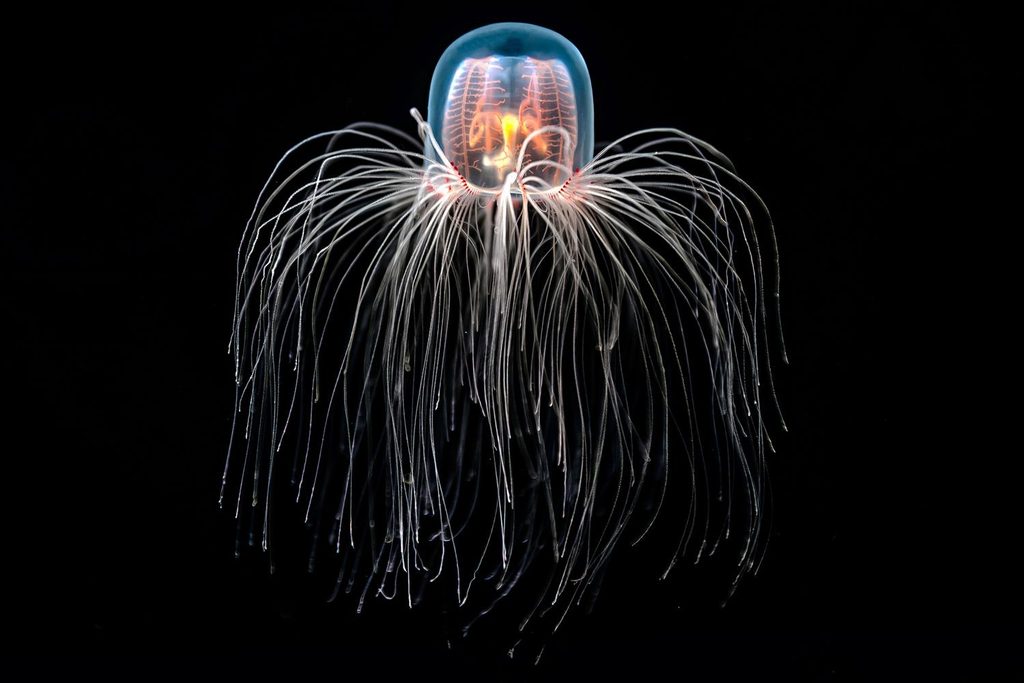
When it experiences starvation, injury, or other stressful factors, it transforms into a spherical shape similar to a cyst, and instead of dying, this weird sea creature can return to an earlier developmental stage. A 2022 genome study at the University of Oviedo compared it with a closely related jellyfish that cannot rejuvenate, discovering that the genes responsible for DNA repair and protection appeared twice as many times in Turritopsis dohrnii. Researchers also found that the rejuvenating jellyfish’s genes responsible for telomerase maintenance, telomere extension, and stem cell production were more active.
The nickname is misleading, since biologists involved in the research consider the word immortal an exaggeration. The animal is still susceptible to predation and disease. Its life-cycle reversal is a biological ability, not a guarantee of endless survival.
Greenland Shark: The Four-Century Vertebrate
While the jellyfish cheats death, the Greenland shark merely waits its turn. In 2016, a team of researchers led by Julius Nielsen at the University of Copenhagen used radiocarbon dating on the eye lenses of 28 female sharks. Since the proteins in the lenses are metabolically inert, the lenses’ chemical signatures indicated the age of the shark. The largest recorded specimen, measuring over five meters, was estimated to be 392 years old, with a potential age range extending from 272 to 512 years.
The cautious estimate of at least 272 years would still make it the longest-lived known vertebrate, surpassing the bowhead whale’s estimated 211-year record. The ocean quahog, a type of clam, is another remarkably long-lived animal that can survive for centuries. The Greenland shark grows about one centimeter a year and reaches maturity near the age of 150. Its cold environment and slow metabolism contribute to its extraordinary longevity.
The slow pace comes with a disadvantage. Greenland sharks were heavily fished because their livers were used for oil, contributing to population declines before synthetic alternatives reduced demand.
Also Read : Human DNA: Genetic Material of the Body
Deep Sea Creatures That Rewrite the Rules of Biology
Anglerfish: When Mating Means Merging
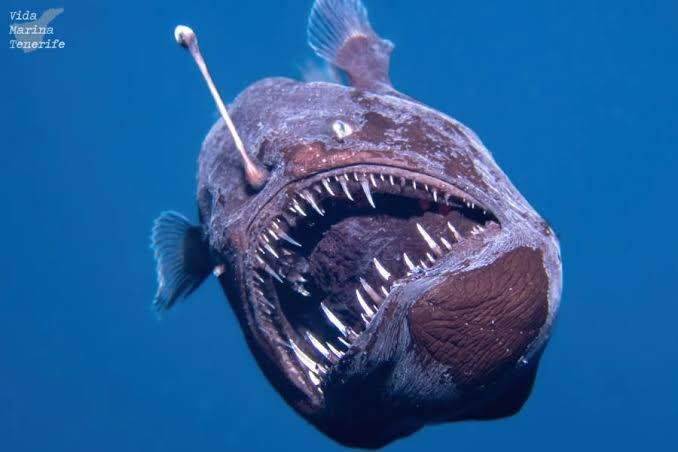
When it comes to weird ocean animals, the anglerfish has one of the most extraordinary mating habits. In some of its roughly 160 species, the dwarf male permanently attaches to the much larger female, fusing their tissues and sharing a blood circulation. In extreme cases, the female can be over 60 times the length of the male and half a million times its mass.
Courtesy: Greenpeace
In perpetual darkness, where mates are rarely encountered, sexual parasitism provides a guarantee that the male never has to search for a mating partner again. Males find females by following species-specific chemical cues, and sensory adaptations help them detect these signals in the water. Such a mating pair was filmed for the first time in 2018.
Fusion seems to violate the fundamental rules of immunology, since a typical vertebrate body would reject foreign tissue. A 2020 study published in Science analyzed 13 anglerfish genomes, discovering that species that exhibit fusion have greatly modified their adaptive immunity genes, making some of them the first known vertebrates that completely lack a conventional adaptive immune system.
An important caveat is that the humpback anglerfish often showcased in the media do not have permanently attached males. Researchers hope the discovery may lead to new treatments for immunological deficiencies.
Vampire Squid: Master of the Oxygen Desert
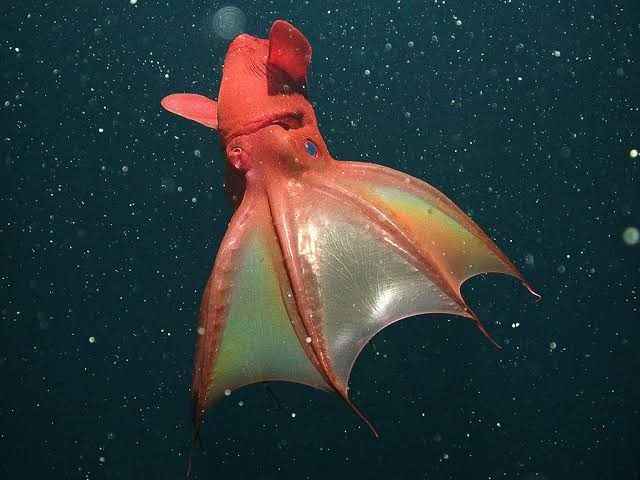
The vampire squid has a terrifying name, but it is not a bloodsucker. It grows to only about a foot in length, and it uses its trailing filaments to grab loose bits of organic debris, covering the morsel in mucus before stuffing it into its mouth. Its suckers do not have any suction power.
Courtesy: National Geographic
This passive strategy is the main reason why this weird sea creature survives. The vampire squid lives in oxygen-minimum zones where oxygen levels can be less than 5% of those found in the atmosphere, relying on a very low metabolism and a specialized respiratory protein that binds oxygen efficiently. Most cephalopods cannot survive in waters with such low oxygen availability.
When it senses a threat, it forgoes ink as a defense mechanism and instead launches glowing, sticky mucus from the ends of its arms, which may illuminate for up to 10 minutes.
Giants and Survivors: Bizarre Marine Animals at Both Extremes
Colossal Squid: Eyes the Size of Dinner Plates
The giant squid is the longest squid, but the colossal squid is the heaviest, making it a contender for the title of the largest invertebrate on the planet. A colossal squid specimen captured in the Ross Sea near Antarctica in 2007 weighed about 495 kilograms. Its overall length depends on how its tentacles are measured, and its enormous eyes are among the largest known in the animal kingdom.
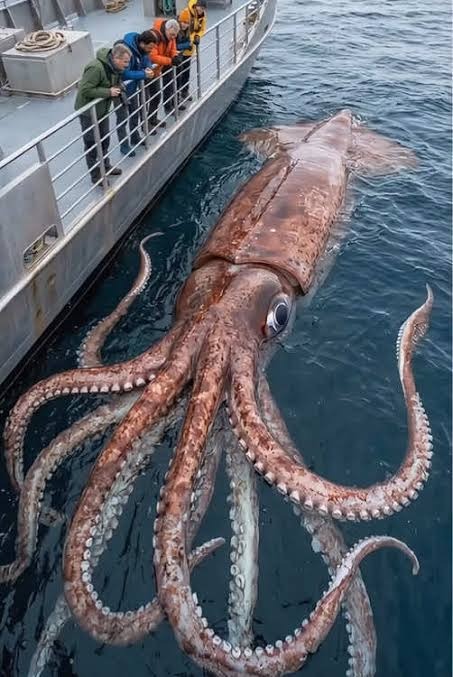
Its eye can measure approximately 27 centimeters across, making it a remarkable adaptation for life in the deep sea. Each eye is equipped to detect faint light, helping the squid navigate the dark ocean.
What’s the point of such large eyes? According to a 2012 study, they may allow the squid to detect a moving sperm whale from up to 120 meters away in darkened water. The stakes are high since colossal squid are an important prey item for sperm whales. Most animals benefit from eyes no bigger than an orange, making these squids an oddity in comparison.
Hagfish: The Slime That Defeats Sharks
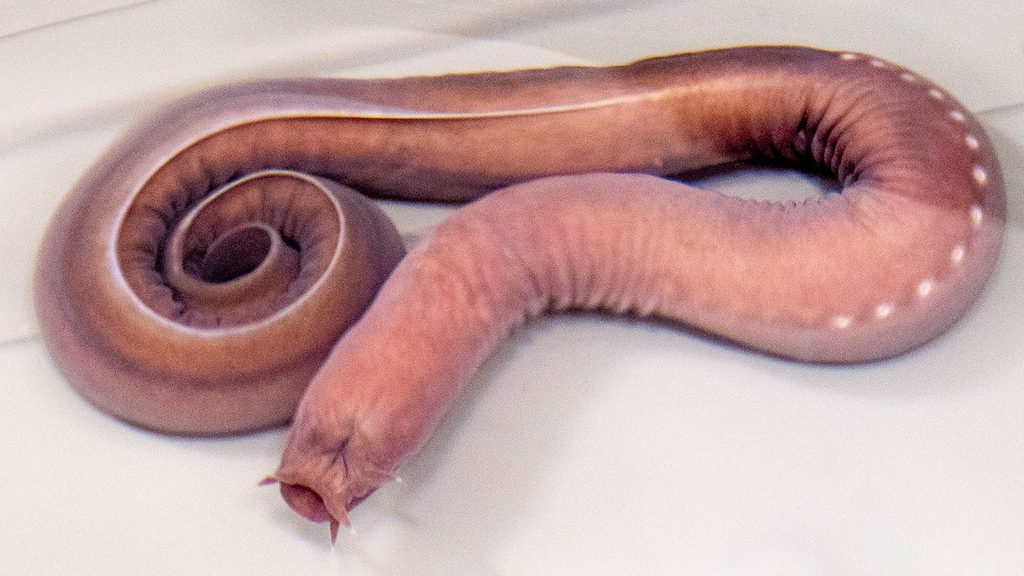
The hagfish has a primordial appearance because it belongs to an ancient lineage. The fossil record indicates that hagfish have changed relatively little in some respects over hundreds of millions of years. Their primary defense mechanism is their slime—an extraordinary material that can fill a predator’s mouth and gill chamber in less than 0.4 seconds.
Courtesy: Howstuffworks
Marine ecologist Vincent Zintzen reviewed 500 hours of deep-water footage around New Zealand and found 14 encounters with dangerous predators. In each encounter, the hagfish escaped unharmed while its attacker fled, apparently struggling with the slime.
A second layer to the hagfish’s defensive capability helps protect its organs from penetrating shark teeth. The hagfish’s skin is loosely attached to the underlying tissue, creating free space that safeguards its insides. The creature is well prepared for such situations: a truck accident in Oregon once caused a highway to become slick with hagfish slime.
Data and Trends: What the Numbers Say About the Craziest Sea Creatures
The table below shows the weirdest sea creatures profiled in this guide in terms of signature ability as well as one headline figure.
| Creature | Signature ability | Headline figure |
| Peacock mantis shrimp | Spring-powered strike | About 50 mph, under 3 milliseconds |
| Pistol shrimp | Cavitation shockwave | Up to 218 decibels |
| Immortal jellyfish | Rewrites itself to youth | Twice the DNA repair gene copies of a relative |
| Greenland shark | Extreme longevity | At least 272 years old |
| Anglerfish | Fused mating | Female up to 60 times the male’s length |
| Vampire squid | Low-oxygen survival | Oxygen under 5% of air level |
| Colossal squid | Largest eyes | About 27 cm across |
| Hagfish | Gill-clogging slime | Released in under 0.4 seconds |
Almost every record features a different approach or trait: speed, heat, patience, fusion, efficiency, vision, or chemistry. Evolution does not guarantee a specific recipe for success, and that is why the deep sea is so full of surprises.
Our understanding of the distribution range of weird sea creatures is also changing.
| Date | Seafloor mapped at high resolution | Source |
| June 2024 | 26.1% | NOAA Ocean Exploration |
| June 2025 | 27.3% | NOAA Ocean Exploration |
| April 2026 | 28.7% | NOAA figure reported by WorldAtlas |
The percentage of seafloor mapped increased by about 2.6 percentage points in just two years, but it still means that over 70% of the seafloor has not been surveyed with modern high-resolution maps. Every new expedition provides an opportunity for a new entry on the list of the weirdest sea creatures.
Conservation ties everything together. Since Greenland sharks grow so slowly and have few offspring, they are especially vulnerable to overfishing. Protecting such creatures means protecting the places they inhabit. Land offers a hopeful analogy, as large-scale solar farms in China have been reported to contribute to the recovery of surrounding desert landscapes.
Also Read : China Desert Solar Farms: Clean Energy Reviving Barren Landscapes
The Craziest Sea Creatures and the Mystery Beyond the Data
The weirdest sea creatures demonstrate how much intelligence and precision go into even the smallest creatures. One shrimp stores its energy in a spring, while the jellyfish rewrites its biological program to become younger, and the shark outlives empires.
Science may describe the mechanism, but the greater question concerns the purpose and order of life. For readers who feel that such a question deserves deeper reflection, exploring philosophical and spiritual perspectives can be a worthwhile endeavor.
Consider reading Gyan Ganga and Way of Living by Saint Rampal Ji Maharaj, which invites readers to investigate the purpose behind life and the connection between creation and its Creator.
May your curiosity about the ocean lead you toward lasting peace and understanding, as humility opens the doors to wisdom.