

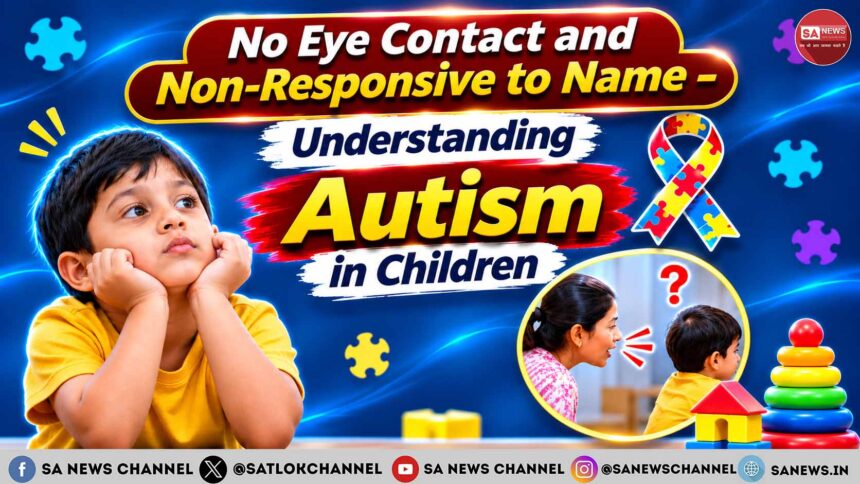
Whilst your child spends hours lining up toy-cars, they fail to respond to their name. Family members often tell you they are ‘just difficult’ and will begin to communicate at the appropriate time. Frustratingly, this is frequently what happens.
- What Is Autism in Children? – Not Poor Parenting
- Ignoring Names, Lining Up and Hand Flapping – Early Indicators of Autism
- Shyness or Late Talking? How To Tell?
- The 18 and 24 Month Assessments – Usually Unmentioned By Parents
- What Causes Autism? Dispelling Guilt-inducing Myths
- Understanding Autism in Children – Latest Statistical Insight
- Concerned About Your Child? 7 Actions To Implement This Week
- Every Child Matters – Musings on Autism in Children
It is increasingly common for autism to be recognised in children now. Around one in 31 children in the USA is known to have autism spectrum disorder according to the most recent CDC figures. Often parents recognise symptoms of autism well before a diagnosis is given.
This piece outlines what autism is, the early indicators of autism, and how it differs from shyness and speech delay. Identifying these early indicators can significantly impact a child’s communication, learning and relationships.
What Is Autism in Children? – Not Poor Parenting
Autism Spectrum Disorder (ASD) is a neurodevelopmental disorder. The World Health Organisation defines it as ‘a heterogeneous group of neurodevelopmental disorders’. It influences a child’s communication, play and responses to sensory information and also their relationships with people.
As the name suggests, autism presents in a wide variety of ways. Whilst one autistic child may experience delayed speech and require ongoing support, another may be an early speaker and accomplished reader but continue to find it hard to form friendships. Intelligence can also range from profoundly affected to superior.
Many parents wrongly believe that their child has contracted, or indeed caused, autism. However, autism is not infectious and is not due to parental behaviour. Although some autistic children excel in specific areas for example art, maths or music, autism itself is not infectious. Often children with autism also suffer from other health issues including epilepsy, anxiety, depression and ADHD. Further emphasising the importance of appropriate assessment.
Read More : Beyond Neurons – Discover the Amazing Brain
Ignoring Names, Lining Up and Hand Flapping – Early Indicators of Autism
Often children demonstrate autism indicators before they are 2 years old. Many show indicators of autism by 12-18 months, and even earlier. Yet many parents do not consider autism as a possibility until their child is late in speaking. Therefore having knowledge of early indicators can be beneficial.
Social and Communication Indicators
Children may:
- fail to respond to their name by 12 months.
- have poor eye contact and infrequent genuine, happy facial expressions.
- not point, wave or indicate. Instead they may hold their parent’s hand and guide it to an item, although again with little eye contact.
- babble little or not at all by 12 months, and speak very little or not at all by 16 months.
- regress in their communication or social skills. Approximately one in four children who subsequently receive an autism diagnosis will regress, typically between 15-24 months.
Behaviour and Sensory Indicators
Children may:
- flap their hands, rock or spin.
- line up items or become fixated on a specific element of an item (for example the wheel of a toy), rather than engaging in imaginative play.
- be highly sensitive to change in aspects of their lives, for example in routine, food, clothing and location.
- have atypical reactions to sensory information. This can involve being excessively responsive or unresponsive to sound, visual, tactile and/or other stimuli.
- have restricted and intense fascinations (for example only being interested in trains and/or ceiling fans).
Whilst many common toddler behaviours can also match some of the above indicators, autism is not simply indicated by one indicator. Rather, it is the combination of several indicators, which persist and which affect both a child’s communication and relationships.
Age Parent observations
| Age | Parent observations |
| 6 months | Infrequent or no large smiles or happy facial expressions. Poor eye contact. |
| 9 months | Restricted two-way communication involving sound, smiling and facial expression. |
| 12 months | Poor or no babbling, pointing, waving and/or response to name. |
| 16 months | Very limited or no spoken language. |
| 24 months | No 2-word sentences. And/or regression. |
Whilst the initial indicators highlighted above relate to social areas, it is also common for children to develop and then regress in skills. For this reason, a child can appear perfectly normal at an earlier stage and then go on to be diagnosed with autism. Please treat the above table as a guide and discuss it with your paediatrician. Again, do not attempt to diagnose autism yourself.
Shyness or Late Talking? How To Tell?
All families hear the comforting phrase “Einstein spoke late too”. Frequently, children are indeed merely late in speaking. However, communication is just one area to consider.
Equally important is the ability to share attention. Typically by 12 months children will follow their parent’s finger, make eye contact with them and smile. Children with autism may not complete this sequence.
Generally, shy children gradually become more sociable. They tend to make good eye contact and respond to their name. Likewise, late talking children often compensate for their limited vocabulary through non-verbal communication and comprehend what is said to them well.
In contrast, children with autism may lack enthusiasm to share attention and/or play – even with those they know – in addition to exhibiting other indicators above.
Rather than solely focusing on whether a child is talking, it is vital to consider whether they are able to share attention. Also request that your doctor checks your child’s hearing as this can mimic non-responsiveness to a name.
The 18 and 24 Month Assessments – Usually Unmentioned By Parents
According to the American Academy of Paediatrics, all children should undergo autism-specific assessments at both 18 and 24 months. It is generally feasible to achieve a reliable diagnosis of autism by approximately 2 years of age. Within the USA, the most commonly used autism screening tool is a parent-completed questionnaire known as the M-CHAT-R/F.
Unfortunately, practice does not always align with guidance. Currently, the median age of autism diagnosis is almost 4 years (47 months). Furthermore, only around half of children are diagnosed by age 3. These years are crucial as they can often form the start of early intervention.
Early intervention is significant as timing is key. The World Health Organisation highlights that appropriate early, evidence-led intervention can enhance the communication and social interaction of autistic children. Moreover, research indicates that parents are typically highly effective at identifying early autism indicators, particularly if they already have an autistic older child. Therefore parental intuition is important.
Awareness can be poorer still in India. In a 2017 Kolkata-based study, researchers contacted 15 hospitals and clinics. Sadly, only one of these kept autism diagnosis records. When official records are sparse, parental observation is often the most effective early detection method.
What Causes Autism? Dispelling Guilt-inducing Myths
Parents are typically inclined to identify an individual or factor which they believe is responsible. Usually they attribute causation to themselves. However, science does not support this. The World Health Organisation states that both genetic and environmental factors are likely to contribute to a child’s propensity to develop autism. As noted by researcher Zachary Warren, there is no single cause for autism and numerous neurogenetic factors are thought to influence its manifestation.
Myth – Vaccinations cause autism. Fact – Following repeated confirmation by independent experts who advise the World Health Organisation, vaccines do not cause autism – even since 1999.
Myth – Unloving or unsuitable parenting leads to autism. Fact – Autism is due to neurodevelopment and no parenting approach can cause it.
Myth – Paracetamol intake during pregnancy is proven to cause autism. Fact – In September 2025, the World Health Organisation made clear that there is no conclusive evidence of a connection.
Myth – There is a particular diet or medication which can ‘fix’ autism. Fact – Some autistic people are fully independent whereas others need continual support. Intervention therefore focuses on improving a child’s communication, learning and independence. It does not aim to change a child’s identity.
Guilt is not needed on this journey.
Understanding Autism in Children – Latest Statistical Insight
Whilst statistics relating to autism are often reported in the media, they can be open to misinterpretation. Below are key statistics.
Year Estimate Source
| Year | Estimate | Source |
| 2000 | About 1 in 150 8-year-old children | CDC ADDM Network (USA) |
| 2018 | 1 in 44 8 year-olds | CDC ADDM Network |
| 2020 | 1 in 36 8 year-olds | CDC ADDM Network |
| 2022 | 1 in 31 8 year-olds and 1 in 34 4 year-olds | CDC ADDM Network (April 2025) |
| 2021 | About 1 in 127 people worldwide | WHO |
| 2018 (Study) | About 1 in 100 under-10 year olds in India | Arora et al., PLOS Medicine |
| 2017 (Study) | About 0.23% of Kolkata school children | Autism Research |
The most recent 2022 USA figure demonstrates an 22% increase on the 2020 figure and a phenomenal 375% increase since monitoring began in 2000. Although this appears concerning, the CDC attributes the main contributing factor to increased autism awareness and diagnosis. Further research is required in this area.
It should be noted that the network does not represent a national sample. It comprises 16 locations and rates of autism occurrence can vary significantly – from below 1% (Laredo, Texas) to 5.3% (California). This is likely to reflect variation in both healthcare and diagnostic provision across the country.
Positive trends are also evident. Children from Asian/Pacific Islander, Black and Hispanic backgrounds are now more frequently recognised as being autistic compared to white children – continuing a trend first identified in 2020. Children born in 2018 were 1.7 times more likely than those born in 2014 to be diagnosed with autism by 48 months. Boys continue to be more commonly identified as autistic (1 in 20) than girls (1 in 70).
Is there an autism epidemic? Analysis of global data from 34 countries has shown that levels of autistic characteristics have remained relatively steady across time. Similarly, a 2026 South Korean study published in JAMA Pediatrics did not substantiate the suggestion of an autism epidemic. Experts cite enhanced awareness and broadened diagnostic criteria as reasons for this.
Variation exists in India in terms of autism statistics. The 2018 PLOS Medicine study estimated that approximately 1 in 100 Indian under 10 year olds may be autistic. Nearly 1 in 8 under 10 year olds were also estimated to have a neurodevelopmental disorder. The Kolkata statistic is comparatively low partly due to a potential reduced likelihood of severely autistic children attending school. Nevertheless, the key point that the statistics convey is that autistic children exist in all communities. Many continue to face lengthy waits for diagnosis however.
Concerned About Your Child? 7 Actions To Implement This Week
Should your child exhibit similar characteristics to those detailed above, take a deep breath. Awareness is the first step in supporting your child. Below are steps you can take:
- Document and film. Provide specific details of behaviour and note the date on which it occurred. Short video clips of daily life can also be made. Doctors only see children for a short period so filming can supplement this.
- See your paediatrician. Request a developmental assessment and hearing test. Also inform them if there has been regression.
- Obtain comprehensive assessment. A developmental paediatrician, child psychologist and/or child psychiatrist can conduct this. Whereas screening identifies potential issues, assessment is used to both confirm and exclude autism.
- Initiate intervention. Enquire from your doctor about therapies such as speech, occupational and play therapy. Avoid those who claim to be able to ‘cure’ autism.
- Become informed on disability. Autism is recognised as a disability within India. Certificates are granted by state constituted medical boards and utilise tools such as the Indian Scale for Assessment of Autism. Ask your doctor for information regarding how to apply for one.
- Establish a peaceful and structured environment. Maintain straightforward routines, use visual timetables and designate a quiet area for sensory relief. Engage in play which is in line with your child’s interests.
- Care for yourself. Well rested and supported parents are in a stronger position to support their child. Furthermore, consider becoming part of a parent support group and accept family support.
Healthy living is important for all children. This is even more so for those who depend on structure.
Read More : 10 Healthy Habits for Kids – For General Well-being and Development
Every Child Matters – Musings on Autism in Children
Autism in children does not reflect on your child or your parenting abilities. It does however highlight the importance of early awareness, access to suitable intervention and unconditional love. Beneath each child’s area of underachievement or achievement is an underlying query as to the significance of our children’s lives.
Indeed, the patience, empathy and humbleness so vital on this journey are also fundamental to spiritual contemplation. Those wishing to further investigate this aspect may also wish to refer to the books Gyan Ganga and Way of Living by Saint
Rampal Ji Maharaj. Allow faith to provide solace, and use science to inform decision making. Ensure your child feels constantly that they are valued.