

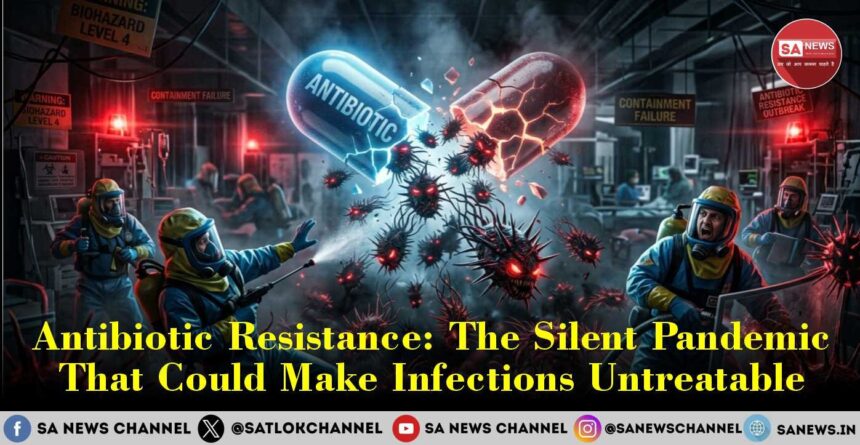
The world may have moved on from COVID-19, but another crisis is already unfolding – quietly, steadily and far more dangerously. This ‘silent pandemic’ is Antibiotic Resistance (AR), where life-saving medicines are beginning to fail against common infections. In countries like India, where antibiotics are often easily available without strict regulation, the threat is accelerating rapidly. What happens when even routine infections become untreatable? In this article, we explore how antibiotic resistance is shaping up to be the next global health emergency and what it means for humanity.
- Antibiotic Resistance Highlights
- What are Antibiotics?
- What is Antibiotic Resistance and How Does it Occur?
- What Makes Antibiotic Resistance a Serious Threat to Global Health?
- What does the WHO Global Antibiotic Resistance Report 2025 reveal?
- The Rise of High-Fatality and Drug-Resistant Pathogens
- The ‘Syndemic’ Effect: Why Antibiotic Resistance is Worse in Some Regions
- The Growing Failure of Last-Line Antibiotics
- Surveillance Gaps and The Challenge of Accurate Data
- Global Goals to Fight Antibiotic Resistance by 2030
- Is Antibiotic Resistance the Next Global Pandemic?
- Why is Antibiotic Resistance (AR) Harder to Control than Viral Outbreaks?
- It Spreads Across Humans, Animals and the Environment
- Antibiotic Resistance is Often Invisible Until Treatment Fails
- There is No Universal ‘Vaccine-like’ Solution
- Global Response is Slower and Less Coordinated
- The Pipeline For New Treatments is Limited
- What Causes Bacteria to Become Resistant to Antibiotics?
- What are the Common Causes of Antibiotic Resistance?
- What Are the Ethical and Healthcare Challenges of Antibiotic Resistance?
- What are Some Real Examples of Antibiotic-resistant Infections?
- Life-threatening Hospital-acquired Infections
- Everyday Infections That are Becoming Harder to Cure
- Multi-drug Resistant Tuberculosis (MDR-TB)
- Foodborne and Community-spread Resistant infections
- The Growing Threat of ‘Superbugs’
- How has Antibiotic Resistance Evolved in India During and After COVID-19?
- The Surge in Antibiotic Misuse During COVID-19
- India’s Unique Risk Factors Driving Antibiotic Resistance
- Changing Resistance Patterns in Indian Healthcare Settings
- The Environmental Dimension of Antibiotic Resistance in India
- Can Antibiotic Resistance be Reversed or Treated?
- Why are New Antibiotics Not Keeping up With Resistance?
- What Happens if Antibiotics Stop Working Completely?
- Can Individuals or Science Help Prevent Antibiotic Resistance?
- Is Antibiotic Resistance Truly ‘Random’ or Something Deeper?
- Antibiotic Resistance FAQs
Antibiotic Resistance Highlights
- Antibiotic resistance is the ability of bacteria to survive drugs designed to kill them.
- Antibiotics work by killing bacteria or stopping their growth, allowing the immune system to clear infections.
- Antibiotic resistance increased in over 40% of monitored drug-bacteria combinations between 2018-2023 (Source)
- Misuse and overuse of antibiotics accelerate resistance development globally.
- Drug-resistant infections are harder to treat and increase the risk of severe illness and death.
- Simple actions like completing prescriptions and maintaining hygiene can slow resistance.
- Global health experts consider antibiotic resistance one of the biggest threats to modern medicine.
What are Antibiotics?
In order to unfold the complex layers of antibiotic resistance, it is important to begin with the very basics. And though the majority of us would be familiar with the concept of antibiotics, a brief glance at its characteristics will help build a complete understanding of antibiotic resistance as a pandemic.
- Antibiotics are drugs designed to fight bacterial infections by either destroying bacteria or preventing them from multiplying.
- Antibiotics are effective only against bacteria and cannot treat infections caused by viruses.
- Therefore, they are effective against infections like strep throat or urinary tract infections, but they do not work for colds or flu that are actually a result of viruses.
- Antibiotics have long been regarded as a cornerstone of modern medicine.
- For example, since the discovery of penicillin, they have made surgeries, childbirth and infection treatment much safer.
- Antibiotics come in different forms.
- They may be prescribed as tablets, capsules, syrups or injections depending on the severity of the infection.
Antibiotics are, therefore, only effective against bacterial infections and should be used responsibly to prevent resistance.
How do Antibiotics Act Within the Human Body to Fight Infections?
Antibiotics work by killing bacteria or stopping their growth, allowing the immune system to eliminate the infection.
- Antibiotics target specific parts of bacteria. For example, some damage the bacterial cell wall, causing the bacteria to burst.
- Others stop bacteria from multiplying. For instance, certain antibiotics block protein production, preventing bacterial growth.
- As discussed earlier in the article, antibiotics do not work on viruses. Therefore they cannot treat colds, flu or even a COVID-19 infection.
Types of Antibiotics
For our easier understanding, here is a broader categorisation of antibiotics:
| TYPE | FUNCTION | EXAMPLE USE CASE |
| Bactericidal | Kill bacteria | Severe infections |
| Bacteriostatic | Stop growth | Mild infections |
| Broad-spectrum | Target many bacteria | Unknown infection source |
| Narrow-spectrum | Target specific bacteria | Confirmed infection |
What is Antibiotic Resistance and How Does it Occur?
Antibiotic Resistance (AR) is the ability of bacteria to survive and grow despite the presence of drugs designed to kill them. This means the line of defense we created itself turns into our enemy.
Let us gain some insights into antibiotic resistance:
- It is important to understand that it is bacteria and not your body becoming resistant.
- So if bacteria are repeatedly exposed to antibiotics, they can adapt and survive future treatments. They develop immunity towards the drug.
- Resistance to antibiotics occurs when bacteria undergo mutations that help them survive treatment. For example, a small mutation might allow some bacteria to survive a drug and these survivors multiply rapidly.
- Resistance spreads quickly between bacteria. Bacteria can share resistance genes, creating so-called ‘superbugs’ that are difficult to treat.
Hence, antibiotic resistance develops through genetic mutations and the overuse or misuse of antibiotics.
What Makes Antibiotic Resistance a Serious Threat to Global Health?
Antibiotic resistance is a major global health threat because it makes infections harder to treat and increases the risk of death. If the medicines we rely on are no longer effective on the treatment, then this definitely becomes a global scare.
- Resistant infections are rising worldwide. For example, 1 in 6 bacterial infections globally were resistant to antibiotics in 2023 (Source: WHO, 13th October 2025 Report).
- Antibiotic resistance affects routine medical care. Surgeries like caesarean sections or chemotherapy depend on effective antibiotics to prevent infections.
- Additionally, it also increases mortality and healthcare costs. For example, drug-resistant infections are linked to over 1 million deaths annually, again as per the same WHO 2025 report.
According to global health authorities, antibiotic resistance is one of the most serious threats to modern medicine. In order to understand the gravity of this developing health situation globally, let us now review the core aspects and data produced in the 2025 report by the World Health Organization (WHO).
What does the WHO Global Antibiotic Resistance Report 2025 reveal?
The WHO Global Antibiotic Resistance Surveillance Report 2025 reveals that antimicrobial resistance is rapidly increasing and poses a critical threat to global health systems.
The scale of the crisis is already alarming. For example, as discussed earlier, one in six bacterial infections globally in 2023 were resistant to antibiotics. This means millions of infections are becoming harder to treat with standard medicines.
Certain infections are especially vulnerable such as the urinary tract infections. It shows resistance in nearly 1 in 3 cases, while bloodstream infections show resistance in about 1 in 6 cases. This directly affects common illnesses that people face every day.
Here are some important insights from the Global Antibiotic Resistance Surveillance Report 2026.
The Rise of High-Fatality and Drug-Resistant Pathogens
Certain bacteria are becoming extremely dangerous due to high resistance levels and limited treatment options.
Some key examples to note:
- Pathogens like carbapenem-resistant Klebsiella pneumoniae and Acinetobacter species have fatality rates exceeding 30%. These are often considered last-resort infections with very limited treatment options.
- Moreover, the burden of resistance is not limited to mortality alone.
- For instance, infections caused by third-generation cephalosporin-resistant E. coli and methicillin-resistant Staphylococcus aureus (MRSA) contribute to thousands of cases annually and are associated with long-term disability.
Therefore, high-resistance pathogens increase both mortality risk and long-term health burden.
The ‘Syndemic’ Effect: Why Antibiotic Resistance is Worse in Some Regions
Antibiotic resistance is higher in regions with weaker healthcare systems and limited access to diagnostics. It is strongly influenced by healthcare infrastructure, socioeconomic conditions and access to diagnostics.
- The WHO report highlights that the resistance rates in South-East Asia and the Eastern Mediterranean regions report resistance levels as high as one in three infections, followed by the African region at approximately one in five.
- At the same time, limited diagnostic capacity plays a major role in accelerating resistance.
- In sub-Saharan Africa, only 1.3% of laboratories can perform bacteriological testing, forcing doctors to rely on guesswork treatments.
- Clinicians often rely on empirical treatment, meaning antibiotics are prescribed without precise identification of the infection. This, in turn, can also add to the growth in antibiotic resistance.
Weak health systems amplify antibiotic resistance through limited testing and over-reliance on broad treatments.
Also Read: Explaining Antibiotic Resistance: Causes, Risks & Fixes
The Growing Failure of Last-Line Antibiotics
Resistance to last-line antibiotics like carbapenems is increasing among major bacterial pathogens.
- Bacteria such as E. coli, Klebsiella pneumoniae and Acinetobacter spp. are increasingly resistant to these critical drugs.
- For example, carbapenem resistance is rising in major Gram-negative bacteria such as the ones stated above. These organisms are responsible for a large proportion of severe hospital-acquired infections.
- In addition, fluoroquinolone-resistant non-typhoidal Salmonella is spreading globally, making foodborne infections more difficult to treat and control.
- At the same time, the antibiotic development pipeline is weak.
The WHO report emphasises that the current antibiotic development pipeline is insufficient and unlikely to meet the growing demand for new treatments in the near future. The WHO also warns that new antibiotics are unlikely to keep up with rising resistance levels in the near future.
As resistance rises faster than drug development, treatment gaps continue to widen.
Surveillance Gaps and The Challenge of Accurate Data
Global antibiotic resistance data is improving, but significant gaps and biases still exist in surveillance systems.
- Countries with limited surveillance often report higher resistance levels because data is primarily collected from tertiary hospitals, where the most severe and treatment-resistant cases are treated.
- However, progress is being made slowly. For example, participation in the Global Antimicrobial Resistance and Use Surveillance System (GLASS) has increased four-fold since 2016.
- This expansion improves global tracking and supports better policy decisions.
Better surveillance is believed to be essential by the medical fraternity for understanding and controlling resistance trends.
Global Goals to Fight Antibiotic Resistance by 2030
Global health organisations have set clear targets to reduce the impact of antibiotic resistance.
For example, the 2024 UN Political Declaration on AMR outlines key goals:
- Reduce deaths linked to bacterial AMR by at least 10% by 2030
- Ensure 70% of antibiotic use comes from WHO ‘Access’ group medicines, which have lower resistance risk
- Achieve 80% global coverage of basic diagnostic testing capacity
Whether or not these targets will be achieved is something only time can reveal.
Is Antibiotic Resistance the Next Global Pandemic?
Antibiotic resistance is increasingly recognised by experts as a potential next global pandemic due to its rapid spread, high mortality risk and lack of effective treatments.
- Global health experts warn that antibiotic resistance could surpass many existing infectious diseases in impact.
- So much so that, projections suggest that drug-resistant infections could cause up to 10 million deaths annually by 2050 if left unchecked (Source: United Nations projections, 2021).
- The COVID-19 pandemic, especially, revealed critical weaknesses in global preparedness.
- The delayed responses and weak health infrastructure contributed to widespread transmission of the COVID-19 pandemic. Such factors could make antibiotic resistance even more dangerous.
- Antibiotic resistance spreads silently. Unlike viral pandemics, it does not emerge as a single outbreak but evolves continuously across populations, making it harder to detect and control early.
Therefore, antibiotic resistance (AR) is not a future threat, but an ongoing, slow-moving pandemic already affecting millions.
Why is Antibiotic Resistance (AR) Harder to Control than Viral Outbreaks?
Antibiotic resistance is harder to control than viral pandemics because it evolves continuously, spreads across multiple environments and lacks a single point of containment. Before analysing this situation in detail, let us glance through some key facts about the difficulty in controlling AR:
- Antibiotic resistance does not begin as a single outbreak, as discussed above. For example, viral pandemics like COVID-19 can often be traced to a specific origin and spread pattern, but resistant bacteria emerge independently in different locations at the same time. This makes containment far more complex.
- Resistance develops gradually through repeated exposure. Every time antibiotics are used, whether correctly or incorrectly, bacteria have an opportunity to adapt.
- Over time, this creates a slow but constant build-up of resistant strains, rather than a sudden crisis that triggers immediate global action.
- Detection is more complex. Resistance often goes unnoticed until treatment fails, delaying response and containment.
How antibiotic resistance operates as a ‘silent pandemic’ that spreads without clear outbreak signals, is something we can understand further through the following breakdown.
It Spreads Across Humans, Animals and the Environment
Antibiotic resistance spreads through interconnected ecosystems, making it a multi-sector problem rather than a single-source outbreak. Hence, resistant bacteria can move from hospitals to communities, from livestock to food chains and even through water systems. This is often referred to as the ‘One Health’ pathway, where human health, animal health and environmental factors are deeply linked.
In addition, antibiotics used in agriculture contribute significantly to this cycle. An example: bacteria in farm animals can develop resistance and transfer it to humans through food consumption or environmental exposure.
Antibiotic Resistance is Often Invisible Until Treatment Fails
Antibiotic resistance is difficult to detect early because it typically becomes visible only when standard treatments stop working.
Example case: A patient may initially respond to treatment, but if the infection returns or worsens, it may indicate resistant bacteria. By this stage, the infection is often more severe and harder to treat.
Moreover, as we have seen in the WHO 2025 report, many regions lack adequate diagnostic tools. In low-resource settings, doctors may prescribe antibiotics without confirming the exact infection, delaying the identification of resistance patterns.
There is No Universal ‘Vaccine-like’ Solution
Unlike many viral diseases, antibiotic resistance does not have a single preventive solution such as a universal vaccine. Vaccines can significantly reduce the spread of diseases like measles or COVID-19, but bacterial infections are caused by a wide variety of organisms, each requiring different treatments.
At the same time, even when vaccines exist for certain bacterial diseases, they do not eliminate the need for antibiotics entirely. This means resistance continues to evolve despite preventive efforts.
Global Response is Slower and Less Coordinated
Antibiotic resistance lacks the urgent, unified global response typically seen during viral pandemics.
In 2020, COVID-19 triggered rapid international collaboration, funding and policy action within months. In contrast, antibiotic resistance develops slowly and does not create immediate visible crises, leading to delayed policy responses. As a result, efforts to combat resistance are often divided and inconsistent across countries and sectors, reducing overall effectiveness.
The Pipeline For New Treatments is Limited
The development of new antibiotics is not keeping pace with the rapid evolution of resistant bacteria. As of today, very few new antibiotic classes have been introduced in recent decades, while resistance continues to grow. This creates a widening gap between emerging threats and available treatments.
Thus, Antibiotic Resistance (AR) is often called a ‘silent pandemic’ because it spreads continuously, crosses multiple systems and lacks the clear warning signals seen in viral outbreaks.
What Causes Bacteria to Become Resistant to Antibiotics?
Bacteria become resistant to antibiotics due to genetic mutations, misuse of antibiotics and natural selection.
It must be noted here, this section deals with the behavioural changes that occur in the bacteria that makes it immune to antibiotics, and not about the factors that propel AR as a medical phenomena.
- Mutation and Natural Selection: Bacteria evolve naturally and that is why a random mutation may help one bacterium survive an antibiotic. The surviving bacteria subsequently multiply. These resistant bacteria quickly dominate the population.
- An extremely important point here is the word ‘random’. Science hasn’t been able to explain why and how a ‘random’ mutation occurs.
- Researchers have only explained the sequence of what follows post the ‘random’ mutation, but not who dictates which and why a ‘random’ mutation must occur. We will revisit this fact later in our exploration.
- Overuse and Misuse of Antibiotics: Misuse of medicine accelerates resistance. For example, taking antibiotics for viral infections exposes bacteria unnecessarily.
- Additionally, incomplete courses worsen the problem. Also, stopping medication early leaves behind stronger bacteria.
What are the Common Causes of Antibiotic Resistance?
Common causes of antibiotic resistance include overprescription, self-medication and antibiotic use in livestock.
- Overprescription is widespread. Antibiotics are sometimes prescribed when not needed.
- Lack of diagnostic clarity drives misuse: This is an offshoot of overprescription as in many cases, doctors prescribe antibiotics without identifying the exact pathogen, especially when rapid testing is unavailable.
- Self-medication is a major issue. People often buy antibiotics without proper guidance in many countries.
- Inappropriate antibiotic use is highly prevalent: Studies show that 30-50% of antibiotic prescriptions are unnecessary or incorrect (Source). This includes wrong drug choice, incorrect dosage or unnecessary prescriptions.
- Agriculture contributes significantly as antibiotics are used in livestock to promote growth, increasing resistance.
- Patient behaviour: This also contributes significantly. For example, stopping antibiotics midway allows partially resistant bacteria to survive and evolve stronger resistance mechanisms.
Hence, antibiotic resistance is driven as much by human behaviour as by biological evolution.
What Are the Ethical and Healthcare Challenges of Antibiotic Resistance?
Antibiotic resistance raises serious ethical and healthcare challenges by limiting treatment options, increasing inequality and straining global health systems.
- Access to effective treatment is becoming unequal.
- Low-resource regions often face higher resistance levels but have fewer alternative treatments available.
- Misuse in animals raises ethical concerns. Antibiotics are widely used in livestock not just for treatment but for growth promotion, contributing significantly to resistance.
- The burden of resistance extends beyond individuals. Ineffective antibiotics increase hospital stays, healthcare costs and the risk of widespread outbreaks.
Antibiotic resistance is not just a medical issue, it is a global ethical and systemic challenge, where fair treatment to all is also a necessity.
What are Some Real Examples of Antibiotic-resistant Infections?
Antibiotic-resistant infections are diseases caused by bacteria that no longer respond to commonly used treatments, making them harder to cure and more dangerous.
Some of the most serious examples come from hospital settings. As an example: carbapenem-resistant infections caused by bacteria like Klebsiella pneumoniae and Acinetobacter baumannii are particularly concerning because carbapenems are often considered last-resort antibiotics. When these fail, treatment options become extremely limited, leading to higher mortality rates.
Let us take a look at some deeply-concerning real life examples of antibiotic-resistant infections.
Life-threatening Hospital-acquired Infections
Hospital-acquired infections are among the most dangerous forms of antibiotic-resistant diseases due to their severity and exposure to strong antibiotics. Some examples here:
- Patients in intensive care units may develop ventilator-associated pneumonia or bloodstream infections caused by multi-drug resistant bacteria.
- These infections are difficult to treat and often require prolonged hospitalisation.
- In addition, methicillin-resistant Staphylococcus aureus (MRSA) remains a major concern in healthcare settings.
- It can cause severe skin infections, surgical site infections and even life-threatening conditions like sepsis.
Everyday Infections That are Becoming Harder to Cure
Many everyday infections are increasingly showing resistance, making routine treatments less effective. Most common of them:
- UTIs caused by antibiotic-resistant E. coli are increasing in frequency worldwide.
- Patients who previously responded to simple oral antibiotics may now require stronger or intravenous medications.
- Pneumonia and respiratory infections are showing rising resistance patterns, especially in urban and hospital environments.
- This increases the risk of complications, particularly in older adults and those with weakened immunity.
- Even minor infections can become serious when first-line antibiotics stop working.
Multi-drug Resistant Tuberculosis (MDR-TB)
Multi-drug resistant tuberculosis is one of the most significant examples of antibiotic resistance, particularly in high-burden countries like India.
- Multi-drug resistant TB does not respond to the primary drugs typically used to treat tuberculosis.
- As a result, treatment becomes longer, more expensive and often associated with severe side effects.
- Also, extensively drug-resistant TB (XDR-TB) represents an even more advanced stage, where very few treatment options remain.This makes control and eradication much more difficult.
Foodborne and Community-spread Resistant infections
Antibiotic resistance is no longer limited to hospitals as it is increasingly seen in community and foodborne infections.
- A very prominent example is fluoroquinolone-resistant Salmonella infections that are rising globally, making foodborne illnesses harder to treat and control.
- These infections can spread quickly through contaminated food and water.
- Similarly, resistant bacteria can spread through close contact in communities, especially in areas with high population density and limited sanitation.
- This again points towards highly populated, developing nations too.
The Growing Threat of ‘Superbugs’
Superbugs are bacteria that have developed resistance to multiple antibiotics, making them extremely difficult to treat. Some strains of bacteria are now resistant to nearly all available antibiotics, leaving doctors with very limited or experimental treatment options. These infections often lead to longer hospital stays, higher costs and increased risk of death.
How has Antibiotic Resistance Evolved in India During and After COVID-19?
Antibiotic resistance in India has intensified significantly during the COVID-19 pandemic due to increased antibiotic use, weak regulation and gaps in diagnostic infrastructure. This section explores the rise in antibiotic resistance during COVID-19 using insights from research conducted by the Department of Microbiology at the University of Bhopal.
The pandemic led to a sharp rise in antibiotic consumption. And although COVID-19 is a viral disease, antibiotics were widely prescribed to prevent or treat suspected secondary infections, even when not clinically necessary. This widespread use created ideal conditions for bacteria to develop resistance. This was a live example of an incorrect line of treatment and empirical treatment.
Due to limited access to rapid diagnostic testing, many healthcare providers prescribed antibiotics without confirming the exact infection, increasing unnecessary exposure and accelerating resistance.
Here we will study the most important driving factors of antibiotic resistance in India during the COVID-19 pandemic.
The Surge in Antibiotic Misuse During COVID-19
The COVID-19 pandemic significantly amplified antibiotic misuse in India, contributing to faster development of resistant bacteria.
- Global and Indian studies show that antibiotic resistance increased during the pandemic, largely due to self-medication, over-prescription and precautionary use in hospitals.
- In addition, fear-driven healthcare behaviour played a role.
- Many patients demanded antibiotics as a ‘safety measure’, while doctors prescribed them to avoid complications from possible bacterial co-infections.
Thus, a viral pandemic unintentionally accelerated a bacterial resistance crisis.
India’s Unique Risk Factors Driving Antibiotic Resistance
India faces a higher burden of antibiotic resistance due to structural, environmental and behavioural factors.
- India is one of the largest consumers and producers of antibiotics globally. This increases exposure at both clinical and environmental levels.
- Self-medication and over-the-counter access are widespread in most parts of the country. For example, antibiotics are often purchased without prescriptions, leading to incorrect usage patterns.
- Environmental contamination plays a critical role in this.
- Increased production of antibiotics and disinfectants during COVID-19 has led to antimicrobial residues entering water systems, promoting resistance in environmental bacteria.
Changing Resistance Patterns in Indian Healthcare Settings
Antibiotic resistance patterns in India have shifted during the pandemic, with several bacteria showing increased resistance to commonly used drugs.
- The study reports rising resistance in Gram-negative bacteria such as Acinetobacter baumannii, Klebsiella pneumoniae and E. coli, which are already major causes of hospital-acquired infections.
- Additionally, these bacteria have shown resistance to multiple antibiotics, including last-resort treatments.
Common infections in India are becoming harder to treat due to multi-drug resistance.
The Environmental Dimension of Antibiotic Resistance in India
Antibiotic resistance in India is not limited to hospitals, it is also increasingly driven by environmental exposure and contamination.
- In India, large-scale manufacturing and increased antimicrobial usage during COVID-19 have introduced drug residues into soil and water systems.
- These residues create selective pressure, allowing resistant bacteria to thrive and spread.
- To add to this, poor waste management systems also amplify this issue.
- Untreated pharmaceutical waste and hospital discharge can carry resistant microbes into public ecosystems.
There have been several instances where manufacturing units simply dump their wastes in rivers or on ground. Therefore, India definitely seems to be in the middle of this ‘silent pandemic’ called antibiotic resistance pandemic (ARP).
Can Antibiotic Resistance be Reversed or Treated?
The medical fraternity states that antibiotic resistance cannot be fully reversed, but it can be managed and slowed down.
- Pay attention to the words ‘managed’ and ‘slowed down’. It simply means that the one facing antibiotic resistance cannot be cured, as per medical science.
- Though new antibiotics are being developed and researchers are creating drugs to target resistant bacteria, there is really no definitive path of return once antibiotic resistance has been developed, that too if it gets diagnosed.
- Combination therapies are still being used as doctors prescribe multiple antibiotics together.
- The medical fraternity speaks of prevention as the most effective strategy. But how does one prevent something that is difficult to track down until one progresses to an advanced stage of diseases?
Just reducing misuse of antibiotics does not cure patients of antibiotic resistance. Additionally, none of the new medicine seems to keep pace with the bacteria they target.
Why are New Antibiotics Not Keeping up With Resistance?
The development of new antibiotics is not keeping pace with rising resistance due to the following reasons:
- Antibiotic discovery is scientifically complex as bacteria evolve quickly, making it difficult to create long-lasting drugs.
- Pharmaceutical incentives are limited.
- Antibiotics are used for short durations, making them less profitable than chronic disease drugs.
- Innovation has slowed significantly. Very few new antibiotic classes have been introduced in recent decades.
The slowing pace of antibiotic innovation increases the risk of a pre-antibiotic era. It is important to note here, is scientific advancement pulling us backward in time, instead of leading experts to the cure of antibiotic resistance?
It is also equally pertinent to observe how science is unable to keep pace with the governance of the human body.
What Happens if Antibiotics Stop Working Completely?
If antibiotics stop working, common infections could become life-threatening again. But, is it not the reality today? Common infections are increasingly becoming life-threatening.
- If antibiotics stop being effective, even minor infections could escalate beyond repair. Example: a simple wound infection could become fatal.
- Medical procedures become risky. Example: surgeries rely on antibiotics to prevent infection.
- And alarmingly, healthcare costs would also rise sharply.
Can Individuals or Science Help Prevent Antibiotic Resistance?
Experts issue several guidelines to individuals stating that by taking certain precautions one can help prevent antibiotic resistance.
However, it is vital to question here, when the whole medical fraternity is unable to keep pace with the bacteria housed within a human body, how can an individual’s action ‘prevent’ antibiotic resistance?
Though using antibiotics responsibly and maintaining good hygiene may help reduce the occurrences, it cannot prevent it, given that the diagnosis and symptoms do not exist in the beginning stages.
Keeping these limitations in mind, one can:
- Always follow prescriptions.
- Avoid unnecessary use by not taking antibiotics for viral infections.
- Maintaining hygiene by regular handwashing reduces infection risk.
Responsible antibiotic use can reduce the spread of resistant bacteria, but not prevent it completely.
Is Antibiotic Resistance Truly ‘Random’ or Something Deeper?
Why is it that science, despite all its advancements, still struggles to fully understand the behaviour of bacteria – the same microorganisms it once claimed to have conquered through antibiotics?
We are told that antibiotic resistance is the result of ‘random mutations’. But does calling something ‘random’ truly explain it or does it simply mask the limits of our understanding?
This is not an irrational comparison. It is a serious question. When medicines that once worked flawlessly begin to fail, it forces us to look beyond conventional explanations and ask if there is a deeper cause behind what we are witnessing?
Science explains disease through lifestyle, environment and biological processes. But is that the complete picture? Or is there a deeper layer of reality that remains unaddressed?
Jagatguru Tatvdarshi Sant Rampal Ji Maharajreveals every disease has a cause rooted not only in the physical body, but also in a deeper spiritual framework. He explains that illnesses arise through interactions with living organisms, such as bacteria and viruses, driven by karmic exchanges accumulated over lifetimes.
Therefore, disease is not merely an accident or coincidence. It is a process of settlement – a balancing of actions and consequences that goes beyond what is visible to the human eye. They are a result of a deeper karmic interplay that is a continuous give-and-take shaped by actions that transcend a single lifetime.
This is not presented as a theory, but as a profound truth rooted in ancient scriptures. The Rigveda contains verses that point toward a higher power capable of influencing life, health, and even death itself.
Sant Rampal Ji Maharaj highlights one such mantra (Rigveda Mandal 10, Sukta 161, Mantra 2) that says the Supreme God can restore life and extend it beyond the limits imposed by mortality. It reveals that even if a person’s lifespan has ended or they have reached the threshold of death, the Supreme God can bring them back and grant them a life of a hundred years.
yadi kṣitāyur yadi vā pareto yadi mṛtyor antikaṁ nīta eva |
tam ā harāmi nirṛter upasthād aspārṣam enaṁ śataśāradāya ||2||
Additionally, there are several more verses from the sacred Rigved reiterating this reality.
The ultimate control over health and disease may not lie solely within human knowledge or medicine. The singular, most powerful cure of not just antibiotic resistance, but of any disease in this world lies in the true worship of Supreme God Kabir granted by Sant Rampal Ji Maharaj, the solitary Complete Saint (Tatvdarshi Sant) in this world. No science can ever compete with the power of God, and that too our Original Creator.
Innumerable followers of Sant Rampal Ji Maharaj share numerous accounts of recovery from serious illnesses through the spiritual practice granted by Him alone. Their testimonials cannot be ignored.
In a world where antibiotic resistance is rising and modern medicine is beginning to face its limits, this hidden truth challenges us to rethink our understanding of disease. Is antibiotic resistance truly just a biological accident, or is it a signal that we have yet to understand the deeper laws governing life?
Discover more such hidden spiritual truths of life through the enlightening spiritual discourses of Jagatguru Tatvdarshi Sant Rampal Ji Maharaj on:
Website: www.jagatgururampalji.org
YouTube: Sant Rampal Ji Maharaj
Facebook: Spiritual Leader Saint Rampal Ji
‘X’ handle: @SaintRampalJiM
Antibiotic Resistance FAQs
Q1) What is antibiotic resistance in simple terms?
Answer: Antibiotic resistance occurs when bacteria survive medicines that once killed them.
Q2) How can you prevent antibiotic resistance?
Answer: You can prevent it by using antibiotics only when prescribed and completing the full course.