

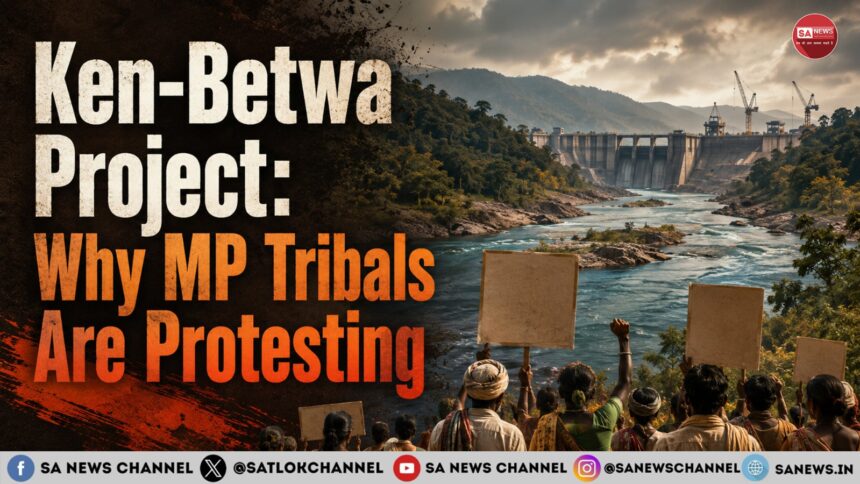
The Ken-Betwa River Linking Project is one of India’s most ambitious river interlinking initiatives, designed to address water scarcity in the Bundelkhand region of Madhya Pradesh and Uttar Pradesh. While the government highlights its potential to improve irrigation, drinking water supply and regional development, the project has also sparked strong protests from several tribal communities in Madhya Pradesh. Demonstrations such as Jal Satyagraha, Chita Andolan, hunger strikes and symbolic Faansi Satyagraha have drawn national attention. The central issue remains the balance between development and the rights of people whose homes, forests and livelihoods are likely to be affected.
- Understanding the Ken-Betwa River Linking Project
- Why Are Tribals Opposing the Ken-Betwa Project?
- Impact on Forests and Livelihoods
- Compensation and Rehabilitation Concerns
- From Jal Satyagraha to Chita Andolan: Forms of Protest
- Government’s Stand on the Project
- Recent Developments in the Ken-Betwa Protest
- Environmental Concerns Surrounding the Project
- Development vs Tribal Rights: A Delicate Balance
- The Road Ahead
- A Message of Humanity
- FAQs on From Chita Andolan to Jal Satyagraha
Understanding the Ken-Betwa River Linking Project
What is the Ken-Betwa Project?
The Ken-Betwa River Linking Project is India’s first major river interlinking project under the National Perspective Plan. It aims to transfer water from the Ken River to the Betwa River through a dam, canal system and associated infrastructure.
The project primarily seeks to benefit the drought-prone Bundelkhand region, covering districts in both Madhya Pradesh and Uttar Pradesh.
According to the government, the project is expected to:
- Increase irrigation facilities across thousands of hectares of farmland.
- Improve drinking water availability for several districts.
- Generate hydroelectric and solar power.
- Support long-term regional development.
- Reduce the impact of recurring droughts in Bundelkhand.
Because of these expected benefits, the project has been described as a landmark step in India’s water management strategy.
Why Are Tribals Opposing the Ken-Betwa Project?
Fear of Displacement
The strongest concern raised by tribal communities relates to displacement.
Many project-affected families say they face displacement due to the proposed submergence and land acquisition associated with the project. For many tribal communities, land is not merely property-it represents their history, traditions, livelihoods and cultural identity.
Residents say relocation cannot fully compensate for the emotional and cultural loss associated with leaving ancestral villages.
Impact on Forests and Livelihoods
Forests provide much more than timber for tribal communities. Many families depend on forests for:
- Collection of forest produce.
- Grazing livestock.
- Traditional farming.
- Herbal medicines.
- Religious and cultural practices.
Several environmental groups and experts have raised concerns that parts of forest land, including areas linked to the Panna landscape, may be affected by project-related infrastructure. Government agencies have stated that wildlife management plans, compensatory afforestation and other mitigation measures are part of the project, although some local communities and environmental groups continue to express concerns about the long-term ecological impact.
Also read: World Forestry Day 2026: Know about the Best Way to Make the Planet Green
Compensation and Rehabilitation Concerns
Another major issue is rehabilitation. Several affected families have demanded:
- Fair compensation.
- Transparent land surveys.
- Alternative agricultural land.
- Proper rehabilitation before displacement.
- Long-term livelihood support.
Many protesters argue that financial compensation alone cannot replace sustainable livelihoods built over generations.
Government authorities, however, state that rehabilitation and compensation are being implemented in accordance with applicable laws and approved policies, although some affected families continue to question their adequacy and implementation.
From Jal Satyagraha to Chita Andolan: Forms of Protest
The protests against the Ken-Betwa Project have taken different forms over the years.
Jal Satyagraha
One of the most symbolic protests has been the Jal Satyagraha.
In this form of peaceful demonstration, protesters stand in water for long periods to oppose displacement and demand justice.
This method has previously been used in other displacement-related movements in India and has once again become a powerful symbol of resistance.
Chita Andolan
Another unusual protest witnessed during the movement is the Chita Andolan.
In this demonstration, protesters symbolically prepare funeral pyres to express that losing their ancestral villages would be equivalent to losing their lives and identity.
The act is intended as a symbolic message rather than a literal threat, highlighting the emotional pain experienced by affected families.
Hunger Strikes
Several community leaders and activists have also organised hunger strikes, demanding meaningful dialogue with authorities and a review of rehabilitation measures.
These peaceful demonstrations have attracted attention from civil society groups, environmental activists and sections of the media.
Faansi Satyagraha
Some protesters have also organised symbolic Faansi Satyagraha, using it as a dramatic expression of their fear of displacement and uncertainty about the future.
The protest was intended to draw attention to their concerns rather than promote violence.
Government’s Stand on the Project
The governments of Madhya Pradesh and the Centre continue to support the Ken-Betwa Project.
According to official statements, the project is expected to bring significant long-term benefits to Bundelkhand, including improved irrigation, drinking water supply and employment opportunities.
Authorities have also stated that rehabilitation and compensation packages are being provided under applicable laws and policies.
At the same time, some affected families and activists have said that rehabilitation, compensation and implementation need greater transparency and stronger safeguards.
Recent Developments in the Ken-Betwa Protest
In recent months, the protests against the Ken-Betwa River Linking Project intensified as affected tribal families continued demanding greater clarity on rehabilitation, compensation and relocation.
Demonstrations such as Jal Satyagraha, Chita Andolan, hunger strikes and symbolic Faansi Satyagraha drew national attention.
According to media reports, authorities removed some protesters from demonstration sites, stating that rising water levels posed a safety risk. Protesters, however, alleged that they were removed against their wishes and reiterated their demand for a fair rehabilitation process. These differing accounts have further highlighted the need for continued dialogue between the administration and affected communities.
The issue has become more than a local dispute. It has sparked a nationwide discussion on how India can pursue development while ensuring justice for vulnerable communities and protecting natural resources.
Environmental Concerns Surrounding the Project
Effect on Forests
Environmental groups and researchers have debated the possible impact on wildlife habitats and biodiversity, while government agencies maintain that mitigation measures have been incorporated into the project.
Trees, medicinal plants and other forest resources play an important role in the daily lives of local communities. Any large-scale change to the landscape requires careful planning and long-term conservation efforts.
Wildlife Conservation
The project area is located near ecologically sensitive regions, including the landscape connected with Panna Tiger Reserve. Experts have debated the possible impact on wildlife habitats and biodiversity.
Government agencies have stated that wildlife management plans, compensatory afforestation and other conservation measures are part of the project. Environmental groups, however, continue to call for strict monitoring to ensure that ecological damage remains minimal.
Also Read: World Wildlife Day 2026: Know How To Avoid Your Rebirth As An Animal
Development vs Tribal Rights: A Delicate Balance
The Ken-Betwa Project highlights one of India’s most important policy challenges-balancing development with social justice.
On one hand, Bundelkhand has experienced repeated droughts and water shortages for decades. Improved irrigation, drinking water facilities and infrastructure could significantly benefit millions of people.
On the other hand, Many affected tribal communities and activists argue that development should not come at the cost of losing ancestral homes, forests, livelihoods and cultural identity.
Tribal communities argue that development should not come at the cost of losing ancestral homes, forests, livelihoods and cultural identity.
Many policy experts believe that sustainable development should include:
- Transparent decision-making.
- Timely and fair compensation.
- Proper rehabilitation before displacement.
- Protection of forests and biodiversity.
- Active participation of affected communities in planning and implementation.
Finding this balance remains essential for ensuring that development benefits everyone without leaving vulnerable communities behind.
The Road Ahead
The Ken-Betwa River Linking Project represents both hope and concern. It promises to improve water availability, agriculture and economic development in the drought-prone Bundelkhand region.
At the same time, it has raised important questions about displacement, rehabilitation, environmental conservation and the rights of affected communities.
The peaceful protests-including Jal Satyagraha, Chita Andolan, hunger strikes and symbolic Faansi Satyagraha-reflect the emotional and social impact that large infrastructure projects can have on local populations.
As India continues to pursue ambitious development initiatives, meaningful dialogue, transparent governance and effective rehabilitation will remain crucial in ensuring that progress is inclusive, equitable and sustainable.
A Message of Humanity
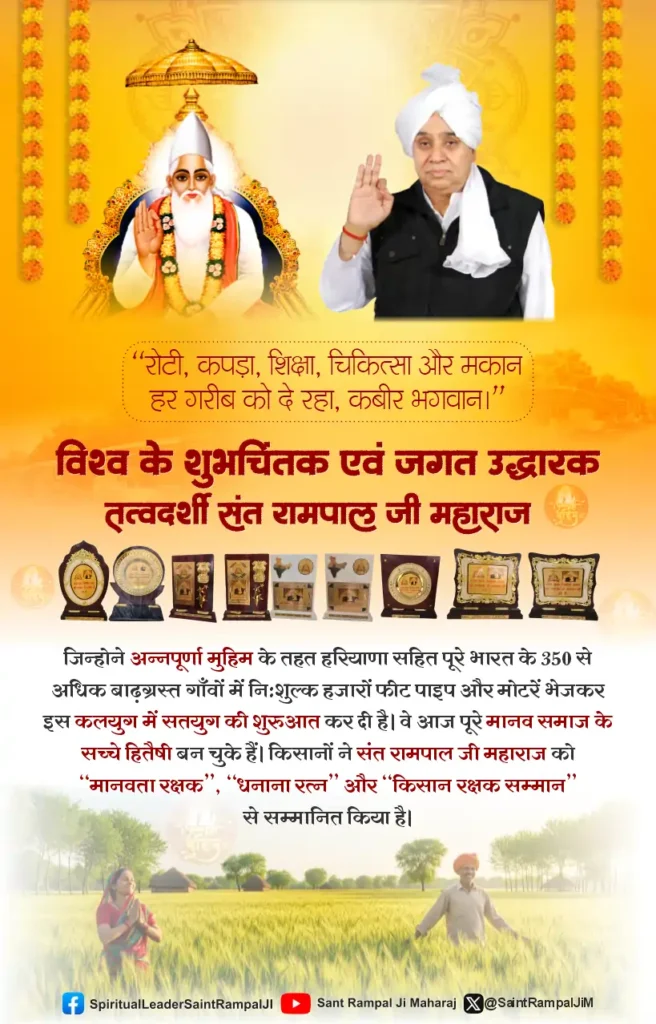
Large public issues often remind society that lasting peace cannot be achieved through conflict alone. Sant Rampal Ji Maharaj teaches that every human being is equal before the Supreme God and deserves justice, compassion and respect, irrespective of caste, community or economic status.
His teachings emphasize non-violence, truthfulness and resolving disputes through wisdom and mutual understanding rather than hatred or confrontation. He also stresses that greed and attachment to material gains often become the root cause of suffering, while true spiritual knowledge inspires people to act with fairness and humanity.
In situations where development and people’s welfare appear to be in conflict, these teachings encourage society to seek solutions that protect both human dignity and the larger public interest. Sant Rampal Ji Maharaj inspires individuals to follow righteousness, compassion and harmony so that progress benefits everyone without ignoring the rights and well-being of those who are most vulnerable.
FAQs on From Chita Andolan to Jal Satyagraha
1. Why are tribal communities protesting against the Ken-Betwa Project?
Many tribal families fear displacement, loss of ancestral land, forests, livelihoods and cultural identity. They are also demanding transparent rehabilitation and fair compensation.
2. What is Jal Satyagraha?
Jal Satyagraha is a peaceful protest in which demonstrators stand in water for long periods to oppose displacement and draw attention to their demands.
3. What is Chita Andolan?
Chita Andolan is a symbolic protest where participants prepare funeral pyres to express that losing their ancestral villages would be like losing their identity and way of life.
4. What benefits does the Ken-Betwa River Linking Project aim to provide?
The project aims to improve irrigation, provide drinking water, generate hydroelectric power, support agriculture and reduce drought-related problems in the Bundelkhand region.
5. Why is the Ken-Betwa Project important for India?
The project is India’s first major river interlinking initiative and is considered significant for improving water resource management while also raising important questions about environmental protection and the rehabilitation of affected communities.