
Ahirka village in Jind district, Haryana, has moved closer to resolving a decades-old waterlogging problem that affected residential areas during the monsoon. Under the Kisan Mazdoor Bachao Abhiyan – Phase II, Tatvdarshi Sant Rampal Ji Maharaj extended support after a technical survey approved an 8,200-foot, 8-inch pipeline along with related infrastructure. The initiative is intended to improve water drainage while enabling surplus johad water to be used for irrigation in nearby agricultural fields.
- Survey Findings at a Glance
- Decades-Old Waterlogging Problem Affected Residents
- Excess Water and Water Scarcity Existed Side by Side
- Technical Survey Determined the Infrastructure Requirement
- Village Welcomed the Relief Material
- Residents Described Years of Flooding and Health Concerns
- Project Designed to Address Waterlogging and Irrigation Together
- Infrastructure Handed Over to the Gram Panchayat
- Ahirka Moves Towards a Long-Term Water Management Solution
The Gram Panchayat of Ahirka approached Tatvdarshi Sant Rampal Ji Maharaj with a prayer seeking a permanent solution to the long-standing water logging issue. Responding to the request, He directed a technical survey of the village. The survey findings formed the basis for the approved infrastructure aimed at addressing both waterlogging and irrigation requirements.
Ahirka Water Relief Phase II: Key Takeaways
- Ahirka village in Jind district had been facing waterlogging for several decades.
- Overflow from two village johads flooded streets and residential areas during heavy rainfall.
- The Gram Panchayat requested assistance from Tatvdarshi Sant Rampal Ji Maharaj.
- A technical survey was conducted using drone mapping, Google Maps and physical inspection.
- The survey recommended 8,200 feet of 8-inch pipeline, one 20 HP motor, and one 10 HP motor.
- Pipeline accessories, including bands, clips, nuts, bolts, air valves, SR and other required materials, were also approved.
- The project is expected to divert excess johad water to agricultural fields while reducing waterlogging in the village.
- Around 200–250 acres of farmland are expected to receive additional irrigation support after implementation.
Survey Findings at a Glance
| Component | Approved Requirement |
| Village | Ahirka, Jind district, Haryana |
| Total Pipeline | 8,200 feet |
| Pipeline Size | 8 inches |
| First Johad Pipeline | Approx. 5,250 feet (1,600 metres) |
| Second Johad Pipeline | Approx. 2,950 feet (900 metres) |
| Motors | One 20 HP and One 10 HP |
| Survey Method | Drone survey, Google Maps and physical inspection |
| Expected Irrigation Coverage | Around 200–250 acres |
Decades-Old Waterlogging Problem Affected Residents
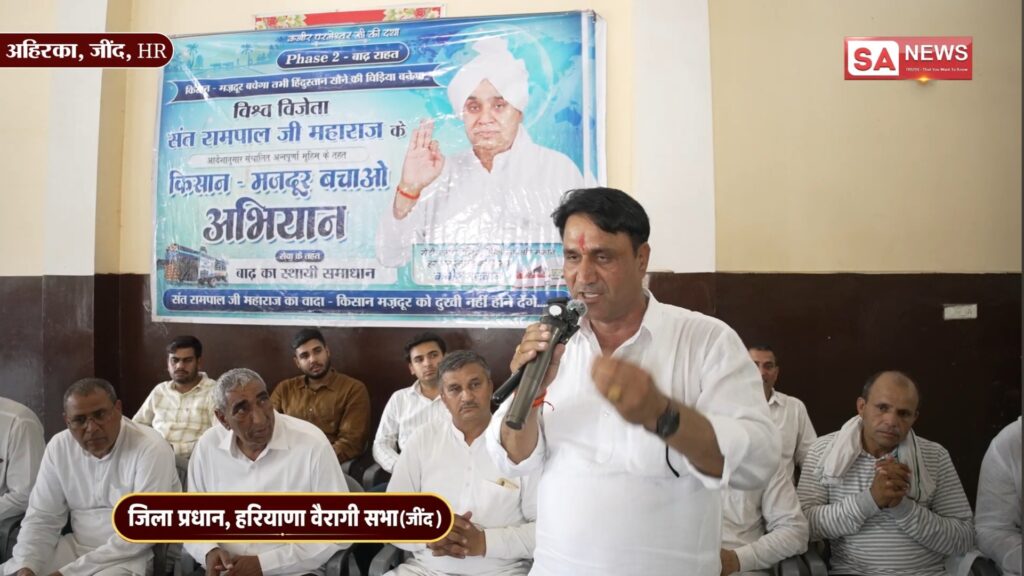
Residents of Ahirka had been dealing with persistent waterlogging for many years because of two large village johads. During the monsoon, both johads overflowed, allowing water to spread into residential areas and village streets.
According to villagers, the situation became severe whenever heavy rainfall filled the johads beyond capacity. More than half of the village was affected, while some residents stated that nearly the entire village, except a few houses located on higher ground, faced flooding during extreme conditions.
Water accumulated in streets and drains for extended periods, increasing concerns over sanitation and public health. Villagers said stagnant water created favourable conditions for snakes, scorpions and mosquitoes, while raising the possibility of disease outbreaks. Some families even reported reaching a stage where they had to leave their homes because of repeated flooding.
Excess Water and Water Scarcity Existed Side by Side
The survey highlighted another challenge in Ahirka. While the village johads stored excess water during the rainy season, nearby agricultural areas continued to face inadequate irrigation.
Village representatives explained that the accumulated water was clean and suitable for agricultural use. Instead of allowing the surplus water to overflow into residential areas, they proposed diverting it towards nearby farmland where irrigation water was unavailable.
According to the Gram Panchayat, the project is expected to benefit farmers by supplying water to approximately 200 to 250 acres of agricultural land, including areas towards Barodi and Karkhadi, where water availability remained limited.
Technical Survey Determined the Infrastructure Requirement
After receiving the Gram Panchayat’s request, Tatvdarshi Sant Rampal Ji Maharaj directed a technical survey of the village.
The survey team carried out a detailed assessment using:
- Drone survey
- Google Maps
- Physical field inspection
The findings showed that the first johad required an underground 8-inch pipeline of approximately 5,250 feet (1,600 metres) leading towards agricultural fields where irrigation water was needed. The second johad required an additional 2,950-foot (900-metre) pipeline extending towards farmland near Barodi.
Based on these findings, the survey recommended:
- 8,200 feet of 8-inch pipeline
- One 20 HP motor
- One 10 HP motor
- Complete pipeline accessories required for installation
The survey report was subsequently submitted to Tatvdarshi Sant Rampal Ji Maharaj, following which He approved assistance under the Kisan Mazdoor Bachao Abhiyan – Phase II.
Tatvdarshi Sant Rampal Ji Maharaj Approved Assistance After Reviewing the Survey
After the survey findings were submitted, Tatvdarshi Sant Rampal Ji Maharaj approved the infrastructure required for the project under the Kisan Mazdoor Bachao Abhiyan – Phase II.
The approved assistance included:
- 8,200 feet of 8-inch pipeline
- One 20 HP motor
- One 10 HP motor
- Pipeline accessories, including bands, clips, nuts, bolts, air valves, SR and other materials required for installation
According to the survey team, the motors would be handed over after the Gram Panchayat completed the underground pipeline installation. Once the pipelines were laid, the survey team would conduct another inspection and submit its report before the motors were provided.
Village Welcomed the Relief Material
As the approved material reached Ahirka village, villagers, Panchayat members and local representatives gathered to receive it. Tractors were brought to the village entrance, where residents welcomed the convoy carrying the pipeline material.
During the programme, members of the Gram Panchayat acknowledged receiving the 8,200-foot pipeline and the related accessories. The Sarpanch stated that the underground pipeline work was expected to be completed within about a week to ten days, after which the survey team would be informed for further inspection regarding the installation of the motors.
Residents Described Years of Flooding and Health Concerns
During interactions with the survey team and programme participants, villagers described how overflowing johads had affected daily life for many years.
Residents said rainwater frequently entered village streets and residential areas, creating prolonged waterlogging. According to them, stagnant water increased the presence of snakes, scorpions and mosquitoes, while making movement difficult during the monsoon.
Some residents recalled that repeated flooding had forced several families to leave their homes. Others stated that they had submitted requests to different authorities over the years but had not received what they considered a permanent solution.
Village representatives also said the approved project would help prevent excess johad water from entering residential areas while making better use of the available water for agriculture.
Project Designed to Address Waterlogging and Irrigation Together
The survey identified that water overflowing from the johads during heavy rainfall could instead be channelled towards nearby agricultural fields.
According to village representatives, the project is expected to serve two purposes:
- Reduce water logging inside the village during the rainy season.
- Supply additional irrigation water to approximately 200–250 acres of agricultural land where water availability had remained limited.
By redirecting excess johad water, the project is intended to support farmers while reducing the pressure created by overflowing ponds within the village.
Infrastructure Handed Over to the Gram Panchayat
During the handover programme, representatives confirmed that the Gram Panchayat received the approved materials, including:
| Material | Status |
| 8,200 feet of 8-inch pipeline | Handed over |
| One 20 HP motor | Approved for installation after verification |
| One 10 HP motor | Approved for installation after verification |
| Bands, clips, nuts, bolts, air valves, SR and related accessories | Handed over |
The survey team reiterated that the motors would be handed over after verifying that the underground pipeline work had been completed as per the approved plan.
Ahirka Moves Towards a Long-Term Water Management Solution
The developments in Ahirka represent an effort to address a long-standing village issue through planned water management. Instead of allowing surplus johad water to overflow into residential areas, the approved infrastructure is intended to channel that water towards agricultural fields where irrigation is needed. According to villagers, the arrangement given by Sant Rampal Ji Maharaj is expected to benefit both the village and nearby farmers by reducing water logging while making productive use of excess water. For more information please do visit SA News YouTube Channel.