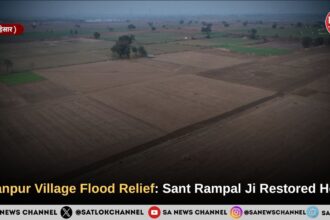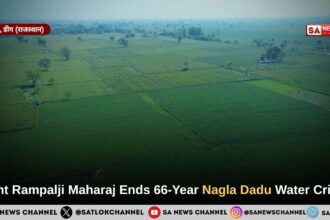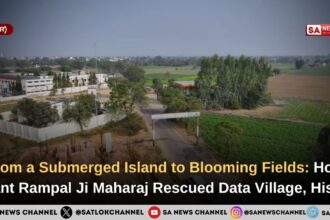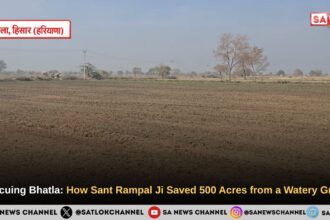


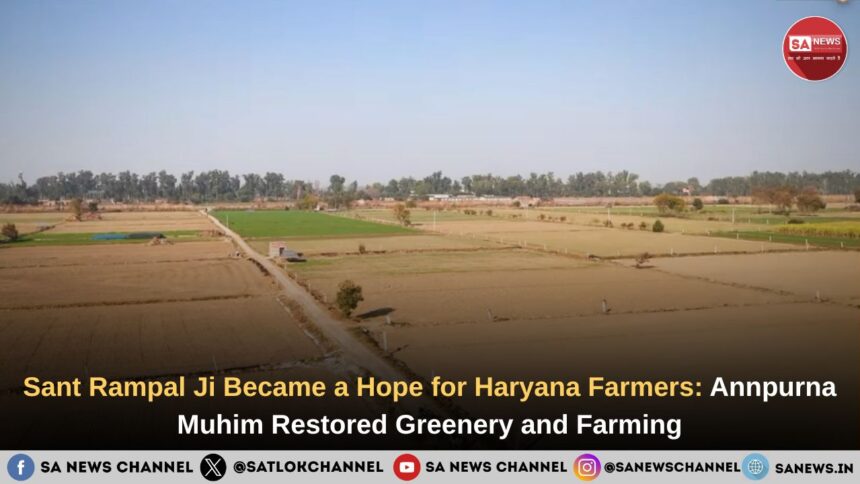
Several villages across different districts of Haryana faced severe waterlogging and flood-like conditions during the past years. Water accumulated up to 3 to 5 feet deep in the fields, Kharif crops were destroyed, and the biggest crisis before the farmers was that if the water was not drained in time, even wheat sowing would not be possible.
- When Waterlogging Changed the Lives of Farmers
- BhainiMaharajpur (Rohtak): Where Waterlogging Had Created Tension
- Assistance Provided
- Dhani Premnagar (Hisar): Where Water Had Reached the Houses
- Assistance Provided
- Khairampur (Hisar): Where Farmers Had Stopped Going to Their Fields
- Assistance Provided
- Mujadpur (Hisar): Where Hundreds of Families Had to Leave Their Homes
- Assistance Provided
- Assistance Overview at a Glance
- Not Just Relief, but an Effort to Save the Future of Farmers
- Greenery and Smiles Returned to the Villages
BhainiMaharajpur in Rohtak district and Dhani Premnagar, Khairampur, and Mujadpur villages in Hisar district were among such areas where hundreds of acres of land became submerged. Many families sank into economic hardship, a fodder crisis arose for livestock, and farmers began to see their livelihoods slipping away.
During such difficult times, the Annpurna Muhim, operated under the guidance of Sant Rampal Ji Maharaj, emerged as a source of relief and hope for farmers. Motors, pipelines, and equipment necessary for water drainage were made available, through which water could be removed from the fields and farmers received an opportunity to cultivate again.
When Waterlogging Changed the Lives of Farmers
In all these villages, farmers faced almost similar challenges—
- Kharif crops had been completely destroyed.
- Wheat sowing had come under threat.
- There was a shortage of fodder for livestock.
- Reaching fields and roads had become difficult.
- Many families had fallen into economic crisis.
- Water had reached homes and settlements.
- People had begun worrying about the future.
Many farmers stated that if the water had not been drained in time, they would have been forced to leave farming and work as laborers.
BhainiMaharajpur (Rohtak): Where Waterlogging Had Created Tension
BhainiMaharajpur village, located in Meham Tehsil of Rohtak district, had approximately 250 to 300 acres of land affected by waterlogging. Water up to 4 to 5 feet deep had accumulated in the fields, and the Kharif crop, including paddy, had been completely destroyed.
The situation became so serious that disputes began arising among farmers. Tension increased in the village, and even the police had to be called to control the situation. According to village Sarpanch representative Atar Singh, the farmers had become mentally and financially shattered.
Assistance Provided
- Approximately 21,000 feet long 8-inch pipeline
- Two powerful 20 HP motors
- Complete pump set
- Equipment necessary for water drainage
Through an approximately 3-kilometer-long pipeline, water was diverted into canals and drains. After a day-and-night operation, the fields once again became suitable for cultivation, and wheat sowing began in the village.
Dhani Premnagar (Hisar): Where Water Had Reached the Houses
Dhani Premnagar village, located in Barwala Tehsil of Hisar district, had approximately 200 acres affected by waterlogging. Water up to 4 to 5 feet deep had accumulated in the fields, and due to stagnation, white salt layers had begun forming on the land.
According to former Sarpanch Rajendra Singh, water had reached the village houses, and a fodder crisis had developed for livestock. Farmers feared that if a solution was not found soon, they might be forced to migrate.
Assistance Provided
- 4,500 feet pipeline
- Powerful 10 HP motor
- 50-meter cable
- Starter
- Complete pipe fitting material
Villagers continuously operated the motors for approximately 15 to 20 days and drained water from the fields. After this, wheat sowing became possible in most of the village fields.
Panchayat member Rajesh stated that where earlier only water could be seen, farming has now started once again.
Khairampur (Hisar): Where Farmers Had Stopped Going to Their Fields
Khairampur village of Mandi Adampur Tehsil in Hisar district struggled with the problem of waterlogging for a long time. Water up to 3 to 5 feet deep had accumulated in the fields, and crops such as cotton, pearl millet, paddy, and guar had been completely destroyed.
The situation became so bad that many farmers had stopped going to their fields altogether. Some families had to leave their homes because water had reached their settlements and houses.
Assistance Provided
- 33,000 feet long 8-inch pipeline
- Two powerful 20 HP motors
- Equipment necessary for water drainage
The motors continued operating for several weeks. Gradually, water drained from the fields and the land began becoming suitable for cultivation once again. After this, farmers started sowing wheat again.
Villagers say that this was not merely a relief operation, but an effort to help farmers stand again after facing continuous destruction.
Mujadpur (Hisar): Where Hundreds of Families Had to Leave Their Homes
Mujadpur village of Hansi Tehsil in Hisar district was affected by severe waterlogging spread across approximately 300 acres. Water up to 4 to 5 feet deep had accumulated in the fields, and crops such as cotton, pearl millet, and sorghum had been completely destroyed.
The situation became so severe that hundreds of people had to leave their homes and take shelter elsewhere. The risk of disease spreading in the village increased, and the fodder crisis for livestock became more serious.
Assistance Provided
- Approximately 12,000 feet long 8-inch pipeline
- Two powerful 15 HP motors
- Starter and electrical equipment
- Pipe fitting material
- Nuts, bolts, and other necessary equipment
Village farmer Naresh Kumar said that he never expected the water would ever recede. According to villager Ashok, the situation had become so serious that children had to be sent to safer places. After the water drainage work, approximately 100 families were able to return to their homes.
Today, the sowing of wheat and fodder has started again in the village.
Assistance Overview at a Glance
| Village | District | Affected Area | Water Depth | Assistance |
| BhainiMaharajpur | Rohtak | 250–300 Acres | 4–5 Feet | 21,000 Feet Pipeline, 2×20 HP Motors |
| Dhani Premnagar | Hisar | Approximately 200 Acres | 4–5 Feet | 4,500 Feet Pipeline, 10 HP Motor |
| Khairampur | Hisar | Extensive Area | 3–5 Feet | 33,000 Feet Pipeline, 2×20 HP Motors |
| Mujadpur | Hisar | Approximately 300 Acres | 4–5 Feet | 12,000 Feet Pipeline, 2×15 HP Motors |
Not Just Relief, but an Effort to Save the Future of Farmers
The assistance delivered to these villages was not limited only to water drainage. Its objective was to secure the farmers’ next crop, livestock, and the future of their entire families.
If the water had not been removed in time—
- Wheat sowing would not have been possible.
- Farmers might have been forced to leave farming.
- The fodder crisis for livestock would have increased.
- Families would have fallen deeper into economic hardship.
- The land would have remained unusable for a long period.
However, timely assistance gave farmers an opportunity to cultivate again and prevented their hopes from breaking.
Greenery and Smiles Returned to the Villages
Today, the situation in villages such as BhainiMaharajpur, Dhani Premnagar, Khairampur, and Mujadpur has changed completely. Where there was once water, anxiety, and despair everywhere, today there is greenery in the fields, the sound of tractors, and hope for a good upcoming harvest.
The story of these villages is not merely a story of water drainage. It is the story of farmers whose sinking hopes were brought back to life. The timely assistance delivered through Annpurna Muhim not only saved the fields but also worked to give a new direction to the future of hundreds of farming families.