


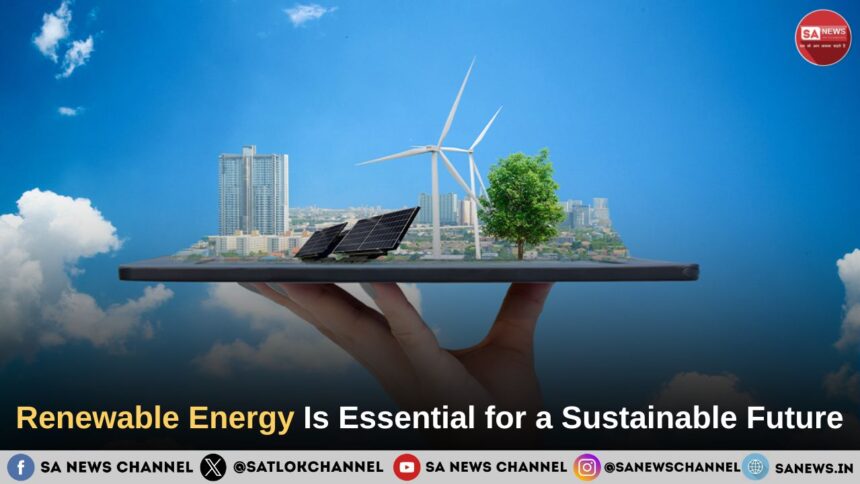
Energy has become one of the important factors of our modern life. We need it to run our households and to power industries, everything is dependent on it. For decades, we have been using fossil fuels to meet our energy needs. These fuels are not going to last forever and they are also harmful for the environment.
- Why Renewable Energy Matters for Economic and Environmental Stability
- Overview of Renewable Energy in Today’s Context
- Key Features of Renewable Energy
- How Renewable Energy Benefits Society and Economy
- Challenges in Adopting Renewable Energy
- Role of Technology in Renewable Energy Growth
- Common Issues in Renewable Energy Transition
- Future Outlook of Renewable Energy
- Conclusion
- Linking Sustainability with Indian Knowledge System and Life Values
Today, the effects are becoming difficult to ignore. Rising temperatures, pollution, and climate-related disruptions are the warming flags that the world-wide model which is practiced by all the countries, is not sustainable anymore. This is where renewable energy steps in, offering a cleaner and more balanced alternative.
It is interesting that renewable energy seems like an idea but the basic idea of living in balance with nature is something that people in India have been doing for a very long time. We can use renewable energy as an approach to live in an environmentally sustainable manner while still improving the quality of our lives.
Why Renewable Energy Matters for Economic and Environmental Stability
Renewable energy cannot be ignored while tackling environmental issues, as well as economic challenges. It is one of the most important ways to diminish the releasing of carbon discharge in, which will decelerate climate change and enhance the air quality.
At the same time, it provides a financial benefit. Thanks to the renewable industry, employment is being generated in many fields such as manufacturing, installation, R&D and the whole process is economically advantageous.
Another good thing about renewable energy is that it allows countries to be more self-sufficient with their energy needs. Less fuel needs to be imported into the country when renewable energy is used, strengthening the economy and making a country more resilient to economic crises. This is environmentally beneficial and economically beneficial.
Overview of Renewable Energy in Today’s Context
The main renewable energy sources are those which are naturally replenished, such as solar, wind, hydro, biomass. Technology development has enabled them to become more cost effective and more affordable for people all around the globe.
Now, we observe that solar panels are widely used in homes, and areas of wind farms increase. Governments implementing policies to promote ‘clean’ energy. This is not only happening in the developed world, but on the spread to other (developing) regions.
What is exciting about renewable energy in the contemporary world is the urgency. Our environment problems are not in some few centuries to come; they are in now.
Key Features of Renewable Energy
Renewable energy stands out because of certain key characteristics:
- Sustainability: Resources are naturally replenished and do not run out
- Low Environmental Impact: Minimal pollution compared to fossil fuels
- Energy Security: Reduces reliance on external sources
- Cost Efficiency Over Time: Lower operational costs after initial setup
- Flexibility: Can be used at both small and large scales
These features make renewable energy a long-term solution and reliable solution rather than a temporary alternative.
How Renewable Energy Benefits Society and Economy
So, energy isn’t just about electricity, renewable energy can keep us healthy by reducing pollution and improving air quality.
In the long run renewable energy can help to reduce our electricity bills for people like us especially if we have a solar panel fitted. For governments it could reduce the amount of fuel they have to import as well as meeting development targets.
Renewable energies also facilitate development in regions. Energy projects frequently generate employment in the distant regions, thus leading to bettering the roads and boosting the local economy.
Renewable Energy Technology: A Solution for the Energy Crisis?
Challenges in Adopting Renewable Energy
Despite the advantages that renewable energy has there are also a few disadvantages that cannot be overlooked. The cost of installing energy systems is too high that could discourage people into its usage particularly those who require a small amount of energy.
We then use nature to harness renewable energy. Solar energy needs sunlight and wind energy needs wind. As such the potential of energy we can generate varies.
Furthermore, storage of energy isn‘t completely reliable yet. We need some way of storing energy so it can be used constantly and this is a matter which is being researched.
Role of Technology in Renewable Energy Growth
The role of technology in the growth of energy is really important. Technology has helped renewable energy grow a lot. We have solar panels, wind turbines and batteries now. This makes clean energy more practical and reliable for people to use.
Technology like grids and digital monitoring systems helps us manage energy better. These new ideas make sure that renewable energy is not just available but used in the best way possible.
As technology gets better it will solve some of the problems that renewable energy has now. This will make renewable energy available to people.
Common Issues in Renewable Energy Transition
Some of the issues are:
• Renewable energy is not being adopted quickly in some places
• We do not have the infrastructure we need
• Traditional energy companies are resisting the change
• We need laws to support renewable energy
These issues show that we know what we want to do but we need to work together to get there.
Future Outlook of Renewable Energy
The future of renewable energy seems bright. As the world becomes more conscious and develops guidelines in favour of this form of energy, the number of people and businesses opting for clean energy solutions should increase.
And also new technology will enhance efficiency and bring down prices which will in turn make renewable energy the number one power source in the world. Meanwhile, the attention might turn to the efficiency of use consumption not merely of generation.
Conclusion
Renewable energy is very “crucial”. It will improve our environment. It can help our economy. We should keep in mind the need to make sure we have the energy which lasts for many years. There are several issues that are yet to be addressed. We know what we need to do. Shift to energy is not only about effective technology but also intelligent, efficient and common responsibility.
Overall, choosing energy boils down to striking a balance between doing our best and protecting our planet.
Linking Sustainability with Indian Knowledge System and Life Values
If we look back, we can see that the idea of sustainability is not new all. The Indian Knowledge System has always taught us to live in harmony with nature and use resources carefully. Concepts such as Prakriti and ‘Vasudhaiva Kutumbakam’ show us that we are a part of the world. These ideas teach us to be balanced to not use much and to respect the earth.
Sant Rampal Ji Maharaj also taught us to live lives to not waste things and to get along with nature. These principles are similar to what we know about sustainability today. Today renewable energy is like a continuation of these ideas, where science meets traditional values.
As Sant Rampal Ji Maharaj said:
“Nature gives us what we need but imbalance begins when we cross our limits.”
A green future isn’t necessarily about saving money or the use of wind and solar power, it’s a way of thinking that everyone should remember. Remember the reasons that we have to use renewable energy. Remember the remaining benefits of renewable energy to the earth and everything living off it. Renewable energy provides the future.