

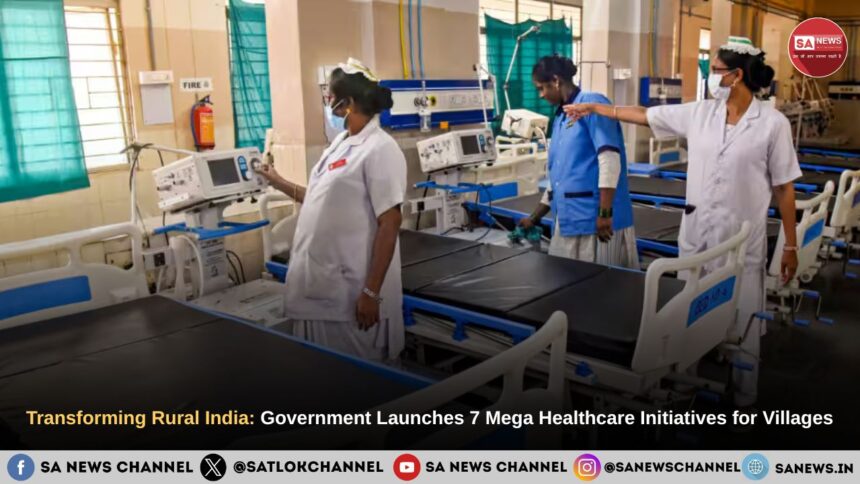
In a monumental push to bridge the deep-ranging healthcare disparity between urban and rural populations, the Government of India has rolled out seven comprehensive healthcare initiatives. Aimed at restructuring the foundational medical infrastructure, these initiatives leverage digital technology, workforce expansion, and localized wellness centers. With a target of setting up 1.5 lakh Health and Wellness Centers (HWCs) and deploying digital ABHA smart cards, the new framework promises to deliver high-quality, accessible, and affordable medical treatments directly to the doorsteps of millions of villagers.
News Highlights
- Infrastructure Overhaul: Modernization of Primary Health Centers (PHCs) and Community Health Centers (CHCs) with advanced diagnostic labs and digital records.
- Digital Integration: Issuance of nationwide usable ABHA (Ayushman Bharat Health Account) smart cards to store complete medical histories.
- Virtual Outreach: Launch of specialized mobile clinics and telemedicine vans equipped for direct video calls with city doctors.
- Workforce Boost: Massive hiring and targeted training of rural doctors, nurses, ANMs, and ASHA workers.
- Holistic Wellness: Establishment of 1.5 lakh HWCs offering traditional yoga sessions alongside mental health support.
- Awareness Campaigns: Deployment of dedicated mobile vans with loudspeakers to educate rural masses on hygiene, nutrition, and infectious diseases.
India’s rural healthcare system is undergoing a massive structural transformation. Recognizing that a significant portion of the population resides in villages with limited access to tertiary medical facilities, the government has executed a multi-tier strategy targeting infrastructure, manpower, and technology.
At the core of this transformation is the physical upgradation of Primary Health Centers (PHCs) and Community Health Centers (CHCs). These centers are being equipped with modern maternity wards and diagnostic laboratories, effectively eliminating the need for rural patients to travel long distances for basic pathology tests.
To resolve the shortage of specialist doctors in remote regions, high-tech Telemedicine Services have been institutionalized. Mobile health vans fitted with internet connectivity allow village patients to consult top-tier city specialists via live video calls. This digital push is seamlessly integrated with the ABHA (Ayushman Bharat Health Account) Smart Cards, which systematically log an individual’s medical history, allowing clinical data to be retrievable across any medical facility nationwide.
Simultaneously, human resource challenges are being tackled via the Health Workforce Expansion. Thousands of additional doctors, nurses, Auxiliary Nurse Midwives (ANMs), and Accredited Social Health Activists (ASHA) are being integrated into the rural framework, receiving specialized training in pediatric care and emergency child deliveries. Furthermore, the maternal ecosystem receives a boost through the scaling up of the Janani Suraksha Yojana and POSHAN Abhiyaan.
Lastly, preventive healthcare is taking center stage with the operationalization of 1.5 lakh Health and Wellness Centers (HWCs). Moving beyond just curative medicine, these centers actively promote community health education, mental health support, and lifestyle modifications like Yoga, creating a holistic shield against chronic illnesses.
Deep Dive: The 7 Core Pillars of the Rural Healthcare Revolution
1. Upgrading Rural Health Centers (PHCs and CHCs)
The foundational tier of rural medicine is getting a complete structural facelift. Primary Health Centers (PHCs) and Community Health Centers (CHCs) are being modernized to include newly built, hygienic maternity wards and fully equipped diagnostic laboratories. By introducing digital record systems and ensuring a consistent supply of high-quality medicines, these centers will eliminate the need for villagers to travel to distant cities for basic treatments and routine medical tests.
2. Telemedicine Services
To solve the chronic shortage of specialist doctors in rural areas, the government is leveraging technology through mobile clinics and specialized telemedicine vans. These units are equipped with high-speed internet connectivity, allowing patients in remote villages to consult with expert doctors and specialists in major cities through live video calls. This ensures immediate, expert medical advice without the burden of expensive travel.
3. Health Workforce Expansion
Recognizing that infrastructure is only as good as the people running it, a massive recruitment and training drive is underway. More rural doctors, nurses, Auxiliary Nurse Midwives (ANMs), and Accredited Social Health Activist (ASHA) workers are being deployed on the ground. Furthermore, these frontline workers are receiving specialized training to efficiently handle childbirth, pediatric care, and medical emergencies directly within the villages.
4. Maternal and Child Health Programs
With a renewed focus on the health of mothers and newborns, flagship schemes like the Janani Suraksha Yojana and POSHAN Abhiyaan are being scaled up aggressively. New, targeted campaigns have been rolled out to ensure 100% safe and institutional deliveries, comprehensive infant vaccination drives, and deep-rooted nutrition awareness to combat malnutrition among rural women and children.
5. Health and Wellness Centers (HWCs)
Under the ambitious Ayushman Bharat umbrella, 1.5 lakh existing sub-centers and PHCs are being transformed into fully operational Health and Wellness Centers (HWCs) across India. These centers go beyond just treating illnesses; they focus on holistic healthcare by offering basic out-patient treatments, free essential medicines, diagnostic services, yoga sessions, mental health support, and community health education.
6. Digital Health Records and Smart Cards
Paperwork is being replaced by digital efficiency. Villagers are now being issued unique ABHA (Ayushman Bharat Health Account) smart cards. This digital card securely stores an individual’s complete medical history, past prescriptions, and diagnostic reports. Because it operates on a nationwide network, the card can be accessed by doctors anywhere in the country, ensuring seamless and error-free treatment.
7. Mobile Health Awareness Campaigns
Preventive healthcare is being taken directly to the doorsteps of the rural masses. Specially designed health vans equipped with medical staff and loudspeakers are navigating village streets to educate people. These campaigns focus on raising awareness about essential hygiene practices, proper nutrition, timely vaccinations, and the prevention and symptoms of dangerous diseases like Tuberculosis (TB) and Malaria.
FAQs
Q1: What is the main objective of the New Rural Healthcare Initiatives?
Ans: The main objective is to provide high-quality, accessible, and affordable healthcare facilities to the rural population of India, minimizing the gap between urban and rural medical infrastructure.
Q2: What is an ABHA Smart Card and how does it help villagers?
Ans: ABHA stands for Ayushman Bharat Health Account. It is a digital smart card that stores a patient’s entire medical history, digital prescriptions, and diagnostic reports, allowing them to access seamless healthcare at any hospital across India.
Q3: How many Health and Wellness Centers (HWCs) are being established?
Ans: Under the Ayushman Bharat initiative, a total of 1.5 lakh Health and Wellness Centers (HWCs) are being set up across India to offer basic treatments, health education, yoga sessions, and mental health support.
Q4: How does Telemedicine work in remote villages?
Ans: Specially equipped mobile clinics and telemedicine vans travel to remote villages. They use internet connectivity to arrange direct video calls between village patients and specialized doctors located in major cities.
Q5: What is the spiritual significance of health according to SatGyan?
Ans: According to SatGyan, while medical science cures physical ailments, the root cause of human suffering is karmic debt. True and permanent health (of both body and soul) is achieved by practicing authentic worship (SatBhakti), which eliminates the distress of past sins and leads to ultimate salvation.