


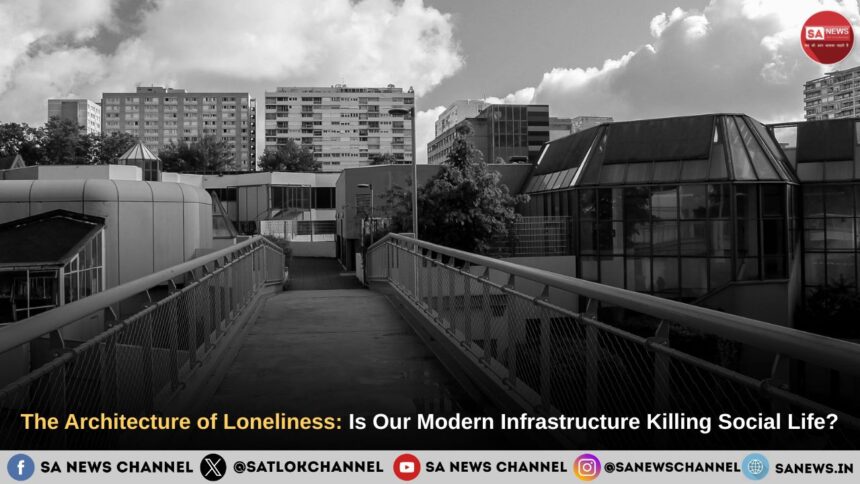
In today’s fast-paced world, cities are expanding, technology is advancing, and life is becoming more convenient than ever. Yet, beneath this progress lies a silent crisis-loneliness. Despite living in densely populated urban spaces, many people feel disconnected, isolated, and emotionally distant. This paradox raises an important question: Is our modern infrastructure unintentionally contributing to social isolation? From high-rise apartments to car-centric cities and digital lifestyles, the way we design our environments shapes how we interact. This blog explores how modern infrastructure may be influencing loneliness-and what it means for our future as a connected society.
- Understanding the Rise of Loneliness in Modern Society
- The Role of Modern Infrastructure
- 1. Urban Design and High-Density Living
- 2. Car-Centric Cities and Reduced Interaction
- 3. Digital Infrastructure Replacing Human Contact
- 4. Lack of Social Infrastructure
- Health Impacts of Loneliness
- How Infrastructure Shapes Human Behavior
- The Psychology Behind Built Environments
- The Decline of “Third Places”
- Remote Work and the Isolation Economy
- Cultural Shifts and Individualism
- The Impact on Youth and Digital Natives
- Gender and Loneliness in Urban Spaces
- Technology Can Also Be Part of the Solution
- Reimagining Future Cities
- Small Changes, Big Impact
- The Need for Emotional Infrastructure
- Solutions – Designing for Connection
- 1. People-Centered Urban Planning
- 2. Strengthening Social Infrastructure
- 3. Balanced Use of Technology
- 4. Policy-Level Changes
- True Happiness Beyond Infrastructure: The Teachings of Sant Rampal Ji Maharaj
- FAQ on Architecture of Loneliness
Understanding the Rise of Loneliness in Modern Society
Loneliness is no longer just a personal issue-it is becoming a global public health concern. According to the World Health Organization, loneliness affects people of all ages, especially youth, with up to 1 in 6 people globally experiencing loneliness. Even more concerning, social isolation impacts up to one-third of older adults and one-fourth of adolescents
This growing trend is often described as a “loneliness epidemic.” But why is it happening in a world that is more connected than ever?
Also read: The Loneliness Epidemic: Why More People Feel Isolated in a Hyper-Connected World
The Role of Modern Infrastructure
1. Urban Design and High-Density Living
Cities are designed to accommodate millions, yet they often fail to foster meaningful interaction. High-rise apartments, gated communities, and crowded public spaces reduce opportunities for genuine social bonding.
Research shows that urban growth and technological advancement have led to increased disconnection, even in densely populated areas
People live side by side-but rarely connect.
2. Car-Centric Cities and Reduced Interaction
Modern infrastructure often prioritizes cars over people. Wide highways, long commutes, and limited pedestrian spaces reduce spontaneous social interactions.
Recent research found that greater car dependency is linked to higher loneliness levels, especially where public transport is weak. Walking neighborhoods encourage conversations. Highways isolate them.
3. Digital Infrastructure Replacing Human Contact
While smartphones and social media promise connection, they often replace real-world interactions.
Studies show increased social media use is associated with higher loneliness levels, highlighting a paradox of digital connectivity
Online likes cannot replace real conversations.
4. Lack of Social Infrastructure
Social infrastructure-such as parks, cafes, libraries, and community centers-plays a critical role in fostering interaction.
WHO emphasizes that strengthening social infrastructure is key to reducing loneliness.
Interestingly, research shows that people who spend time talking in social spaces like cafes and salons are significantly less likely to feel lonely.
Health Impacts of Loneliness
Loneliness is not just a feeling-it has serious health consequences.
According to global health data:
- It increases the risk of heart disease, stroke, and diabetes
- It doubles the risk of depression
- It affects education, employment, and productivity
In fact, loneliness can be as harmful as smoking or obesity in some cases.
How Infrastructure Shapes Human Behavior
Infrastructure isn’t just functional-it actively shapes how people interact, move, and experience daily life. In today’s digital society, modern infrastructure often prioritizes speed and efficiency, sometimes at the cost of social connection. This can contribute to urban loneliness and a growing sense of isolation, impacting mental health and weakening community bonds. Thoughtful urban design, however, can reverse this trend. By investing in community spaces and accessible public transport that encourage interaction, cities can foster stronger connections and help communities thrive rather than fragment.
The Psychology Behind Built Environments
Modern infrastructure doesn’t just shape cities-it shapes the human mind. Environmental psychology suggests that the spaces we inhabit directly influence our emotions, behaviors, and sense of belonging.
Large, impersonal environments-such as massive apartment complexes or crowded transit systems-can create what psychologists call “social anonymity.” In such settings, individuals feel invisible, reducing the likelihood of initiating conversations or forming connections.
On the other hand, smaller, human-scale environments encourage familiarity. Seeing the same faces regularly-at a local shop, park, or street-builds trust over time. This phenomenon, often referred to as the “mere exposure effect,” subtly strengthens social bonds without conscious effort. In essence, when infrastructure removes familiarity, it also removes emotional comfort.
The Decline of “Third Places”
Sociologists often refer to “third places”-locations outside home (first place) and work (second place)-as essential for social life. These include cafes, parks, community halls, and local markets.
However, modern urban planning has reduced access to such spaces. Shopping malls have replaced local markets, and online services have replaced physical interactions. Even when third places exist, they are often commercialized, limiting access for many people.
The absence of these informal gathering spaces weakens community ties. Earlier generations built friendships organically in such environments, but today, social interaction often requires deliberate effort. Without third places, society loses its natural meeting points.
Remote Work and the Isolation Economy
The rise of remote work-accelerated in recent years-has fundamentally changed how people interact. While working from home offers flexibility, it also reduces daily social contact.
Casual office conversations, shared lunches, and team interactions once played a significant role in emotional well-being. Now, many individuals spend entire days without face-to-face communication.
This shift has also given rise to what some experts call the “isolation economy,” where services are designed for convenience but reduce human interaction-food delivery apps, self-checkout systems, and automated services.
While efficient, these systems gradually remove small but meaningful social exchanges from daily life.
Also Read- Ultimate Guide to Remote Work Strategies: Boost Productivity and Well-being
Cultural Shifts and Individualism
Infrastructure does not exist in isolation-it reflects cultural values. Modern societies increasingly emphasize independence, privacy, and personal success.
While these values have many benefits, they can also reduce collective living and shared experiences. In earlier times, extended families, neighborhood gatherings, and community traditions provided built-in social networks.
Today, nuclear families and individual lifestyles dominate urban settings. Combined with infrastructure that prioritizes privacy-such as isolated housing units-this cultural shift can deepen feelings of loneliness.
The result is a paradox: more freedom, but less connection.
The Impact on Youth and Digital Natives
Young people are among the most affected by modern loneliness. Despite being highly active online, many struggle with real-world social interaction.
Digital-native generations often grow up in environments where communication is mediated by screens. While this builds certain skills, it can reduce emotional depth in relationships.
Additionally, academic pressure, urban migration, and changing family structures contribute to isolation among youth. Many move to new cities for education or work, leaving behind established support systems.
Without strong community infrastructure, adapting to new environments becomes emotionally challenging.
Gender and Loneliness in Urban Spaces
Interestingly, loneliness is experienced differently across genders. Urban infrastructure can influence how safe and comfortable individuals feel in public spaces.
For example: Women may avoid certain public areas due to safety concerns, limiting social interaction. Men may experience social isolation due to societal expectations around emotional expression
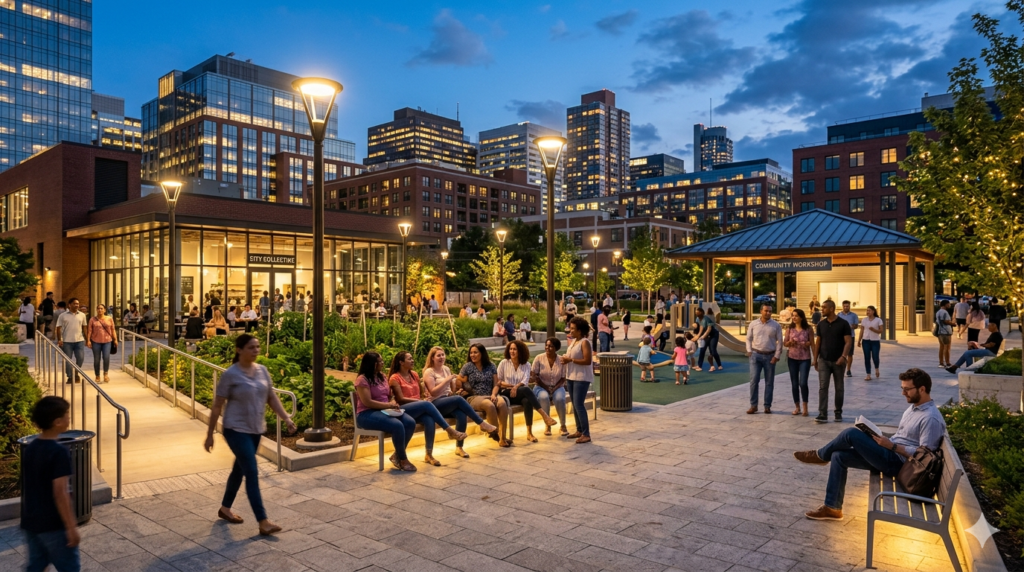
Inclusive and safe infrastructure-well-lit streets, accessible public spaces, and community programs-can help bridge this gap and encourage participation from all groups.
Technology Can Also Be Part of the Solution
While technology is often blamed for loneliness, it can also help address it when used mindfully.
Digital platforms can:
- Connect like-minded communities
- Help people find local events and groups
- Provide mental health support
The key lies in balance. Technology should act as a bridge to real-world interaction-not a replacement for it.
For example, community apps that encourage neighborhood engagement or local volunteering can strengthen offline relationships.
Reimagining Future Cities
Urban planners and policymakers are increasingly recognizing the need to design cities for well-being, not just efficiency.
Future cities may include:
- Mixed-use neighborhoods where people live, work, and socialize
- More green spaces and pedestrian-friendly zones
- Community-driven design with citizen participation
- Public spaces that encourage interaction across age groups
The concept of “15-minute cities,” where essential services are within walking distance, is gaining popularity as a way to reduce isolation and improve quality of life. Such approaches highlight a shift from infrastructure that separates people to infrastructure that brings them together.
Small Changes, Big Impact
Addressing loneliness doesn’t always require large-scale changes. Small, everyday actions can also make a difference:
- Greeting neighbors
- Participating in local events
- Spending time in community spaces
- Reducing excessive screen time
When combined, these actions create a ripple effect, strengthening social fabric at the grassroots level.
Infrastructure sets the stage-but people bring it to life.
The Need for Emotional Infrastructure
Beyond physical structures, society also needs “emotional infrastructure”-systems that support empathy, understanding, and human connection.
This includes:
- Mental health awareness
- Community support networks
- Education on emotional well-being
- Encouraging open conversations
When emotional and physical infrastructure align, societies become more resilient and connected.
Solutions – Designing for Connection
1. People-Centered Urban Planning
Cities should prioritize walkability, parks, and shared spaces. Green spaces have been shown to reduce loneliness and improve well-being
2. Strengthening Social Infrastructure
Creating more community hubs-libraries, cultural centers, and local events-can rebuild social bonds.
3. Balanced Use of Technology
Technology should enhance-not replace-real-life interaction.
4. Policy-Level Changes
Governments worldwide are recognizing loneliness as a public health issue, with some countries even appointing ministers to address it.
True Happiness Beyond Infrastructure: The Teachings of Sant Rampal Ji Maharaj
True happiness, according to the Satgyan (True Spiritual Knowledge) of Sant Rampal Ji Maharaj, is not a product of material infrastructure but a result of reconnecting the soul with its original source. While modern cities and technology provide physical comfort, they cannot fill the “emotional void” caused by our separation from our true home Satlok (the Eternal Abode) and the Supreme Almighty.
Sant Rampal Ji teaches that the human birth is a rare opportunity, granted after passing through 8.4 million species, specifically intended for Satbhakti (True Devotion) and attaining Moksha (Liberation). By understanding the laws of Karma and living a life rooted in compassion, truth, and the worship of the Supreme God, individuals can overcome the rising global epidemic of loneliness and mental unrest. Ultimately, social harmony and inner peace are achieved not through better physical development, but through a transformation of consciousness that prioritizes spiritual values over transient worldly gains.To connect with Almighty take initiation ( Naam Diksha) through this link :https://online.jagatgururampalji.org/naam-diksha-inquiry
Understand the complete Spiritual knowledge through the official account:
FAQ on Architecture of Loneliness
Q1. What is the architecture of loneliness?
It refers to how urban design, infrastructure, and technology contribute to social isolation and reduced human interaction.
Q2. How does modern infrastructure cause loneliness?
Factors like high-rise living, car dependency, and digital communication reduce face-to-face interaction and community bonding.
Q3. Is loneliness a global problem?
Yes, studies show that loneliness affects millions worldwide and is now considered a public health issue.
Q4. How can cities reduce loneliness?
By creating walkable neighborhoods, green spaces, and community hubs that encourage social interaction.
Q5. What is the spiritual solution to loneliness?
Spiritual teachings emphasize inner peace, meaningful relationships, and connection with God as ways to overcome loneliness.