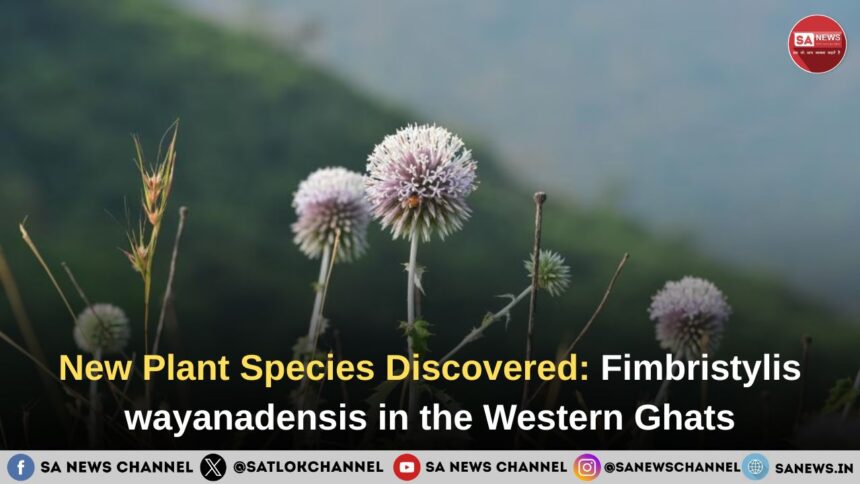
WAYANAD, KERALA — In a significant boost to India’s botanical records, researchers have announced the discovery of a new plant species, Fimbristylis wayanadensis, from the rugged mountain terrains of the Western Ghats. The find underscores the status of this UNESCO World Heritage site as a remarkable “cradle of evolution,” continuing to reveal new life forms even in the 21st century.
The Discovery and Habitat
The new species was identified during a series of floristic surveys conducted in the high-altitude grasslands of the Wayanad district. Thriving at elevations of approximately 1,100 to 1,200 meters, F. wayanadensis was found growing in the transitional zones between open grasslands and rocky outcrops.
Unlike many of its relatives that prefer marshy lowlands, this species has adapted to the unique microclimate of the “sky islands”—isolated mountain peaks that host distinct ecosystems.
Botanical Characteristics
Belonging to the Cyperaceae family (commonly known as sedges), Fimbristylis wayanadensis possesses several distinct morphological features that separate it from other members of the genus:
- Distinctive Spikelets: The most striking feature is the color of its spikelets (the flower clusters), which are a deep chestnut brown, contrasting with the pale or yellowish hues common in similar sedges.
- Unique Stems: The plant features slender, rigid stems that are slightly hairy, a defensive adaptation likely used to retain moisture or deter insects.
- Microscopic Identification: Under a microscope, the seeds (nutlets) reveal a unique “reticulate” or net-like pattern, which serves as a primary diagnostic tool for the research team to confirm it as a new species.
Taxonomy and Naming
The plant was named after its type locality, the Wayanad district, a region celebrated for its dense forest cover and endemic flora.
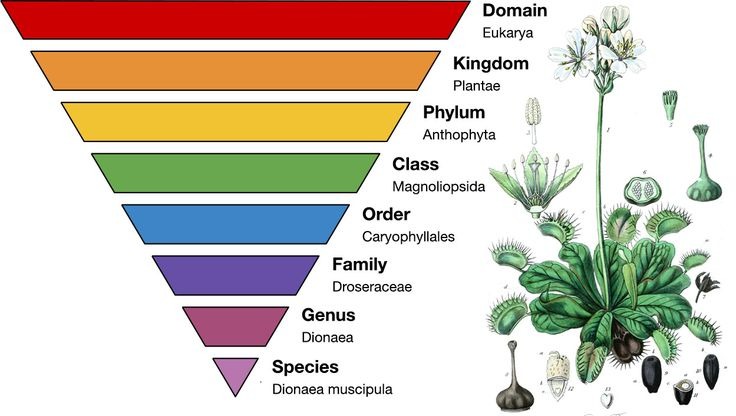
The discovery was led by a team of botanists from institutions including the University of Calicut and the M.S. Swaminathan Research Foundation (MSSRF). The formal description of the species has been published in international peer-reviewed botanical journals, following rigorous comparative analysis with herbarium specimens from across the globe.
Conservation Concerns
While the discovery is a cause for celebration, it also brings a sense of urgency. The high-altitude grasslands of the Western Ghats are among the most threatened ecosystems in India due to:
- Invasive Species: The spread of exotic plants like Acacia and Eucalyptus.
- Climate Change: Rising temperatures shifting the delicate balance of “shola-grassland” complexes.
- Tourism Pressure: Increasing human footprint in previously untouched mountain zones.
“The discovery of Fimbristylis wayanadensis is a reminder that we are still in the ‘age of discovery’ in the Western Ghats,” says a lead researcher on the project. “However, these species are often ‘born’ into the scientific world already facing the threat of extinction.”
The Spiritual Perspective on Biodiversity
The Supreme Creator (Purna Brahm)
According to Sant Rampal Ji, the entire nature and all living beings—including the vast variety of flora in the Western Ghats—are the creation of the Supreme God (Kabir Dev). While science identifies “new” species, spiritual knowledge suggests these are part of the infinite variety created by the Almighty.
FAQs: New Plant Species Discovered: Fimbristylis wayanadensis in Western Ghats
Q. What is Fimbristylis wayanadensis?
Ans: It is a new species of sedge (grass-like plant) recently discovered by researchers.
Q. Where was it found?
Ans: It was discovered in the high-altitude grasslands of Wayanad, Kerala, in the Western Ghats.
Q. At what altitude does it grow?
Ans: This species thrives in high-altitude environments, with records showing it at elevations reaching up to 1,900 meters.
Q. What are its physical characteristics?
Ans: It has hairy stems, dark chestnut-brown flowers, and smooth, patterned seeds.