

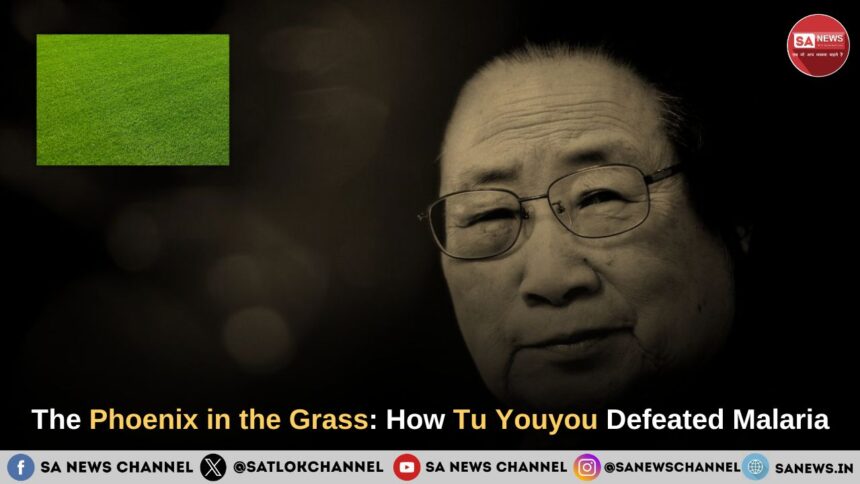
History is full of accidental discoveries, but few have changed the world as much as Tu Youyou’s work. She found a way to extract artemisinin from the sweet wormwood plant. Tu was born during a chaotic time in China and became a scientist during the difficult Cultural Revolution. She stands out as a unique figure in medicine. She built a bridge between the old ways and the new. She used the ideas found in ancient medical books and tested them with modern scientific methods.
- Part I: A Young Girl in Ningbo (1930–1955)
- The Illness That Changed Her Path
- Part II: Working Through Hard Times (1955–1969)
- Part III: Project 523 and the Secret Mission (1967–1969)
- Part IV: The Discovery of Artemisinin (1969–1972)
- Part V: Testing the Medicine (1972–1978)
- Part VI: Controversy and Credit
- Part VII: Global Fame (2011–2015)
- Part VIII: Personal Life
- Part IX: Legacy in 2025
- Tu Youyou’s Legacy
- Cure To Death, Key To Eternal Life
- FAQs
Her discovery saved millions of lives in developing countries and proved that traditional medicines could hold the keys to modern cures. This article explores her life from her childhood in Ningbo to her leadership in the secret Project 523, and finally to her status today as a 95-year-old scientific hero in 2025.
Part I: A Young Girl in Ningbo (1930–1955)
Heritage and Resilience
Tu Youyou’s story starts in Ningbo, a busy port city on the east coast of China. She was born on December 30, 1930. Ningbo is a place where old traditions meet modern trade. Her family valued education very highly. Her father worked at a bank, which helped the family stay stable during hard economic times. Her mother stayed home to raise Tu and her four brothers. Her parents believed that studying was important for everyone, not just for finding a job, but for building good character. This belief helped Tu later when many people in China began to turn against intellectuals.
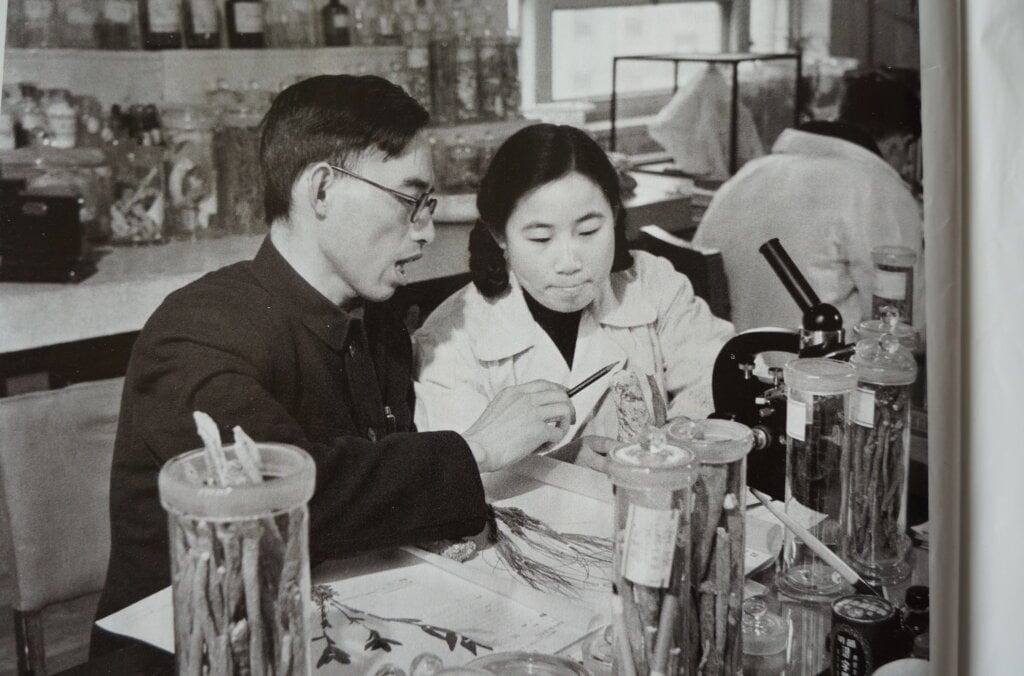
(Image: Tu Youyou with one of her mentors, pharmacologist Lou Zhicen, in the 1950s. Lou Zhicen trained her to identify medicinal plants based on their botanical descriptions)
Her father chose her name, “Youyou,” from a very old book of poems called the Book of Songs. The poem says, “Deer bleat ‘youyou’ while they eat the wild mugworts”. This was a strange coincidence. The poem mentions the mugwort plant, which is related to the plant Tu used to find the cure for malaria. Decades later, the plant her father named her after would become her greatest gift to the world.
The Illness That Changed Her Path
Tu went to good schools, but her life took a scary turn in 1946. When she was 16 years old, she got sick with tuberculosis (TB). In the 1940s, doctors did not have many medicines to treat TB. It was a very serious disease that often killed people. Tu had to stop going to school for two years to stay home and rest.
During those two years, she felt helpless. She saw how much diseases hurt people. This experience changed her mind about her future. She stopped wanting to just be a student and started wanting to heal people. When she went back to school in 1948, she knew what she wanted to do. She later said that if she learned medical skills, she could keep herself healthy and cure others. This difficult time gave her the drive to become a scientist.
Learning Two Worlds at Peking University
In 1951, Tu passed her exams and entered Peking University School of Medicine. This was a time of big changes in China. The government was separating medical schools into specialized institutes. Tu studied in the Department of Pharmaceutical Sciences.
Her classes were a mix of old and new. She learned how to classify plants, how to get ingredients out of them, and how to understand their chemical structure. At the same time, the government wanted scientists to combine Western science with Traditional Chinese Medicine (TCM). Most scientists usually liked only one or the other. Tu learned both. She graduated in 1955 at the age of 24. She knew modern science, but she also respected ancient Chinese medicine.
Part II: Working Through Hard Times (1955–1969)
The Academy of Traditional Chinese Medicine
After college, the government sent Tu to work at the Academy of Traditional Chinese Medicine in Beijing. She did not choose this job, but it shaped her whole career. The government wanted researchers to look at Chinese medicine and make it better using science.
Tu started by studying a herb called Lobelia chinensis to treat a parasitic disease caused by worms. This work taught her important skills. She learned how to find a folk remedy, extract the chemicals, and test it to see if it worked. She learned that she needed patience to find the right chemical hidden inside a plant.
Learning the Ancient Texts
The government created a special program for doctors trained in Western science to learn Chinese medicine. From 1959 to 1962, Tu took this course full-time. She stopped her lab work to read old medical books. She studied famous texts like the Book of The Yellow Emperor. She also traveled to different provinces to find herbs in the wild and learn from local healers.
(Image Source: Tu Youyou)
By the end of the course, Tu was a “hybrid” scientist. she understood both modern chemistry and ancient philosophy. This mix of skills was very rare. It gave her the ability to read a 1,600-year-old book and see it as a scientific guide.
Science in the Shadows
In 1966, the Cultural Revolution began. This was a chaotic time in China. Schools closed, and many scientists were attacked or sent to work on farms. Research stopped in many places. However, Tu was able to keep working because her institute was important to the government. Even though she was safe, it was hard to work. China cut off contact with other countries. Scientists had to work in secret. In this closed environment, Tu took on a job that was vital for national security.
Part III: Project 523 and the Secret Mission (1967–1969)
The Crisis in the Jungle
To understand Tu’s discovery, we must look at the Vietnam War. In the mid-1960s, North Vietnam was fighting the United States. Soldiers were dying from bullets, but they were also dying from malaria. The mosquitoes in the jungles carried a deadly parasite. The normal medicine, chloroquine, stopped working because the parasite had become resistant to it. Entire groups of soldiers got sick with high fevers. The situation was so bad that North Vietnam asked China for help.
Launching Project 523
The Chinese government started a secret military project to find a cure. They launched it on May 23, 1967, so they called it Project 523. It was a huge effort involving over 500 scientists. They looked for synthetic drugs and herbal cures.
For two years, the project failed to find a good cure. They tested thousands of chemicals and herbs, but nothing worked consistently. The government put a lot of pressure on the scientists because soldiers were dying every day.
Tu Takes the Lead
In January 1969, the leaders of Project 523 asked Tu Youyou to lead the team searching for herbal cures. She was 39 years old. This job came with a heavy personal price. Her husband had been sent away to a “re-education” camp. Tu had to take care of their two daughters alone.
Because the project was a military secret and very urgent, Tu made a hard choice. She sent her daughters away so she could work all the time. She sent her baby daughter to live with her parents in Ningbo and her four-year-old to a nursery. She did not see them for three years. When she finally saw them again, her daughters did not recognize her. Tu later said she was willing to sacrifice her personal life because the work was so important.
Part IV: The Discovery of Artemisinin (1969–1972)
Hunting for a Cure
Tu started by listing every herb that might cure fevers. She traveled to Hainan Island to see malaria patients herself. She saw people shaking with fever and dying. This made her work feel very real and urgent.
Her team read hundreds of ancient books and talked to many local healers. They made a list of 640 prescriptions. They tested extracts from 200 different herbs on mice. At first, nothing worked well. One plant, Artemisia annua (sweet wormwood), sometimes worked but sometimes failed. The results were inconsistent, and the team almost gave up on it.
The Clue from 340 AD
Tu went back to the old books to figure out why the experiment was failing. She found a sentence in a book written by a man named Ge Hong in 340 AD. The book was called A Handbook of Prescriptions for Emergencies. It said: “Take a handful of Qinghao, immerse it in two liters of water, wring out the juice, and drink it all”.
Also Read: Biography of Virginia Apgar: Medical Pioneer and Mother of Neonatal Resuscitation
This sentence changed everything. Tu realized that her team usually boiled herbs to make medicine. But Ge Hong said to soak the plant in water and wring out the juice. This meant the water was cold, not hot. Tu guessed that high heat destroyed the medicine inside the plant.
(Image Source: Lasker Foundation)
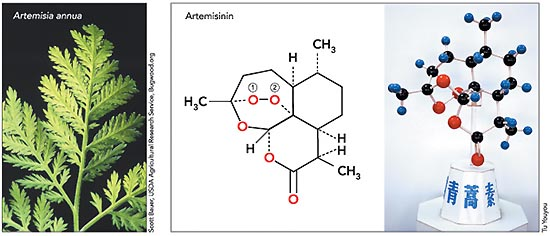
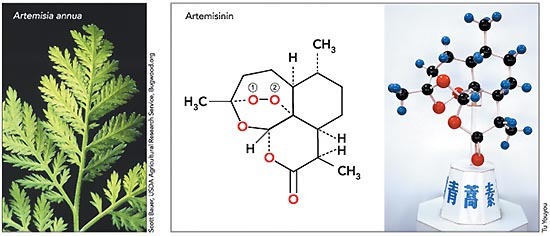
Take a look at the image to see where this medicine starts. On the left is Artemisia annua (sweet wormwood), the plant that naturally produces artemisinin, also known as Qinghaosu. The diagrams in the middle and on the right zoom in on the molecule’s secret weapon: the endoperoxide bridge. Those linked oxygen atoms might look simple, but they are exactly what gives the drug its powerful ability to fight malaria.
The Breakthrough with Ether
Tu changed how she made the extract. She stopped using boiling water or hot alcohol. Instead, she used a chemical called ether, which boils at a very low temperature (35°C). She also realized the medicine was in the leaves, not the stems.
On October 4, 1971, Tu tested the new extract, called Sample 191, on mice with malaria. The result was amazing. It killed 100% of the parasites. They tested it on monkeys, and it worked perfectly again. This was the breakthrough they needed. The plant went from being a failure to a powerful weapon against malaria.
Part V: Testing the Medicine (1972–1978)
The First Human Guinea Pig
Before they could give the medicine to patients, they had to prove it was safe. But some animal tests showed possible problems with the liver. They needed to do human trials quickly because the malaria season was ending.
Tu decided to take a risk. She and two colleagues volunteered to be the first humans to take the drug. She said that as the leader, it was her responsibility. They stayed in a hospital and took the extract. It did not hurt them. This brave act proved the drug was safe for humans.
Success in the Clinic
In August 1972, Tu took the medicine to Hainan Island to treat real patients. They treated 21 people who had malaria. The drug worked fast. The patients’ fevers broke quickly, and the parasites disappeared from their blood. It worked better than the standard drugs.
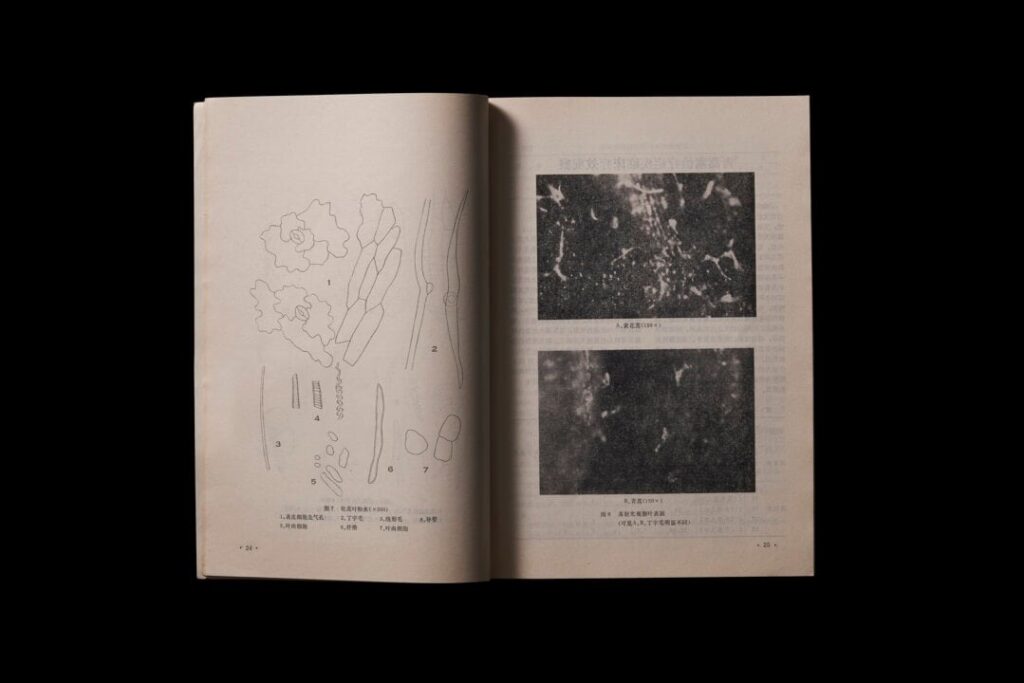
(Image Source: An early publication by Tu Youyou Photo: © Nobel Foundation Photo: Karl Anderson)
Back in Beijing, the team purified the extract into a crystal. On November 8, 1972, they isolated the pure compound. They named it Qinghaosu, which the world now knows as Artemisinin.
Understanding the Molecule
Tu’s team had to figure out what the molecule looked like. They found it had a strange structure with a “peroxide bridge” two oxygen atoms connected together. This bridge acts like a bomb. When it meets the iron inside the malaria parasite, it explodes and kills the parasite.
In 1973, Tu was trying to study the molecule when she accidentally made a new version of it. She used a chemical to change the molecule slightly and created Dihydroartemisinin (DHA). This new version was ten times stronger than the original and dissolved better in water. This accidental discovery paved the way for the best malaria drugs we use today.
Part VI: Controversy and Credit
The “Three-Without” Scientist
For a long time, no one outside the project knew Tu Youyou’s name. In China during the 1970s, people focused on the group, not the individual. Papers were published without names.
When China opened up to the world, people began to argue about who deserved credit. Tu was often called the “Three-Without Scientist” because she had no doctorate degree (PhD), no experience studying abroad, and was not a member of the prestigious Chinese Academy of Sciences.
The Struggle for Recognition
Tu was never elected to the Chinese Academy of Sciences, even though she discovered a Nobel Prize-winning drug. Some people think this is because she was too bold and claimed credit for her work, which upset people who wanted to emphasize the group effort. Others looked down on her because she did not have a high degree or foreign training. However, the records show that Tu was the one who brought the plant into the project, invented the method to extract it, and led the first clinical trials.
Part VII: Global Fame (2011–2015)
The World Takes Notice
The world started to pay attention in 2011. The Lasker Foundation in America gave Tu a major award. They said she clearly discovered artemisinin. This forced people in China to rethink her status.
The Nobel Prize
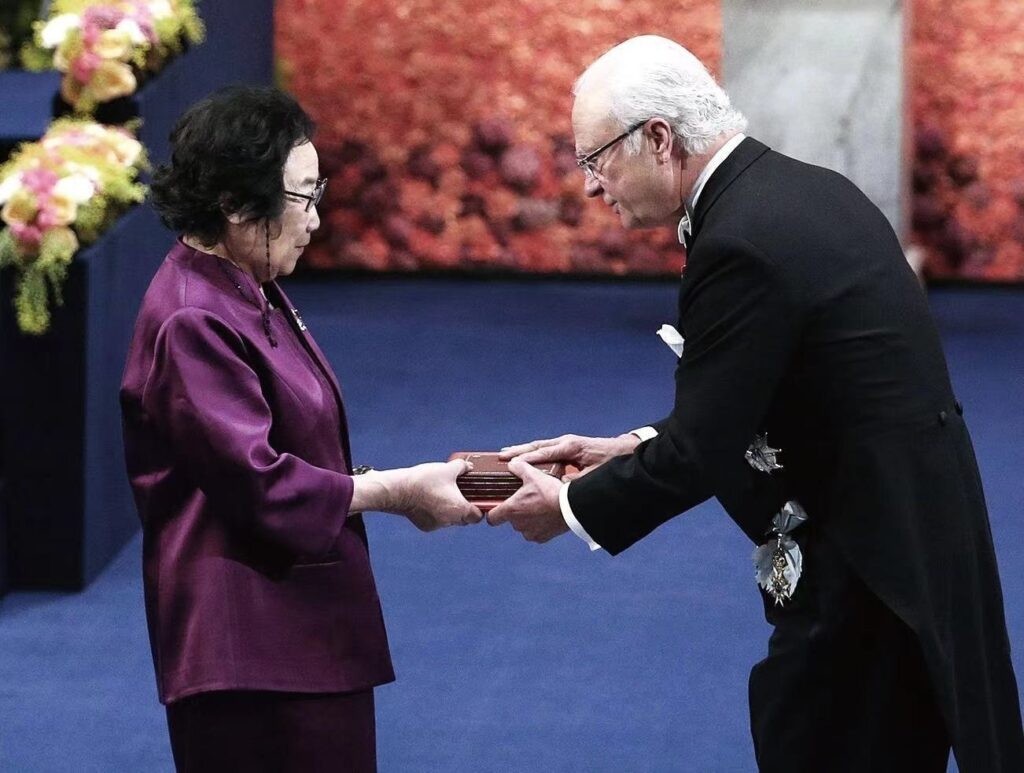
On October 5, 2015, Tu Youyou won the Nobel Prize in Physiology or Medicine. She was 84 years old. She was the first Chinese scientist to win a Nobel Prize in science for work done in China.
(Image Source: Tu Youyou)
In her speech, she called artemisinin “a gift from Traditional Chinese Medicine to the world”. She stayed humble, saying she did not want fame, but she was proud to help the world.
Part VIII: Personal Life
Family Sacrifice
Tu married Li Tingzhao, a classmate from high school, in 1963. He supported her work and took care of the house. The time she spent away from her daughters during the secret project left scars. When she returned after three years, her younger daughter, Li Jun, treated her like a stranger. It took a long time for them to rebuild their relationship. Her daughter later said that her parents felt like strangers to her back then. But the family understood that Tu’s sacrifice saved millions of other children.
A Quiet Life
Tu is known for being modest and tough. She lives in a simple apartment in Beijing. She does not like interviews. She once criticized the wastefulness of the old project, saying too many people wasted time and money. She values hard work and results.
Part IX: Legacy in 2025
Still Fighting at 95 As of December 2025, Tu Youyou is 95 years old. She is still the Chief Scientist at the China Academy of Chinese Medical Sciences. Her discovery has had a massive impact. A 2025 report from the World Health Organization estimates that since 2000, artemisinin treatments have saved 14 million lives and prevented 2.3 billion cases of malaria.
However, the fight is not over. The malaria parasite is starting to resist the drug in some places. Tu continues to urge scientists to use the drug carefully to protect it.
New Honors
Even in her nineties, Tu receives new honors. In April 2025, she was elected as an International Member of the US National Academy of Sciences. This is a rare honor for a Chinese scientist and shows that her work is respected worldwide, regardless of politics.
Key Innovations by Tu Youyou
| Innovation | Date | Why it Mattered |
| Finding the Plant | 1969-1971 | She chose Sweet Wormwood out of 640 plants when others gave up on it. |
| The Cold Extraction | Oct 1971 | The Big Breakthrough. She used cold ether instead of boiling water. This saved the medicine from being destroyed by heat. |
| Testing on Herself | 1972 | She took the drug herself to prove it was safe, allowing trials to start immediately. |
| Creating DHA | 1973 | She accidentally made a stronger version of the drug (DHA), which is used in treatments today. |
Tu Youyou’s Legacy
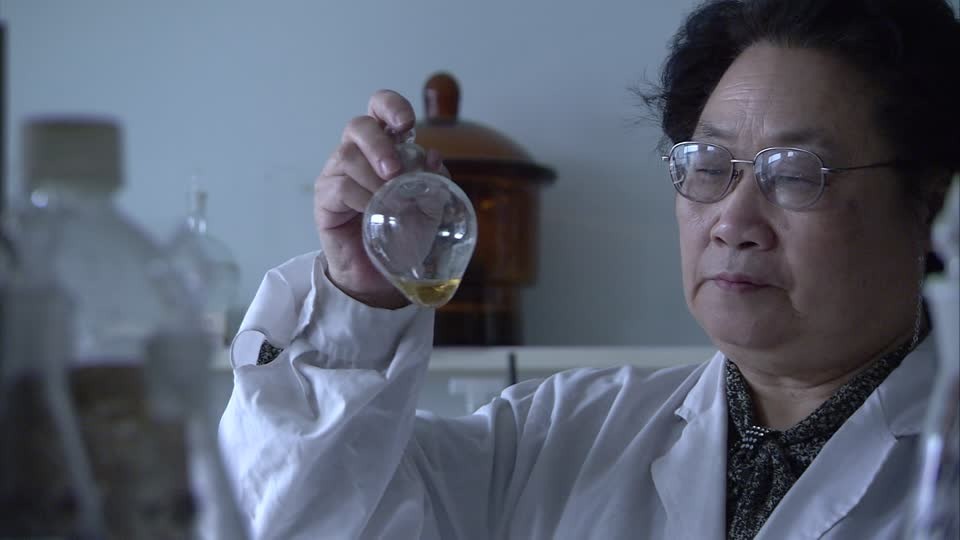
Tu Youyou’s journey from a sick teenager to a Nobel Laureate proves that great ideas can come from anywhere. She found a cure in an old book and used modern science to unlock its secrets. She proved that we should respect ancient knowledge while testing it with rigorous methods.
(Image Source: Tu Youyou: Conqueror of Malaria)
At 95 years old, Tu Youyou is a living legend. She was a scientist without a PhD who did what the biggest experts could not do. She gave the world a molecule that saves a child’s life every few minutes. The ancient poem about the deer eating the mugwort turned out to be a prophecy. It wasn’t just food for the deer; it was a miracle for humanity.
Cure To Death, Key To Eternal Life
The past holds the answers
Just as the Nobel laureate Tu Youyou discovered vital medical breakthroughs within ancient civilizations’ texts, the answers to humanity’s oldest questions “Why do we die?” and “How can we attain immortality?” have been hidden in plain sight. We failed to recognize these truths or find the cure simply because we lacked the “master key” , the advanced spiritual tool required to decipher these clues.
He Holds The Key and The Cure
The pressing question remains: what is this key, what is the cure, and who possesses them? This knowledge is held by Sant Rampal Ji Maharaj. He presents the key known as Shrishti Rachna (Creation of the Universe) and the cure known as Saarnaam.
Shrishti Rachna serves as the master key because it provides the foundational understanding of all creation narratives. It unlocks the secrets of existence, the “why” and “how” of life itself and, most importantly, reveals the remedy for the cycle of birth and death.
To understand the validity of these concepts, you are invited to view the following explanation:👇🏻.
Alternatively, you may refer to Gyaan Ganga, a book authored by Sant Rampal Ji Maharaj. It is available for free in PDF format in various languages here: Download Spiritual Books in PDF – Gyan Ganga, Jeene ki Rah, Andh Shradha Bhakti – Jagat Guru Rampal Ji
FAQs
1) Why is Tu Youyou famous?
Ans:- She is famous for discovering artemisinin, a drug extracted from sweet wormwood that has saved millions of lives globally by effectively treating malaria.
2) Who was the first Chinese woman to win a Nobel Prize?
Ans:- Tu Youyou was the first Chinese woman to win a Nobel Prize, receiving the award in Physiology or Medicine in 2015.
3) What is Tu Youyou doing now?
Ans:- As of late 2025, she is 95 years old and continues to work as the Chief Scientist at the China Academy of Chinese Medical Sciences in Beijing.
4) Does Tu Youyou have a PhD?
Ans:- No, she does not have a PhD; she is famously known as the “Three-Without Scientist” because she lacks a postgraduate degree, study abroad experience, or membership in the Chinese national academies.
5) Did Tu Youyou find a cure using Old Medical Texts?
Ans:- Yes, she found the key to the cure in a 4th-century text by Ge Hong, which instructed that the herb be soaked in cold water rather than boiled, preserving its active ingredients.