



Rise of Online Education in India: Picture this: you’re at home, grab your phone, and join a live class where a great teacher breaks down tricky math just for you. No long bus rides, no packed classrooms, just learning when it works for you. This isn’t some far-off dream; it’s happening all over India right now. Online learning in India has completely changed how we think about school, bringing top-quality lessons to kids in far-off villages and busy cities.
- How Online Learning Started and Grew in India
- What’s Making Online Learning Boom in India
- Big Online Learning Companies in India
- Byju’s Story: Big Success and Recent Problems
- How Unacademy Grew in Test Prep
- Physics Wallah (PW): Cheap Online Learning for Indian Students
- Numbers and Trends in India’s Online Learning
- Good Things About Online Learning for Indian Students
- Problems in India’s Online Learning Growth
- How Places Like Kota Are Struggling Because of Online Learning
- What’s Next for Online Learning in India
- Beyond Digital Learning: From Knowledge to Spiritual Wisdom
With faster internet and cheap apps, millions are finding fresh ways to study. But how did this big change start, and where’s it going? Let’s dive into India’s exciting online learning world, full of real facts, cool trends, and stories of transformation.
How Online Learning Started and Grew in India
Online learning in India started small but picked up speed fast. Back in the early 2000s, just a few websites had basic courses, mostly government sites with school subjects. Slow internet and not many computers kept it from spreading much. Around 2010, sites like Khan Academy inspired Indian versions that focused on free videos for big exams like IIT-JEE and NEET.
The real game-changer was smartphones. When more people got cheap data plans, apps made learning super easy. Government moves, like starting the National Digital Library in 2015, added tons of free stuff to learn from. Now, online learning covers everything from regular school subjects to job skills. This change shows how technology meets India’s massive need for better education, reaching more than 250 million students.
What’s Making Online Learning Boom in India
Several things are pushing online learning forward in India. First, way more people are online, India has over 900 million internet users by 2025, which makes it all possible. Cheap phones and data plans from companies like Jio totally changed everything.
Another big reason is people need flexible learning. Lots of students have to balance school with family stuff or jobs. Online classes let them study whenever they want, which fits their busy lives. Plus, crazy traffic in cities and long distances in villages make getting to regular schools really tough.
How COVID-19 Sped Up Online Learning in India
The COVID-19 pandemic made online learning grow in India faster than anything else could have. When schools closed in 2020, over 320 million students had to go online. Teachers started using Zoom and Google Classroom for their lessons. This sudden change showed everyone just how powerful online learning could be.
After the pandemic, these new habits stayed. A 2025 report shows that people signing up for online courses jumped 50% from 2021 numbers. It wasn’t just about surviving; it actually made learning more accessible. Rural areas that used to miss out can now connect through apps. Though it also showed some problems, like bad internet in certain places.
Cool Tech Upgrades in India’s Online Learning Apps
Technology improvements are making India’s online learning apps way better. AI makes lessons personal, suggesting topics based on what you need to work on. Apps quiz you and change how hard things are based on your answers.

Virtual reality (VR) lets students “visit” science labs or historical places without leaving home. By 2025, AI and VR working together is much more common, making classes really fun. Big data looks at patterns to help teachers do better. These tools make online learning feel like playing games, with rewards for making progress.
Most people use mobile apps, 75% of users are on phones. Features like downloading stuff to use offline help when the internet is weak. Cloud storage keeps your notes safe. These improvements make sure online learning keeps getting better, adapting to what people need.
Big Online Learning Companies in India
India’s online learning scene has major players that shape the whole market. These companies offer courses for school, exams, and skills, reaching millions of people.
Byju’s Story: Big Success and Recent Problems
Byju’s started as a tutoring app in 2011, growing really fast with fun videos and quizzes. It became India’s top education technology company, worth $22 billion in 2022, thanks to celebrity ads and buying other companies worldwide.
But big challenges hit hard. By 2025, Byju’s faces serious problems, its value dropped 99% because of money troubles, legal fights, and filing for bankruptcy in the US. Founder Byju Raveendran says a $1.2 billion loan from 2021 was a mistake, leading to job cuts and investors leaving. Now, Byju’s 3.0 focuses on AI to make a comeback, but rebuilding trust takes time. It still serves millions of students, showing how education technology can go up and down.
How Unacademy Grew in Test Prep
Unacademy started in 2015 as YouTube videos for exams like UPSC and IIT. It grew into a complete platform with live classes and practice tests.
In 2025, Unacademy expects its best year for growth and making money. CEO Gaurav Munjal says 70% of their physical centers will make profit, cutting money losses to below Rs 200 crore. The founders stepped back from daily work, with Sumit Jain as the new CEO bringing fresh ideas. It mixes online and in-person learning, helping over 10 million users prepare for tough tests.
Physics Wallah (PW): Cheap Online Learning for Indian Students
Physics Wallah, or PW, started as Alakh Pandey’s YouTube channel in 2016, teaching physics for free. It became a unicorn company by focusing on affordable, high-quality courses for JEE and NEET exams.
By financial year 2025, PW’s earnings hit Rs 3,000 crore, up 55% from last year, with losses cut by 80%. From Rs 744 crore in the financial year 2023 to this shows really strong growth. PW plans a $530 million public offering in 2025, expanding to physical locations too. Its success comes from low prices, courses under Rs 5,000, and simple explanations, attracting students from smaller towns.
Also Read: AI Psychosis: The Emerging Mental Health Risk of Chatbots
These companies compete but also grow the whole market. While Byju’s struggles, Unacademy and PW do well, proving that focusing on value wins.
Numbers and Trends in India’s Online Learning
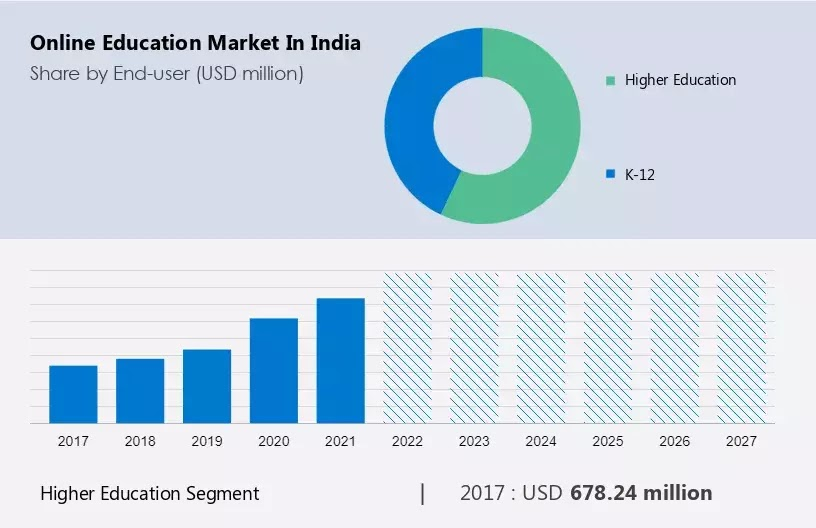
The numbers tell an amazing story about online learning in India. The market reached USD 2.92 billion in 2024 and should hit USD 20.98 billion by 2033, growing 24.5% every year. Another prediction says it grows by USD 8.53 billion from 2025-2029, with 29% yearly growth.
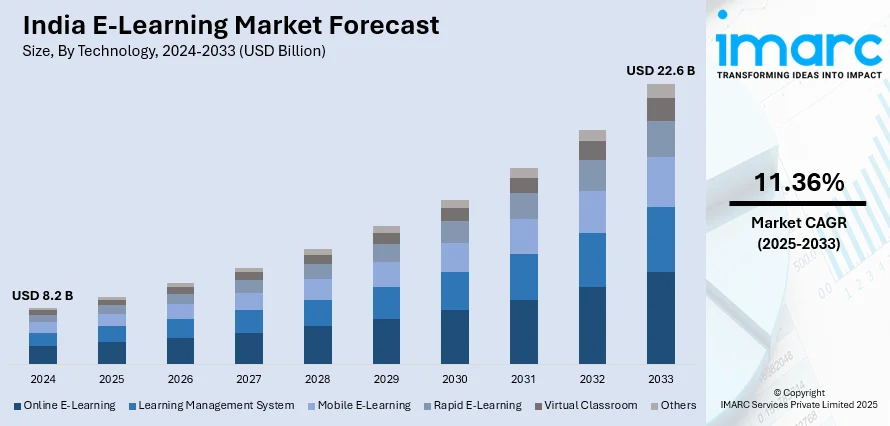
Revenue in 2025 is expected to be US$7.57 billion, rising higher with 25.76% growth through 2029. Trends include AI for custom learning, 75% of platforms use it by 2025. Regional languages cover 60% of content, helping people who don’t speak English well.
Skill courses are booming, with 40% growth in job preparation. Mobile learning rules, as 80% access through apps. Global connections bring international certificates. But challenges like the digital divide continue, only 51.8% of households have internet in 2025.
Here’s a table showing market size predictions:
| Year | Market Size (USD Billion) | Growth Rate (CAGR) | Key Trend |
| 2025 | 7.57 | 25.76% (2025-2029) | AI personalization surges |
| 2026 | 9.52 | 25.76% | VR adoption in schools |
| 2027 | 11.97 | 25.76% | Skill development focus |
| 2028 | 15.05 | 25.76% | Regional content expansion |
| 2029 | 18.92 | 25.76% | Global collaborations grow |
| 2030 | 23.80 (projected) | 24.50% (2025-2033 avg) | Mobile-first platforms dominate |
| 2033 | 20.98 | 24.50% | Full integration of edtech in curriculum |
These numbers show steady growth, driven by technology and demand.
Good Things About Online Learning for Indian Students
Online learning brings lots of benefits for students in India. First, it’s flexible, study when you want, no set schedule. This helps if you live far away or have chores to do.
It costs less money. Regular coaching costs Rs 50,000-1 lakh per year, but online starts at Rs 1,000. Companies like PW keep prices low.
You can learn from the best teachers anywhere. A student in a village can learn from experts in Delhi. Fun tools like quizzes make it interesting, helping students do better, studies show 20-30% better memory.
It builds important skills like managing time and using technology, which are key for jobs. For girls, it’s safer because they don’t have to travel. Overall, it opens doors for everyone to get equal learning opportunities.
Problems in India’s Online Learning Growth
Despite growth, there are still obstacles in India’s online learning. Internet access isn’t steady, rural areas have weak signals, affecting 40% of users.
Not having devices hurts poor families; not everyone has a laptop. Too much screen time causes eye problems and less social interaction.
Quality varies, some platforms don’t have good content. Cheating in online tests is a problem. Teachers need training for digital tools.
People worry about data privacy with AI. It’s more affordable but still costs too much for some. Fixing these issues will help fair growth.
How Places Like Kota Are Struggling Because of Online Learning
Kota, once India’s coaching capital, faces a big decline because of online learning’s rise. Known for JEE and NEET preparation, it used to host 2-2.5 lakh students yearly, making Rs 7,000 crore.
But enrollments dropped 30-40% in 2024, to 85,000-1 lakh, and further to 122,000 by March 2025. Reasons include student suicides, over 20 in 2023, leading to bad news and strict rules like mental health checks.
Online platforms offer the same preparation at home, cheaper and less stressful. PW and Unacademy pull students away with live classes. This hurts Kota’s economy, hostels empty, shops close, people lose jobs.
Other cities like Delhi see similar changes. People hope for recovery, but online convenience wins. It shows how online learning reshapes old systems.
What’s Next for Online Learning in India
Looking forward, online learning in India looks bright. By 2030, the market could go over USD 23 billion. AI will make lessons even more personal, predicting what you need.
VR classrooms will create real experiences, like doing science experiments. Game-like apps with points and badges will keep people interested.
The government pushes forward with NEP 2020, aiming for 50% digital by 2025. Partnerships with global universities bring degrees online. Focus on skills like coding grows, preparing people for jobs.
Challenges like bridging city-village gaps need work, through cheap data and devices. Overall, it promises learning for everyone that’s inclusive and innovative.
Beyond Digital Learning: From Knowledge to Spiritual Wisdom
The rise of online education in India proves how knowledge can transcend barriers of geography and time. Yet, beyond digital classrooms lies a question technology cannot answer: what is the true purpose of our existence? Academic success, career growth, and skill mastery provide direction, but they often leave a deeper longing unfulfilled. True enlightenment comes not just from learning facts, but from discovering eternal truths and our connection with the divine.
For those seeking such wisdom, books like “Gyan Ganga“ and “Way of Living” by Saint Rampal Ji Maharaj guide readers towards authentic worship, inner peace, and a life of purpose. Exploring these teachings can complete the journey from education to true understanding.