


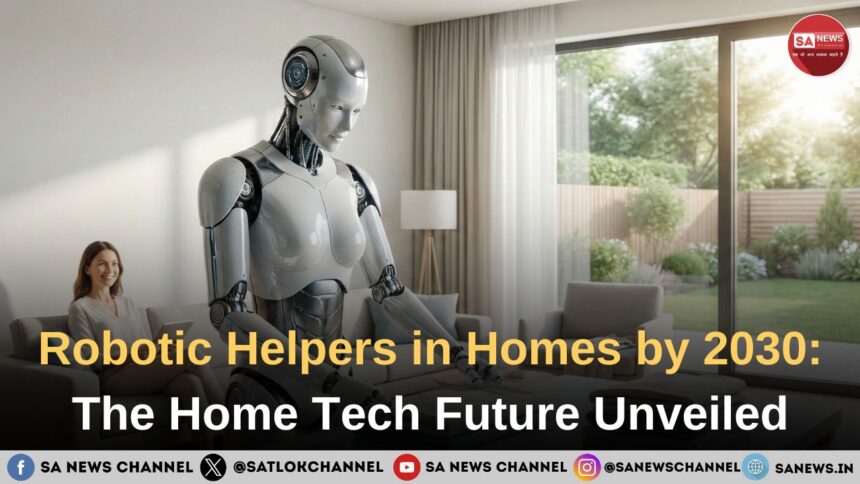
The science-fiction dream of a personal, autonomous robot helper-once the domain of The Jetsons or I, Robot-is rapidly transforming into a near-future reality. As we approach the year 2030, a seismic shift in domestic technology is underway, poised to redefine the very concept of home life. This isn’t just an incremental upgrade to your smart speaker or a slightly faster robotic vacuum; it is the dawn of sophisticated, AI-driven machines capable of complex household chores, deep companionship, and vital elderly assistance.
- The March of the Machines: Market and Technology Driving the 2030 Vision
- The Technological Leaps: From Code to Chore
- AI-Driven Autonomy: The Brains of the Operation
- Sensor Fusion and Mobility
- The Robot-as-a-Service (RaaS) Model
- The New Cohort of Robotic Helpers: Beyond Cleaning
- 2. Specialized Chore Bots
- Impact on Daily Life: Time, Work, and Wellness
- Reclaiming the Mundane: The Gift of Time
- Improved Wellness and Work-Life Balance
- Accessibility for People with Disabilities
- The Ethical and Societal Debate
- Privacy and Security in the Age of Eyes and Ears
- The New Human-Robot Relationship
- Job Displacement (and Creation)
- Preparing for a Robot-Friendly Home: Practical Steps
- The True Purpose of Time Gained: A Spiritual Perspective
- FAQs on Robotic Helpers in Homes by 2030
- Q1: Will a humanoid robot really be in every home by 2030?
- Q2: What is the biggest advantage of having a robotic helper in the home?
- Q3: How much will an advanced home robot cost by 2030?
- Q4: Will AI and home robotics take jobs away from people?
- Q5: What complex tasks are domestic robots expected to perform by 2030?
Driven by a global robotics market projected to reach between $24 billion and $34 billion by 2030 (with some aggressive estimates soaring up to $65 billion by 2033), these robotic helpers are emerging from high-tech laboratories and stepping into our living rooms. This comprehensive guide will pull back the curtain on the home tech future, exploring the market forces, technological breakthroughs, and the profound human impact of having a robot companion by the end of the decade.
The March of the Machines: Market and Technology Driving the 2030 Vision
The journey from a simple robotic vacuum bumping into walls to a fully autonomous, multi-functional household robot is being propelled by exponential advancements in artificial intelligence and a clear, growing consumer demand for convenience.
The Economic Explosion
Market analysts and venture capitalists are watching this sector with bated breath. The global household robots market is projected to grow at a Compound Annual Growth Rate (CAGR) of approximately 16–19% leading up to 2030. This growth is not accidental; it is driven by three core pillars that are creating a “perfect storm” for adoption:
- Technological Convergence: The simultaneous maturation of AI, battery density, and material science.
- Economic Viability: The dropping cost of hardware components.
- Shifting Demographics: An aging global population requiring assistance that human labor markets cannot fully supply.
As highlighted by tech commentators on platforms like X (formerly Twitter), the buzz surrounding humanoid robots is reaching a fever pitch, with industry giants signaling that the age of the general-purpose bot is imminent.
The Technological Leaps: From Code to Chore
The key to a true domestic robot lies not merely in its mechanical arms or hydraulic legs, but in its digital brain. The integration of cutting-edge Artificial Intelligence (AI), sensors, and edge computing is enabling robots to move beyond pre-programmed, repetitive tasks into the realm of adaptive behavior.
AI-Driven Autonomy: The Brains of the Operation
Modern home robots are powered by advanced AI models, often referred to as Vision-Language-Action (VLA) models. These allow robots to learn from their environment in real-time. Unlike a dishwasher that runs a set cycle, 2030-era robots will:
- Recognize Objects: Distinguish between a dropped sock (laundry) and a dropped remote (living room item).
- Adapt Actions: Understand that a glass vase requires a delicate touch compared to a cast-iron skillet.
- Plan Routes: Navigate a messy floor without getting stuck, planning the most efficient path to a destination.
- Identify Urgency: Recognize a spill that needs immediate attention versus a routine dusting task.
Sensor Fusion and Mobility
To operate safely around humans and pets, robots require “Sensor Fusion.” This is the aggregation of data from multiple sources to create a coherent picture of the world. Robots like Tesla’s Optimus and Figure AI’s Figure 03 are demonstrating advanced humanoid robotics that utilize:
- LiDAR (Light Detection and Ranging): For precise distance mapping.
- High-Resolution Computer Vision: To “see” in stereo, providing depth perception.
- SLAM (Simultaneous Localization and Mapping): A technology that allows the robot to map a room while simultaneously tracking its location within it.
These technologies grant robots the agility to step over toys, crouch to reach low cabinets, and move with a fluidity that mimics human motion.
The Robot-as-a-Service (RaaS) Model
Technological capability is one thing; affordability is another. High upfront costs remain the single biggest barrier to mass adoption. A sophisticated humanoid robot could cost upwards of $20,000 to manufacture initially.
To combat this, industry experts predict a massive shift toward a Robot-as-a-Service (RaaS) subscription model.
- How it works: Instead of paying $30,000 upfront, consumers might pay a monthly fee (e.g., $200–$500).
- The Benefit: This fee covers the hardware, insurance, and crucial over-the-air software updates.
- The Result: A static piece of hardware turns into an evolving, smarter personal assistant that improves every month, similar to how Tesla vehicles receive new features remotely.
Also Read: Are AI and Robotics Redefining Human Life?
The New Cohort of Robotic Helpers: Beyond Cleaning
While current domestic robotics are dominated by floor-cleaning disks and stationary security devices (estimated to make up ~75% of the market as of late 2024), the landscape of 2030 will be defined by diversity in form and function.
1. The Multi-Talented Humanoid
This is the “Holy Grail” of robotics. Companies like Tesla (Optimus), Figure AI, Boston Dynamics (Atlas), and Agility Robotics (Digit) are aggressively targeting this space.
- Capabilities: These bipedal robots are designed to fit into a world built for humans. They can climb stairs, open standard doors, and handle tools designed for human hands.
- The 2030 Reality: While a humanoid in every home by 2030 is ambitious, early adopters and luxury households will likely have models capable of folding laundry, unpacking groceries, and loading dishwashers.
2. Specialized Chore Bots
Not every robot needs legs and a face. Highly specialized robots will proliferate for specific, complex tasks:
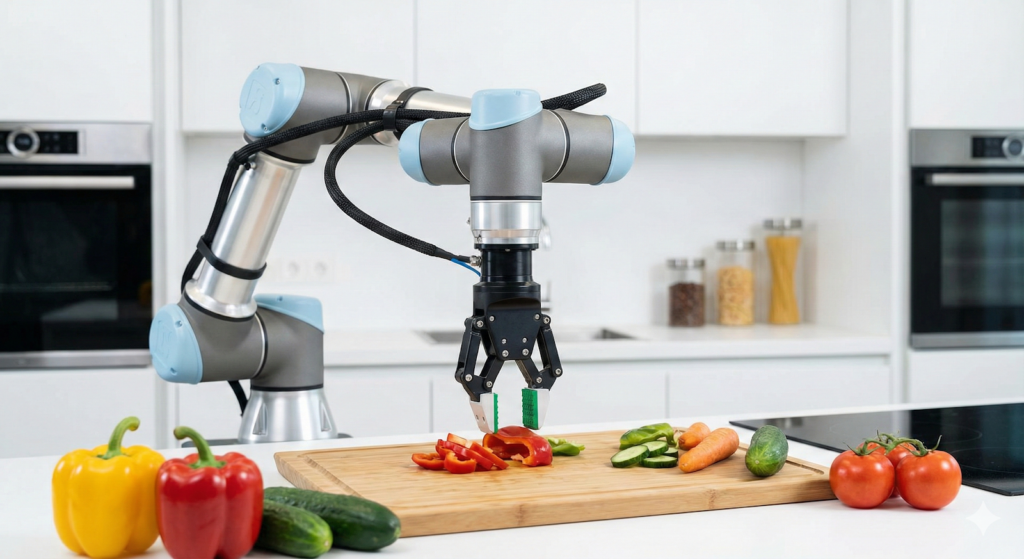
- The Robotic Chef: Advanced kitchen arms (like those pioneered by Moley Robotics) that can measure ingredients, mix, cook, and clean up, utilizing a library of thousands of recipes.
- The Laundry Master: Robots dedicated solely to the complex geometry of folding clothes, matching socks, and ironing.
- The Green Thumb: Sophisticated gardening robots that can identify weeds from flowers, prune roses, and mow lawns with millimeter precision.
3. Companionship and Care Robots: The Most Impactful Segment
Perhaps the most socially significant segment is elderly care robotics. With the “Silver Tsunami” of an aging global population, there is a shortage of human caregivers.
- Health Monitoring: Machines that monitor heart rate, sleep patterns, and fall detection.
- Medication Management: Ensuring pills are taken on time.
- Social Interaction: Robots like SoftBank’s Pepper, Intuition Robotics’ ElliQ, and emerging models from Samsung and LG utilize Large Language Models (LLMs) to hold natural conversations, offer cognitive stimulation, and combat the crushing health effects of loneliness. Governments in Japan and Europe are already looking to subsidize these devices as essential healthcare infrastructure.
Impact on Daily Life: Time, Work, and Wellness
The integration of robotic helpers is not merely a change in the appliances we own; it represents a fundamental shift in how we manage our time, our energy, and our households.
Reclaiming the Mundane: The Gift of Time
The average human spends countless hours every week on routine, repetitive, and often unsatisfying chores. Estimates suggest that cleaning, cooking, laundry, and errands consume 7 to 12 hours a week for the average adult.
- The Shift: By offloading these tasks to autonomous agents, humans can reclaim hundreds of hours annually.
- The Result: This time can be redirected toward higher-value activities: bonding with family, personal education, creative hobbies, and physical exercise. This liberation from the mundane is the central value proposition of the 2030 smart home.
Improved Wellness and Work-Life Balance
Beyond chores, robots can act as wellness coaches. By analyzing environmental data and user habits, they can:
- Remind users to hydrate or correct their posture.
- Prepare nutritionally balanced meals automatically.
- Assist working parents by handling the “second shift” of housework, dramatically reducing burnout and household stress.
Accessibility for People with Disabilities
For individuals with physical disabilities or limited mobility, robotic helpers will be nothing short of revolutionary. They offer the promise of restored independence-fetching objects from high shelves, carrying heavy groceries, opening doors, and assisting with transfers. This technology levels the playing field, allowing people to live in their own homes comfortably for longer.
The Ethical and Societal Debate
As robots become more autonomous and intimate-moving from a vacuum on the floor to a walking companion in the living room-profound ethical questions arise that society must address before 2030.
Privacy and Security in the Age of Eyes and Ears
A robot equipped with multiple 4K cameras, microphone arrays, and LiDAR mapping capabilities will possess an intimate, encyclopedic knowledge of your home layout, your schedule, and your private conversations.
- The Risk: Data breaches or hacking could turn a home robot into a surveillance device.
- The Solution: Manufacturers must prioritize “Edge AI” (processing data locally on the robot rather than the cloud) and robust encryption. Public trust hinges on the assurance that what happens in the home, stays in the robot.
The New Human-Robot Relationship
What is the psychological impact of a robot companion on a developing child or a lonely senior?
- Pros: Research suggests human-like robots can enhance social bonding and provide stability.
- Cons: There is a risk of the “Uncanny Valley” causing unease, or conversely, humans forming deep emotional attachments to non-sentient machines, potentially replacing genuine human interaction.
Also Read: Can Technology Really Solve Loneliness?
Job Displacement (and Creation)
The economic fear is real: Will robots steal jobs?
- Displacement: Routine service jobs (cleaning, basic maintenance) will undoubtedly face automation pressure.
- Creation: Experts from the McKinsey Global Institute predict the emergence of entirely new industries. We will need robot maintenance technicians, AI personality trainers, remote robot fleet managers, and ethical design specialists. The nature of work will shift from manual repetition to creative collaboration with intelligent machines.
Preparing for a Robot-Friendly Home: Practical Steps
As robotic helpers edge closer to everyday reality, homeowners will need to adapt their living spaces. Just as we build garages for cars, we will need to build infrastructure for bots.
Infrastructure Changes by 2030
- Clear Pathways: Clutter-free floors will be essential for navigation.
- Robot Stations: Dedicated “garages” or alcoves with high-speed charging ports and water/waste hookups for cleaning bots.
- Standardized Protocols: “Robot-proof” home design will become a standard, ensuring thresholds are flat and doors can be opened via wireless signals (V2X communication) rather than just physical handles.
- IoT Integration: Seamless linking with Alexa, Google Home, or Apple HomeKit will be mandatory for voice command control.
The True Purpose of Time Gained: A Spiritual Perspective
The coming age of robotic helpers offers a seductive promise: a life freed from the drudgery of survival tasks. By 2030, we may find ourselves with more free time than any generation in human history. But this convenience raises a profound, almost spiritual question that technology itself cannot answer: How will we use this extra time?
In the rush for modernization, we often forget the guidance found in holy scriptures. According to spiritual teachings, the true purpose of human life is not merely to increase comfort, accumulate wealth, or maximize productivity. It is to pursue liberation through true worship.
The Distraction of the Modern World
The world constantly keeps us occupied-first with the struggle for survival, then with the maintenance of our lifestyle, and finally with endless entertainment, desires, and material pursuits. We are caught in a cycle where technology solves one problem only to create new distractions.
The Golden Opportunity
The time saved through robotic automation is a priceless opportunity. It is not meant to be squandered on more screen time or leisure, but to be invested in spiritual growth. This “found time” is a gift that should be utilized for:
- Initiation (Naam-Diksha): Taking initiation from a complete Guru.
- Spiritual Knowledge: Listening to and contemplating true spiritual discourses.
Even if robots take over our physical burdens by 2030, they can never carry our spiritual responsibility. A robot can clean your floor, but it cannot cleanse your soul. Only humans can work toward escaping the cycle of birth and death.
Sant Rampal Ji Maharaj’s teachings remind us of a critical truth: as technology makes our lives easier, we must turn our focus toward the ultimate goal-securing our spiritual future and striving for the eternal peace of Satlok. This is the real purpose of the time we gain-a purpose no machine, no matter how advanced, can fulfill for us.
To understand how to utilize this life and the time granted to us effectively, and to find the path to true spiritual liberation, it is essential to delve deeper into these teachings.
For deeper understanding and guidance on the true purpose of human life, watch the Sant Rampal Ji Maharaj YouTube channel.
FAQs on Robotic Helpers in Homes by 2030
Q1: Will a humanoid robot really be in every home by 2030?
While the goal is ambitious, market data suggests a rapid increase. The consensus is that basic domestic robots (like advanced vacuums) will be ubiquitous by 2030, while sophisticated, multi-functional humanoid robots will begin to see major commercial sales, especially through subscription-based Robot-as-a-Service (RaaS) models-though widespread household penetration is more likely in the 2030s.
Q2: What is the biggest advantage of having a robotic helper in the home?
The most significant advantage is the saving of time and effort. Robotic helpers will handle repetitive, time-consuming tasks like deep cleaning, laundry, cooking, and lawn care, freeing up human time for work, family, leisure, and personal well-being.
Q3: How much will an advanced home robot cost by 2030?
The initial purchase price for advanced humanoid prototypes is currently high (USD 20,000–30,000+). However, to reach mass adoption, industry analysts predict a shift toward leasing through a Robot-as-a-Service (RaaS) subscription model with much lower monthly fees, making the technology far more accessible.
Q4: Will AI and home robotics take jobs away from people?
The rise of domestic automation will displace some repetitive jobs (like professional cleaning services). However, this is expected to create a large number of new jobs, including roles in robot maintenance, AI training, programming, ethical design, and new human-centric services, leading to a shift in the labor market rather than total job loss.
Q5: What complex tasks are domestic robots expected to perform by 2030?
By 2030, domestic robots are projected to move beyond basic cleaning to handle complex tasks such as folding laundry, performing basic food preparation/cooking, providing sophisticated elderly and patient care (medication management, monitoring), and running light outdoor errands like collecting dry cleaning or gardening.